
Cultural Context:
The sign for the number 2000 in ASL is commonly used when discussing years, large numerical values, or historical events. When signing the number 2000 in ASL, accuracy matters because number signs can differ depending on context. This sign is frequently seen in conversations about milestones, such as the year 2000, financial figures, or statistics. In American Sign Language, numbers have a specific structure that makes them clear and easy to understand. The sign for the number 2000 in ASL follows a numerical pattern that allows for smooth communication. When expressing years or large amounts, ASL signers rely on consistent handshapes and movement to avoid confusion. Many people remember the year 2000 as a significant moment in history. The sign for the number 2000 in ASL is useful when discussing events like Y2K, the turn of the millennium, or personal memories. Whether talking about the past or future, knowing this ASL number sign ensures effective storytelling and clarity. In financial contexts, the sign for the number 2000 in ASL is useful for price discussions, salary talks, and budgeting. ASL users often sign this number when talking about savings, expenses, or payments. The ability to sign this number correctly can help in everyday interactions, whether at the bank or during a shopping trip. Sports and entertainment frequently involve numbers, making the sign for the number 2000 in ASL relevant in discussions about scores, records, and statistics. Athletes, commentators, and fans may use this sign to reference past seasons, achievements, or rankings. It helps in communicating data clearly and concisely in ASL discussions. In education and academics, students often use the sign for the number 2000 in ASL when discussing historical dates, math problems, or research findings. Teachers and interpreters incorporate number signs to improve comprehension in ASL classrooms. This number sign plays a key role in conveying accurate information in academic settings. Historical discussions often require the sign for the number 2000 in ASL to signify past events or generational timelines. When reflecting on the changes since the year 2000, ASL users can effectively express political, scientific, or cultural shifts. Clear numerical signing ensures discussions remain accurate and engaging. The sign for the number 2000 in ASL is also helpful in casual conversation. Whether talking about a birthday year, a memorable event, or a personal experience, number signs enhance storytellingExtended Definition:
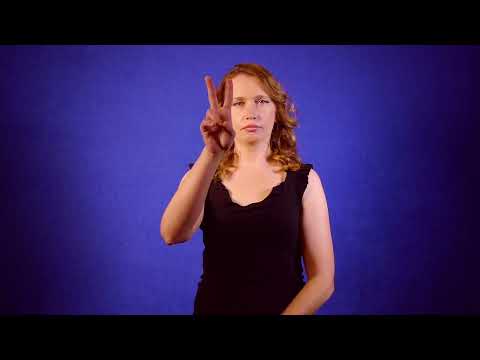
The sign for the number 2000 in ASL follows a straightforward structure that combines elements of the number two and thousand. Understanding this sign is helpful for discussing dates, amounts, or large numerical values in American Sign Language. Mastering number signs enhances fluency and comprehension in ASL conversations. To sign 2000 in ASL, start with the handshape for the number two, extending the index and middle fingers while keeping the others tucked in. Then, make the sign for thousand by forming a bent hand and tapping the fingertips onto the palm of the opposite hand. This motion visually represents the concept of a thousand, making the sign clear and intuitive. Learning the sign for the number 2000 in ASL is essential for discussing years, especially when referring to events from the early 2000s. This sign is useful in historical, educational, and daily conversations where numerical values are needed. Practicing number signs regularly helps improve signing speed and recognition. ASL relies on facial expressions and body language in addition to hand signs, so using the correct expression with the sign for the number 2000 in ASL ensures clarity. Numbers play a crucial role in many discussions, including math, finances, and telling time. Developing strong skills in number signs will make ASL communication more effective and natural. For ASL learners, mastering the sign for the number 2000 in ASL is a great way to become comfortable with larger numbers. Watching native signers and practicing in real conversations will help reinforce proper usage. Fluency in numbers allows for smoother dialogue and deeper connections in the Deaf community. Understanding the structure behind number signs like 2000 also helps in learning other numerical values. Once learners grasp the pattern, signing other thousands, such as 3000 or 4000, becomes easier. The consistency in ASL number signs makes learning and recalling them more manageable. Some variations may exist depending on regional or personal signing styles, but the standard way of signing 2000 remains widely recognized. Exposure to different signers and contexts enhances comprehension and adaptability. Observing experienced signers or using ASL dictionary resources can help learners fine-tune their skills. The sign for the number 2000 in ASL is an essential part of numerical fluency, useful in various conversational settings. Whether discussing years, large amounts, or specific numbers, being confident with this sign makes communication smoother. Regular practice with number signs builds confidence and helps in everyday ASL Synonyms: two thousand, 2k, 2,000, twenty-first century, millennium marker, 21st century Educational resources: Find related learning materials in our course bank! Want more? Check out some of our popular learning activities on the homepage! Need to look up a sign? Use our highly rated dictionary: https://aslinteractive.com/best-asl-dictionary/ Follow us on tiktok: https://www.tiktok.com/@aslinteractive. More social media links at the bottom of this page! Long-tail Keywords: what is the sign for the number 2000 in ASL, how do you sign the number 2000 in American Sign Language, ASL sign for the number 2000 Categories: Numbers – Basics, thousands, cardinal numbers tags: Numbers, Years, Counting, Mathematics, Educational, Language LearningParameters
*Handshape*:
The sign for the number 2000 in ASL uses the number “2” handshape, followed by a movement that indicates “thousand.” Start with the index and middle fingers extended while the remaining fingers stay folded. Then, transition into the bent “C” or “curved” handshape to represent the concept of a thousand. This movement makes the sign for the number 2000 in ASL clear and visually distinct. Using smooth motion ensures correct interpretation. ✌️*Palm Orientation*:
The palm orientation for the sign for the number 2000 in ASL starts with the dominant hand in a flat “2” handshape, palm facing outward. The fingers move slightly forward as the hand transitions into a “0” shape, with the thumb and fingertips touching. This motion mimics the visual pattern of the number and clearly distinguishes it from similar signs in ASL.*Location*:
The sign for the number 2000 in ASL takes place in the neutral signing space in front of the body. The dominant hand forms the number “2” with the index and middle fingers extended, while the other fingers remain down. The hand then transitions into a loose “O” shape as it moves slightly forward. The motion represents the transition between “2” and “thousand” in the sign for the number 2000 in ASL, keeping it clear and visually distinct.*Movement*:
To sign for the number 2000 in ASL, start by forming the number 2 with your dominant hand, extending the index and middle fingers while keeping the other fingers folded. Then, transition to forming the number 0 by curving all fingers into a circular shape. Finally, repeat the 0 handshape to emphasize the thousand component. The movement should be smooth, with a slight pause between the transitions to clearly indicate the number sequence.*Non-Manual Signals*:
Facial expression remains neutral or slightly focused when performing the sign for the number 2000 in ASL. The eyebrows may stay relaxed, with minimal movement, unless emphasizing the number in conversation. Mouth movements can be natural, with a subtle mouthing of “two thousand” if needed for clarity. Eye contact should be maintained with the listener, ensuring clear communication. If emphasizing the quantity, a slight head nod may accompany the sign for the number 2000 in ASL.*Prosody, Dominant/Non-Dominant Hand*:
The sign for the number 2000 in ASL uses the dominant hand. Begin with the number 2 handshape, with the palm facing forward. Then shift into a loose 5-handshape and gently tap the fingertips of the dominant hand against the palm of the non-dominant hand, representing the transition from 2 to 1000. This movement creates a fluid representation of the numerical concept within ASL, ensuring clarity and accuracy in communication.Tips for Beginners:
Learning the sign for the number 2000 in ASL requires a smooth and clear movement to ensure accuracy. The number begins with a “2” handshape, followed by an open palm making a quick forward movement as if tapping the air slightly with the fingertips. Keeping the movement controlled and steady will help make the sign look fluid and understandable. A common beginner mistake when signing the number 2000 in ASL is over-exaggerating the movement. The forward motion should be subtle and not overly dramatic. Avoid bouncing the hand too much, as this can make the number unclear. Keeping your hand shape firm while maintaining a relaxed wrist will help make the sign more natural. Hand positioning is key when signing the number 2000 in ASL. Your palm should be facing forward when making the initial “2” shape, and the transition to the following movement should feel smooth. Try practicing in front of a mirror to ensure your movements are clean and precise. Recording yourself and reviewing the motion can also help refine your technique. Context is important when using the sign for the number 2000 in ASL. If expressing years, such as “the year 2000,” make sure to integrate it into a sentence appropriately with clear facial expressions. If using the number to indicate a quantity, emphasize it with a steady hand shape and proper pacing. Practicing with sentences will make the number easier to use in conversations. To master the sign for the number 2000 in ASL, repetition is key. Engage in practical exercises, such as signing different years and numbers, to build fluency. Watching skilled signers and mimicking their movement can help refine your speed and accuracy. Keep practicing until the transition between the numbers feels effortless.Connections to Other topics:
The sign for the number 2000 in ASL connects to broader number-related concepts, including how numbers are signed in different contexts. In ASL, numbers can be modified based on emphasis, repetition, or associated signs. For example, years like 2010 or 2023 follow similar number patterns but may be signed slightly differently depending on clarity needs. Understanding the sign for the number 2000 in ASL also helps with recognizing patterns in large numbers, such as thousands and millions. Ordinal and cardinal numbers share a relationship with the sign for the number 2000 in ASL. While 2000 is commonly used for dates, it may also be used for counting in contexts like population size, money, or measurement. In ASL, number signs adapt based on context, such as signing “2000 people” by incorporating a classifier rather than just the number. This makes the use of numbers more spatial and visually clear. When discussing historical events, the sign for the number 2000 in ASL is essential for identifying years. Concepts like the turn of the millennium, early 2000s pop culture, or significant world events require precise number articulation. Signing years in ASL follows a structured system, and numbers like 2024 may differ slightly in movement from 2000. This highlights the importance of knowing multiple number structures to ensure accuracy. The sign for the number 2000 in ASL also ties into financial discussions, such as stating an amount of money. When signing “$2000,” the currency sign is positioned before or after the number, depending on the signer’s preference. This practical usage applies in everyday conversations about salaries, contracts, or large purchases. Mastering large number signs enhances fluency in ASL by ensuring numerical clarity in various situations.Summary:
The sign for the number 2000 in ASL is a combination of numerical concepts and movement. It follows the general structure of signing numerals, incorporating both the “2” and the “thousand” gesture in a seamless motion. To perform it, the signer begins with the number 2, formed by extending the index and middle fingers while keeping the other fingers folded down. Next, the movement incorporates a gesture for thousand. The most common way to show thousand in ASL is by tapping the fingertips of the dominant hand onto the curved non-dominant palm. This visual representation reinforces the concept of large numerical values in an efficient, space-saving manner. The number 2 transitions smoothly into this thousand sign to express the complete value of 2000. In terms of grammatical structure, number signs in ASL generally follow a standard pattern within numerical sequences. The sign for the number 2000 in ASL adheres to this pattern and integrates seamlessly into various sentences. Whether used for counting years, monetary values, or general numeration, the clarity of this sign remains essential. Conceptually, numbers in ASL provide a visual approach to quantification. Unlike spoken languages that rely on phonetic articulation, ASL numerals are spatial and gestural. The sign for the number 2000 in ASL encapsulates this principle well by breaking the number into meaningful parts while maintaining fluency. ASL has distinct ways of handling large numbers, ensuring they remain clear and efficient. The sign for the number 2000 in ASL exemplifies how numeral structures can be expanded. By combining smaller numerical elements to convey larger quantities, the signer enhances precision and reduces ambiguity. Years are a particularly relevant application of the sign for the number 2000 in ASL. When referring to historical dates, the number structure provides a swift way to indicate exact points in time. This approach ensures that numbers remain readable while flowing naturally within conversational contexts. Numbers also carry cultural significance in ASL. The sign for the number 2000 in ASL may be used in recounting major historical events or time periods that hold importance. The visual representation through signing reinforces the clarity and emphasis necessary in storytelling situations. Numerical signs in ASL are closely tied to mathematical expressions. The sign for the number 2000 in ASL can be adapted within mathematical discussions to indicate large quantities. This adaptability makes the structure useful for both everyday interactions and academic settings. A key aspect of signing large numbers involves fluency and efficiency. The sign for the number 2000 in ASL is visually distinct yet follows a logical progression. Mastering the transition between the numeral 2 and the thousand gesture ensures smooth and natural communication. Learning the sign for the number 2000 in ASL provides insight into how numerical systems work in signed languages. While distinct from spoken number systems, ASL’s structure offers an intuitive way to ensure accuracy. Understanding the mechanics of numerical representation helps learners build confidence in using number signs effectively. The structure of the sign for the number 2000 in ASL also offers insights into linguistic evolution within signed languages. The blending of numerical units into compound structures showcases ASL’s adaptability. By combining gestures into fluid representations of large values, the language continues to evolve with numerical expression. Historical events play a role in the significance of certain numbers. The sign for the number 2000 in ASL may be frequently used when discussing major societal changes, technological advancements, or personal memories tied to that year. This reinforces the broader cultural connection between numbers and historical narratives. ASL’s numerical system is structured yet flexible. The sign for the number 2000 in ASL demonstrates how numbers integrate into daily communication and more specialized discussions. Whether discussing statistics, finances, or history, ASL users rely on clear numerical representation to convey ideas efficiently. Numbers in ASL often require attention to precision in handshapes and movements. The sign for the number 2000 in ASL demands careful execution of both the numeral 2 and the transition into the thousand sign. Ensuring proper hand placement and movement accuracy contributes to clear communication. Certain phonetic concepts translate into ASL’s numerical system through handshape and motion. The sign for the number 2000 in ASL provides an example of how signed languages break numbers into segments to facilitate understanding. This process mimics spoken language segmentation but through visually distinct means. Context plays a significant role in utilizing numbers effectively in ASL. The sign for the number 2000 in ASL may change slightly based on the situation, such as when listing years versus monetary values. Adjusting the motion or positioning depending on context improves clarity in real-life interactions. Educational settings often require precise numerical communication. The sign for the number 2000 in ASL is essential for conveying large numerical data in classrooms, whether in mathematics, financial discussions, or historical references. Having a firm grasp of numerical structuresWant more? Check out some of our popular learning activities!
ASL Interactive Resources
ASLInteractive YouTube Channel
Follow us on tiktok: @aslinteractive.com
Follow us on Instagram: aslinteractive
Facebook page: aslinteractive
Facebook group: aslinteractive
LInkedIn: ASL Interactive LLC
Twitter: @ASL_interactive
*Some information on this page is AI-generated. AI can make mistakes. Please check the information.
Responses