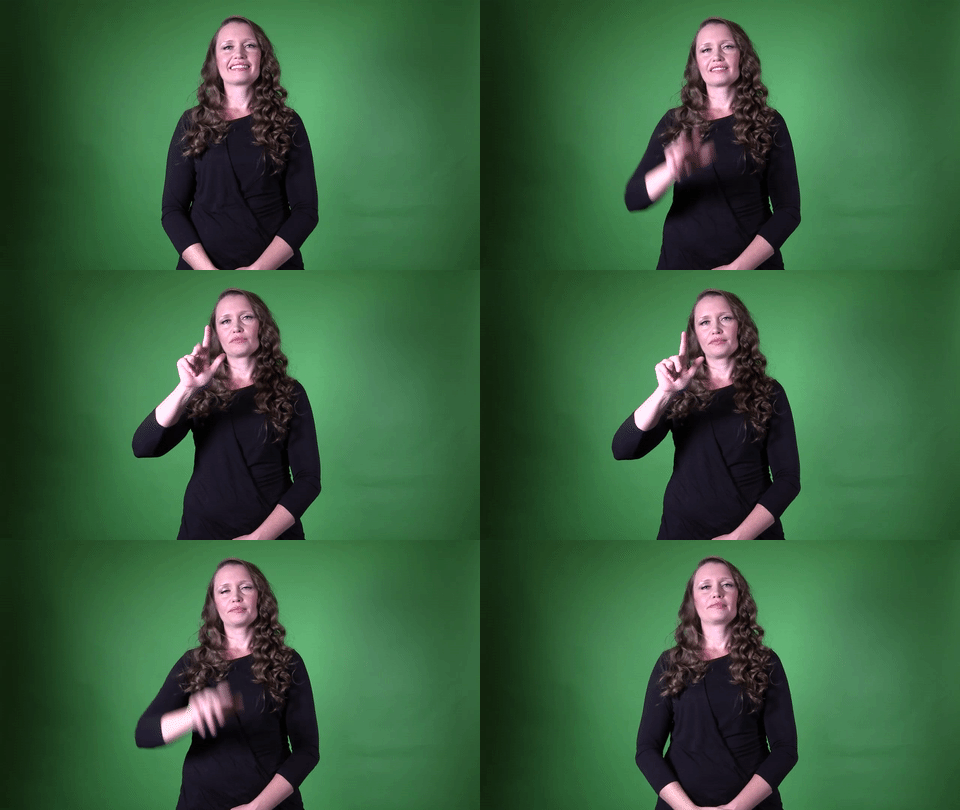
Definition: The number twenty-three
Sign for TWENTY-THREE in ASL

Practice Activities:
Practicing the sign for twenty-three in ASL can be made fun and interactive with various exercises. Start by isolating the movement with repetition, holding up your dominant hand in a “2” shape and transitioning smoothly into a “3” shape with your index and thumb staying extended while the middle finger moves up and down. Try signing it slowly and then gradually increasing speed while maintaining clarity.
Use the sign for twenty-three in ASL in real-life contexts. Count aloud from twenty to twenty-five while signing each number, making sure to transition smoothly between them. Try incorporating it into your daily life, such as signing your age or talking about dates. Challenge yourself by flipping through a calendar and signing different dates that contain the number twenty-three.
Engage in storytelling to reinforce the sign for twenty-three in ASL. Create a short scenario where the number might be important, such as talking about a person who is twenty-three years old, celebrating a twenty-third birthday, or discussing an event happening on the twenty-third of a month. If working with a partner, take turns asking each other age-related or schedule-related questions that require this number in response.
For a fun memory game, write numbers between twenty and thirty on index cards and shuffle them. Flip a card and sign the number without saying it aloud, challenging a partner to recognize the sign. Another engaging activity is numbering a list of your top five favorite things but ensuring that one of them is in the twenty-three spot. Then, explain in ASL why that choice belongs in that position.
Record yourself signing numbers from twenty to thirty in order, paying close attention to the transition for twenty-three. Watching your footage can help you refine the movement and clarify any awkward transitions. Repetition and real-life applications will make recalling this number effortless.
Cultural Context:
The sign for twenty-three in ASL is an essential part of everyday communication in American Sign Language. Numbers are frequently used in conversations, whether discussing age, money, time, or counting objects. Learning the sign for twenty-three in ASL helps build fluency and confidence in using numbers naturally.
ASL numbers follow unique patterns that differ from spoken English, making them an important aspect of cultural identity in the Deaf community. The sign for twenty-three in ASL combines elements of other numerical signs, demonstrating the efficiency of ASL’s structure. Mastering this sign improves understanding of how ASL incorporates movement and handshape variations in counting.
Deaf culture values clear and expressive signing, especially with numbers, because they are used so often. The sign for twenty-three in ASL, like other numbers, needs to be signed with clarity to avoid confusion. Proper handshape and palm orientation ensure the number is understood in conversations, whether discussing birthdays, schedules, or prices.
ASL numbers are also widely used in sports, classrooms, and business settings. The sign for twenty-three in ASL is especially relevant when referring to ages, jersey numbers, or measurements. Knowing how to sign numbers correctly makes communication smoother in both casual and professional interactions.
Numbers in ASL have a rhythm that becomes natural with practice. The sign for twenty-three in ASL follows the numerical flow that users become accustomed to over time. Recognizing patterns in ASL numbers helps improve signing speed and accuracy.
Learning the sign for twenty-three in ASL is useful for both Deaf and hearing individuals who want to communicate effectively in sign language. Whether ordering food, talking about years, or referring to quantities, knowing how to sign numbers helps with everyday interactions. The more a signer practices, the more natural and fluent their use of numbers becomes.
The complexity of ASL numbers showcases the language’s visual and spatial nature. The sign for twenty-three in ASL is a great example of how numbers are structured efficiently to fit the needs of signers. Understanding this structure deepens appreciation for ASL as a complete and expressive language.
From casual chats to academic settings, numbers play a vital role in communication. The sign for twenty-three in ASL allows signers to convey precise information without needing written or spoken words. Becoming comfortable with ASL numbers enhances both comprehension and expressive ability in sign language.
Using the sign for twenty-three in ASL correctly also demonstrates respect for the language and Deaf culture. Accurate signing
Extended Definition:
The sign for twenty-three in ASL is a combination of hand movements that represent the number in American Sign Language. This sign is commonly used in conversations, storytelling, and when discussing quantities or numbers. Learning how to properly form the sign for twenty-three in ASL helps improve communication with the Deaf community.
To make the sign for twenty-three in ASL, start by holding up your dominant hand with your palm facing forward. Extend your index and middle fingers while keeping your ring and pinky fingers folded down, with your thumb extended. Quickly move your middle and index fingers up and down in a slight, alternating motion.
The sign for twenty-three in ASL is visually distinctive and follows the pattern of signing numbers in the twenties. It is similar to the sign for twenty-two, but instead of repeating the whole hand movement, only the two extended fingers move. Mastering this number sign is helpful when counting, providing addresses, discussing prices, or sharing personal details like age.
Understanding the sign for twenty-three in ASL is important for both new learners and fluent signers. Numbers are frequently used in daily interactions, making it helpful to practice and become comfortable with them. Consistent practice with numbers will improve signing fluency and boost confidence in communication.
Like all ASL signs, the sign for twenty-three in ASL relies on clear hand shapes and motion. Proper hand positioning and finger movement ensure the sign is understood correctly. Watching native signers or using ASL dictionaries can help perfect the movement and avoid common mistakes.
ASL numbers follow a logical flow, and the sign for twenty-three in ASL fits within this numerical system. Recognizing patterns in sign language numbers makes learning them easier and more intuitive. Many ASL learners find that practicing in front of a mirror or recording themselves helps with refining signs.
The sign for twenty-three in ASL can be used in many different scenarios. Whether giving a phone number, discussing a countdown, or sharing personal details, this sign is essential. Practicing it alongside other number signs will help retain the movements and make signing smoother.
Learning ASL numbers, including the sign for twenty-three in ASL, can strengthen overall signing skills. Fluency in numbers supports conversations involving math, time, and everyday topics. It also promotes greater engagement with the Deaf community and creates more meaningful interactions.
When signing the sign for twenty-three in ASL, keep your hand relaxed to ensure smooth finger movement. Stiff fingers can make the sign look unnatural, so staying flexible
Synonyms: twenty-three, number twenty-three, number 23, the number 23, the number twenty-three
Educational resources: Find related learning materials in our course bank!
Want more? Check out some of our popular learning activities on the homepage!
Need to look up a sign? Use our highly rated dictionary: https://aslinteractive.com/best-asl-dictionary/
Follow us on tiktok: https://www.tiktok.com/@aslinteractive. More social media links at the bottom of this page!
Long-tail Keywords: What is the sign for Twenty-three in ASL, How do you sign Twenty-three in ASL, Step-by-step guide to signing Twenty-three in American Sign Language
Categories: Numbers – Basics, Numbers 21-30, cardinal numbers
tags: Numbers 21-30, Numbers, Language Learning, Math, Education
Parameters
*Handshape*:
The sign for TWENTY-THREE in ASL uses the extended index and middle fingers of the dominant hand, while the thumb remains separate. The hand starts in a relaxed position with the palm facing forward. To produce the sign for TWENTY-THREE in ASL, the index and middle fingers alternately flex twice while the thumb remains stationary. This handshape is distinct from other number signs and requires precise finger movement for clarity.
*Palm Orientation*:
The sign for TWENTY-THREE in ASL is produced with the palm facing forward ✋. The dominant hand forms the number 3, with the index, middle, and thumb extended while the ring and pinky fingers remain tucked. The index and middle fingers alternatively bend and straighten in a slight flicking motion. Keeping the palm outward ensures clear visibility and proper formation for accurate sign recognition.
*Location*:
The sign for twenty-three in ASL is formed in the neutral space in front of the chest. The dominant hand is positioned with the palm facing outward, and the index and middle fingers are extended. The thumb moves twice in a tapping motion against the palm while the two extended fingers remain in place. The movement happens in front of the signer’s torso, ensuring clear visibility for the receiver.
*Movement*:
To produce the sign for twenty-three in ASL, begin by extending the index and middle fingers of your dominant hand while keeping the other fingers curled into your palm. Position your hand in front of your chest with the palm facing forward. Flick the middle finger up and down twice while keeping the index finger extended. This movement distinguishes the sign for twenty-three in ASL from other similar number signs.
*Non-Manual Signals*:
When using the sign for twenty-three in ASL, the eyebrows remain neutral unless emphasizing the number, in which case they may raise slightly. The mouth typically stays relaxed, but some signers may mouth “twenty-three” for clarity. Eye contact is maintained with the conversational partner, ensuring the sign is clearly received. Head movement is minimal, though a slight nod may occur when confirming or emphasizing the number.
*Prosody, Dominant/Non-Dominant Hand*:
The sign for TWENTY-THREE in ASL is made using the dominant hand. Start with the palm facing outward, forming the number 2 with the index and middle fingers extended while the thumb, ring, and pinky fingers remain folded. Then, transition into the number 3 by extending the thumb outward while the index and middle fingers flutter up and down slightly. The non-dominant hand is not used for this sign.
Tips for Beginners:
When learning the sign for TWENTY-THREE in ASL, focus on keeping your hand steady while using the correct movement. This sign uses the palm-forward position, where the index and middle fingers move up and down alternately. Avoid stiff or exaggerated motions, as this can make the sign unclear or confusing.
A common mistake beginners make is using too much movement in the hand or fingers. The motion should be small and controlled to maintain accuracy. Practicing in front of a mirror can help you refine the movement and ensure your handshapes stay consistent.
Finger positioning is crucial when signing numbers in ASL. For the sign for TWENTY-THREE in ASL, be sure not to spread the index and middle fingers too far apart. A slight separation is enough to keep the sign readable without straining your hand.
Hand orientation matters when signing numbers, so always keep your palm facing forward. If you accidentally turn your palm inward or sideways, it may look like a different number. Watching videos or practicing with a fluent signer can help reinforce the correct palm orientation.
Try to relax your hand while signing to avoid unnecessary stiffness. If your fingers feel tight or strained, take breaks and stretch your hand. This will help improve flexibility and make the sign look more natural.
Repetition is key to mastering the sign for TWENTY-THREE in ASL. Practice in different lighting conditions to ensure your signing remains visible and clear. Signing frequently in real conversation will help you gain confidence and fluency.
Finally, be patient with yourself as you learn. Numbers in ASL may feel tricky at first, but with practice, they will become second nature. Keep practicing, and soon you’ll sign TWENTY-THREE smoothly and accurately.
Connections to Other topics:
The sign for twenty-three in ASL connects to other number signs in the twenties series. Like other numbers in this range, it follows a handshape pattern that builds on previous numbers, demonstrating ASL’s logical numerical system. Learning the sign for twenty-three in ASL helps in understanding how numbers are modified using finger movements, reinforcing muscle memory for related signs like twenty-one, twenty-two, and twenty-four.
Numbers in ASL are often used in counting sequences, age descriptions, dates, and quantifying objects. The sign for twenty-three in ASL fits into these contexts seamlessly, allowing signers to communicate precise numerical values. It also becomes essential when discussing sequences such as sports jersey numbers, addresses, and lists. When paired with classifiers, numbers like twenty-three can describe the quantity of objects, movements, or groupings.
The structure of the sign for twenty-three in ASL highlights one of ASL’s common features—wiggling fingers to indicate specific numbers. Other signs that use similar motion include those for twenty-five and variations of the three-handshape in different contexts. Recognizing this repetition in numerical signs helps in understanding how ASL modifies handshapes dynamically to convey meaning.
Beyond numbers, the sign for twenty-three in ASL supports broader discussions about mathematical concepts. It can be incorporated into learning activities for arithmetic, percentages, and division. It also appears in discussions about history, such as years or numbered events. Mastery of signs like twenty-three enhances fluency in discussions requiring numerical specificity, improving overall ASL comprehension.
Summary:
The sign for twenty-three in ASL is a two-digit number sign that relies on movement to differentiate it from other numbers. It is formed by beginning with the palm facing outward and the index and middle fingers extended while the thumb touches the palm. The motion involves wiggling the middle finger up and down while keeping the index finger still.
This sign follows the sequential numbering system of ASL, closely relating to the signs for twenty, twenty-one, and twenty-two. The numbering system in ASL frequently uses handshape and motion instead of static symbols, making it visually distinct from spoken languages. Because of this, recognizing number signs requires attentiveness to subtle changes in movement.
The sign for twenty-three in ASL is not only rooted in handshape and movement principles but also considered highly efficient for quick numerical communication. Numbers in ASL often integrate into daily interactions such as discussing ages, dates, money, addresses, and quantities. The numerical system in ASL ensures clarity in contexts ranging from casual discussions to academic and professional settings.
Number signs, including twenty-three, adhere to a specific structure that ensures consistency and ease of understanding. The way fingers move for twenty-three reflects the phonemic structure of ASL, where individual components of movement, orientation, and finger selection contribute to meaning. Numerical fluency in ASL enhances communication efficiency, particularly in contexts like banking, education, and transactions.
Different countries have variations in their signed number systems, but the sign for twenty-three in ASL generally remains consistent across American and Canadian Deaf communities. Some regional dialects within ASL may exhibit slight differences in number articulation, but the fundamental signs for 20-30 are widely standardized. Learning numbers in ASL provides a foundation for signing larger numerical expressions fluently.
The historical development of ASL numbers traces back to early sign languages and adaptations from French Sign Language (LSF). Over time, ASL has optimized number signs, including twenty-three, for speed and fluidity, helping signers communicate effortlessly. Unlike spoken numeral systems, signed numbers incorporate kinetic motion, making them immediately recognizable within a visual language framework.
The sign for twenty-three in ASL is particularly useful in everyday settings such as giving phone numbers, discussing prices, or sharing measurements. Being able to sign numbers comfortably increases accessibility for Deaf and hard-of-hearing individuals, promoting independence in tasks like shopping, scheduling, and formal documentation. Mastery of number signs is essential when engaging in higher-level ASL grammar related to mathematics, science, and business transactions.
One reason number signs like twenty-three are visually dynamic is that ASL prioritizes efficiency and spatial recognition. The movement of the middle finger during the sign ensures that numbers are not easily confused with others that share similar handshapes. This concept aligns with ASL’s phonological rules, where movement and orientation differentiate similar signs.
Deaf culture emphasizes numerical fluency as an essential part of social and professional engagement. Whether discussing sports scores, legal details, or family traditions, the ability to use numerical signs fluidly is integral to clear and meaningful interaction. The sign for twenty-three in ASL represents the broader role of numerical information in the visual language community.
ASL learners frequently practice number signs early in their studies because they appear in numerous conversational scenarios. Mastering the sign for twenty-three helps build confidence in understanding other related number signs while reinforcing the ability to manipulate fingers independently. Like any language, fluency in ASL numbers requires consistent practice and exposure to real-world signing situations.
One challenge for new signers is ensuring that the movement of the sign for twenty-three is clear and distinct from the sign for twenty-two or twenty-four. The small difference in movement between these numbers means precision is necessary to avoid confusion. Hand dexterity plays an important role in signing numbers smoothly and effectively.
The pattern used in signing twenty-three follows a general rule applied to numbers in the 20s, making it easier for learners to recognize and remember. ASL employs visual mnemonics to enhance memory retention, which benefits those acquiring signed numbers as part of their larger linguistic development. Number fluency in ASL leads to a better grasp of time-related concepts, spatial descriptions, and measurements.
Technology has influenced how the Deaf community uses numbers, especially for digital communication and banking. The sign for twenty-three in ASL may frequently appear in video calls, online transactions, and educational environments. Understanding number signs allows for seamless interactions in digital and in-person contexts alike.
Many ASL instructors incorporate number storytelling games to help reinforce numerical fluency. The motion of the middle finger in the sign for twenty-three gives learners a kinesthetic method to associate numbers through movement rather than memorization alone. Engaging in fun, interactive number activities strengthens retention and accuracy.
Numbers hold cultural significance in different communities, and ASL is no exception. Some numbers may have symbolic or personal meanings within the Deaf community, emphasizing shared experiences and traditions. Learning numbers in
Want more? Check out some of our popular learning activities!
ASL Interactive Resources
ASLInteractive YouTube Channel
Follow us on tiktok: @aslinteractive.com
Follow us on Instagram: aslinteractive
Facebook page: aslinteractive
Facebook group: aslinteractive
LInkedIn: ASL Interactive LLC
Twitter: @ASL_interactive
*Some information on this page is AI-generated. AI can make mistakes. Please check the information.


Responses