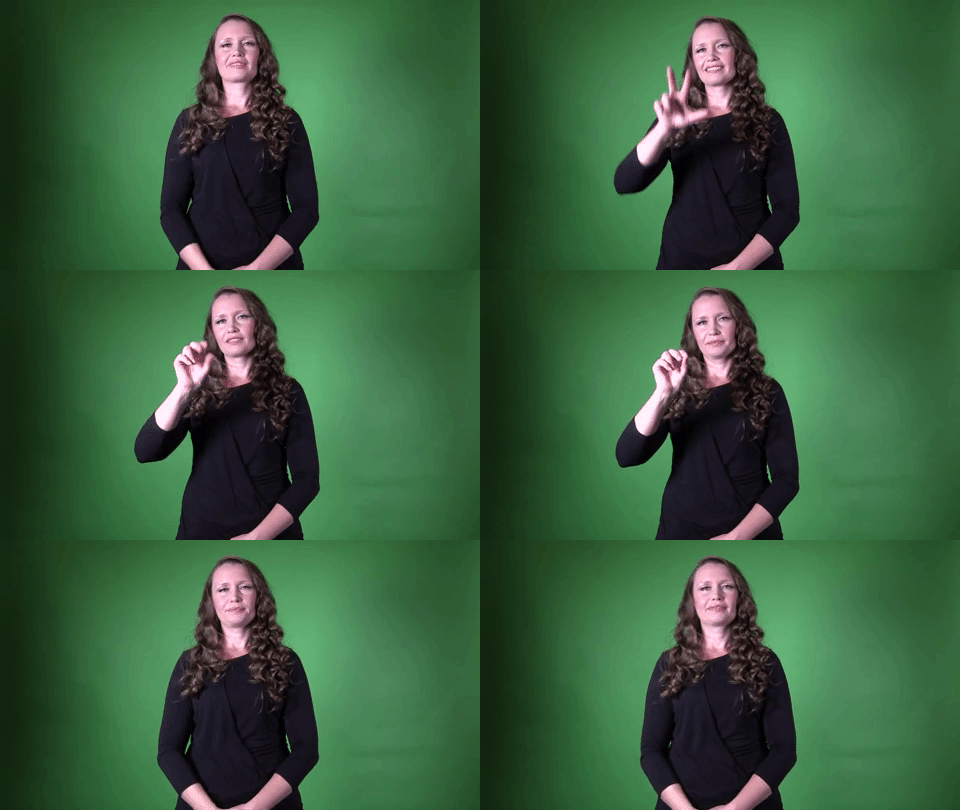
Sign for THE NUMBER THIRTY in ASL | Learn the Sign for THE NUMBER THIRTY in ASL ✅ The #1 Best Guide for Success!

Definition: Refers to the number thirty

Sign for THE NUMBER THIRTY in ASL 

YouTube player

Practice Activities:

To practice the sign for the number thirty in ASL, start by signing it repeatedly in front of a mirror. Observe your handshape and movement to ensure accuracy. Try signing it at different speeds while maintaining clarity and precision.

Incorporate the sign for the number thirty in ASL into counting exercises. Count from one to forty, pausing at thirty to emphasize the correct formation. Then, count backward from forty to one, reinforcing the number’s placement within numerical sequences.

Use the sign for the number thirty in ASL in real-life contexts. Practice stating your age if applicable or sign imaginary prices when pretending to shop. You can also ask and answer questions involving thirty, such as “How many push-ups can you do?” and reply with the number.

Partner activities can enhance fluency with the sign for the number thirty in ASL. One person asks questions about numbers, and the other responds in ASL. Try playing number bingo, where a caller signs numbers and players mark their cards.

For storytelling practice, create a short story that includes the number thirty. It could be about a thirty-minute wait, a thirty-mile journey, or thirty objects in a collection. As you sign, focus on fluency and natural transitions between signs.

A fun way to reinforce memorization is through games. Try a speed-challenge activity where you and a friend sign numbers quickly back and forth, making sure to include the sign for the number thirty in ASL. The goal is to sign accurately while increasing speed.

To improve comprehension, watch ASL videos featuring numbers and try to identify when the number thirty appears. Recreate the segments using your own signing. Recording yourself can also help you analyze your accuracy and make adjustments.

Cultural Context:

American Sign Language is a rich and expressive language that incorporates number signs into everyday communication. The sign for the number thirty in ASL is commonly used in various contexts, from counting to expressing ages, dates, and quantities. Understanding number signs is essential for fluency in ASL and helps create smoother conversations.

The number system in ASL follows a logical pattern, making it easy to learn once you recognize the structure. The sign for the number thirty in ASL uses a combination of finger movements that align with other number signs. Learning this sign, along with other numbers, improves comprehension and confidence in signing.

Numbers are a key part of daily conversations in the Deaf community. Whether discussing time, money, or age, knowing the sign for the number thirty in ASL ensures clarity in communication. Mastering numbers is a fundamental step toward increasing ASL fluency.

When signing numbers, handshape and movement are crucial for accurate signing. The sign for the number thirty in ASL follows the same structure as other multiples of ten. By practicing this sign along with related numbers, signers can develop a natural flow in ASL communication.

ASL numbers are frequently used in education, work, and social settings. The sign for the number thirty in ASL is often seen in classrooms, especially in math discussions or when referring to historical dates. Knowing these number signs allows signers to engage more fully in different conversations.

Many ASL learners find number signs particularly useful when discussing schedules. Expressing the sign for the number thirty in ASL can be important when stating times, such as 30 minutes past the hour. Mastering these numerical signs ensures clear and effective communication in conversations about time.

In Deaf culture, precise signing is important for maintaining understanding. The sign for the number thirty in ASL follows a distinct movement that differentiates it from similar numbers. Learning number signs properly helps avoid confusion and enhances communication skills.

Practicing number signs regularly helps with memorization and recall. The sign for the number thirty in ASL is easy to learn with repetition and proper technique. Incorporating number practice into daily ASL use strengthens signing ability and comprehension.

Numbers are a universal aspect of communication, and ASL provides a visual way to express them. The sign for the number thirty in ASL is just one example of how numerical signs are integrated into conversations. Expanding number vocabulary is an essential part of becoming proficient in ASL.

The ability to sign numbers fluently opens the door to more advanced conversations in AS

Extended Definition:

The sign for the number thirty in ASL is a combination of the numbers three and zero. It is a common numerical sign used in various contexts, including counting, age, time, and measurements. Learning to sign this number correctly is essential for clear communication in American Sign Language.

To sign the number thirty in ASL, start by forming the number three with your dominant hand. Then, transition into the sign for zero by closing your fingers into an “O” shape. This movement should be fluid to maintain natural signing flow.

Numbers play a vital role in ASL, and understanding them improves overall fluency. The sign for the number thirty in ASL is used frequently in everyday conversations. It appears in discussions related to money, addresses, dates, and more.

American Sign Language numbers follow specific patterns that make learning them easier. The number thirty fits into the group of two-digit numbers that combine single-digit signs. Practicing these signs consistently helps with speed and accuracy in ASL communication.

When signing, hand placement and movement are important for clarity. The sign for the number thirty in ASL should be done at chest level with a steady motion. Keeping a neutral facial expression is typical unless context requires emphasis.

Numbers in ASL are often used in combination with other signs for complete sentences. The sign for the number thirty in ASL can appear in phrases like “thirty minutes” or “thirty dollars.” Understanding number signs enhances overall comprehension and expressive skills.

For beginners, repetition is key to mastering this number sign. Watching native signers or ASL videos can help reinforce the proper technique. The more often you use the sign for the number thirty in ASL, the more natural it will feel.

Different sign variations may exist, but the standard form is widely accepted. Regional influences might slightly alter the execution of the number sign. However, the general structure of the sign remains the same across most ASL users.

Learning the sign for the number thirty in ASL contributes to better numerical literacy in sign language. It helps when discussing scores, prices, measurements, and even storytelling. Accuracy in signing numbers ensures effective communication with the Deaf community.

ASL numbers follow logical patterns that make them easier to remember. Once you learn the sign for the number thirty in ASL, other numbers in the same range become easier to pick up. Regular practice leads to faster recognition and comfortable signing.

Teaching number signs to children or new ASL learners strengthens

Synonyms: thirty, number thirty, number 30, the number 30, the number thirty

Educational resources: Find related learning materials in our course bank!

Want more? Check out some of our popular learning activities on the homepage!

Need to look up a sign? Use our highly rated dictionary: https://aslinteractive.com/best-asl-dictionary/

Follow us on tiktok: https://www.tiktok.com/@aslinteractive. More social media links at the bottom of this page!

Long-tail Keywords: what is the sign for the number thirty in asl, how do you sign the number thirty in american sign language, learn how to sign the number thirty in asl

Categories: Numbers – Basics, Numbers 21-30, cardinal numbers

tags: Numbers 21-30, Numbers, Math, Language Learning, Educational

Parameters

*Handshape*:

The sign for the number thirty in ASL uses a combination handshape that moves smoothly. It begins with the number three handshape, where the index, middle, and thumb are extended, while the ring and pinky fingers remain folded. Then, it transitions into the number zero handshape by bringing the extended fingers together, forming an “O” shape. This movement is fluid, ensuring clarity when signing the sign for the number thirty in ASL. ✋

*Palm Orientation*:

The palm orientation for the sign for the number thirty in ASL begins with the hand facing forward. The thumb and index finger touch to form an “O” shape while the remaining fingers stay extended. The movement involves tapping the thumb and index together twice in a repeated motion. Throughout the sign for the number thirty in ASL, the palm remains oriented outward toward the viewer for clarity and accuracy.

*Location*:

The sign for the number thirty in ASL is produced in the neutral space in front of the body, typically at chest level. The movement occurs within this personal signing space, ensuring visibility for the receiver. When signing the number, the dominant hand moves in a clear and controlled manner, maintaining a comfortable position without extending too far from the torso.

*Movement*:

To sign for the number thirty in ASL, start with the number three handshape, extending the index, middle, and thumb while keeping the ring and pinky fingers down. Then, smoothly transition to a zero handshape by bringing the index and middle fingers down to meet the thumb. This motion should be fluid and repeated once or twice to ensure clarity. ✅ Keep the movement small and controlled for accuracy.

*Non-Manual Signals*:

Facial expressions remain neutral or slightly focused when signing the sign for the number thirty in ASL. Maintaining steady eye contact with the communication partner ensures clarity. Eyebrows may be slightly relaxed unless emphasizing or questioning the number.

Mouth movements might naturally follow the number’s shape, but no exaggerated mouthing is required. If used within a sentence, slight head tilts or pauses can provide additional emphasis. The sign for the number thirty in ASL should be fluid, avoiding unnecessary tension in the face.

*Prosody, Dominant/Non-Dominant Hand*:

The sign for the number thirty in ASL is produced using the dominant hand. Begin with the number three handshape (index, middle, and thumb extended), then transition to the number zero handshape by bringing the index and middle fingers down to meet the thumb. This movement is repeated in a quick, fluid motion. The non-dominant hand is not used in the sign for the number thirty in ASL.

Tips for Beginners:

When learning the sign for the number thirty in ASL, focus on clear finger positioning and movement. This sign is a combination of the number three and the number zero. Begin by forming the number three with your dominant hand, keeping the index, middle finger, and thumb extended while the ring and pinky fingers stay folded. Then, transition by bringing your fingers together into a closed zero shape.

A common mistake is making the transition too slowly, which can make the sign harder to recognize. Try to make the shift from three to zero smooth and natural to avoid hesitation. Another issue is finger placement—be sure the “three” shape is clear before moving to the zero to prevent confusion with similar signs. Practicing repeatedly in front of a mirror can help refine your fluidity.

Finger dexterity is key for the sign for the number thirty in ASL. If you struggle with quickly forming the zero, try strengthening your fingers with simple exercises like tapping each finger to your thumb or opening and closing your hand in a controlled motion. Using both hands to shape the sign initially can also provide guidance, but remember to practice with only your dominant hand.

Context also matters when signing numbers in ASL. If you are counting or giving information that includes thirty, ensure your hand is positioned naturally in your signing space, not too high or too low. Keep your palm orientation consistent with how you usually sign numbers for clarity. Watching native signers or recorded demonstrations can help reinforce correct technique.

By focusing on finger accuracy, smooth transitions, and proper hand placement, you can master the sign for the number thirty in ASL more effectively. Regular practice and real-life application will build confidence and fluency over time.

Connections to Other topics:

The sign for the number thirty in ASL is part of the broader numeral system, which follows a logical pattern in ASL number formation. It involves the use of the palm-forward orientation, similar to other multiples of ten. Understanding this sign helps learners become more comfortable with ASL number sequences, especially when dealing with ages, prices, and quantities. Many higher numbers in ASL build upon smaller numbers in predictable ways, making it easier to learn counting systematically.

The sign for the number thirty in ASL is linked to signs for related numerical concepts, such as time, money, and math functions. Numbers in ASL often follow similar handshape transitions, and understanding these similarities makes it easier to sign larger numbers. This knowledge is useful for discussing dates, such as “thirty days in a month,” or talking about anniversaries and birthdays. Practicing smooth number transitions also improves fluency in everyday conversations.

Because ASL has a unique way of forming compound terms, numbers often combine with classifiers to indicate quantity or sequence. For example, when counting objects, the sign for the number thirty in ASL may be incorporated into a classifier to show a group of thirty items. Similarly, in financial discussions, this number might appear in contexts such as “$30” or “30 percent” with modified movement. Understanding how to modify numbers within different contexts ensures clarity in communication.

Numbers are also crucial in storytelling, measurements, and ranking systems. The sign for the number thirty in ASL appears when discussing historical dates, ages, or temperatures. It can also be seen in sports when referring to a player’s jersey number or a game score. By mastering numbers like thirty in ASL, signers develop confidence in numerical discussions and enhance their overall communication skills in ASL.

Summary:

The sign for the number thirty in ASL is produced using a combination of the digits three and zero. The dominant hand forms the number three with the index, middle, and thumb extended while the ring and pinky fingers remain tucked. Then, the hand transitions into a zero shape by bringing the three fingers together, forming an “O” shape.

The motion is fluid, without unnecessary pauses. The shift from three to zero happens naturally and quickly. This sign is part of the unique number system in ASL that blends clarity with efficiency.

Numbers in ASL have a structured system that allows for rapid communication. The sign for the number thirty in ASL follows the pattern commonly used for multiples of ten. This pattern ensures easy understanding and quick signing.

ASL numbers can vary slightly depending on regional dialects and signing styles. Some signers may make the transformation from three to zero more pronounced than others. The key to accurate communication is using a smooth and natural movement.

This sign belongs to the broader category of cardinal numbers in ASL. Cardinal numbers represent basic counting and quantity expressions. Understanding such numbers is fundamental for conversations involving age, money, and measurements.

Numbers play an essential role in both casual and formal signing. The sign for the number thirty in ASL may appear in discussions about age, price, time, or quantity. Proficiency in number signs improves overall fluency in ASL.

Different numerical categories influence how signs are executed. Cardinal, ordinal, and other numbering systems follow particular patterns. ASL users learn these patterns to navigate conversations efficiently.

ASL numbers incorporate linguistic nuances that reflect movement economy. The transition from three to zero is one example of this economy. By using minimal effort, signers can convey numbers quickly and effectively.

The cultural use of numbers in ASL includes storytelling, historical references, and community events. The sign for the number thirty in ASL might be used to discuss historical anniversaries or personal milestones. Numbers hold significance beyond simple counting.

Historical events within the Deaf community sometimes emphasize particular numbers. If an event happened thirty years ago, this sign would provide context. The ease of numerical representation strengthens discussions about history.

ASL learners often practice numbers in sequences to build fluency. Mastering the sign for the number thirty in ASL is an essential step in learning larger numbers. The smooth transition prepares learners for handling higher multiples.

Numbers frequently appear in educational settings, such as classrooms and presentations. Teachers use the sign for the number thirty in ASL when giving examples or assigning problems. Clear numerical signing ensures comprehension among students.

Sports discussions often involve numerical signs. The sign for the number thirty in ASL might be used to reference a player’s jersey number, score, or time left in a game. Rapid numerical fluency is valuable in these contexts.

In financial settings, number signs play a crucial role. Conversations about budgets, pricing, and income often require quick numerical expression. The sign for the number thirty in ASL may be used when discussing totals or cost estimates.

Phone numbers and addresses use a different numbering style in ASL. The sign for the number thirty in ASL would be presented clearly when identifying a location or contact detail. Numbering order follows specific signing conventions.

Age is another common context for numerical signs. Someone may indicate that they are thirty years old using this sign. Age-related conversations use cardinal numbers for clarity.

Ordinal numbers modify cardinal signs to indicate sequence. The sign for the number thirty in ASL differs from thirty-first, which adds a slight modification. This distinction is crucial for discussions involving dates or rankings.

ASL incorporates symmetrical hand patterns for some numbers, but thirty follows a sequential form. The change from three to zero ensures clarity in communication. This sequence matches other tens-based numbers like twenty or forty.

The efficiency of number transitions in ASL reflects broader linguistic principles. By minimizing hand movement, ASL optimizes communication speed. The sign for the number thirty in ASL exemplifies this efficiency.

In casual conversation, signers may abbreviate movements slightly if context makes the number clear. Skilled signers maintain clarity even with slight variations. The goal is always effective communication.

The usage of numerical signs spans across many fields, including law, medicine, and technology. In medical discussions, the sign for the number thirty in ASL may refer to dosages, wait times, or test results. Precision is essential in such fields.

Grammatical placement of numbers follows standard ASL syntax rules. The sign for the number thirty in ASL may come before or after a noun, depending on the sentence structure. Understanding numerical placement aids in forming grammatically correct expressions.

Some numbers have alternate variations in ASL, particularly for years and addresses. The sign for the number thirty in ASL generally remains consistent across contexts. However, learning number variations improves language adaptability.

Linguistic research in ASL has analyzed how

Want more? Check out some of our popular learning activities!

ASL Interactive Resources

ASLInteractive YouTube Channel

Follow us on tiktok: @aslinteractive.com

Follow us on Instagram: aslinteractive

Facebook page: aslinteractive

Facebook group: aslinteractive

LInkedIn: ASL Interactive LLC

Twitter: @ASL_interactive

*Some information on this page is AI-generated. AI can make mistakes. Please check the information.

Sign for NUMBER 30 in ASL, Sign for THE NUMBER 30 in ASL, Sign for THE NUMBER THIRTY in ASL 

Responses