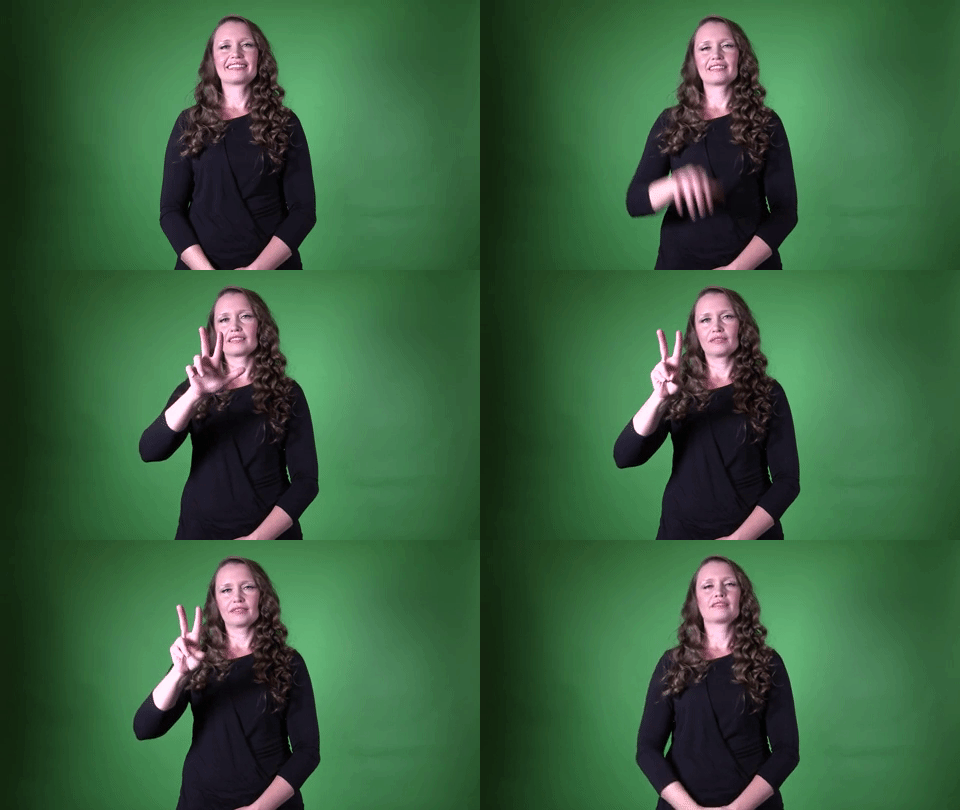
Definition: Refers to the number thirty-two
Sign for NUMBER THIRTY-TWO in ASL

Practice Activities:
Practicing the sign for number thirty-two in ASL can start with isolated repetition. Hold up your dominant hand and alternate between the three and two handshapes quickly. Do this while looking in a mirror to ensure accuracy. Repeat the number aloud or in your mind as you sign to reinforce memory.
Try signing the number in a sequence with other numbers. Count from thirty to thirty-five, pausing to ensure clarity on the sign for number thirty-two in ASL. Mix up the order by having a partner randomly ask for numbers between thirty and forty, ensuring quick recognition and recall.
Apply the number in everyday contexts. Imagine you are telling someone your age, giving a sports jersey number, or announcing a sale price of thirty-two dollars. Sign a short sentence like “I have thirty-two books” or “Room thirty-two is on the left.” Practice making up your own examples using the number.
Work with a partner to quiz each other. One person will sign a number between thirty and forty, and the other has to sign back the correct number in response. Then, switch roles. This encourages speed and improves fluency with different number signs.
Create a story incorporating numerical details. For example, describe a birthday party with thirty-two guests or a classroom with thirty-two desks. Sign the story to a friend or record yourself to check for clarity. The more you use the sign for number thirty-two in ASL in context, the more easily it will become part of your signing vocabulary.
For a fun challenge, try playing a number bingo game using signs instead of verbal numbers. This will help with rapid recognition and production while making practice more engaging.
Cultural Context:
The sign for number thirty-two in ASL is part of the numbering system used in American Sign Language, combining the digits three and two in a fluent motion. Numbers play a significant role in daily communication, from giving addresses to counting and telling time. The sign for number thirty-two in ASL follows the general rule of forming numbers in sequence while maintaining clarity and accuracy.
American Sign Language uses a consistent structure for numbers, making it easier for signers to recognize patterns. The sign for number thirty-two in ASL follows the common way of signing two-digit numbers, ensuring smooth visual understanding. Learning ASL numbers helps in various situations, such as financial transactions, sports scores, and classroom settings.
In Deaf culture, numbers hold special importance in storytelling, games, and historical references. The sign for number thirty-two in ASL may come up in discussions about age, prices, sports rankings, or any situation that requires numerical expression. Fluency in ASL numbers allows signers to communicate efficiently, especially when sharing precise details.
Practicing the sign for number thirty-two in ASL can improve finger coordination and muscle memory. Signing numbers quickly and accurately enhances overall communication skills in ASL. Learning and using numbers frequently helps both beginners and fluent signers stay comfortable with numerical expressions.
ASL numbers are essential for engaging in conversations with the Deaf community. The sign for number thirty-two in ASL, like other numbers, follows a logical sequence that makes counting in ASL both practical and intuitive. Increasing awareness of ASL numbering conventions supports better communication and inclusion.
When signing numbers, clarity and consistency are crucial for avoiding misunderstandings. The sign for number thirty-two in ASL must be performed with precise hand movements to ensure proper comprehension. Practicing ASL numbers regularly helps signers build confidence in using them in real-life interactions.
Many educational resources and ASL classes emphasize number fluency as part of essential language skills. The sign for number thirty-two in ASL is just one of many important signs to master when learning American Sign Language. Understanding number signs well contributes to smoother conversations in both casual and professional settings.
Children and adults learning ASL benefit from practicing number signs regularly. The sign for number thirty-two in ASL, along with other numerical signs, is useful for daily communication and academic purposes. Mastering number signs helps build confidence in using ASL for various applications.
Incorporating ASL numbers into everyday practice strengthens overall signing abilities. The sign for
Extended Definition:
The sign for NUMBER THIRTY-TWO in ASL is a combination of the numbers three and two, produced in a fluid motion. It follows the standard number-signing rules in American Sign Language, ensuring clarity and ease of understanding. This sign is commonly used in various contexts, such as counting, referencing addresses, or discussing statistics.
To sign NUMBER THIRTY-TWO in ASL, begin by forming the number three with your dominant hand, then transition smoothly into the number two. The motion is typically a slight wrist movement to change between the two numbers. Maintaining proper handshape and fluid movement is essential for accurate signing.
Understanding ASL numbers, including the sign for NUMBER THIRTY-TWO, is important for effective communication. Whether signing phone numbers, ages, or quantities, knowing how to express numbers correctly improves fluency. Practicing the movement between numbers helps build confidence in using them naturally.
The sign for NUMBER THIRTY-TWO in ASL is part of the broader numerical system in American Sign Language. ASL numbers follow consistent patterns, making it easier to learn multiple numbers once the basics are understood. This structured system allows signers to communicate numerical information efficiently.
When learning the sign for NUMBER THIRTY-TWO in ASL, it is helpful to watch native signers or instructional videos. Observing experienced signers can clarify handshape, motion, and positioning. Repeated practice, preferably in conversations, helps reinforce the movement and maintain accuracy.
ASL numbers, including NUMBER THIRTY-TWO, are signed using one hand following a structured pattern. In everyday conversations, numbers play a significant role in providing important details. Mastering number signs makes communication smoother and more efficient.
Using the sign for NUMBER THIRTY-TWO in ASL correctly ensures that your message is clear to other signers. Accuracy in number signs is particularly important in formal settings like education, business exchanges, or medical situations. Consistently practicing different numbers helps enhance overall fluency in ASL.
The more you practice the sign for NUMBER THIRTY-TWO in ASL, the more naturally it will become part of your signing vocabulary. Signers often use numbers in combination with other signs, so developing strong number-signing skills is beneficial. With patience and regular use, ASL numbers will become second nature in communication.
Synonyms: thirty-two, number thirty-two, number 32, the number 32, the number thirty-two
Educational resources: Find related learning materials in our course bank!
Want more? Check out some of our popular learning activities on the homepage!
Need to look up a sign? Use our highly rated dictionary: https://aslinteractive.com/best-asl-dictionary/
Follow us on tiktok: https://www.tiktok.com/@aslinteractive. More social media links at the bottom of this page!
Long-tail Keywords: what is the sign for Number thirty-two in ASL, how do you sign Number thirty-two in ASL, learn how to sign Number thirty-two in American Sign Language
Categories: Numbers – Basics, Numbers 31-40, cardinal numbers
tags: Numbers 31-40, Numbers, Math, Educational, Language Learning
Parameters
*Handshape*:
The sign for NUMBER THIRTY-TWO in ASL uses a shifting handshape to represent the digits. First, the dominant hand forms a “3” handshape with the index, middle, and thumb extended. Then, it transitions smoothly to a “2” handshape ✌️ with only the index and middle fingers extended. This movement visually represents the number, maintaining clarity and accuracy. The wrist may slightly move to emphasize the change between the two digits.
*Palm Orientation*:
The palm orientation for the sign for NUMBER THIRTY-TWO in ASL begins with the palm facing outward in a neutral position. The hand transitions between the digits three and two, with the palm continuing to face forward throughout the motion. Keeping the palm steady helps maintain clarity while signing the number sequence. Proper orientation ensures the sign for NUMBER THIRTY-TWO in ASL is easily understood by the viewer. ✋
*Location*:
The sign for number thirty-two in ASL is produced in the neutral space in front of the signer, typically at chest level. The dominant hand forms the number three and then transitions to the number two in a quick, fluid motion. This movement maintains a steady position in front of the body, ensuring clarity and readability for the viewer.
*Movement*:
To sign for number thirty-two in ASL, form the number three with your dominant hand, extending the index, middle, and thumb while keeping the ring and pinky tucked. Flick the middle and index fingers down simultaneously to form the number two. This movement is repeated smoothly with a slight bounce, transitioning between three and two. Maintain a relaxed wrist and ensure the motion is clear for easy recognition.
*Non-Manual Signals*:
Facial expression remains neutral or slightly focused when performing the sign for number thirty-two in ASL. The eyebrows stay in a relaxed position unless emphasizing or clarifying the number in context. Eye gaze should remain naturally directed at the conversation partner or toward the signing space to maintain engagement.
A slight head nod can be used to reinforce the numerical sequence during teaching or clarification. If emphasizing, a slight forward movement of the head can add weight to the sign for number thirty-two in ASL. When used in counting or listing, natural rhythm in signing is maintained without excessive exaggeration.
*Prosody, Dominant/Non-Dominant Hand*:
The sign for NUMBER THIRTY-TWO in ASL uses the dominant hand, forming the number “3” with the index, middle, and thumb extended, while the ring and pinky fingers stay down. The hand then transitions into the number “2” by retracting the thumb and keeping just the index and middle fingers extended. This movement is typically done with a small bounce or shift, maintaining palm orientation forward. Keep the motion smooth and natural for clarity. ️
Tips for Beginners:
When learning the sign for NUMBER THIRTY-TWO in ASL, focus on maintaining smooth transitions between the numbers. This sign uses a combination of “3” and “2” in a flicking motion, so be sure to keep your hand steady and fingers clearly formed. Accuracy matters, as unclear finger positions can be mistaken for other numbers.
Practice moving between “3” and “2” without hesitation. Many beginners tend to tense their fingers, making the change awkward. Relax your hand and use a fluid wrist motion to create a natural and confident execution of the sign for NUMBER THIRTY-TWO in ASL.
One common mistake is angling your palm incorrectly. Your palm should face outward, but some learners unintentionally twist their wrists too much or keep their palm facing in. Checking your sign in a mirror or recording a video can help you identify and correct these minor errors.
Finger dexterity is key, especially when switching between numbers quickly. Warm up your fingers before practicing by flexing them and making small circular motions with your wrists. This will help you sign smoothly without stiffness or hesitation, improving your overall ASL fluency.
Consistency is crucial, so make sure you sign the number the same way each time. Watching native signers or using ASL learning apps can reinforce proper technique. The more you expose yourself to the sign for NUMBER THIRTY-TWO in ASL, the more natural it will feel in conversation.
In real-life settings, numbers come up frequently, so practicing them in sequences will improve your recall and speed. Try signing other numbers before and after thirty-two to build confidence. Over time, your fluency with numeric transitions will improve, making your signing more expressive and accurate.
Connections to Other topics:
The sign for NUMBER THIRTY-TWO in ASL connects to broader concepts related to numerals, sequencing, and mathematics. Numbers in ASL follow specific patterns, and the sign for NUMBER THIRTY-TWO in ASL falls within the series of three-digit number signs that combine elements of ASL number formation. Understanding the structure of this sign can help learners recognize patterns in signing two-digit and larger numbers effectively.
The sign for NUMBER THIRTY-TWO in ASL also relates to measurements, dates, and quantities in ASL. For example, numbers are frequently used in contexts such as age, money, and addresses. Learning how the number 32 is signed can improve fluency in discussing statistics, sports scores, and historical dates. Additionally, some signs incorporate numbers to create compound meanings, such as signing an age by incorporating the number sign with the sign for YEAR or OLD.
Ordinal numbers, which indicate sequence (such as 32nd place), are closely related to cardinal numbers. In ASL, ordinal numbers often involve a slight twist of the wrist or an additional movement to indicate order. Understanding how the sign for NUMBER THIRTY-TWO in ASL functions in ordinal form can be helpful when discussing rankings, addresses, and floors in buildings.
Many ASL number signs, including NUMBER THIRTY-TWO in ASL, are influenced by their visual similarity to other signs. Some numerical signs resemble common gestures or handshapes found in other ASL vocabulary, which can help in differentiating closely related signs. By practicing numbers in various contexts, learners can gain fluency in discussing numerical concepts and improve their overall ASL comprehension.
Summary:
The sign for number thirty-two in ASL follows a numerical pattern similar to other double-digit numbers in the 30s. It requires a clear and precise movement to distinguish it from other numbers. Accuracy in handshape, palm orientation, and movement is crucial to avoid confusion.
To sign number thirty-two in ASL, begin with the number three handshape. The palm should face outward, with the index, middle, and thumb extended, while the ring and pinky fingers remain folded. This initial position reflects the number thirty and ensures clarity in conveying the first digit.
The transition to thirty-two involves a shift to the number two handshape. The index and middle fingers extend, while the thumb, ring, and pinky fingers fold. This quick movement between the handshapes for thirty and two creates a fluid numerical expression.
Maintaining a steady palm orientation prevents misinterpretation. Some signers may slightly adjust the palm direction for comfort, but keeping it outward is the clearest approach. Proper execution helps avoid confusion with similar numbers like twenty-three or forty-two.
The movement for number thirty-two in ASL should be smooth and deliberate. A slight bounce or repetition enhances clarity, reinforcing the distinction between the digits. This method mirrors how other compound numbers are signed in ASL.
Numerical signs in ASL require precision due to their role in clear communication. Misarticulation can lead to misunderstandings, especially when discussing quantities, measurements, or identifiers. Practicing number signs regularly improves fluency in numerical expressions.
Numbers in ASL play a significant role in everyday interactions. They appear in contexts ranging from age and addresses to mathematical concepts and time. Learning number signs strengthens overall ASL proficiency and comprehension.
The structure of number signs follows a logical pattern. The numerical system in ASL is based on handshape transitions, making it both efficient and visually clear. Signers benefit from the consistency and predictability of numerical movements.
Historical influences on ASL number signs stem from manual communication systems. Early sign languages incorporated numerical gestures, refined over time into the standardized system used today. These developments showcase the adaptability of ASL.
The sign for number thirty-two in ASL aligns with linguistic patterns observed in other signed languages. Many signed languages use similar numeral structures, although exact handshapes vary. This parallel reflects the universality of visual communication.
Grammar in ASL treats numbers as integral linguistic elements. They function as adjectives when describing quantities and as nouns in standalone contexts. Understanding their placement in sentences enhances signing accuracy.
Spatial awareness plays a role in numerical signs. When discussing multiple numerical values, signers may establish reference points in signing space. This technique helps differentiate and organize numerical data efficiently.
Applying number signs fluently requires consistent practice. Signers often rehearse numbers through counting exercises, sequences, and real-life applications. Engaging in these practices reinforces retention and recall.
The sign for number thirty-two in ASL is crucial for various real-world scenarios. It appears in contexts such as dates, monetary transactions, and statistical discussions. Developing proficiency in this sign enhances overall communication effectiveness.
Number signs often have cultural significance within the Deaf community. They are used in sports scores, addresses, and event planning. This widespread usage emphasizes their importance in both casual and formal interactions.
ASL number signs contribute to language evolution. As new technologies and societal changes impact communication, numerical expressions remain adaptable. The ability to sign numbers efficiently benefits both native and new signers.
The repetition technique used in signing thirty-two is consistent across other double-digit numbers. This method ensures clarity and reduces ambiguity. Mastering this pattern simplifies learning additional numbers.
Handshape transitions in numerical signs reflect key principles of ASL phonology. They involve systematic changes in finger positions, akin to phonemic variations in spoken languages. This similarity emphasizes the structural complexity of ASL.
Numerical cognition and signed language intersect in unique ways. Deaf individuals often display strong spatial reasoning skills, benefiting numerical comprehension. Using sign language for numbers enhances visual memory and cognitive processing.
Fingerspelling occasionally supplements number signs when specifying exact values in certain contexts. However, the sign for number thirty-two in ASL remains the preferred method for conveying this number efficiently. This distinction underscores ASL’s multimodal nature.
Fluency in numerical signs contributes to mathematical communication in ASL. Educators and interpreters utilize number signs to teach and discuss numerical concepts. Enhancing these skills supports educational accessibility for Deaf students.
Signers can reinforce their understanding by practicing sequences that include thirty-two. Combining it with nearby numbers like thirty-one and thirty-three strengthens muscle memory. Repetitive practice builds confidence in numerical signing.
The use of ASL numbers extends beyond conversation into professional fields. Deaf professionals rely on accurate numerical signing in settings such as finance, science, and healthcare. Mastering number signs supports career opportunities and workplace communication.
Number signs can also incorporate non-man
Want more? Check out some of our popular learning activities!
ASL Interactive Resources
ASLInteractive YouTube Channel
Follow us on tiktok: @aslinteractive.com
Follow us on Instagram: aslinteractive
Facebook page: aslinteractive
Facebook group: aslinteractive
LInkedIn: ASL Interactive LLC
Twitter: @ASL_interactive
*Some information on this page is AI-generated. AI can make mistakes. Please check the information.


Responses