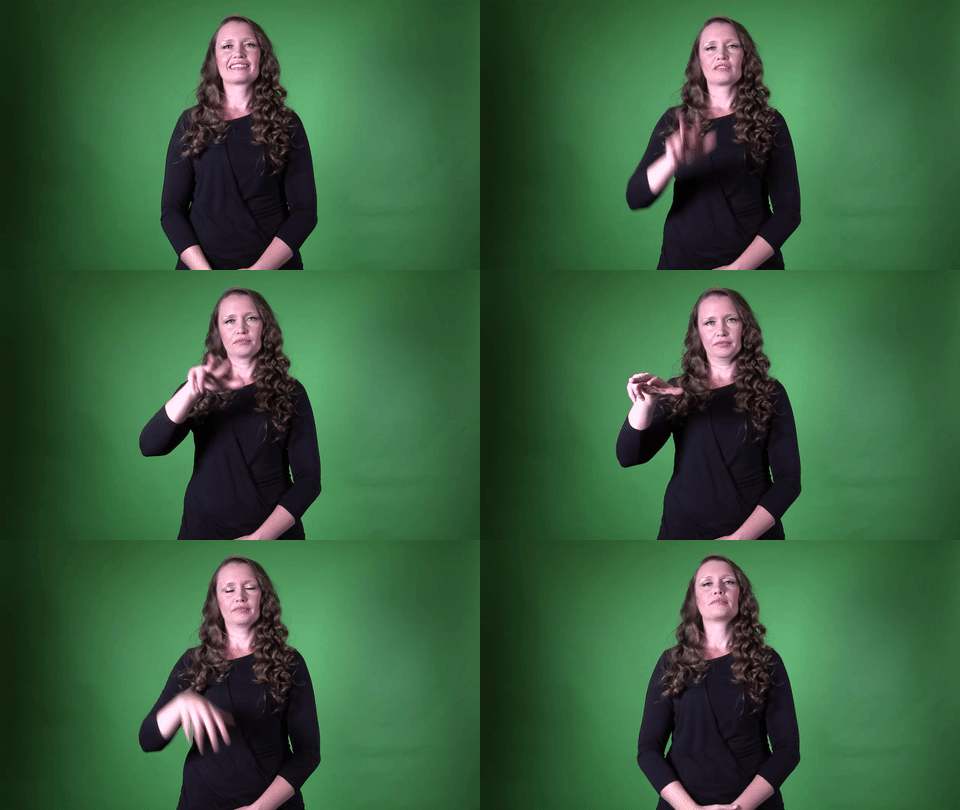
Definition: Refers to the number thirty-three
Sign for NUMBER THIRTY-THREE in ASL

Practice Activities:
Begin by practicing the sign for number thirty-three in ASL in isolation. Hold your palm outward and repeat the movement several times while watching yourself in a mirror to ensure correct handshape and motion. Practice transitioning from thirty to thirty-three smoothly to improve fluency.
Use the sign for number thirty-three in ASL in context by introducing yourself with an age or discussing a numbered list. For example, practice signing, “My uncle is thirty-three years old,” or “There are thirty-three students in my class.” This will help integrate the number naturally into conversations.
Create a counting exercise by signing all numbers from thirty to forty, paying special attention to thirty-three. Repeat this multiple times at varying speeds to build confidence with signing numbers fluently. Try signing other double numbers like twenty-two or forty-four to compare movements and reinforce patterns.
Work with a partner to quiz each other on numbers. One person fingerspells a random number, and the other signs it back, including the sign for number thirty-three in ASL. Switch roles and challenge each other to increase speed while maintaining clarity.
Use storytelling to incorporate the number smoothly. For example, tell a short story where thirty-three appears, such as “I have traveled to thirty-three states” or “The bakery made thirty-three cookies today.” Use expressive signing to make the story engaging.
Play a number challenge game where a partner or instructor calls out random numbers, and you sign them as quickly and accurately as possible. Make sure to sign the number thirty-three correctly each time you encounter it.
Practice using the sign for number thirty-three in ASL while discussing sports scores, prices, or any real-world scenario involving numbers. This will reinforce its usage in daily communication.
Cultural Context:
The sign for number thirty-three in ASL follows the standard pattern for double-digit repeated numbers. To sign number thirty-three in ASL, the number three handshape moves slightly to indicate repetition. This movement helps differentiate it from other similar signs.
In Deaf culture, numbers play an important role in daily communication. Whether sharing ages, addresses, or ranking in competitions, the sign for number thirty-three in ASL is used frequently. Being able to sign numbers correctly ensures clear and accurate communication.
Sports scores and statistics often include number thirty-three in ASL when discussing player jerseys or game points. Many athletes have worn the number 33, making it a commonly referenced number in conversations. It’s also relevant when discussing historical figures or important dates.
Phone numbers and addresses sometimes contain the number thirty-three in ASL. When signing an address, keeping the correct movement and handshape ensures the information is conveyed properly. This is particularly essential for situations like giving directions or filling out official forms.
In social settings, recognizing and understanding the sign for number thirty-three in ASL helps with fluent communication. Conversations about birthdays, anniversaries, and milestones may include this number. Accurate number signs create smoother interactions in both casual and formal discussions.
Learning the sign for number thirty-three in ASL is important for students of American Sign Language. Mastering number signs helps with counting, math, and everyday exchanges. It’s a foundational skill for effective ASL communication.
When watching ASL storytelling or interpreting, the sign for number thirty-three in ASL may appear in narratives. Whether in a story, a news report, or a classroom lesson, the proper sign ensures the message is understood. Numbers are a key component of ASL fluency.
Historical events sometimes involve the number thirty-three in ASL, making it an essential number to recognize. Whether discussing timelines, years, or statistics, knowing number signs enhances understanding. Practicing with real-world examples helps reinforce learning.
Conversations in ASL often rely on clear and precise signing, especially with numbers. The sign for number thirty-three in ASL is just one of many number signs that must be learned accurately. Mastering number signs increases confidence in ASL communication.
Extended Definition:
The sign for number thirty-three in ASL is a two-digit numeral sign that follows a specific pattern used for repeated numbers. It is part of the cardinal number system in American Sign Language, where numbers play an essential role in communication. Understanding this sign helps with expressing quantities, ages, addresses, and other numerical information.
To form the sign for number thirty-three in ASL, the handshape involves an open palm with the index and middle fingers extended. The movement consists of slightly bouncing the fingers forward twice to indicate the repeated digit. This follows the same numerical modification used for other double-digit numbers like twenty-two, forty-four, and fifty-five.
In everyday conversations, the sign for number thirty-three in ASL can be used in various contexts. It may indicate a person’s age, a jersey number in sports, or even a street address. Learning this sign enhances fluency when discussing numeric values efficiently and clearly.
Numbers in ASL rely on consistent handshapes and movements, making them easy to recognize. The double motion in the sign for number thirty-three in ASL helps distinguish it from single-digit or non-repeating numbers. This visual repetition ensures clarity while communicating in different settings.
When signing numbers, proper hand positioning and movement are important for accuracy. The hand remains in a stable location while the fingers bounce slightly to show the pattern of thirty-three. Practicing this motion helps with muscle memory and improves signing fluidity.
The sign for number thirty-three in ASL is frequently used in education, business, and casual conversations. Teachers introduce it in ASL classes when discussing numbers and counting. In professional settings, it may appear when sharing statistics, meeting times, or identifying numbered items.
For beginners, learning the different number patterns in ASL, including the sign for number thirty-three in ASL, is an important step. Once this concept is understood, it becomes easier to learn other repeating numbers. Mastering these signs boosts confidence in using ASL in daily interactions.
Understanding number signs is crucial for effective ASL communication. The sign for number thirty-three in ASL is just one part of the numbering system that helps convey important numerical information. Regular practice and observation help in mastering number fluency in American Sign Language.
Synonyms: thirty-three, number thirty-three, number 33, the number 33, the number thirty-three
Educational resources: Find related learning materials in our course bank!
Want more? Check out some of our popular learning activities on the homepage!
Need to look up a sign? Use our highly rated dictionary: https://aslinteractive.com/best-asl-dictionary/
Follow us on tiktok: https://www.tiktok.com/@aslinteractive. More social media links at the bottom of this page!
Long-tail Keywords: what is the sign for number thirty-three in ASL, how do you sign number thirty-three in American Sign Language, learn how to sign number thirty-three in ASL
Categories: Numbers – Basics, Numbers 31-40, cardinal numbers
tags: Numbers 31-40, Numbers, Math, Educational, Language Learning
Parameters
*Handshape*:
The sign for NUMBER THIRTY-THREE in ASL uses the “3” handshape on both hands. Both hands alternate slightly while maintaining the “3” shape, with the fingertips facing outward. This sign moves slightly from side to side, reinforcing the repeated numeral. The movement should remain fluid and controlled. Since the sign for NUMBER THIRTY-THREE in ASL is a repeating number, both hands mirror each other during execution.
*Palm Orientation*:
The sign for NUMBER THIRTY-THREE in ASL uses the number 3 handshape on both hands. The palm orientation is typically facing downward or slightly outward. The fingers flick between the first and second position as they move slightly side to side. This repetitive motion helps distinguish it from similar number signs. Keeping a steady motion with clear hand positioning ensures clarity and accuracy.
*Location*:
The sign for NUMBER THIRTY-THREE in ASL is formed in the neutral space in front of the body, at about chest level. Both hands use the number three handshape, with the palm facing outward. The fingers of each hand bounce slightly in place to represent the repetition of the number three. The movement is small and controlled, ensuring clarity. This sign stays within the signing space and does not touch the body.
*Movement*:
To sign for number thirty-three in ASL, start with the number three handshape on your dominant hand, with the palm facing outward. The thumb, index, and middle fingers remain extended while the ring and pinky fingers are curled in. Move the hand slightly outward, then inward in a small bouncing motion, repeating the number three handshape twice. Keep the movements fluid and consistent for clarity.
*Non-Manual Signals*:
When signing the sign for number thirty-three in ASL, maintain a neutral or slightly focused facial expression to ensure clarity. Keep your gaze directed towards the person you are communicating with , reinforcing engagement. Slightly raised eyebrows can indicate a questioning tone if asking about the number, while a small head nod can affirm understanding. Avoid exaggerated expressions to maintain the natural flow of signing the sign for number thirty-three in ASL.
*Prosody, Dominant/Non-Dominant Hand*:
The sign for NUMBER THIRTY-THREE in ASL uses the dominant hand in the “3” handshape . The palm faces outward, and the hand bounces twice from left to right or in a small repetitive motion. Each bounce maintains the “3” handshape, ensuring clarity. The non-dominant hand is not used in this sign. Hand movement should be fluid and natural to maintain accuracy in signing NUMBER THIRTY-THREE in ASL.
Tips for Beginners:
The sign for number thirty-three in ASL is a repetitive movement of the number three handshape. Both the index, middle, and thumb should be extended while the ring and pinky fingers are tucked down. The hand bounces slightly twice in place while maintaining the same shape and position.
One common mistake beginners make with the sign for number thirty-three in ASL is changing the handshape between movements. Keep your fingers steady and maintain the number three handshape throughout to ensure clarity. Wavering or losing the handshape can cause confusion, so practice holding it firm.
Another issue beginners face is inconsistent movement. The small bounce should be controlled and deliberate, not exaggerated or rushed. Keeping an even rhythm will help make the sign look natural and smooth rather than jerky or sloppy.
Hand orientation is another important factor. The palm should face outward, not inward or downward. If the palm faces the wrong direction, it may look like a different number. Practicing in front of a mirror can help reinforce proper positioning.
Finger dexterity is key when forming the number three handshape. If it’s difficult to hold the ring and pinky fingers down while extending the others, try practicing with one hand supporting the fingers at first. Over time, finger strength and flexibility will improve.
When signing the sign for number thirty-three in ASL, keep your hand at a comfortable position in front of your body. Avoid excessive movement across your signing space, as numbers are typically signed in a fixed position. Keeping it clear and stable ensures better readability.
For added fluency, practice signing similar numbers like twenty-two, forty-four, or fifty-five, which follow the same bouncing pattern. This will help you recognize and perform the movement consistently in different number contexts.
Connections to Other topics:
The sign for number thirty-three in ASL is an example of repetitive number formation, which is commonly used for double-digit numbers where both digits are the same. This pattern appears in numbers like 22, 44, and 55, where the hand moves slightly to show reduplication. Understanding this repetition helps with recognizing other number signs that follow a similar movement pattern, reinforcing numerical fluency in ASL.
Numbers are widely used in ASL in contexts such as age, time, money, and measurements. The sign for number thirty-three in ASL can be seen when discussing someone’s age (as in “I am 33 years old”) or addressing costs (like “This costs $33”). Incorporating number signs into everyday conversations helps develop greater signing proficiency, especially when discussing personal information, statistics, or addresses.
Ordinal numbers and ranking systems also relate to the sign for number thirty-three in ASL. A slight modification in the movement can turn cardinal numbers into ordinals, useful for events like “the 33rd anniversary” or sports rankings (“33rd place in the competition”). Recognizing these distinctions in signing ensures clarity when discussing sequences and ordered lists in ASL.
Doubling hand movements in number signs contributes to the practice of reduplication in ASL, which also appears in non-numerical signs. This concept can be seen in sign variations used for emphasis or plurality in words such as “people” and “chairs.” Learning the numbering system and its relation to other sign repetitions strengthens overall comprehension of ASL’s grammatical structures.
Additionally, numbers in ASL are frequently used in conjunction with classifiers when describing groups of objects or people. The sign for number thirty-three in ASL might appear in a discussion about multiple items in categories like “33 people attended the event” or “There are 33 books on the shelf.” Recognizing how numbers integrate with classifiers enhances descriptive power in signed communication.
Summary:
The sign for number thirty-three in ASL is a repeated movement of the number three handshape. The number three handshape is formed by extending the index finger, middle finger, and thumb while the ring and pinky fingers remain folded. This handshape is an essential component of many ASL numbers.
To sign the number thirty-three in ASL, the dominant hand is used. The hand starts in the number three handshape and bounces twice in a slight downward motion. This repetition distinguishes thirty-three from the isolated number three.
Numbers in ASL often follow set movement patterns to indicate duplication or grouping. The sign for number thirty-three in ASL follows the pattern for repeated digits such as twenty-two, forty-four, and so on. The bouncing motion visually reinforces the concept of repetition.
ASL numbers have a unique structure that differs from spoken English numbers. While spoken numbers are spoken in sequence, ASL numbers incorporate movement and positioning to convey meaning. This can be especially helpful in situations where clarity is critical.
The sign for number thirty-three in ASL relies on a consistent palm orientation. The palm generally faces outward so the numbers are clearly visible to the viewer. This is a key feature in ASL number signs to ensure clarity and comprehension.
In ASL, multiple-digit numbers often follow an internal rhythm. The sign for number thirty-three in ASL maintains a steady, controlled motion. Too much bouncing or exaggeration can obscure the meaning and lead to confusion.
The number system in ASL is deeply tied to cultural and linguistic conventions. Signed numbers incorporate handshapes, placement, and movement to create a visual representation of quantity. The sign for number thirty-three in ASL showcases how ASL numbers build upon foundational handshapes.
The handshape for the number three in ASL is frequently used in numerical signs. It appears in signs for thirty, thirteen, and three itself. This handshape provides a versatile base for other number-related concepts.
When signing the number thirty-three, maintaining consistency in movement is crucial. The two slight bounces should be even and controlled. If the movement is too abrupt, the sign may be misinterpreted.
Numbers in ASL often have variations depending on regional or stylistic differences. However, the sign for number thirty-three in ASL tends to remain fairly uniform across users. The bouncing motion is a widely accepted standard for repeated double-digit numbers.
ASL numbers can be classified into categories like cardinal and ordinal numbers. The sign for number thirty-three in ASL represents a cardinal number, meaning it denotes quantity rather than sequence. If used in an ordinal context, additional modifications might be necessary.
In educational settings, learning ASL numbers helps build foundational skills for communication. The sign for number thirty-three in ASL teaches repetition and rhythm, which are essential for mastering number sequences. This concept applies to phone numbers, addresses, and mathematical expressions.
Numerical classifiers in ASL help describe objects by shape and amount. The handshape for the number three often serves as a classifier for three-pronged objects or groups of three. The sign for number thirty-three in ASL builds from this functional handshape.
Certain signs in ASL require numerical incorporation. The sign for number thirty-three in ASL does not merge with other signs but remains a standalone number. However, numbers are often embedded in signs for time, money, and quantity.
In ASL grammar, numbers can be integrated with specific contexts to modify meaning. The sign for number thirty-three in ASL may be used in listing, grouping, or comparative contexts. This allows for a dynamic and adaptable use of numerical signs.
Understanding ASL numbers enhances overall fluency in signed communication. The sign for number thirty-three in ASL is one key component in recognizing and producing double-digit numbers. Mastering number signs contributes to accurate and effective communication.
Mathematical concepts in ASL use number signs extensively. The sign for number thirty-three in ASL may appear in equations, counting, or problem-solving discussions. This connection highlights how ASL expresses numerical concepts visually.
Deaf culture places importance on clear and efficient communication. The sign for number thirty-three in ASL follows established patterns to ensure clarity. Standardized number signs reduce confusion and improve comprehension within the community.
In some conversational situations, ASL users may modify the size or speed of number signs for emphasis. The sign for number thirty-three in ASL might be emphasized by slowing down the motion slightly. Context often determines whether such modifications are appropriate.
Numbers appear frequently in everyday interactions, making numerical literacy in ASL essential. The sign for number thirty-three in ASL may be used in daily activities such as shopping, sports scores, or scheduling. Knowing number signs enhances an ASL user’s ability to navigate practical communication needs.
Deaf schools and ASL courses introduce number concepts early in education. The sign for number thirty-three in ASL is typically taught alongside other double-digit numbers to reinforce consistency. This exposure builds fluency in recognizing
Want more? Check out some of our popular learning activities!
ASL Interactive Resources
ASLInteractive YouTube Channel
Follow us on tiktok: @aslinteractive.com
Follow us on Instagram: aslinteractive
Facebook page: aslinteractive
Facebook group: aslinteractive
LInkedIn: ASL Interactive LLC
Twitter: @ASL_interactive
*Some information on this page is AI-generated. AI can make mistakes. Please check the information.


Responses