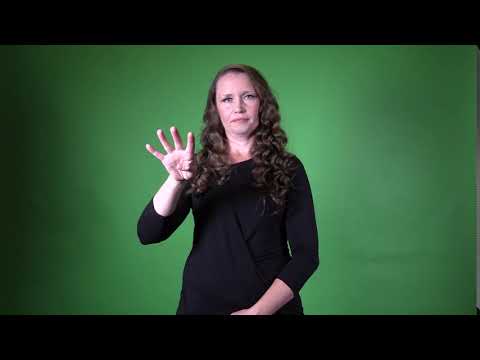
Definition: The number thirty-four.
Sign for 34 in ASL

Practice Activities:
To practice the sign for 34 in ASL, start by repeatedly signing the number in isolation. Focus on the transitions between the digits 3 and 4, ensuring smooth and controlled movements. Use a mirror or record yourself to compare your sign to reference videos.
Incorporate the sign for 34 in ASL into real-life context by practicing with numbers around it. Count from 30 to 40 while emphasizing 34. Say a two-digit number aloud and then sign it to reinforce recall.
Create simple math problems that require you to sign the answer. For example, have a friend show you 17 + 17, and you sign for 34 in ASL as the response. This builds fluency while associating numbers with mathematical concepts.
Use the number in sentences to improve contextual understanding. Sign sentences such as “My grandmother is 34 years old” or “There are 34 students in my class.” Try writing multiple sentences that include 34 and practice signing them fluidly.
Engage in a signing race with a partner or group. One person fingerspells a random number, and the other signs it as quickly as possible. If you are practicing alone, use a number generator to display random numbers and sign them without hesitation.
Create a short story or scenario where 34 appears frequently. For example, describe a person’s day who completes 34 tasks in a day or collects 34 items. Practice signing your story multiple times to achieve comfort and smooth transitions.
While watching TV or reading, look for mentions of numbers, specifically 34, and sign them when they appear. This helps reinforce natural usage and recognition, making signing numbers an automatic response. Repeat these exercises consistently to feel more confident with the sign for 34 in ASL.
Cultural Context:
In American Sign Language, numbers play a crucial role in everyday communication. The sign for 34 in ASL follows a logical pattern, making it easy for signers to incorporate into conversations about age, dates, addresses, and quantities. Understanding how to form numbers correctly is essential for fluency in ASL.
The sign for 34 in ASL uses distinct hand shapes and movements to represent the digits 3 and 4. Many number signs in ASL are signed with a smooth transition between each digit, maintaining a natural flow. This fluid motion makes numerical concepts clear and efficient in ASL conversations.
Numbers in ASL are widely used in various contexts, such as phone numbers, sports scores, and financial transactions. Learning the sign for 34 in ASL helps expand vocabulary and improve communication skills in both personal and professional interactions. Mastering numbers in ASL enhances confidence when discussing numerical information.
Different ASL users may show slight variations in how they sign numbers, but the core elements of the sign for 34 in ASL remain consistent. Regional influences and individual preferences may affect subtle aspects of signing, just as with spoken languages. Still, clarity and comprehension are key when signing numbers in ASL.
Teaching ASL numbers to students helps build a foundation for expressive and receptive skills. The sign for 34 in ASL is part of a broader numerical system that enables signers to express large and small quantities with ease. Practicing ASL numbers regularly improves fluency and comprehension.
Technology and social media have made learning ASL easier than ever. Many online resources, videos, and ASL dictionaries provide clear demonstrations of the sign for 34 in ASL. Engaging with these materials helps learners refine their signing skills and gain confidence in using ASL numbers.
Fingerspelling is sometimes used alongside numbers in ASL to clarify concepts or names. However, numbers like the sign for 34 in ASL are typically signed using number-specific handshapes rather than fingerspelling. This contributes to the efficiency of ASL conversations, especially in fast-paced discussions.
ASL numbers are used in storytelling, math, and casual conversations. Whether discussing a person’s age, counting objects, or listing event dates, knowing how to sign numbers enhances communication. The sign for 34 in ASL is a small but essential part of this broader numerical system.
Deaf culture places a strong emphasis on visual communication, and numbers hold significant meaning in various social settings.
Extended Definition:
The sign for 34 in ASL is a combination of two numerical handshapes produced sequentially. It starts with the sign for 3, followed by a smooth transition into the sign for 4. This movement should be fluid and natural to maintain clarity in communication.
When forming the sign for 34 in ASL, hold up your dominant hand and display the number 3 by extending the index, middle, and thumb while keeping the ring and pinky fingers closed. Then, shift into the number 4 by extending all four fingers while keeping the thumb tucked in. This transition should be done with precision to avoid confusion with similar numbers.
Numbers play a crucial role in American Sign Language, allowing users to express ages, dates, quantities, and more. The sign for 34 in ASL is part of a structured numbering system used in various contexts. Practice can help improve fluency and accuracy in transitioning between digits.
Finger-spelling numbers in ASL follows a consistent rule, making it easier for signers to recognize and understand numerical sequences. The sign for 34 in ASL requires controlled movement and distinct handshapes. Proper palm orientation and finger placement ensure the number is signed clearly.
Using ASL numbers correctly improves overall signing proficiency. The sign for 34 in ASL can be used when discussing prices, addresses, measurements, or general counting. Becoming comfortable with number signs enhances confidence in communication.
Seeing the sign for 34 in ASL demonstrated by fluent signers or through instructional videos can reinforce learning. Observing precise handshapes and transitions helps with accuracy. Consistent practice allows for smoother and faster number signing.
In ASL, numbers up to 99 are typically signed with one hand, unlike some other sign languages that require both hands for certain numbers. The sign for 34 in ASL follows this one-handed format. This consistency helps with readability and efficiency in conversations.
Numerical signs like 34 remain essential for both beginners and advanced signers. Understanding how to smoothly transition between numbers ensures effective communication. Learning each number individually and within sequences strengthens comprehension.
Context can also dictate how numbers are signed. The sign for 34 in ASL remains the same structurally but may be used differently depending on the conversation. Being aware of situational usage makes signing more natural and expressive.
Mastering number signs, starting with small sequences, builds a strong foundation in ASL. The sign for 34 in ASL is
Synonyms: thirty-four, number thirty-four, number 34, the number 34, the number thirty-four
Educational resources: Find related learning materials in our course bank!
Want more? Check out some of our popular learning activities on the homepage!
Need to look up a sign? Use our highly rated dictionary: https://aslinteractive.com/best-asl-dictionary/
Follow us on tiktok: https://www.tiktok.com/@aslinteractive. More social media links at the bottom of this page!
Long-tail Keywords: what is the sign for 34 in ASL, how do you sign 34 in ASL, ASL sign for the number 34
Categories: Numbers – Basics, Numbers 31-40, cardinal numbers
tags: Numbers 31-40, Numbers, Math, Educational, Language Learning
Parameters
*Handshape*:
The sign for 34 in ASL uses a two-number sequence, transitioning smoothly between the numbers 3 and 4. Start with the number 3 handshape, where the index, middle, and thumb extend while the ring and pinky fingers remain folded. Then, shift to the number 4 handshape by extending the ring finger while keeping the thumb tucked in. This movement should be fluid, maintaining palm orientation and clarity for proper understanding.
*Palm Orientation*:
The palm orientation for the sign for 34 in ASL starts with the dominant hand in an open position, facing outward. The fingers shift from the number three (thumb, index, and middle fingers extended) to the number four (adding the ring finger). The movement is smooth and fluid, maintaining outward palm orientation throughout. When forming each number, ensure clarity in finger positioning to differentiate between the transitions accurately.
*Location*:
The sign for 34 in ASL is produced in the neutral space in front of the signer’s chest. The dominant hand forms the number 3 first, with the index, middle, and thumb extended while the ring and pinky fingers remain folded. Then the hand transitions smoothly to the number 4 by extending the ring finger while keeping the thumb tucked. The movement is fluid and happens at chest level for clear visibility.
*Movement*:
To produce the sign for 34 in ASL, start with the number 3 handshape: your index, middle, and thumb extended while the ring and pinky fingers remain tucked. Face the palm outward. Quickly transition to the number 4 handshape by extending the ring finger while keeping the other fingers in place. Maintain smooth movement between the two numbers without excessive pausing. This fluid technique ensures a clear and natural representation of 34 in ASL.
*Non-Manual Signals*:
When performing the sign for 34 in ASL, maintain a neutral or slightly focused facial expression to ensure clarity. Your eyebrows remain relaxed since this is a straightforward number sign. Keep eye contact with the receiver of the message to reinforce accuracy. The mouth may remain neutral or slightly articulate the number for added emphasis. Smooth and confident hand movements help avoid confusion when conveying the sign for 34 in ASL.
*Prosody, Dominant/Non-Dominant Hand*:
The sign for 34 in ASL uses the dominant hand. Start with the number 3 handshape, where the thumb, index, and middle fingers are extended while the ring and pinky fingers remain folded. Then, smoothly transition into the number 4 handshape by extending the ring finger while keeping the previous three fingers extended. The movement should be clear and fluid, ensuring that the numbers are easily recognizable.
Tips for Beginners:
The sign for 34 in ASL is a two-part movement, blending the digits 3 and 4 seamlessly. Start with the number 3, extending your index, middle, and thumb while keeping the ring and pinky fingers folded. Then, smoothly transition into the number 4 by folding the thumb in and extending all four fingers. Keep your palm facing forward throughout the motion to ensure clarity. This fluid change helps communicate the number efficiently.
When practicing the sign for 34 in ASL, emphasize smooth transitions between the two numbers. Some beginners struggle with shifting from the number 3 to 4 quickly, so focus on refining each shape separately before combining them. A slow and controlled movement will prevent hesitation and increase confidence. Hand positioning is crucial—make sure your palm remains outward for visibility. Avoid overly stiff fingers to maintain a natural and flexible gesture.
A common mistake learners make is curling their fingers too much or flattening them excessively when forming the number 4. Proper finger structure ensures readability and enhances fluency. Try signing in front of a mirror to monitor accuracy. Recording yourself can also help you track progress and pinpoint small errors. If unsure about your movement, reference a trusted ASL resource or seek feedback from an experienced signer.
Repetition is essential for mastering the sign for 34 in ASL, so integrate it into daily practice. Incorporate it into number sequences or count aloud while signing to reinforce muscle memory. Practicing alongside a partner can help improve speed and fluidity. Since ASL numbers are frequently used in various contexts, mastering them will boost overall signing confidence. Stay patient, and over time, your hands will naturally adapt to the motion.
Connections to Other topics:
The sign for 34 in ASL follows the number pattern commonly seen in ASL counting, which helps learners understand the broader structure of number formation. Since 34 combines the handshapes for 3 and 4 in fluid motion, it reinforces the transition required for multi-digit numbers. Understanding this transition helps in counting, telling ages, discussing years, and providing numerical data in various contexts.
Numbers in ASL connect to other signed concepts like time, money, measurements, and ranking. The same number-handshapes used in the sign for 34 in ASL may also appear in phone numbers, addresses, and ID numbers. Mastery of number signs enables smoother communication about statistics, sequences, and ordering information in daily and professional settings.
Many related signs derive from number incorporation, such as age-related signs like “34 years old” by attaching the number to the chin-based “AGE” sign. Time-related concepts also integrate numbers, such as “34 minutes” or “34 hours,” reinforcing the importance of fluent number signing. The structure of the sign for 34 in ASL also supports learning sports scores, historical dates, and numerical rankings.
For financial discussions, numbers combine with money signs to indicate costs, payments, and transactions. Someone might sign “34 dollars” with a numerical incorporation method or fingerspell “DOLLARS” after signing 34. This connection enhances financial literacy in ASL and helps in discussions about pricing or business transactions.
Practice with transitioning between numbers such as 30 to 40 can improve fluidity when signing numbers above 20. The sign for 34 in ASL follows a sequential flow that exemplifies ASL’s efficiency with numerical expressions. Understanding this sign leads to greater confidence in expressing large numerical values and engaging in numerical reasoning during conversations.
Summary:
The sign for 34 in ASL is a combination of two distinct handshapes that represent the individual digits of the number. ASL numbers follow a structured pattern, and double-digit numbers in the thirties have a fluid movement between the two digits. This number follows the general rule for sequential number formation in ASL.
To form the sign for 34 in ASL, start with the handshape for the number 3. Extend the thumb, index, and middle fingers while keeping the ring and pinky fingers folded down. Then transition smoothly into the handshape for 4 by extending the ring finger alongside the other three.
The motion between numbers 3 and 4 is key to maintaining clarity in communication. This transition should be fluid yet clearly defined so that each digit is visible. Unlike some other numbers, there is no bouncing movement—just a straight shift from one handshape to the next.
Number signs in ASL must be formed with precision, especially for numeric sequences. If the transition between the handshapes for 3 and 4 is unclear, it may cause confusion. Proper finger positioning and movement are essential to ensure accuracy.
ASL numbers are used in various contexts, from telling time to listing quantities. The sign for 34 in ASL may be used in numerical sequences, ages, addresses, or monetary values. Context helps distinguish between its different possible meanings.
Numbers in ASL have an important role in Deaf culture and communication. Various dialects and signing styles may influence how fluently numbers like 34 are signed. Fluent signers develop a natural rhythm in transitioning between digits.
Linguistically, ASL numbers function similarly to classifiers in that they represent precise quantitative information. The sign for 34 in ASL adheres to numerical word order conventions, where each digit of the number must be clearly articulated. This is necessary to avoid miscommunication.
Some ASL learners find number transitions difficult at first. Moving smoothly from one handshape to another requires dexterity and practice. Drills that involve rapidly switching between numbers help improve proficiency and fluidity.
ASL number signs also highlight the language’s reliance on handshape and movement. Each number is a distinct lexeme, formed by a standardized handshape pattern. The sign for 34 in ASL follows the visual-spatial grammar of ASL rather than a spoken or written format.
In some signed languages outside ASL, number signs differ significantly. While the numeral system in ASL is relatively consistent among signers in the U.S. and Canada, there are variations elsewhere. Consequently, the handshape for 34 may look different in other sign languages.
The visual structure of ASL numbers allows for quick recognition and efficient conversation. The sign for 34 in ASL retains a structure that makes it easy to distinguish from other numbers. This clarity of movement is one of the strengths of signed numerical communication.
Cultural aspects of ASL numbers often appear in signed games, storytelling, and name signs. Some numbers have symbolic significance in Deaf communities, though 34 itself does not hold particular cultural weight. However, numbers play a role in various forms of Deaf identity and expression.
Finger dexterity is an essential part of mastering ASL numbers. Since proper form is needed for clarity, exercises focusing on finger strength and flexibility can assist in improving fluency. This ensures that signs like 34 are easily recognizable.
In some cases, fingerspelling may be used alongside number signs for added clarity. For instance, if a name or specific identifier includes the number 34, fingerspelling may accompany the numerical sign to prevent confusion. This is especially common in proper names or unique numeric identifiers.
Context often determines how the sign for 34 in ASL is visually perceived by the receiver. When someone is accustomed to quickly processing ASL numbers, their ability to recognize numerical shifts becomes second nature. This reinforces the efficiency of numerical communication in signing.
ASL numbers are closely tied to mathematical concepts and visual-spatial reasoning. Learning to recognize and use numbers like 34 correctly strengthens overall numerical comprehension in ASL. This applies to both basic arithmetic and advanced mathematical conversations.
Because ASL is a visual language, the placement and orientation of numbers in space can also carry additional meaning. Numbers may be incorporated into classifiers, indicating amounts of objects or movements. The sign for 34 in ASL can fit naturally into mathematical discussions using classifiers.
When signing telephone numbers or addresses, pauses are used to separate number groupings. When signing 34 in a string of digits, a signer might emphasize the transition slightly more to ensure clarity. This is particularly useful when conveying important information like identification numbers.
The sign for 34 in ASL follows a natural, standardized format that aligns with ASL phonology. Each digit is articulated distinctly while maintaining transition smoothness. This structure supports linguistic consistency across ASL users.
ASL learners should practice using numbers in structured conversation to gain fluency. Engaging in number-based activities, such as listing
Want more? Check out some of our popular learning activities!
ASL Interactive Resources
ASLInteractive YouTube Channel
Follow us on tiktok: @aslinteractive.com
Follow us on Instagram: aslinteractive
Facebook page: aslinteractive
Facebook group: aslinteractive
LInkedIn: ASL Interactive LLC
Twitter: @ASL_interactive
*Some information on this page is AI-generated. AI can make mistakes. Please check the information.


Responses