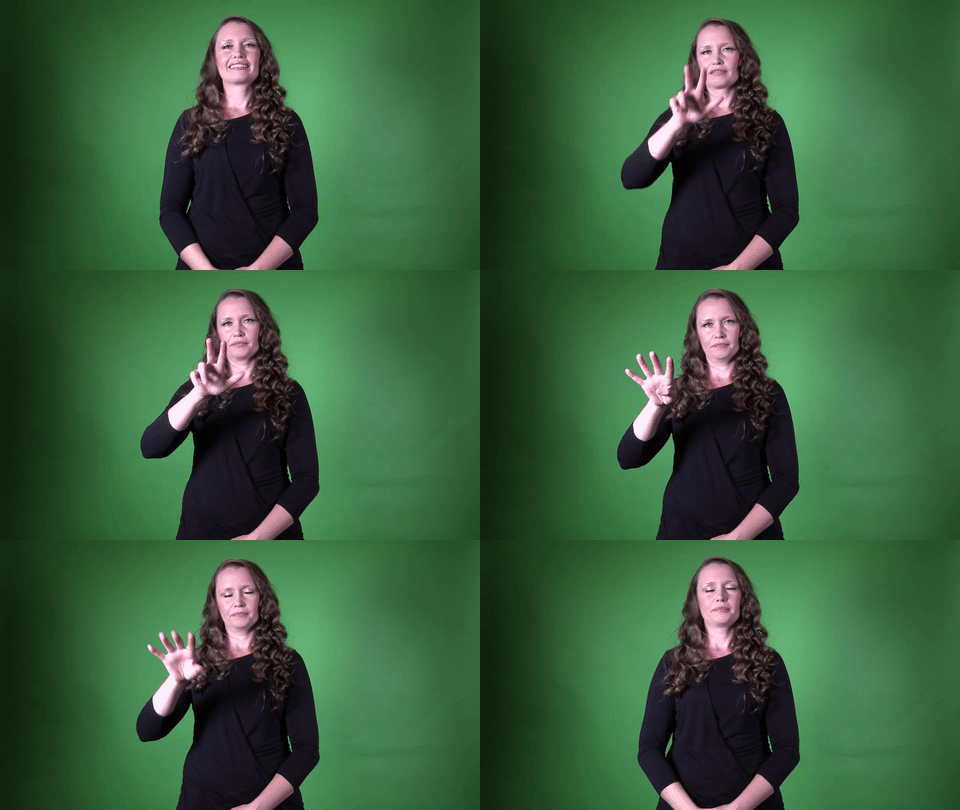
Sign for THIRTY-FOUR in ASL | Learn the Sign for THIRTY-FOUR in ASL with the #1 Best Free Dictionary! ✅

Definition: The number thirty-four

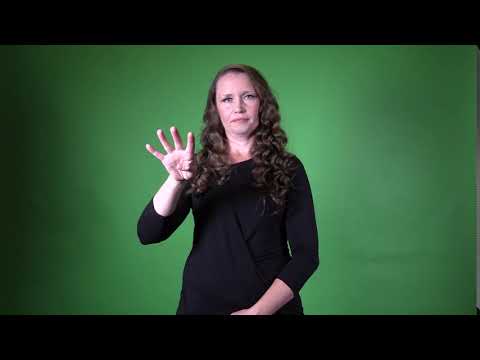
Sign for THIRTY-FOUR in ASL 

YouTube player

Practice Activities:

To practice the sign for thirty-four in ASL, start by signing the number slowly while watching yourself in a mirror. Pay attention to the shape and movement of your fingers to ensure accuracy. Repeat the sign multiple times, gradually increasing your speed while maintaining clarity.

Try incorporating the sign for thirty-four in ASL into number sequences. Count from thirty to thirty-five, signing each number in order. Then, mix up the sequence and sign random numbers between thirty and forty to reinforce recognition.

Use the sign for thirty-four in ASL in real-world contexts. Imagine telling someone your age, the number of an item, or a quantity in a sentence. For example, sign: “I have thirty-four books” or “She is thirty-four years old.” Practice creating five different sentences to reinforce fluency.

Engage in a partner activity where one person signs a number between thirty and forty, and the other person identifies it. Swap roles and repeat the exercise to improve both signing and comprehension of numbers in ASL.

Create a short story that includes the sign for thirty-four in ASL. For instance, describe a fictional scenario where you see thirty-four birds in a park or count thirty-four steps while climbing. Sign the story aloud, ensuring fluidity in your hand movements.

Challenge yourself with a sign scavenger hunt. Find objects around your home that you can count to thirty-four and sign the number as you point to them. This activity strengthens your ability to transition between concrete objects and numerical concepts in ASL.

Watch ASL videos where people use numbers in conversation. Pay attention to how they sign thirty-four and mimic their handshapes and movements. Practice with recorded dialogues to enhance fluency in signing numbers confidently.

Cultural Context:

The sign for thirty-four in ASL is a combination of two number signs, forming a fluid motion that represents the numeral. This signing technique is common in American Sign Language when indicating numbers beyond single digits. The sign for thirty-four in ASL follows the natural flow of numerical sequencing used by Deaf signers.

Numbers play an important role in ASL conversations, including counting, giving directions, and sharing contact information. The sign for thirty-four in ASL may come up when discussing dates, prices, or someone’s age. Knowing how to sign numbers correctly ensures clear communication in personal and professional settings.

American Sign Language relies on handshapes and movement to convey numerical values visually. The sign for thirty-four in ASL consists of the digits three and four in sequence, smoothly transitioning from one to the next. This approach to signing numbers remains consistent throughout ASL, making it easy to learn with practice.

Deaf culture values clarity and accuracy in number signs, ensuring smooth conversations. The sign for thirty-four in ASL is frequently used when discussing measurements, addresses, and statistics. Mastering number signs helps signers participate fully in discussions that involve numerical information.

Learning the sign for thirty-four in ASL improves fluency and comprehension in signed conversations. ASL users employ numerical signs in everyday interactions, from discussing math concepts to sharing sports scores. Knowing how to sign numbers correctly builds confidence when communicating in sign language.

American Sign Language has a visually expressive way of conveying numbers, including the sign for thirty-four in ASL. This number sign appears in discussions about time, appointments, and records. Understanding numerical signs allows for accurate exchanges of information in both casual and formal settings.

Numbers in ASL are an essential part of communication, and knowing the sign for thirty-four in ASL contributes to effective discussions. Whether stating a house number or explaining a math problem, clarity in number signs matters. Becoming proficient in ASL numbers helps signers engage in a range of conversations.

In Deaf communities, accuracy in signing numbers like the sign for thirty-four in ASL ensures smooth interactions. Whether referring to page numbers, lists, or financial figures, numerical signs are essential in various contexts. Familiarity with ASL numbers supports clear storytelling, explanations, and everyday dialogue.

Mastering the sign for thirty-four in ASL allows for seamless integration of numerical expressions into conversation. ASL learners benefit from practicing number sequences, helping them build confidence in signing larger numerals. The sequential pattern

Extended Definition:

The sign for THIRTY-FOUR in ASL is a combination of the numbers three and four, signed in sequence. It follows the standard pattern for signing double-digit numbers in American Sign Language. This number is commonly used in various contexts, such as counting, age, time, and measurements.

When signing THIRTY-FOUR in ASL, begin with the handshape for three, then smoothly transition to the handshape for four. The motion should be fluid and natural, ensuring clarity and accuracy. This sign relies on maintaining proper hand positioning and finger articulation to avoid confusion with similar numbers.

Numbers play an essential role in communication in ASL. The sign for THIRTY-FOUR in ASL is often seen in discussions about dates, prices, addresses, and statistics. It is important to practice signing numbers correctly to improve fluency and comprehension in conversations.

Like other ASL numbers, THIRTY-FOUR can appear in different contexts depending on the topic. Whether discussing someone’s age or a specific quantity, this sign is useful for expressing numerical values. Knowing how to sign numbers clearly enhances effective communication in ASL.

The sign for THIRTY-FOUR in ASL is a straightforward combination of two familiar number signs. It is beneficial for deaf individuals and ASL learners to master these number combinations for everyday use. Practicing in front of a mirror or with a signing partner helps reinforce accuracy and confidence.

Some variations in signing numbers can occur based on regional dialects or personal signing styles. However, the general approach to signing THIRTY-FOUR in ASL remains consistent across most signers. Exposure to ASL conversations and signed content helps learners recognize and use numbers effectively.

Being proficient in numbers like THIRTY-FOUR is valuable in both formal and casual ASL communication. Whether in educational settings, workplace discussions, or social interactions, number signs play a key role in conveying precise information. Developing fluency in numerical signs strengthens overall ASL skills.

By consistently practicing the sign for THIRTY-FOUR in ASL, learners improve their confidence and signing speed. Watching native signers and using ASL resources further supports mastery of number signs. Engaging with the Deaf community also enhances comprehension and real-world application of ASL numbers.

Synonyms: thirty-four, number thirty-four, number 34, the number 34, the number thirty-four

Educational resources: Find related learning materials in our course bank!

Want more? Check out some of our popular learning activities on the homepage!

Need to look up a sign? Use our highly rated dictionary: https://aslinteractive.com/best-asl-dictionary/

Follow us on tiktok: https://www.tiktok.com/@aslinteractive. More social media links at the bottom of this page!

Long-tail Keywords: what is the sign for thirty-four in ASL, how do you sign thirty-four in ASL, thirty-four in American Sign Language

Categories: Numbers – Basics, Numbers 31-40, cardinal numbers

tags: Numbers 31-40, Numbers, Math, Educational, Language Learning

Parameters

*Handshape*:

The sign for THIRTY-FOUR in ASL uses a number transition with the dominant hand. It begins with the number “3” handshape, where the index, middle, and thumb are extended while the other fingers are closed. The fingers change smoothly into the “4” handshape, extending the ring finger while keeping the thumb tucked. This transition should be fluid, maintaining a consistent palm orientation. The sign for THIRTY-FOUR in ASL is performed in front of the signer’s body at chest level.

*Palm Orientation*:

The palm orientation for the sign for THIRTY-FOUR in ASL starts with the palm facing outward. The signer forms the number “3” with the dominant hand, fingers extended. Then, the hand transitions smoothly into the number “4” by bringing down the thumb while lifting the ring finger. Throughout the movement, the palm remains forward, ensuring clarity. This sign is executed fluidly to maintain the natural rhythm of ASL number transitions.

*Location*:

The sign for THIRTY-FOUR in ASL is produced in the neutral space in front of the signer’s torso. The dominant hand forms the number “3” near shoulder level, then shifts smoothly into the number “4” without breaking fluidity. The movement should be clear and natural, ensuring an easy transition between the two handshapes.

*Movement*:

To make the sign for THIRTY-FOUR in ASL, start by forming the number three with your dominant hand—thumb, index, and middle fingers extended while the ring and pinky fingers are folded down. Quickly transition into the number four by extending the ring finger while keeping the same hand position. This movement should be fluid and slightly bouncy, maintaining a natural rhythm to clearly indicate both numbers in the sequence. ➡️✋

*Non-Manual Signals*:

When using the sign for THIRTY-FOUR in ASL, maintain a neutral or slightly engaged facial expression. If emphasizing the number, such as for clarity or correction, slightly raise your eyebrows and lean forward. A casual or natural head movement may accompany the transition between “THIRTY” and “FOUR” for fluidity. If asking for confirmation about the number, raise your eyebrows and slightly tilt your head forward to signal a questioning intent.

*Prosody, Dominant/Non-Dominant Hand*:

The sign for THIRTY-FOUR in ASL uses the dominant hand, starting with the number 3 handshape (index, middle finger, and thumb extended) and smoothly transitioning into the number 4 handshape (index, middle, ring, and pinky fingers extended). This movement is fluid, with the palm facing outward. The non-dominant hand is not used. The motion should be clear and distinct to ensure proper recognition of the numbers.

Tips for Beginners:

When learning the sign for THIRTY-FOUR in ASL, focus on smooth number transitions. Since this is a compound number, your hand should move fluidly from “3” to “4” without unnecessary pauses. Keep your dominant hand in a natural, comfortable position to avoid stiffness while transitioning between numbers.

A common mistake is tensing the fingers too much, which can slow down the motion. Relax your hand and ensure each number is distinct but connected. If your fingers are too rigid, the sign may appear awkward or incomplete, making it harder for others to recognize.

Another tip for mastering the sign for THIRTY-FOUR in ASL is maintaining proper palm orientation. Your palm should generally face outward, similar to other number signs. Avoid tilting your hand too far forward or backward, as this can make the sign unclear to your audience.

Practice in front of a mirror or record yourself signing to check for accuracy. Watching fluent ASL signers can also help you internalize the rhythm of signed numbers. Repetition is key, so sign the number several times a day until it feels natural.

In real conversations, signing numbers quickly and clearly is important for fluent communication. If you need to slow down at first, that’s fine, but work towards increasing speed while maintaining clarity. Numbers are frequently used in ASL, so mastering them will significantly improve your overall signing ability.

If you’re interacting with native signers, observe how they sign numbers in different contexts. Small variations in speed and transition can occur, but consistency is essential. Keep practicing, and soon, signing numbers like THIRTY-FOUR will feel effortless.

Connections to Other topics:

The sign for THIRTY-FOUR in ASL follows the number pattern used for other two-digit numbers in ASL, where the first digit is signed, followed by the second. This method of signing numbers directly relates to the ASL numbering system, which categorizes numbers by format, including palm orientation and movement. Understanding this pattern helps with learning other multi-digit numbers, such as thirty-five, thirty-six, or forty-three, which follow a similar structural pattern.

ASL numbers play a significant role in various contexts, such as telling time, expressing money amounts, addressing quantities, and giving sports scores. The sign for THIRTY-FOUR in ASL can be useful in everyday situations like discussing someone’s age, giving a street address, or specifying the number of items in a set. Mastering number transitions smoothly is essential for fluency, as hesitation or misplacement of hand orientation may lead to confusion when communicating exact numerical values.

The structure of the sign for THIRTY-FOUR in ASL is related to other two-digit number signs that require a fluid shift between digits. In ASL discourse, numbers can function within classifiers to indicate a specific quantity of objects. For instance, discussing thirty-four books or thirty-four students in a classroom may involve incorporating the number into a classifier structure for meaningful representation. Learning to incorporate numbers seamlessly into sentences strengthens overall ASL fluency.

Ordinal numbers, such as thirty-fourth, depend on a modification of cardinal number signs to indicate order. Understanding how numbers work in conjunction with ranking and listing concepts helps to expand ASL vocabulary. Additionally, numbers can appear within dates, phone numbers, and height or weight descriptions, showing how integral number signs are in both formal and casual ASL conversations.

Summary:

The sign for thirty-four in ASL is a combination of two numerical handshapes. It begins with the hand displaying the number “3” and transitions smoothly into the number “4.” This transition is fluid, requiring controlled finger movement to maintain clarity.

Each number in ASL has a distinct configuration that must be maintained throughout the sign. The number “3” is formed by extending the thumb, index, and middle fingers while keeping the ring and pinky fingers curled down. The number “4” follows by extending the index, middle, ring, and pinky fingers while tucking in the thumb.

The shift from “3” to “4” should be seamless. The movement occurs at the wrist or slightly at the fingers without dramatic repositioning. Clarity is key because misalignment of fingers can result in confusion with other numerical signs.

Numbers in ASL rely on visual contrast to differentiate between them. The consistency of formation and movement allows for clear communication. Practicing slow and deliberate transitions ensures accuracy.

The sign for thirty-four in ASL, like other cardinal numbers, follows standard ASL numeral incorporation rules. Numbers in sequences must be signed fluidly to maintain efficiency and clarity. Keeping the hand position steady and ensuring a complete transition are essential.

Cultural understanding of ASL numbers is vital in both formal and casual settings. Numbers are frequently used not just for counting but also in addresses, phone numbers, and prices. Mastery of numerical formations enhances fluency in ASL.

The sign for thirty-four in ASL is commonly used in discussions involving age, quantity, and ranking. In everyday conversations, numbers frequently appear in contexts such as banking, scheduling, and purchasing. Being able to sign numbers smoothly increases effectiveness in communication.

ASL number signs are part of a structured numeral system. This system allows for efficient numerical representation in signed conversations. Mastering number sequences ensures greater communication ease in both casual and professional interactions.

Some learners initially struggle with number transitions in ASL. Common errors include mispositioning the fingers or moving the hand too much. With consistent practice, the transition between different numerical signs becomes more natural.

Linguistically, numbers in ASL exhibit unique phonological traits. Each number formation has its own distinct handshape and movement. The way numerical signs transition influences overall ASL fluency.

Research in applied linguistics highlights the importance of numerical fluency in signed languages. Studies show that numerical cognition in sign language users follows similar patterns to spoken language users. The way ASL represents numbers reflects a deep visual-linguistic process.

The sign for thirty-four in ASL operates within the decimal framework commonly used across cultures. The decimal system is visually represented through distinct handshapes in ASL. This representation ensures efficient numerical expression.

ASL has adapted numerical expressions to fit visual-spatial communication needs. The clarity of each numeral is crucial for accurate information exchange. Context often determines how numbers are presented in conversation.

In some cases, numbers are fingerspelled instead of signed. This occurs when specific emphasis is needed or when distinguishing closely related numbers. However, standard numeral signs are preferred for most general uses.

The sign for thirty-four in ASL relies on hand configurational consistency. Changes in finger positioning can result in misinterpretation. Every numerical sign must be distinct to prevent confusion with similar numbers.

Different regions may exhibit slight variations in numerical signing. However, the sign for thirty-four in ASL remains widely consistent across ASL users. Standardized number signs help maintain uniformity in communication.

Numerical fluency in ASL enhances broader sign language skills. The ability to transition smoothly between numbers strengthens overall dexterity. With regular practice, numerical expression becomes second nature.

The sign for thirty-four in ASL, like other numbers, appears in clock times, financial transactions, and various data-related conversations. Numeracy is an essential skill in daily life. Strong numerical understanding supports better sign language comprehension.

Children learning ASL often acquire number signs early. Counting and numerical association play major roles in language acquisition. Teaching numbers in engaging ways strengthens foundational ASL skills.

Numbers in ASL also connect with broader mathematical concepts. Signing math equations or measurements requires mastering numerical expression. The ability to sign numbers efficiently supports academic learning and everyday tasks.

The sign for thirty-four in ASL fits within the numbering system used up to hundreds, thousands, and beyond. ASL users frequently combine numbers to express larger values. Understanding numerical transitions supports broader numeric comprehension.

Fluency in signing numbers allows for faster communication. Just as spoken numbers flow naturally in speech, signed numbers should be fluid and clear. Practicing different number sequences improves speed and accuracy.

Numbers often appear in official documents, legal situations, and financial records. The ability to sign numbers accurately ensures smooth interactions in professional settings. Developing strong numerical sign skills is an asset in both casual and formal contexts.

Hes

Want more? Check out some of our popular learning activities!

ASL Interactive Resources

ASLInteractive YouTube Channel

Follow us on tiktok: @aslinteractive.com

Follow us on Instagram: aslinteractive

Facebook page: aslinteractive

Facebook group: aslinteractive

LInkedIn: ASL Interactive LLC

Twitter: @ASL_interactive

*Some information on this page is AI-generated. AI can make mistakes. Please check the information.

Sign for THIRTY-FOUR in ASL 

Responses