Sign for 46 in ASL | 🔢 ASL Dictionary

Definition: The number forty-six.

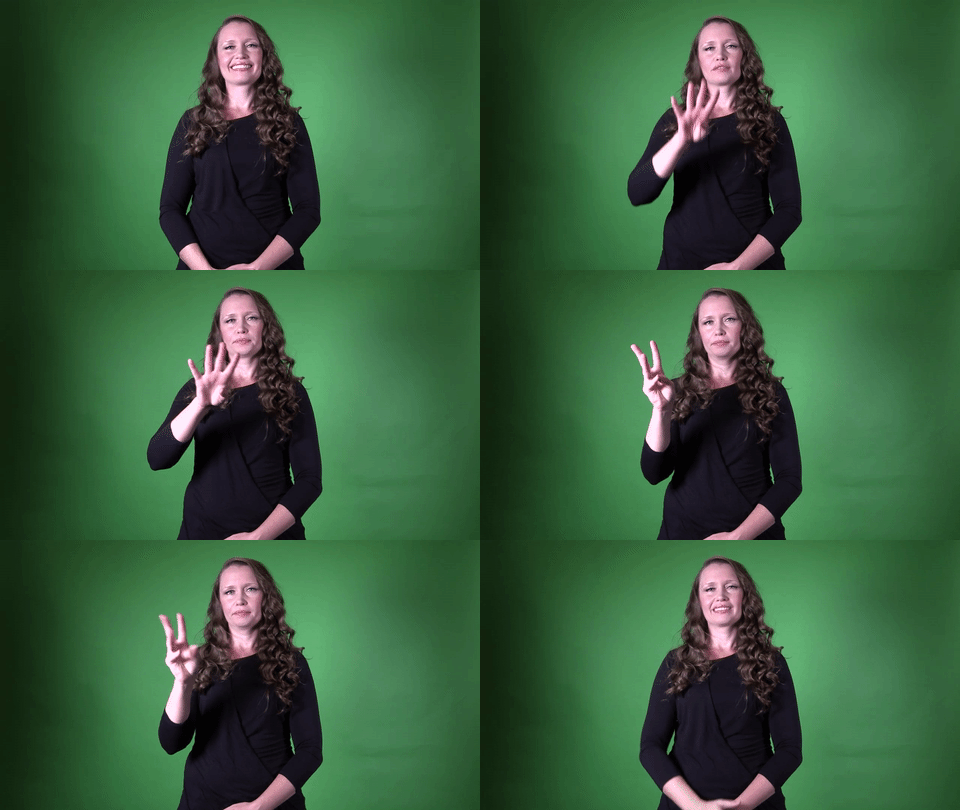
Sign for 46 in ASL 

YouTube player

Practice Activities:

To practice the sign for 46 in ASL, begin by repeatedly forming the sign in isolation. Focus on smoothly transitioning between the “4” and “6” handshapes without hesitation. Use a mirror or record yourself to ensure accuracy and fluidity.

Incorporate the sign for 46 in ASL into basic counting exercises. Count from 40 to 50, emphasizing 46 each time. Try counting backward from 50 to 40, ensuring that 46 remains clear and distinct from the surrounding numbers.

Use the sign for 46 in ASL in context by talking about real-life situations. For example, sign about someone who is 46 years old or mention counting 46 objects. Create a short story where 46 is an important number, such as a runner completing their 46th race or a baker making a batch of 46 cookies.

Practice with a partner by quizzing each other on random numbers, including 46. Take turns signing numbers while the other person identifies them. You can also create math problems and sign the answers using ASL numbers, ensuring 46 appears frequently.

Enhance fluency by incorporating 46 into a timer-based exercise. Sign numbers from 1 to 50 as quickly and accurately as possible, making sure the sign for 46 in ASL remains precise. Repeat the activity at different speeds to develop confidence.

For an advanced challenge, practice fingerspelling words that relate to 46, such as “forty-sixth” or “route 46.” Then, seamlessly transition between the fingerspelled words and the numerical sign. This will help reinforce recognition and dexterity with the number.

Cultural Context:

Understanding the sign for 46 in ASL is essential for anyone learning American Sign Language. Numbers play a significant role in everyday communication, from discussing quantities to stating ages, addresses, and prices. The sign for 46 in ASL follows a numerical pattern that makes counting in ASL efficient and visually clear.

The American Deaf community uses ASL numbers in various contexts, including education, business, and personal interactions. Knowing the sign for 46 in ASL helps in conversations about counting, sports scores, money, and years. Whether you’re signing a phone number or a mathematical equation, fluency with numbers improves overall ASL communication.

Deaf culture emphasizes the importance of facial expressions and hand movements to convey meaning. When signing the sign for 46 in ASL, maintaining accuracy in handshape and movement ensures clarity. A small variation in handshape can change the meaning or cause confusion, making precision essential.

Numbers in ASL are frequently used in storytelling, dates, and historical references. The sign for 46 in ASL might come up when discussing history, a person’s age, or specific cultural events. Learning these number signs builds confidence and enhances the ability to engage in ASL conversations.

Technology and social media have made ASL more accessible to learners worldwide. Videos and tutorials help people master details such as the sign for 46 in ASL. Practicing regularly with fluent signers or online resources improves accuracy and comprehension.

ASL is a dynamic language that differs from English in grammar and structure. The sign for 46 in ASL is part of a logical numerical system that simplifies counting and calculations. Understanding ASL numbers opens doors to deeper communication within the Deaf community.

Whether in classrooms, workplaces, or casual conversations, numbers are an integral part of ASL communication. Learning the sign for 46 in ASL strengthens overall fluency and helps in daily interactions. Mastering ASL numbers contributes to smoother, more natural conversations with Deaf individuals.

By focusing on correct handshapes and movements, learners ensure that they sign 46 in ASL accurately. Miscommunication can occur if numbers are signed incorrectly, so careful attention to detail is necessary. Watching experienced signers and practicing consistently improves fluency and confidence.

ASL learners benefit from understanding numerical signs early in their journey. Since numbers appear frequently in everyday usage, mastering the sign for 46 in ASL is a valuable skill. Regular practice and real-world application lead to stronger signing abilities.

Extended Definition:

The sign for 46 in ASL follows the standard pattern for signing two-digit numbers. It combines the numbers 4 and 6 in a continuous motion using one hand. This method is consistent with other two-digit numbers in American Sign Language.

When signing 46 in ASL, start with the number 4 handshape, holding up four fingers while keeping the thumb tucked in. Then, smoothly transition into the number 6 handshape, where the thumb and pinky finger touch while the other fingers remain extended. This transition should be fluid to maintain clarity and ease of understanding.

Numbers in ASL rely on distinct handshapes and movements to ensure accuracy. The sign for 46 in ASL is performed with the dominant hand, usually in front of the chest or slightly off to the side. Hand orientation and positioning are important to avoid confusion with similar numbers.

ASL numbers are used in various contexts, including counting, addresses, and expressing ages. The sign for 46 in ASL may be used when discussing quantities, years, or numerical references in conversations. Clear articulation of the numbers is essential for effective communication.

Regional variations may exist in how certain numbers are signed. However, the general method for signing 46 in ASL remains widely understood. Practicing number signs frequently can help improve fluency and comprehension in sign language.

Facial expressions and body language also support signed numbers. While signing 46 in ASL, maintaining a neutral or context-appropriate facial expression is helpful. This ensures natural communication and prevents misunderstandings.

ASL number signs are an essential part of the language structure. Learning the sign for 46 in ASL helps build a foundation for understanding larger numbers. Mastering number transitions improves signing speed and overall communication skills.

By consistently practicing, signers can develop confidence in signing numbers accurately. The sign for 46 in ASL, like other numbers, should be executed smoothly. This helps maintain the natural flow of conversation in ASL.

Synonyms: forty-six, number forty-six, number 46, the number 46, the number forty-six

Educational resources: Find related learning materials in our course bank!

Want more? Check out some of our popular learning activities on the homepage!

Need to look up a sign? Use our highly rated dictionary: https://aslinteractive.com/best-asl-dictionary/

Follow us on tiktok: https://www.tiktok.com/@aslinteractive. More social media links at the bottom of this page!

Long-tail Keywords: what is the sign for 46 in ASL, how do you sign 46 in American Sign Language, learn the ASL sign for 46

Categories: Numbers – Basics, Numbers 41-50, cardinal numbers

tags: Numbers 41-50, Numbers, Math, Educational, Language Learning

Parameters

*Handshape*:

The sign for 46 in ASL uses a two-digit number formation with the dominant hand. It starts with the number 4 handshape, where the index, middle, ring, and pinky fingers are extended while the thumb is tucked in. Then, the hand smoothly transitions into the number 6 handshape, bringing the pinky and thumb together while the index, middle, and ring fingers remain extended.

When signing the sign for 46 in ASL, ensure a clear and fluid movement between the two numbers. Maintain a steady palm orientation, usually facing outward, for easy readability. Keep the hand relaxed to facilitate the transition, ensuring each number is visually distinct for the viewer.

*Palm Orientation*:

the palm orientation for the sign for 46 in ASL starts with the palm facing outward as the number 4 is shown. The fingers are extended and slightly spread apart while the thumb remains tucked. As the transition to 6 occurs, the palm remains forward while the pinky and thumb touch to form the number 6 . The movement between the two numbers should be fluid, ensuring clarity when signing the sign for 46 in ASL.

*Location*:

The sign for 46 in ASL is formed in the neutral space in front of the signer’s body, typically at chest level. The hand transitions smoothly between the numbers 4 and 6, maintaining clear finger positions. The movement is fluid to ensure clarity. Proper placement in the signing space helps maintain visibility and readability. The sign for 46 in ASL should be performed with a steady hand to avoid confusion with similar numbers.

*Movement*:

Begin by forming the number 4 with your dominant hand, extending the index, middle, ring, and pinky fingers while keeping the thumb tucked. Rotate the wrist slightly as you transition smoothly into the number 6 by touching the pinky to the thumb while the remaining three fingers stay extended. The sign for 46 in ASL requires a clear transition between these two handshapes, ensuring fluidity and precision in movement.

*Non-Manual Signals*:

When performing the sign for 46 in ASL, maintain a neutral facial expression or a slight focus to show clarity in communication. Eyebrows remain relaxed unless emphasizing the number in a question or clarification. Mouth movements should correspond naturally with the numbers as they are signed, avoiding exaggerated expressions. Ensure eye contact with the receiver to reinforce the sign for 46 in ASL and enhance comprehension.

*Prosody, Dominant/Non-Dominant Hand*:

The sign for 46 in ASL is formed using the dominant hand. Start with the number 4 handshape, with the palm facing outward. Then smoothly transition into the number 6 handshape, where the pinky and thumb touch. The movement should be fluid to clearly indicate the sequence of numbers. This method ensures the sign for 46 in ASL is easily understood within numerical contexts. Make sure the transitions are distinct yet smooth.

Tips for Beginners:

When learning the sign for 46 in ASL, focus on maintaining clear finger transitions. The sign for 46 in ASL follows a number pattern that requires fluid movement between digits. Make sure your handshape remains steady, and each number shift is smooth to avoid confusion.

A common mistake is rushing through the transition between numbers. Beginners often don’t fully form the 4 before moving into the 6, making the sign unclear. Slow down and practice each handshape separately before combining them into one motion.

Finger placement is crucial for clarity. When signing the 4, keep all four fingers extended with the thumb tucked in. Then transition into the 6 by touching the pinky to the thumb while the other three fingers stay extended. Ensuring proper hand positioning improves readability.

Practice in front of a mirror to check your form. Watching your hand movements helps match what fluent signers produce. If possible, record yourself and compare your signs with native ASL users to refine your technique.

Hand orientation should remain consistent. Hold your dominant hand upright, fingers facing outward toward the person who is viewing. If you tilt your hand incorrectly, it may look like another number, leading to misunderstandings.

Context is important when using numbers in ASL. The sign for 46 in ASL might appear differently depending on the counting system or numbering format used. Pay attention to how numbers are signed in money, time, and measurements to use the correct variation in real-life settings.

The best way to improve is repetition. Consistently practice forming numbers and transitioning smoothly between them. Over time, your muscle memory will strengthen, and signing 46 will feel more natural. Seek feedback from fluent ASL users to enhance accuracy and confidence.

Connections to Other topics:

The sign for 46 in ASL is part of a broader numerical system that includes both cardinal and ordinal numbers. Understanding the sign for 46 in ASL helps grasp the numerical patterns used in signing other numbers in the 40s series. The transitions within these numbers follow a systematic pattern where the hand moves smoothly from one digit to the next, reinforcing the importance of fluidity in ASL numbering.

This sign connects to number sequencing and mathematical concepts in ASL. Counting, financial transactions, and measurements often require knowledge of numerical signs, including the sign for 46 in ASL. Additionally, numbers are frequently incorporated into age signs, calendar-related vocabulary, and sports statistics, making them essential for broader communication.

The sign for 46 in ASL also links to temporal concepts such as years, decades, and historical contexts. For example, years like 1946 would involve signing 19 followed by 46 in a structured movement. Decade-related discussions, such as talking about the 1940s, would generally involve a combination of number signs and additional context.

Understanding number patterns in ASL can improve fingerspelling and numerical cognition in signed conversations. Many classifiers involve number incorporation, such as classifiers for specific quantities or locations. Expressing precise quantities, such as measurements or identifying specific addresses, often requires fluency with number signs, including the sign for 46 in ASL.

Handshape consistency plays a role in ensuring clarity when transitioning between digits in multi-digit numbers. Being comfortable with alternating between hand configurations enables more natural counting sequences. This skill extends to time-telling, phone numbers, and statistics, supporting overall fluency in numerical and conversational ASL.

Summary:

The sign for 46 in ASL follows a structured numerical pattern that aligns with the way numbers are generally signed in American Sign Language. It is signed using a combination of numerical handshapes, transitioning smoothly to indicate the number without confusion. ASL numbers from 40 to 49 rely on a consistent movement or shape retention to ensure clarity.

To sign 46, the signer starts with the hand forming the number 4, with the palm facing outward and the four fingers extended. Then, a transition occurs to the number 6, which is formed by touching the pinky and thumb while the other three fingers remain extended. This movement helps visually distinguish the number 46 from other numerical values in ASL.

ASL numbers from 40 to 49 are particularly interesting due to their visual rhythm. The handshape transition is fluid, helping convey the number clearly while maintaining efficiency in signing. This fluency is crucial in fast-paced conversations where numerical information needs to be communicated quickly.

Numbers play a major role in everyday interactions, and the sign for 46 in ASL is useful in contexts such as ages, addresses, prices, and counting. Understanding how ASL structures multi-digit numbers allows for better accuracy in communication. Just as in spoken languages, structuring numbers correctly is crucial for avoiding misunderstandings.

The hand positioning in ASL numerical signs often follows a set pattern to differentiate similar numbers visually. Some numbers, like 46 and 56, may appear similar at a glance, but careful movement and handshapes help distinguish them. Signers often ensure clarity by moving at an appropriate pace, neither too fast nor too slow, for the receiver to understand.

The sign for 46 in ASL follows numerical grammar rules that make numbers easy to read in a visual language. This structured system makes learning ASL numbers efficient because patterns emerge, particularly when moving between specific sets of numbers. Mastering these transitions helps maintain smooth communication when signing larger numerical figures.

Numerical sequences like 46 highlight the logical structure in ASL and reinforce how spatial awareness is integral to the language. By using clearly defined movements, signers prevent confusion when communicating numbers, which is important in data-heavy conversations. Signing numbers correctly is also crucial in professional settings, such as financial discussions or phone number exchanges.

The way numbers are signed in ASL also connects to broader linguistic principles in sign language studies. The efficiency of number signing relies on the ease of transition between different handshapes without unnecessary pauses. This makes numerical signs one of the most visually systematic aspects of ASL.

The cultural significance of numbers in ASL goes beyond just their mathematical value. Many signers use numbers in storytelling, personal histories, and even names when incorporating numerical identifiers. The structured way ASL conveys numbers like 46 provides a foundation for effective communication between Deaf and hearing individuals.

ASL numbers have their own rhythm, much like spoken numbers, where inflection in tone is replaced by hand movement and positioning. For fluent signers, numerical transitions become automatic, enhancing overall fluency. The ability to sign numbers quickly and correctly is an important skill for anyone learning ASL.

One common challenge for ASL learners is differentiating similar numerical signs. Numbers like 46 and 49 can look similar if signed too quickly, leading to possible confusion. Practicing the precise transitions between numbers ensures that each digit is clear and correctly understood.

Learning the sign for 46 in ASL within the context of counting from 40 to 49 helps reinforce the natural pattern in numerical sign transitions. Understanding this pattern reduces cognitive load, allowing signers to focus on conveying accurate information within conversations. Numbers also play an essential role in time-related expressions, such as indicating ages and years.

The biomechanics involved in numerical signs focus on dexterity, precision, and clarity. The transition from 4 to 6 requires a controlled opening and closing of the fingers while maintaining proper hand positioning. Consistency in these gestures ensures that the numerical sign is received correctly.

Digits in ASL rely on palm orientation and controlled motions to enhance comprehension. Misaligning hand orientation while signing 46 can potentially lead to misinterpretation as a different number. This highlights the importance of muscle memory and structured hand movements when signing numbers.

Many ASL users also finger-count in a structured sequence for consistency. The numbers 40-49 maintain a uniform numerical system that echoes spoken number patterns but in a visual medium. This illustrates ASL’s capability to function as a full language with its own numerical grammar rules.

The clarity of numerical signs also depends on signer positioning. Signing too close to the body or too far away can distort visibility, affecting comprehension. A balanced approach ensures that numbers remain visible and fluid for ease of understanding.

Numbers in ASL provide insight into how sign language organizes quantitative data in a visual way. The structure of the language ensures that signers can efficiently communicate numerical information in both casual and formal

Want more? Check out some of our popular learning activities!

ASL Interactive Resources

ASLInteractive YouTube Channel

Follow us on tiktok: @aslinteractive.com

Follow us on Instagram: aslinteractive

Facebook page: aslinteractive

Facebook group: aslinteractive

LInkedIn: ASL Interactive LLC

Twitter: @ASL_interactive

*Some information on this page is AI-generated. AI can make mistakes. Please check the information.

Sign for 46 in ASL 

Responses