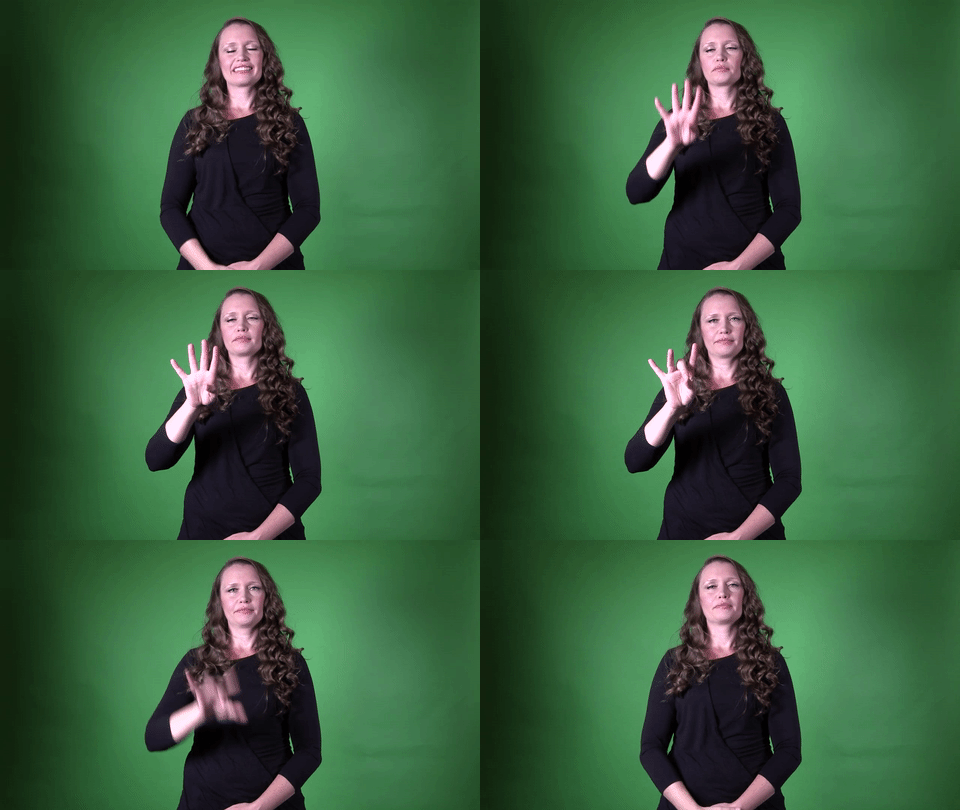
Definition: Refers to the number forty-eight
Sign for NUMBER 48 in ASL

Practice Activities:
Practicing the sign for number 48 in ASL can be engaging and effective with a variety of activities. Start by repeatedly signing the number in front of a mirror to ensure correct handshapes and transitions. Try signing it slowly at first, focusing on the change between the digits, then gradually increase your speed while maintaining accuracy.
Use flashcards with different numbers and randomly select one to sign, including the sign for number 48 in ASL. Practice fingerspelling a sequence of numbers that includes 48 to improve fluency. Challenge yourself to sign a countdown from 50 to 40, ensuring that 48 is smoothly integrated into the sequence.
Incorporate the sign for number 48 in ASL into real-world situations. Practice saying your age or a random number within a conversation. Create a short story that features the number, such as talking about “48 students in a class” or “48 miles to a destination.” Write down different number-related facts and sign them aloud, such as “I read 48 books last year.”
Engage with a partner for interactive practice. One person signs a number, and the other must identify it correctly, including the sign for number 48 in ASL. Play a number-guessing game where one person describes a situation using a number, and the other must guess the number being signed. Another activity is using flashcards with written numbers and signing them to a partner for reinforcement.
For a fun exercise, practice signing numbers while listening to a recording of spoken numbers, ensuring you can recognize and sign 48 quickly. Record yourself signing different numbers and review your accuracy. By practicing in isolation and in context, you will gain confidence in correctly using the sign for number 48 in ASL.
Cultural Context:
The sign for number 48 in ASL is an important part of American Sign Language numbering. Numbers are frequently used in daily communication, from telling time to sharing addresses. Knowing the sign for number 48 in ASL helps improve fluency and understanding.
In ASL, numbers follow a specific pattern and are often signed with one hand. The sign for number 48 in ASL is formed using the dominant hand, following the rules for signing two-digit numbers. Mastering this sign makes it easier to understand and produce larger numerical concepts in ASL.
Deaf culture relies on ASL numbers for everything from sports scores to academic discussions. The sign for number 48 in ASL might come up in conversations about age, prices, or distances. Practicing number signs helps with better overall ASL communication.
Using the sign for number 48 in ASL correctly ensures clear and effective communication within the Deaf community. ASL users often incorporate numbers into daily conversations, making it essential to learn and memorize them. Fluency with number signs helps in education, work, and social situations.
Numbers in ASL are not just functional; they also have cultural significance. The sign for number 48 in ASL could be used in historical dates, rankings, or sports statistics. Learning number signs helps in fully engaging with ASL and Deaf culture.
Because ASL is a visual language, number signs like the sign for number 48 in ASL must be performed correctly to avoid miscommunication. Subtle handshape differences can change the meaning of a number sign. Accuracy ensures that the number is understood as intended.
When signing numbers, facial expressions and speed can impact meaning. The sign for number 48 in ASL should be signed clearly to ensure the viewer understands it without confusion. Practicing number signs regularly improves signing speed and comprehension.
Many ASL learners struggle with two-digit numbers at first. The sign for number 48 in ASL may take practice, but once mastered, it becomes second nature in conversation. Repetition and exposure to ASL numbers help build fluency over time.
ASL numbers are used in education, business, and everyday communication. Knowing the sign for number 48 in ASL prepares signers for situations where numbers are essential. Developing strong number-signing skills enhances overall ASL proficiency.
ASL numbering has unique rules compared to spoken languages. The sign for number 48 in ASL follows the pattern of ASL numerical structure
Extended Definition:
The sign for number 48 in ASL follows a common pattern for signing double-digit numbers. It combines the signs for 4 and 8 in a fluid motion to clearly indicate the number 48. This sign is typically made with one hand, using a quick transformation between the two digits.
When signing number 48 in ASL, the handshape starts with the number 4, where the index, middle, ring, and pinky fingers are extended while the thumb stays tucked in. The hand then smoothly transitions into the number 8 by bringing the middle finger to touch the thumb while the other fingers remain extended. This movement keeps the sign clear and recognizable.
ASL numbers from 30 to 99, including number 48, follow a pattern that helps maintain clarity in conversation. The number 48 is signed with a natural hand transition, making it easy for fluent signers to recognize. Proper finger positioning and a smooth shift between digits ensure that the number is understood accurately.
Knowing how to sign number 48 in ASL is useful in many everyday situations. It can be used when giving a phone number, providing an address, or discussing quantities. Numbers are essential in ASL communication, and being able to sign them correctly can improve overall fluency.
Pronunciation of ASL numbers relies on handshape and motion rather than spoken sounds. The sign for number 48 in ASL should flow naturally, with slight wrist movement to emphasize the transition. Practicing this number regularly can help strengthen signing skills and improve recognition.
Numbers in ASL can be incorporated into larger numerical concepts. For example, number 48 may be included in math problems, age references, or financial transactions. Understanding these number signs helps create a more complete grasp of ASL for everyday use.
In ASL, clarity and consistency are key when signing numbers. The sign for number 48 in ASL should be practiced with a steady rhythm to ensure comprehension. Watching native signers or using ASL resources can provide helpful visual examples.
Many ASL learners find signing numbers a bit challenging at first. Practicing finger transitions, such as those in the number 48, can increase confidence over time. Using a mirror or video recording can help learners refine their technique.
The sign for number 48 in ASL remains the same whether used alone or within a numerical sequence. Maintaining a consistent size and speed while signing numbers helps with readability. Every number sign follows a standardized approach to
Synonyms: forty-eight, forty-eight, number forty-eight, number 48, the number 48, the number forty-eight
Educational resources: Find related learning materials in our course bank!
Want more? Check out some of our popular learning activities on the homepage!
Need to look up a sign? Use our highly rated dictionary: https://aslinteractive.com/best-asl-dictionary/
Follow us on tiktok: https://www.tiktok.com/@aslinteractive. More social media links at the bottom of this page!
Long-tail Keywords: what is the sign for number 48 in ASL, how do you sign number 48 in ASL, ASL sign for the number 48
Categories: Numbers – Basics, Numbers 41-50, cardinal numbers
tags: Numbers 41-50, Numbers, Math, Educational, Language Learning
Parameters
*Handshape*:
The sign for NUMBER 48 in ASL uses a two-part handshape transition. It starts with the number 4, where the index, middle, ring, and pinky fingers are extended while the thumb remains tucked. The hand then shifts into the number 8, curling the middle finger to touch the thumb while the index, ring, and pinky fingers extend. This numerical transition is fluid and typically performed with the dominant hand, maintaining a forward orientation.
*Palm Orientation*:
The palm orientation for the sign for NUMBER 48 in ASL starts with the dominant hand facing outward. The number “4” is formed with the palm facing forward, then transitions to the number “8” by curving the middle finger while maintaining outward orientation. The movement should be fluid, ensuring a natural transition between the two numbers while keeping the fingers comfortably positioned. The sign for NUMBER 48 in ASL follows the standard number transition rules. ✋
*Location*:
The sign for number 48 in ASL is produced in the neutral space in front of the signer, slightly above waist level. The dominant hand forms the number 4 and then transitions to the number 8 in a smooth motion. This movement happens within the signing space without touching the body, maintaining a clear visual representation for easy recognition.
*Movement*:
To produce the sign for number 48 in ASL, start by forming the number 4 with your dominant hand, palm facing out. Transition smoothly into the number 8 by tucking in the index and middle fingers while extending the thumb and making contact with the tip of the middle finger. This movement should be fluid, maintaining a consistent handshape change without hesitation. Ensure clear transitions to differentiate the digits effectively. ✋➔
*Non-Manual Signals*:
Facial expression should remain neutral or slightly focused while signing the sign for number 48 in ASL. Eyebrows should be in a relaxed position unless the number is being emphasized or used in a question, in which case they may raise slightly. Eye gaze should be directed toward the person being communicated with or at the hand while forming the sign for number 48 in ASL for clarity. Mouth movements should remain natural, with slight lip rounding if necessary for emphasis.
*Prosody, Dominant/Non-Dominant Hand*:
The sign for number 48 in ASL uses the dominant hand, forming the number 4 with the fingers extended. The hand then transitions smoothly into the number 8 by tucking in the index, middle, and ring fingers while extending the pinky and thumb. This motion is performed with a slight flick of the wrist, ensuring clarity. The non-dominant hand is not used, as the sign for number 48 in ASL is executed with one hand.
Tips for Beginners:
When learning the sign for NUMBER 48 in ASL, it’s important to have fluency with number signs. This sign is typically formed by transitioning smoothly from the number 4 to 8, ensuring each handshape is distinct. Keep your fingers relaxed and avoid stiff movements, as fluidity is key to proper execution.
A common mistake is tensing your fingers too much, which can make the transition from 4 to 8 look awkward. To avoid this, practice signing numbers in sequences to build comfort with handshape changes. Another trick is to use a slight bounce or wrist movement to emphasize the shift.
Hand orientation matters when signing numbers, including the sign for NUMBER 48 in ASL. Ensure your palm faces outward when forming the number 4, and maintain consistency as you change to 8. In casual settings, signers may angle their hands slightly, but beginners should focus on clear, direct movements.
Finger strength and dexterity play a big role in number signs, so exercise your fingers regularly to improve control. Practicing with a mirror or recording yourself can help identify any inconsistencies in hand transitions. Watching fluent signers can also provide insight into how to execute this number smoothly.
When using the sign for NUMBER 48 in ASL in conversation, keep up confidence and rhythm. Native signers often sign numbers quickly, so practicing speed along with accuracy will be beneficial. Keep your hand steady and avoid unnecessary additional movements, as this may confuse your meaning.
If you struggle with remembering shapes, break the sign down into two parts: first forming the 4 correctly, then transitioning to the 8. Repetition is key, and signing frequently will make the movement feel more natural. With patience and ongoing practice, you’ll master the sign for NUMBER 48 in ASL effectively.
Connections to Other topics:
The sign for NUMBER 48 in ASL connects to the broader system of number signs in ASL, which follows a consistent structure in American Sign Language. Numbers from 1 to 99 often have distinct movements that integrate with patterns used in counting, age, money, and time signs. The transition between digits, as seen in the sign for NUMBER 48 in ASL, reflects the general rule of flipping or twisting movements used in number sequencing.
Numbers in ASL integrate into larger expressions such as addresses, phone numbers, and measurements. In signing dates or counting in a sequence, the sign for NUMBER 48 in ASL would follow the same conventions as other two-digit numbers, maintaining clarity in numerical communication. This is particularly essential for topics like math, sports scores, or statistics, where precision in number signs ensures accuracy.
Another connection is how number signs influence compound signs. For example, numbers can be incorporated into concepts related to age by signing the number directly from the chin area, a common structure for age-related expressions. The sign for NUMBER 48 in ASL could be part of a signed phrase like “48 years old” by incorporating that number directly into the age structure.
Numbers also play a role in classifiers, especially when describing quantities or rankings. If referencing 48 items, ASL users may sign NUMBER 48 in ASL before incorporating a classifier to contextualize what is being quantified. This technique helps ensure meaning is effectively conveyed through both numerical representation and spatial agreement.
The efficiency of numerical signs in ASL makes them an essential part of communicating about money, time, and sequences. Whether counting or expressing a specific value, the sign for NUMBER 48 in ASL follows ASL’s structured approach to numbers, reinforcing the importance of consistency in number-related signs in various everyday contexts.
Summary:
The sign for NUMBER 48 in ASL follows a pattern seen in numbers that end in 8. The hand moves in a fluid motion, transitioning between the digits 4 and 8. This sign is part of the larger numerical system in ASL that builds from foundational number signs.
When signing NUMBER 48 in ASL, start with the number 4 on your dominant hand. The palm faces outward, with the four fingers extended and separated. Then smoothly transition to the number 8 by folding the middle finger to touch the thumb.
This number sign is often used in various contexts, including counting, measurements, and age. It might appear in phone numbers, addresses, or specific data references. In discussions involving historical dates, sports statistics, or financial figures, NUMBER 48 in ASL can be significant.
Numerical fluidity is essential for clear sign production. The transition between 4 and 8 should feel natural rather than robotic. Many numbers in ASL follow a predictably smooth motion, helping to maintain the grammatical flow of signed communication.
ASL numbers rely on consistent structure to enhance clarity. A signer must control handshape changes to avoid visual confusion. Practicing numerical transitions like NUMBER 48 in ASL supports overall fluency in expressing numeric values.
Number signs are integral in everyday signed conversations. Whether in banking, statistics, or personal identification, numbers appear frequently. Signing NUMBER 48 in ASL precisely ensures efficient communication in numerical contexts.
ASL numbers align with broader linguistic principles. Like spoken languages, ASL exhibits numerical morphology, where handshape modifications convey meaning. The transition within NUMBER 48 in ASL demonstrates this morphological shift between digits.
Beyond basic counting, context determines how NUMBER 48 in ASL is used. It could indicate a quantity, an identifier, or an arbitrary numerical label depending on the situation. Understanding its flexibility ensures appropriate application in various environments.
Number sign accuracy impacts communication effectiveness. When signing NUMBER 48 in ASL, maintaining a consistent transition prevents misinterpretation. Misarticulated numbers might alter meaning, leading to potential confusion.
ASL number systems extend to mathematical operations. Addition, subtraction, multiplication, and division incorporate numerical signs fluidly. Using NUMBER 48 in ASL within equations ensures its correct representation during signed mathematic discussions.
Sports-related contexts often emphasize numbers. A player’s jersey might feature 48, requiring accurate sign production in ASL sports commentary. Number-specific recognition is crucial for conveying player statistics during signed broadcasts.
Addresses and identification numbers frequently use multi-digit numerical sequences. When signing NUMBER 48 in ASL within addresses, maintaining rhythmic clarity secures meaning. Reducing hesitation between number changes improves interpretability.
Cultural factors influence numerical signs in ASL. Some numbers carry cultural or superstitious meanings, though 48 does not have broad symbolic significance. However, mastering correct number signs respects ASL’s linguistic heritage.
ASL learners often practice numerical sequences to enhance dexterity. Transitioning between numbers like 4 and 8 improves overall manual articulation. Signing NUMBER 48 in ASL frequently strengthens motor control for smoother numerical expression.
Visual perception in ASL depends on clarity. Numbers must remain distinct to avoid ambiguity. Signing NUMBER 48 in ASL cleanly and deliberately ensures visual comprehensibility in fast-paced discussions.
Technology and digital communication incorporate signed numbers. Video chats and ASL-based media require precise number articulation. Ensuring clear expression of NUMBER 48 in ASL in digital spaces reinforces effective remote conversations.
Interpreters must deliver numerical information accurately. When interpreting fast numerical data, clear enunciation of NUMBER 48 in ASL prevents confusion. Maintaining measured transitions supports interpreter accuracy.
Linguistic rhythm is central to signing fluency. Smooth number transitions contribute to ASL’s overall visual cadence. Practicing NUMBER 48 in ASL in sequential counting refines consistency in number articulation.
Numerical precision forms the foundation of ASL fingerspelling integration. Number signs frequently appear alongside fingerspelled words in specific contexts. Practicing NUMBER 48 in ASL alongside other number sequences sharpens fluency.
Sign adjustments might occur depending on regional or stylistic variations. Some signers might emphasize distinct hand transitions for clarity. Observing various ASL users sign NUMBER 48 in ASL highlights diverse stylistic approaches.
ASL structure maintains syntactic rules distinct from English. When incorporating NUMBER 48 in ASL into sentences, its placement aligns with ASL syntax. Understanding sentence structure ensures that numbers contribute logically within ASL grammar.
Educational frameworks emphasize numerical ASL competency. Signing NUMBER 48 in ASL correctly supports foundational lessons on number articulation. Many ASL curriculum paths include progressive number-focused exercises for learners.
Mathematical instruction in ASL incorporates visual learning. Teachers who use ASL guide students through numerical signs clearly. Expressing NUMBER 48 in ASL effectively supports numeracy development in
Want more? Check out some of our popular learning activities!
ASL Interactive Resources
ASLInteractive YouTube Channel
Follow us on tiktok: @aslinteractive.com
Follow us on Instagram: aslinteractive
Facebook page: aslinteractive
Facebook group: aslinteractive
LInkedIn: ASL Interactive LLC
Twitter: @ASL_interactive
*Some information on this page is AI-generated. AI can make mistakes. Please check the information.


Responses