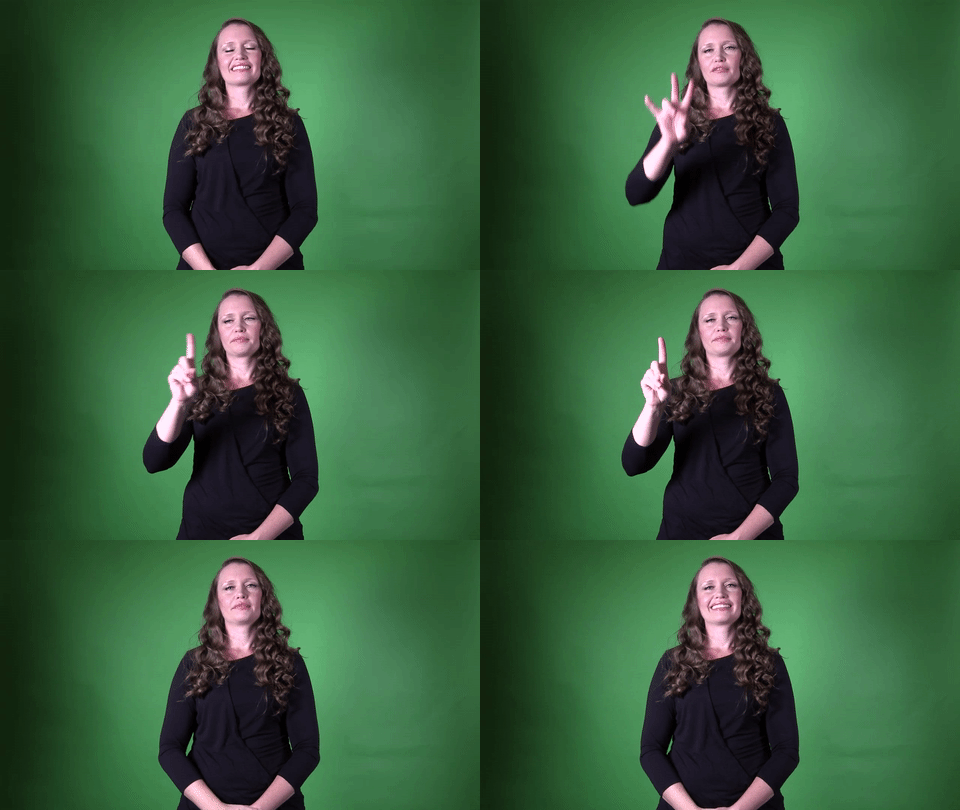
Sign for THE NUMBER 71 in ASL | 🔢 ASL Dictionary

Definition: Refers to the number seventy-one

Sign for THE NUMBER 71 in ASL 

YouTube player

Practice Activities:

To practice the sign for the number 71 in ASL, start by signing it slowly and focusing on handshape transitions. Repeat the sign multiple times in front of a mirror to ensure accuracy in both formation and movement. Try signing it with your dominant hand while keeping your non-dominant hand relaxed at your side.

Once you are comfortable, practice signing the number in sequences. Count from 70 to 75, incorporating the sign for the number 71 in ASL to strengthen fluidity. For more variety, randomly sign numbers between 60 and 80 to challenge yourself in recognizing and producing different values.

Incorporate the number into real-life contexts. Imagine you are talking about someone’s age, a highway number, or the price of an item. Practice sentences such as “My grandfather is 71 years old” or “The highway exit is number 71.” Signing these in front of a mirror or recording yourself will help build confidence.

Try a number guessing game with a partner. One person signs a random number between 60 and 80 while the other identifies it, making sure to include the sign for the number 71 in ASL in the mix. You can also switch roles to challenge your receptive skills.

Create a short story where the number 71 plays a key role. Maybe someone wins a raffle with that number, or it represents a locker number. Signing out the story will reinforce memory and improve expressive fluency.

Lastly, mix in fingerspelling with numbers to improve transitions. Practice signing a short phrase like “71A Street” or “Room 71B,” smoothly combining letters and numbers. This will enhance your ability to use the sign naturally in different situations.

Cultural Context:

The sign for the number 71 in ASL is part of the number system used in American Sign Language to express numerical values. Numbers play an essential role in daily conversations, from discussing ages and quantities to sharing addresses and phone numbers. Knowing how to sign numbers correctly helps ensure clear and effective communication.

ASL numbers follow specific patterns, and the sign for the number 71 in ASL is no exception. The number incorporates elements of movement and handshape that are consistent with other two-digit numbers. Learning these patterns makes it easier to understand and sign numbers fluently.

Deaf culture values accuracy when signing numbers, especially in formal settings like business or education. The sign for the number 71 in ASL must be produced correctly to avoid confusion with similar numbers. Small mistakes in handshape or movement can lead to misunderstandings in conversations.

Many ASL users rely on numbers for dates, prices, and measurements. The sign for the number 71 in ASL might come up when discussing historical events, sports scores, or statistics. Being able to sign numbers quickly and smoothly is an important skill in ASL communication.

Numbers are also commonly used in storytelling and jokes within the Deaf community. The sign for the number 71 in ASL might be part of a narrative or personal anecdote. Expressing numbers accurately helps maintain the natural flow of a signed conversation.

ASL number signs can vary slightly depending on regional dialects or personal signing styles. The sign for the number 71 in ASL remains generally consistent across ASL users, but some subtle differences may exist. Exposure to different signers helps develop a better understanding of variations in number signs.

When learning the sign for the number 71 in ASL, practice is key to achieving fluidity. Repetition and proper hand placement will make the number easier to recognize and understand in conversations. Watching fluent signers use numbers in context improves comprehension.

Using the sign for the number 71 in ASL correctly demonstrates language proficiency and cultural understanding. Numbers are an integral part of ASL and essential for effective dialogue in various settings. Mastering number signs boosts overall confidence in ASL communication.

Extended Definition:

The sign for the number 71 in ASL is an essential part of learning American Sign Language numbers. When signing numbers in ASL, handshapes and movements must be precise to ensure clarity. The number 71 follows the conventions used in ASL numbering, making it easy to recognize in conversation.

To form the sign for the number 71 in ASL, start by signing the number 7, followed by the number 1. The handshape for 7 is made by extending the index and middle fingers while touching the tip of the thumb to the ring finger. Then, transition smoothly to the handshape for the number 1, which is formed by extending just the index finger.

ASL numbers in the 70s often use a flicking or shaking motion, depending on regional variations. Some signers may use a twisting movement from one number to the next, making the sign flow naturally. Understanding these slight variations can help in recognizing different signing styles.

Numbers play a crucial role in ASL communication, and knowing how to sign the number 71 correctly ensures accuracy. Whether discussing ages, addresses, phone numbers, or quantities, ASL number signs help convey clear information. Many ASL learners practice numbers frequently to improve speed and fluency.

When signing numbers like 71, facial expressions and body language can also provide context. ASL is a visual language, so the way numbers are presented can depend on the situation. Keeping eye contact and maintaining consistent hand positioning helps improve comprehension.

Learning the sign for the number 71 in ASL is useful for everyday conversations and formal settings. Whether using ASL for interpreting, teaching, or casual interactions, mastering numbers is fundamental. Practicing numerical sequences regularly can build confidence and signing accuracy.

When fingerspelling or transitioning between numbers, maintaining a steady pace ensures better understanding. Numbers above 69 often involve a small wrist twist or hand movement to smoothly connect each digit. Observing fluent signers can help beginners refine their technique and movement accuracy.

The sign for the number 71 in ASL is frequently used in different contexts, such as math, finance, and time-related discussions. Businesses, schools, and sign language interpreters rely on precise number signs for effective communication. Mastering these signs helps bridge communication gaps between Deaf and hearing individuals.

Watching ASL videos or practicing with native signers can improve number-signing skills. Seeing the sign for the number 71 in context allows learners to

Synonyms: seventy-one, number seventy-one, number 71, the number 71, the number seventy-one

Educational resources: Find related learning materials in our course bank!

Want more? Check out some of our popular learning activities on the homepage!

Need to look up a sign? Use our highly rated dictionary: https://aslinteractive.com/best-asl-dictionary/

Follow us on tiktok: https://www.tiktok.com/@aslinteractive. More social media links at the bottom of this page!

Long-tail Keywords: what is the sign for the number 71 in ASL, how do you sign the number 71 in ASL, learn how to sign the number 71 in American Sign Language

Categories: Numbers – Basics, Numbers 71-80, cardinal numbers

tags: Numbers 71-75, Numbers, Language Learning, Mathematics, Education

Parameters

*Handshape*:

The sign for the number 71 in ASL uses a two-digit movement. It starts with the palm facing outward in the “7” handshape, where the thumb and ring finger touch while the other fingers extend. Then, the hand smoothly shifts to the “1” handshape by extending the index finger while folding the other digits down.

When signing the number 71 in ASL, keep the movement fluid as you transition between the two handshapes. The shift should be smooth without a pause, ensuring clarity. Hand orientation remains outward throughout the motion, maintaining consistency in representation. ✋

*Palm Orientation*:

The palm orientation for the sign for the number 71 in ASL starts with the palm facing outward. The number 7 is formed with the index finger and thumb extended while the other fingers remain closed. Then, the hand transitions into the number 1 by extending the index finger and folding the other fingers into a fist. The movement should be fluid and natural to maintain clarity when signing the sign for the number 71 in ASL.

*Location*:

The sign for the number 71 in ASL is formed in the neutral space in front of the signer’s dominant shoulder. The hand starts in an upright position with the palm facing forward. The signer begins by forming a “7” with their fingers and smoothly transitions to a “1” without changing location. Maintaining a steady hand position ensures clarity when signing the number 71 in ASL.

*Movement*:

To produce the sign for the number 71 in ASL, start with the palm facing outward. Form the number 7 by touching the tip of the thumb to the tip of the ring finger. Then smoothly transition to the number 1 by extending just the index finger while the other fingers close into a fist. This movement should be fluid to clearly indicate the number sequence without long pauses.

*Non-Manual Signals*:

When signing the sign for the number 71 in ASL, maintain a neutral or slightly focused facial expression. Your eyebrows remain relaxed as this is a straightforward numerical sign. If emphasizing or confirming the number, slightly raise your eyebrows and tilt your head forward. Keep eye contact with the person you are signing to, ensuring clarity. If correcting a mistake, a slight head shake or subtle squint may accompany the sign for the number 71 in ASL.

*Prosody, Dominant/Non-Dominant Hand*:

The sign for the number 71 in ASL uses the dominant hand, forming the number 7 with the index and middle fingers extended while the thumb touches the ring finger. Then, smoothly transition into the number 1 by extending just the index finger. The movement should be fluid, with a slight wrist shift, ensuring clarity when displaying the sign for the number 71 in ASL. Maintain a steady hand position and natural facial expressions.

Tips for Beginners:

When learning the sign for the number 71 in ASL, accuracy in handshape and movement is crucial. The number 71 is signed using a combination of the numbers 7 and 1, transitioning smoothly between them. Keep your palm facing outward and ensure that the transition is clear and distinct to avoid confusion with similar numbers.

One common mistake beginners make when signing the number 71 in ASL is blending the two numbers too quickly or incorrectly moving their fingers. Focus on forming the 7 properly by extending your thumb and ring finger, then transitioning smoothly to the 1 by extending just your index finger. Practicing slow and deliberate movements will improve clarity.

Finger positioning is key to making the sign for the number 71 in ASL easy to read. If your handshape is unclear, it may be misinterpreted as another number. Always keep your fingers relaxed but firm, and maintain a steady orientation to ensure readability from different viewing angles.

Repetition is important in mastering the sign for the number 71 in ASL. Try signing it multiple times in front of a mirror or recording yourself to check hand positioning and movement. Additionally, practicing in different lighting conditions will help ensure you can sign clearly in daily conversations.

Watching native ASL users or online videos can significantly help in understanding the correct motion and speed of the sign for the number 71 in ASL. Signing too fast may cause errors, while signing too slow may appear unnatural. Striking a balance between accuracy and fluidity will make communication more effective.

If you struggle with consistency, break down the sign into steps. First, focus only on forming the 7, then separately work on transitioning to the 1. This method helps reinforce muscle memory, making it easier to sign the number fluently in real conversations.

Connections to Other topics:

The sign for the number 71 in ASL connects closely with ASL numbering rules and handshape consistency. Numbers in ASL often follow patterns based on hand orientation and movement, making it easier for signers to recognize groupings like 60-69 or 70-79. The sign for the number 71 in ASL belongs to the 70s series, which uses a twisting wrist motion from one digit to another. Understanding this structure helps with fluidity when counting or signing monetary figures, addresses, and years.

Ordinal numbers and mathematical expressions also relate to the sign for the number 71 in ASL. For example, adding a slight twist or movement can indicate “71st” in a ranking or order. In mathematical contexts, incorporating the sign for addition, subtraction, or percentage alongside the number 71 can express figures like “71%” or “subtract 71.” This showcases that ASL numbers are adaptable and function in diverse settings, including finance and education.

The sign for the number 71 in ASL is useful when discussing history, birthdates, and ages. If mentioning the year 1971, a signer would typically sign “19” followed by “71,” adhering to the standard format for years. When expressing someone’s age, incorporating the number within the “AGE” sign creates phrases like “71 years old.” This demonstrates how ASL integrates numbers into broader communicative contexts essential for everyday conversation.

Practice with related numbers enhances fluency when signing sequences such as phone numbers and times. Since the 70s series includes numbers 70-79, recognizing the consistent movement pattern improves recognition and recall. The sign for the number 71 in ASL also reinforces dexterity, as transitioning between two distinct digits quickly requires finger control. Learning numerical sequences in ASL supports broader skills in counting, measurements, and precise data communication.

Summary:

The sign for the number 71 in ASL follows a unique numerical pattern consistent with American Sign Language’s numbering system. It is a two-digit number, so it typically involves a transition from one number handshape to another. ASL numbers in this range require fluidity and familiarity with number transitions to ensure clarity.

To produce the sign for the number 71 in ASL, start with the handshape for 7. The hand is held up with the palm facing outward, and the thumb and ring finger touch while the other fingers remain extended. This configuration is crucial for distinguishing 7 from other numbers like 6 or 8 because small handshape differences can change meanings in ASL.

After establishing the 7 handshape, transition smoothly to the handshape for 1. The index finger remains extended while the rest of the fingers fold in. This transition should be seamless, ensuring the number 71 is clearly understood rather than appearing as separate digits.

The movement between the numbers should be fluid, not abrupt. The shift from the 7 to the 1 happens in the same location in space without exaggerated motion. This economy of movement makes the sign smooth and natural when used in ASL communication.

Number signs in ASL follow a structured pattern that ensures clarity and efficiency. The sign for the number 71 in ASL fits within the broader numerical system, where numbers from 67 to 99 often follow a standard transition pattern. Keeping transitions clear is vital for fluent ASL finger movements.

ASL users commonly sign two-digit numbers with a slight flick or change in wrist orientation. However, the specific movement can vary slightly based on region or personal signing style. Some signers may add a small twist of the wrist between 7 and 1, though it remains minimal to maintain efficiency.

Numbers play a crucial role in ASL communication, allowing for precise references to age, time, addresses, and other numerical data. The sign for the number 71 in ASL is useful in various contexts, such as discussing quantities, giving a street address, or referring to historical years. Numbers are essential tools in everyday signing.

The ASL numbering system is distinct from English. While spoken English relies on vocal intonation to clarify digits, ASL numbers depend on clear handshapes and specific transitions. Mastering transitions between two-digit numbers ensures better communication fluency.

Regional variation can sometimes be observed in number signing. Some ASL users may transition from 7 to 1 with a slightly more pronounced movement, while others keep it compact. Regardless of minor variations, the sign remains recognizable within ASL conventions.

Historically, numbering systems in ASL have evolved over time. Earlier signers followed different conventions for some numbers, but modern ASL has standardized most numerical signs for clarity. The sign for the number 71 in ASL reflects this evolution while maintaining ties to traditional ASL structures.

ASL numbering conventions also align with its visual and kinesthetic nature. Instead of relying solely on numeric words, ASL signers use their hands to build a structured numerical system. This visual strategy enhances comprehension for both deaf and hearing ASL users.

When fingerspelling numerical sequences, proper hand placement is key. The sign for the number 71 in ASL should be performed within the neutral space in front of the chest. Overextending the movement too much can make the sign unclear or awkward.

In numerical sequences, signers may need to clarify numbers based on context. If a person misunderstands the sign for 71, the signer can slow down and enunciate the 7 and 1 clearly. Context remains crucial in ensuring accurate interpretation of numbers.

The use of numbers in ASL extends beyond simple counting. Numbers often contribute to more complex linguistic structures, such as classifiers or time references. The sign for the number 71 in ASL can integrate into broader narratives when specifying quantities or years.

ASL also incorporates numerical inflections for different topics. For example, numbering patterns may alter slightly when discussing money, ranking, time, or percentages. The sign for the number 71 in ASL remains consistent but can be adjusted for specific contexts.

Numbers like 71 can play a role in historical discussions or cultural references. If a signer discusses a particular year, such as 1971, they may combine numeric sequences accordingly. Understanding number signs allows for a more comprehensive grasp of ASL storytelling and discourse.

In mathematical or educational settings, signing numbers is essential for clear instruction. Teachers and students use numbers frequently to discuss calculations, data, and sequences. The sign for the number 71 in ASL may appear during math lessons, science presentations, or budget discussions.

There are common mistakes associated with number signing in ASL. A frequent issue is indistinct handshape transitions that make numbers look unclear. Practicing clear 7 and 1 handshapes ensures that the sign for the number

Want more? Check out some of our popular learning activities!

ASL Interactive Resources

ASLInteractive YouTube Channel

Follow us on tiktok: @aslinteractive.com

Follow us on Instagram: aslinteractive

Facebook page: aslinteractive

Facebook group: aslinteractive

LInkedIn: ASL Interactive LLC

Twitter: @ASL_interactive

*Some information on this page is AI-generated. AI can make mistakes. Please check the information.

Sign for 71 in ASL, Sign for SEVENTY-ONE in ASL, Sign for NUMBER SEVENTY-ONE in ASL, Sign for THE NUMBER SEVENTY-ONE in ASL, Sign for THE NUMBER 71 in ASL 

Responses