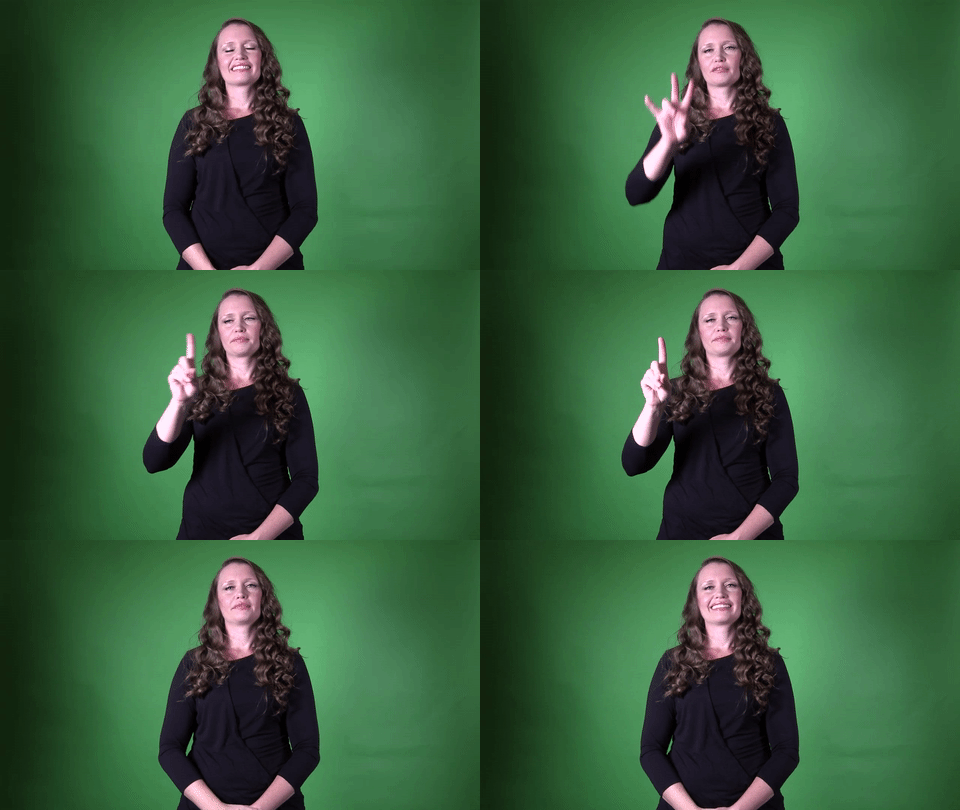
Sign for NUMBER 71 in ASL | 🔢 ASL Dictionary

Definition: Refers to the number seventy-one

Sign for NUMBER 71 in ASL

YouTube player

Practice Activities:

To master the sign for number 71 in ASL, start by practicing it in isolation. Hold up your dominant hand in a neutral position and transition smoothly between the numbers 7 and 1 using the standard ASL number system. Repeat this motion multiple times to build fluency and confidence in signing without hesitation.

Once comfortable, try using the sign for number 71 in ASL in real-world contexts. Count aloud while signing from 70 to 75 to practice transitioning between similar numbers. Create small math problems involving 71 and sign both the equation and the answer to reinforce comprehension.

Engage in a partner activity where one person signs a two-digit number, including 71, and the other must recognize and respond with its written form. Switch roles to practice both signing and receptive skills. Additionally, you can play a number-guessing game where a friend signs a sequence of numbers, and you must identify which one is missing from the sequence.

Use the sign for number 71 in ASL in sentence practice. Example sentences include “My grandmother is 71 years old” or “There are 71 students in this school program.” Try forming your own sentences that include the number 71 in various contexts, such as money, ages, or event counts.

For storytelling, narrate a short scenario where 71 is significant. Describe a store receipt showing a total of $71 or a sports game where a team scored 71 points. Adding context to your signing will reinforce retention and proper execution.

To further enhance your skills, record yourself signing the number and sentences using it. Watching playback allows you to self-correct and observe handshape and transition smoothness. Consistent practice with the sign for number 71 in ASL will help integrate it seamlessly into your signing vocabulary.

Cultural Context:

The sign for number 71 in ASL follows the standard pattern for signing two-digit numbers. American Sign Language often combines handshapes fluidly to represent numbers efficiently. Mastering these number signs helps improve fluency and comprehension in ASL conversations.

Numbers play an important role in daily communication within the Deaf community. Knowing the sign for number 71 in ASL is helpful for giving addresses, phone numbers, and other numerical details. It also supports clear communication in academic and professional settings.

When signing the number 71 in ASL, it’s essential to use the correct handshape and movement. Numbers in ASL follow a logical system that becomes easier with practice. Understanding proper number signing is crucial for effective conversations in ASL.

The sign for number 71 in ASL, like most two-digit numbers, requires attention to finger positioning. Consistent practice helps build muscle memory for signing numbers quickly and accurately. Deaf individuals and ASL learners benefit from mastering number signs for everyday use.

Handshapes are an integral part of ASL and help distinguish different signs. The sign for number 71 in ASL uses specific finger movements that must be executed clearly. Learning number signs ensures better communication in social and professional interactions.

Using the proper technique for signing numbers enhances overall ASL fluency. The sign for number 71 in ASL is commonly used in various contexts, from teaching to personal interactions. Accurate number signing helps convey information without confusion in ASL conversations.

Fluent ASL users recognize number signs instantly, making communication smoother. The sign for number 71 in ASL is one of many essential numerical signs used in everyday interactions. Learning these signs helps both Deaf individuals and ASL students strengthen their signing skills.

Including ASL numbers in daily practice helps build confidence in signing. The sign for number 71 in ASL is often used when discussing dates, quantities, or scores. Proficiency in signing numbers increases overall understanding of American Sign Language.

Since ASL is a visual language, number signs play a crucial role in communication. Knowing the sign for number 71 in ASL ensures clarity when sharing numerical details. Learning and practicing number signs helps bridge communication gaps in diverse situations.

Many ASL number signs follow a standard pattern that makes them easier to remember. The sign for number 71 in ASL is part of this logical system, making numerical communication efficient. Becoming comfortable with ASL numbers improves signing accuracy and speed.

Mastering

Extended Definition:

The sign for number 71 in ASL follows the standard pattern for signing two-digit numbers in American Sign Language. This sign combines the numbers 7 and 1 in a smooth, flowing motion. It’s important to maintain proper handshape and rhythm to ensure clarity.

To sign number 71 in ASL, begin by forming the number 7 with your dominant hand. Your palm should be facing outward, with your thumb touching the tip of your ring finger while the other fingers remain extended. Then transition smoothly into the number 1 by extending your index finger while folding the other fingers down.

The movement between the digits should be natural and fluid. ASL numbers from 67 to 98 typically involve a rocking motion of the hand. For the sign for number 71 in ASL, your hand will slightly rock from a side-to-side position as you transition from 7 to 1.

This sign is commonly used in daily communication, especially when discussing age, addresses, prices, or quantities. When indicating the number in a conversation, make sure your hand is positioned correctly in your signing space. Consistent and clear handshape transitions will help ensure the meaning is understood.

American Sign Language numbers can vary slightly depending on regional accents or personal signing styles. Some ASL users may emphasize the rocking motion more than others. However, the structure of the number remains the same to maintain clarity and understanding.

When practicing the sign for number 71 in ASL, take your time to develop muscle memory. Regular practice will help improve accuracy and confidence. Watching native ASL signers can also help you refine your technique.

Different contexts may require you to sign numbers at different speeds. In formal settings, such as interpreting or teaching, maintaining precision is crucial. In casual conversations, numbers might be signed more quickly but should still remain clear.

Understanding how to sign numbers correctly in ASL is an important skill for effective communication. The sign for number 71 in ASL is just one example of how numbers follow a systematic pattern in ASL. Mastering these patterns will make it easier to sign and understand numbers in various scenarios.

Learning number signs in ASL can be an engaging and rewarding experience. Whether you are a beginner or an advanced signer, practicing different numbers helps build fluency. With consistent effort, signing numbers will become second nature.

Synonyms: seventy-one, number seventy-one, number 71, the number 71, the number seventy-one

Educational resources: Find related learning materials in our course bank!

Want more? Check out some of our popular learning activities on the homepage!

Need to look up a sign? Use our highly rated dictionary: https://aslinteractive.com/best-asl-dictionary/

Follow us on tiktok: https://www.tiktok.com/@aslinteractive. More social media links at the bottom of this page!

Long-tail Keywords: what is the sign for number 71 in ASL, how do you sign number 71 in ASL, ASL sign for number 71

Categories: Numbers – Basics, Numbers 71-80, cardinal numbers

tags: Numbers 71-75, Numbers, Language Learning, Mathematics, Education

Parameters

*Handshape*:

The sign for NUMBER 71 in ASL uses a fluid movement between two handshapes. The dominant hand starts in a “7” handshape, with the thumb and ring finger touching while the remaining fingers extend. It then transitions to a “1” handshape, with the index finger extended and other fingers curled into the palm. This movement maintains a smooth and natural shift, emphasizing the numerical transition while keeping the motion clear and concise.

*Palm Orientation*:

The palm orientation for the sign for NUMBER 71 in ASL starts with the palm facing outward. The hand transitions smoothly as the thumb and pinky fingers extend to form the number 71. The movement is fluid, ensuring a clear differentiation from similar numbers. When signing the sign for NUMBER 71 in ASL, maintain a steady hand position and a confident motion to enhance clarity.

*Location*:

The sign for number 71 in ASL is made in the neutral space in front of the body, typically around chest level. The movement occurs with the dominant hand as it transitions from the number 7 shape to the number 1. The fingers and thumb adjust fluidly as the hand moves slightly outward. This sign for number 71 in ASL follows the traditional number pattern used for expressing double-digit numbers.

*Movement*:

To make the sign for number 71 in ASL, form a “7” by extending the thumb and index finger while keeping the other fingers folded. Then smoothly transition into “1” by bringing in the thumb and fully extending the index finger. The movement should be fluid, with a slight wrist twist as you change from “7” to “1.” This sign for number 71 in ASL should be done at a comfortable pace for clarity.

*Non-Manual Signals*:

When signing the sign for number 71 in ASL, maintain a neutral or slightly focused facial expression . Your eyebrows should remain relaxed unless using emphasis, in which case they may raise slightly. Keep your mouth in a natural, resting position unless the context requires clarification . Eye contact should be directed at the conversational partner to ensure clear communication. Small head nods may help emphasize the number depending on the context.

*Prosody, Dominant/Non-Dominant Hand*:

The sign for NUMBER 71 in ASL uses the dominant hand. Begin with the number 7 handshape (✋ with the thumb and ring finger touching). Then, smoothly transition into the number 1 handshape (☝️) with the index finger extended. The movement is a slight twist of the wrist as the hand transitions between the numbers. The non-dominant hand is not used in this sign. Keep the motion fluid and natural.

Tips for Beginners:

When learning the sign for NUMBER 71 in ASL, start by ensuring that your handshape is correct. The sign follows the standard ASL number system, where the digits are individually represented by their respective number signs. Make sure your palm orientation and finger placement are accurate to avoid confusion with similar numbers like 61 or 81.

A common mistake beginners make with the sign for NUMBER 71 in ASL is reversing the hand position or muddling the transition between the digits. To prevent this, practice slowly in front of a mirror, paying close attention to finger movement. Keeping your hand steady and fluid will help improve clarity and make the number more recognizable.

Finger dexterity is crucial for signing numbers efficiently, especially when transitioning between digits. Stretching and warming up your fingers before signing can help maintain smooth motion. If your fingers feel stiff, take a break and try again to avoid building bad habits.

Consistency is key when practicing the sign for NUMBER 71 in ASL. Repetition helps commit the movement to memory and improves accuracy over time. It may help to incorporate this number into everyday signing practice, such as fingerspelling phone numbers or addresses, to reinforce learning.

Pay attention to the natural flow of numbers in ASL since they follow a rhythmic movement pattern. Numbers in the 70s have a unique pattern that requires a slight flick of the wrist. Watching fluent signers or using ASL learning apps can help you get comfortable with this motion and make your signing more natural.

Finally, practice signing in front of others to gain confidence and receive feedback. Signing with a partner or joining a signing group can provide valuable insights. The more exposure you get to real-world signing, the more fluent and accurate your signs will become over time.

Connections to Other topics:

The sign for NUMBER 71 in ASL connects to broader number patterns in ASL. The numbers 70-79 follow a consistent movement pattern, making it easier to recognize variations such as 72, 73, and so on. Understanding the sign for NUMBER 71 in ASL can also help with learning other numbers in the 70s by recognizing the shifting hand orientation and movement.

This sign is part of the general structure used for cardinal numbers, which are crucial in counting, stating ages, and giving addresses. Many numerical signs, including the sign for NUMBER 71 in ASL, maintain similar movement patterns, with minor changes for each individual number. Recognizing these patterns enables fluent and quick number recognition, which is essential in everyday conversations.

Ordinal numbers, such as first, second, or seventy-first, relate to cardinal numbers but often incorporate a small twisting movement or an added suffix when fingerspelled. While the sign for NUMBER 71 in ASL is primarily used for counting, ordinal variations may be used in ranking or sequencing. These connections highlight the adaptability of numbers in ASL.

Comparing the sign for NUMBER 71 in ASL to other numeric sequences helps build a deeper understanding of sign language structure. Larger numbers, such as 171 or 1071, incorporate similar principles, showing how basic numerical movements can be expanded into longer sequences. Becoming comfortable with two-digit numbers like this one eases the transition into signing higher values accurately.

Numbers frequently appear in combined signs, such as age, time, and money amounts. The sign for NUMBER 71 in ASL could be used when giving a price, discussing age, or indicating quantities in a conversation. Recognizing its structure and application allows for more fluent communication in various contexts.

Summary:

The sign for NUMBER 71 in ASL follows the conventional structure used for two-digit numbers in American Sign Language. It is formed by signing the number 7 followed by the number 1 in a fluid motion. This maintains consistency with other double-digit numbers, making it easily recognizable by fluent ASL users.

When forming the number 7 in ASL, the thumb and ring finger touch while the remaining fingers remain extended. This distinct shape ensures clarity and prevents confusion with similar numbers. After forming 7, the signer transitions smoothly into the shape for 1, which requires extending just the index finger.

A key linguistic aspect of the sign for NUMBER 71 in ASL is movement. The two numbers should be expressed in a controlled manner without unnecessary pauses. This ensures proper flow and follows typical ASL number signing conventions, making it easier to understand.

Hand orientation plays an essential role in signing numbers correctly. The palm should generally face outward when forming both digits. This increases visibility and clarity, particularly in conversation or when signing numbers to an audience.

Facial expression is typically neutral when signing numbers unless context demands emphasis. For example, if stating a figure for emphasis, slight head movement or a raised eyebrow can add meaning. In most cases, however, signing single numbers does not require exaggerated facial expressions.

The sign for NUMBER 71 in ASL is commonly used in various contexts. It may indicate an age, a street number, a score, a percentage, or a year. Understanding the versatility of ASL numbers helps signers accurately convey different types of numerical information.

Historically, ASL number formations have evolved over time, influenced by different signing communities. Standardization helps ensure that users across different regions can understand and recognize numerical signs consistently. This contributes to the efficiency and clarity of ASL as a structured language.

Comparing ASL numbers with other sign languages reveals interesting linguistic differences. Some sign languages may use different number representations or orientations. This highlights the variety in signed languages and how numbers are uniquely adapted to each linguistic community.

The placement of numbers within sentence structures in ASL often follows ASL grammar rules. Numbers can appear before or after a subject, or they may integrate into a classifier structure. Understanding proper ASL syntax helps reinforce fluency when using numbers in signed conversations.

Some common mistakes when signing the sign for NUMBER 71 in ASL include incorrect palm orientation or incorrect finger positioning. These mistakes can lead to misunderstandings, so practicing number signs accurately is crucial. Paying attention to the fluid transition between digits also improves clarity.

Fingerspelling is not typically used for numbering unless necessary. ASL relies on established number signs rather than fingerspelling numeric values. This makes signing numbers faster and more efficient in regular communication.

In educational settings, signing numbers correctly is especially important. Teachers and interpreters use numbers frequently, whether in math instruction, statistics, or general descriptions. Proper formation of number signs supports accessibility and comprehension in educational environments.

Some people may ask about alternative variations of the sign for NUMBER 71 in ASL. While regional variations exist in some ASL signs, numbers generally remain standardized. This reduces ambiguity and creates consistency in how numerical values are expressed.

Deaf culture plays a significant role in shaping how numbers are understood and used in daily life. In Deaf events, numbers may be used to indicate seating arrangements, ticket numbers, or event counts. Recognizing ASL numbers quickly is a useful skill in these interactive settings.

Technology has influenced how numbers are represented in digital communication. Video calls, captioning, and animation software all incorporate ASL numbers. As communication methods evolve, maintaining clear number signs ensures effective digital interactions.

The frequency of number usage in ASL conversations supports the need for precision. Whether discussing money, dates, or measurements, numbers appear in everyday interactions. Building confidence in signing numbers helps both beginner and advanced ASL users communicate effectively.

Children learning ASL are often introduced to numbers early in language development. Number signs are fundamental building blocks, supporting cognitive skills and language comprehension. Practicing signs like the sign for NUMBER 71 in ASL helps reinforce number memorization and recognition.

Adults who are new to ASL benefit from structured lessons on number signs. Repeated practice of numerical sequences ensures accuracy. Understanding number sequences builds fluency and helps develop muscle memory for smooth transitions between digits.

Numbers in ASL are sometimes incorporated into classifiers, depending on the context. For example, numbers may describe ranking, order, or quantity within a signed narrative. Recognizing different contexts for numbers enhances ASL proficiency.

Mathematical contexts frequently require the use of ASL number signs. Fractions, percentages, and scores all utilize signed numbers. Mastering different numerical expressions strengthens mathematical communication within the Deaf community.

Telephone numbers or addresses may require a slightly different signing pace. Each digit is signed individually with slight pauses for grouping. Understanding how to properly sign long

Want more? Check out some of our popular learning activities!

ASL Interactive Resources

ASLInteractive YouTube Channel

Follow us on tiktok: @aslinteractive.com

Follow us on Instagram: aslinteractive

Facebook page: aslinteractive

Facebook group: aslinteractive

LInkedIn: ASL Interactive LLC

Twitter: @ASL_interactive

*Some information on this page is AI-generated. AI can make mistakes. Please check the information.

Sign for 71 in ASL, Sign for SEVENTY-ONE in ASL, Sign for NUMBER SEVENTY-ONE in ASL, Sign for THE NUMBER SEVENTY-ONE in ASL, Sign for THE NUMBER 71 in ASL, Sign for NUMBER 71 in ASL

Responses