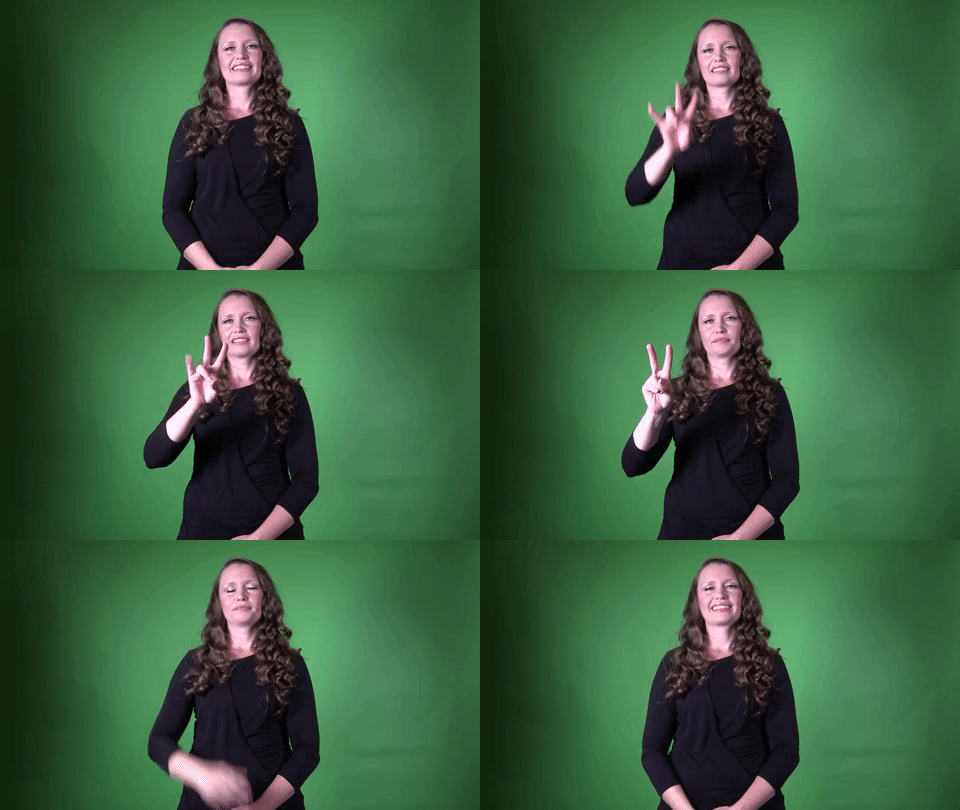
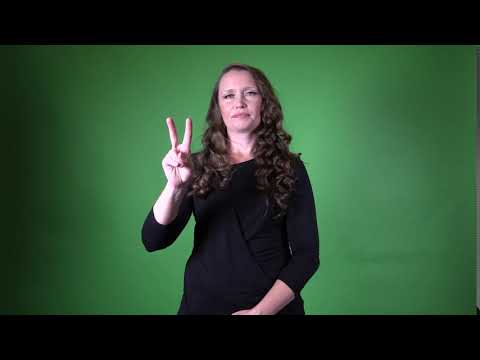
Definition: Refers to the number seventy-two
Sign for THE NUMBER 72 in ASL

Practice Activities:
To practice the sign for the number 72 in ASL, begin by repeatedly signing the number in isolation. Hold up your dominant hand and form the number 7, then smoothly transition into the number 2. Focus on maintaining fluidity and clarity as you move between the two numbers, and use a mirror to check your handshape accuracy.
Once comfortable, incorporate the sign for the number 72 in ASL into counting sequences. Try counting from 70 to 75, emphasizing a smooth transition between each number. Say the numbers in your head as you sign to reinforce the connection between the numerical concept and the ASL sign.
Use the number in real-world contexts. Practice signing someone’s age, a sports jersey number, or a price tag amount. Try signing “My grandpa is 72 years old” or “The store charges 72 dollars for that jacket.” Create a list of numbers and randomly pick one to sign, making sure to include 72 to reinforce muscle memory.
Engage in a number identification game with a partner. Take turns signing different numbers, including the sign for the number 72 in ASL, and guess the correct number. Increase speed as you get more confident. You can also write random numbers on index cards, shuffle them, and pick one to sign while your partner identifies it.
For a storytelling challenge, create a short story featuring the number 72. For example, tell a story about a runner who completes a 72-mile race or a grandmother celebrating her 72nd birthday. Recording yourself and reviewing the footage can help improve fluency and accuracy.
Cultural Context:
The sign for the number 72 in ASL is an important part of American Sign Language number systems. Numbers play a key role in daily communication, from counting objects to discussing dates, prices, and addresses. Understanding the sign for the number 72 in ASL ensures clarity when signing numbers in conversation.
ASL numbers follow consistent patterns, but certain numbers, like the number 72, have distinct movements. The sign for the number 72 in ASL follows the common pattern for two-digit numbers, using handshape changes to represent both digits clearly. This makes it easy for signers to recognize and produce numbers quickly.
Numbers are used frequently in Deaf culture, especially in education, sports, and daily communication. Knowing the sign for the number 72 in ASL can be useful when discussing ages, scores, measurements, or even historical dates. Precise number signs help avoid confusion and ensure smooth conversations in ASL.
The sign for the number 72 in ASL is also useful for discussing prices and transactions. Whether shopping or talking about discounts, correctly signing numbers is essential for clear communication. In business settings, knowing the correct ASL number signs allows transactions and financial discussions to proceed effortlessly.
Sports statistics and team scores are another area where numbers are essential in ASL conversations. The sign for the number 72 in ASL might appear when discussing an athlete’s jersey number, a game score, or a personal record. Sports fans in the Deaf community often rely on number signs to follow and share game updates.
In classrooms and academic settings, numbers are fundamental to lessons and activities. Teachers and students frequently use the sign for the number 72 in ASL when solving math problems or discussing historical events. Fluency with number signs helps students better understand and participate in class discussions.
Dates and addresses often require precise number signing in ASL. The sign for the number 72 in ASL can appear in references to birthdays, anniversaries, and historical milestones. Understanding number signs ensures smooth communication when sharing personal details.
Technology and phone numbers also involve number signs in ASL. When exchanging contact details, the sign for the number 72 in ASL may be used in phone numbers, passwords, or account numbers. Mastering ASL number signs is useful in many everyday situations that involve numbers.
Accurate number signing is essential for storytelling and historical discussions in the Deaf community. When recounting events or experiences, using the sign for the number 72 in
Extended Definition:
The sign for the number 72 in ASL follows the standard pattern for signing two-digit numbers. It combines the sign for 7 and the sign for 2 in a smooth, sequential motion. This number can appear in various contexts, such as age, addresses, or counting.
When signing the number 72 in ASL, the dominant hand typically starts with the number 7 handshape. The fingers then transition smoothly to form the number 2 handshape. It’s important to maintain a natural flow when moving between the numbers to ensure clarity.
Facial expressions and context can play a role in how the sign for the number 72 in ASL is understood. If the number is used in a formal setting, the signer may maintain a neutral expression. In casual conversations, signers might use slight facial movements to emphasize the number.
Numbers in ASL follow a consistent structure, making it easier to recognize patterns. The number 72 follows the same principles, where the first digit is signed first, followed by the second digit. This structure helps signers quickly convey numerical information.
Hand orientation is crucial when signing the number 72 in ASL. The palm generally faces outward while signing both digits. Keeping a steady hand position ensures the number looks clear and is easily recognized by the viewer.
Learning the sign for the number 72 in ASL can be helpful for various real-life situations. It can be used when discussing exact numbers, such as temperatures, sports scores, or historical dates. Mastering this number also builds confidence in understanding larger ASL numbers.
Watching fluent signers can help improve your ability to sign the number 72 in ASL correctly. By observing the fluid motion between 7 and 2, learners can develop better finger coordination. Practicing in front of a mirror or recording oneself can also enhance accuracy.
Some variations in number signs exist depending on regional ASL differences. While the number 72 generally follows a standard structure, minor variations in movement or palm orientation might be seen among different signers. Consistency in practice helps solidify correct signing techniques.
To reinforce learning, it helps to incorporate the number 72 into daily signing practice. Using it in phrases like “72 hours” or “route 72” allows for better retention. Repetitive practice ensures smoother transitions between finger movements.
Knowing how to sign the number 72 in ASL contributes to overall fluency in numerical communication. It allows signers to participate
Synonyms: seventy-two, number seventy-two, number 72, the number 72, the number seventy-two
Educational resources: Find related learning materials in our course bank!
Want more? Check out some of our popular learning activities on the homepage!
Need to look up a sign? Use our highly rated dictionary: https://aslinteractive.com/best-asl-dictionary/
Follow us on tiktok: https://www.tiktok.com/@aslinteractive. More social media links at the bottom of this page!
Long-tail Keywords: what is the sign for the number 72 in ASL, how do you sign the number 72 in American Sign Language, step-by-step guide to signing 72 in ASL
Categories: Numbers – Basics, Numbers 71-80, cardinal numbers
tags: Numbers 71-75, Numbers, Language Learning, Mathematics, Education
Parameters
*Handshape*:
The sign for the number 72 in ASL uses a two-part motion. First, form the number 7 by extending the thumb and ring finger while keeping the other fingers folded. Then, transition smoothly into the number 2 by extending the index and middle fingers while tucking the thumb, ring, and pinky fingers. This sign for the number 72 in ASL is performed with a fluid movement, maintaining clear handshape transitions to ensure accuracy.
*Palm Orientation*:
The palm orientation for the sign for the number 72 in ASL starts with the palm facing outward. The hand transitions smoothly between the number 7 and the number 2, maintaining the outward orientation throughout. The movement should be swift and clear to differentiate it from similar numbers. Proper palm positioning ensures that the sign for the number 72 in ASL is easily recognizable and understood in conversation.
*Location*:
The sign for the number 72 in ASL is produced in the neutral space in front of the signer’s chest. The dominant hand forms the number 7, with the thumb and ring finger touching while the other fingers extend. Then, the hand smoothly transitions into the number 2, with the index and middle fingers extended. This movement happens in one fluid motion to clearly convey the sign for the number 72 in ASL.
*Movement*:
To sign for the number 72 in ASL, start by forming the number 7 with your dominant hand, extending the thumb and ring finger while the other fingers remain folded. Then, smoothly transition to the number 2 by bringing in the thumb and extending the index and middle fingers. The movement between the two numbers should be fluid, ensuring clarity. Keep the palm facing outward throughout to maintain proper number orientation.
*Non-Manual Signals*:
Facial expressions remain neutral when signing the sign for the number 72 in ASL, as it is a straightforward numeric representation. The eyebrows stay relaxed unless context requires emphasis, such as counting or clarification. Mouth movements may reflect the number being signed but are typically minimal unless used for further clarification.
Head movement is usually steady, but a slight nod may accompany the sign for the number 72 in ASL in instructional or listing contexts. Eye gaze remains toward the person being addressed, ensuring clear communication. No exaggerated non-manual signals are required unless emphasis is needed.
*Prosody, Dominant/Non-Dominant Hand*:
The sign for the number 72 in ASL uses the dominant hand in a number formation. Start with the palm facing outward in the number 7 handshape, with the thumb extended and the index and middle fingers slightly bent. Quickly transition to the number 2 handshape by extending the index and middle fingers while retracting the thumb. The movement is fluid, maintaining a steady orientation. Non-dominant hand is not involved.
Tips for Beginners:
When learning the sign for the number 72 in ASL, focus on proper hand positioning and movement. The number 72 is signed using a combination of the digits 7 and 2, transitioning smoothly between them. Ensure your palm orientation is correct—typically facing outward—so the numbers are clear and easy to recognize.
A common mistake beginners make when signing the number 72 is not fully forming the individual digits before transitioning. It’s important to display a distinct 7 and then move cleanly into the 2 without hesitation. Practice this motion slowly at first to build muscle memory before increasing speed.
Finger dexterity plays a big role in making the sign for the number 72 in ASL look natural and fluent. Keep your fingers relaxed yet controlled, and avoid excessive stiffness, which can make movement awkward. Warm up by stretching your fingers before practice to improve flexibility.
Ensure consistency in the movement between the two digits. Jerky or unclear transitions can make the number difficult to read. Try practicing in front of a mirror or recording yourself to check for smooth execution. If you’re unsure, ask a fluent signer or ASL instructor for feedback.
In real-life conversations, numbers are often signed quickly, so becoming comfortable with the sign for the number 72 in ASL at a natural pace is helpful. Rehearse signing larger sequences of numbers to improve fluency and confidence. Frequent repetition will help solidify the movement patterns needed for clear and precise signing.
Practicing in different scenarios, such as signing phone numbers or addresses, will help reinforce the number 72 in a practical context. Keep practicing daily, and soon, switching between digits in larger numbers will become second nature.
Connections to Other topics:
The sign for the number 72 in ASL follows the general structure of number signs in ASL, where numbers switch handshapes fluidly. ASL numbers above 60 often involve movement or a shift in palm orientation to differentiate them. The transition between 7 and 2 in this case follows the typical rule of changing handshapes efficiently, making it part of numeral incorporation patterns in ASL.
Numbers like the sign for the number 72 in ASL connect to broader ASL numbering systems, including age, ranking, addresses, and monetary amounts. For example, signing a person’s age with 72 follows a similar handshape transition, where the number is formed directly from the chin. Likewise, addresses or years use the same numerical structure but might have a different rhythm in movement depending on their context.
Ordinal numbers, such as 72nd, require slight modifications. In ASL, ordinal numbers often include a twist or movement at the end to indicate ranking or order. If discussing a 72nd-place finish in a competition, for example, subtle modifications might be made in movement or repetition to clarify its ordinal status. Understanding how the sign for the number 72 in ASL fits into these larger numerical patterns strengthens comprehension of numbers in everyday use.
Fingerspelled loan signs and numerical classifiers also relate to number signs. Some classifiers incorporate numbers for describing measurements or quantity, like a sequence of 72 objects spread across a space. The incorporation of numbers into classifier handshapes helps convey specific details about arrangements, distances, and amounts. Mastering these uses enhances fluency and ensures clear communication in various number-based discussions.
Summary:
The sign for the number 72 in ASL follows a structured numerical pattern commonly used in signing multi-digit numbers. It begins with the handshape for the number 7, represented by the index finger and thumb extended while the other fingers remain folded. Then, the signer transitions smoothly to the handshape for the number 2 by extending just the index and middle fingers while folding the rest.
This number follows the same formation rules as other two-digit numbers in ASL. The transition between numbers should be fluid but distinct, ensuring clarity in communication. Proper hand orientation and movement are essential to avoid confusion with similar numbers.
Numerical ordering in ASL follows a clear left-to-right or right-to-left signing practice depending on the dominant hand of the signer. When signing the number 72 in ASL, it’s crucial to maintain consistency with numerical flow to ensure readability. The palm orientation usually faces outward but may slightly shift depending on sign fluency.
The number system in ASL relies heavily on visual and kinetic memory, making handshape recall an important component. The number 72 follows a standard pattern used in counting, mathematics, and numeric references within ASL discourse. Signers typically become familiar with this number structure early in their ASL learning journey.
The sign for the number 72 in ASL can be used in various contexts, including prices, ages, addresses, and statistics. In real-world scenarios, numerical precision is necessary, especially when conveying critical information like phone numbers or identification figures. Misarticulation of numbers can lead to miscommunication, highlighting the need for clarity.
One linguistic insight into the number 72 in ASL relates to hand dominance and number articulation. Right-handed signers typically lead with their dominant hand, while left-handed signers mirror the motion accordingly. This alignment ensures standardized communication regardless of the signer’s dominant hand.
The number 72 in ASL also plays a role in historical discussions and cultural references. For instance, years in history, such as 1972, might include the sequential signing of 19 followed by 72. Understanding this numeric ordering helps in accurately discussing dates and events in ASL.
Numbers in ASL include unique variations depending on regional dialects and stylistic preferences. Some signers may express the number 72 with a subtle wrist twist or fluid transition, while others may keep it straightforward. These variations do not change the core structure but add fluency and personalization.
In everyday use, the number 72 might appear in contexts like sports scores, weather reports, and business transactions. ASL users must become adept at recognizing and expressing numbers quickly to participate effectively in signed conversations. Building number fluency in ASL enhances overall language proficiency.
Comparing numbers across different signed languages reveals intriguing linguistic differences. ASL maintains a distinct numerical system that is not always identical to other sign languages, such as British Sign Language (BSL) or French Sign Language (LSF). Recognizing these contrasts helps signers navigate multilingual sign environments.
Numbers in ASL also contribute to mathematical education for Deaf students. The number 72 might be used in signed arithmetic lessons, reinforcing numerical comprehension through visual-spatial learning. ASL’s numeric system provides a structured approach that supports both basic math skills and complex problem-solving.
The sign for the number 72 in ASL also connects to broader themes of accessibility. Numeric comprehension is essential in everyday life, from banking transactions to classroom learning. Mastering numerical signing ensures Deaf and Hard-of-Hearing individuals can independently navigate professional and personal environments.
In social situations, the number 72 may be used in casual conversation, quizzes, or storytelling. ASL storytelling often incorporates numbers dynamically, embedding them within narratives to enhance engagement. Knowing how to sign numbers accurately allows for richer storytelling and effective communication.
Numerical literacy in ASL extends beyond just knowing handshapes. It also involves quick recall, spatial organization, and numerical recognition in various signing speeds. Speed and accuracy often develop over time as signers gain confidence and proficiency.
Finger dexterity plays a significant role in signing numbers efficiently. Individuals with limited finger mobility may develop alternative techniques to express numerical concepts clearly. ASL remains flexible, allowing adaptations to accommodate different signing abilities.
Recognizing signed numbers quickly is a skill that comes with practice and exposure. ASL learners often engage in numerical drills to strengthen their ability to identify and produce numbers instantly. Repetition and real-world application help solidify numerical memory.
Numbers like 72 may appear across different domains, including finance, technology, and science. In financial contexts, 72 might represent percentage rates, calculations, or account figures. Clear numerical articulation ensures accuracy in professional settings where precision is vital.
Technology has expanded access to ASL numerical learning through apps, video tutorials, and interactive tools. Digital resources provide visual examples of number signs, improving accessibility for new learners. Engaging with ASL digital learning platforms accelerates numerical comprehension and flu
Want more? Check out some of our popular learning activities!
ASL Interactive Resources
ASLInteractive YouTube Channel
Follow us on tiktok: @aslinteractive.com
Follow us on Instagram: aslinteractive
Facebook page: aslinteractive
Facebook group: aslinteractive
LInkedIn: ASL Interactive LLC
Twitter: @ASL_interactive
*Some information on this page is AI-generated. AI can make mistakes. Please check the information.


Responses