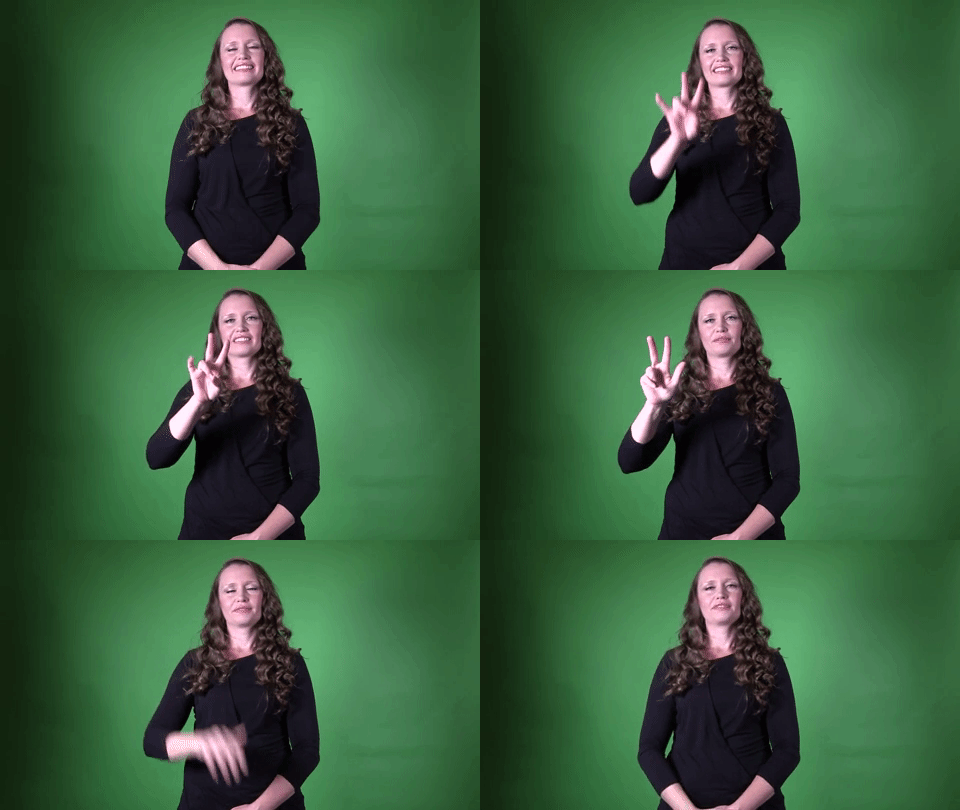
Sign for NUMBER SEVENTY-THREE in ASL | 🔢 ASL Dictionary

Definition: Refers to the number seventy-three

Sign for NUMBER SEVENTY-THREE in ASL 

YouTube player

Practice Activities:

Practicing the sign for number seventy-three in ASL can help reinforce both numerical fluency and dexterity. Start by signing the number several times in isolation. Focus on smooth transitions between the two digits and ensure your handshape maintains clarity. Use a mirror or record yourself to check for accuracy and consistency.

Next, practice the sign for number seventy-three in ASL by incorporating it into real-world contexts. Try counting from seventy to eighty, pausing at seventy-three to reinforce its form. You can also practice by saying a number out loud and then signing it immediately to strengthen the connection between spoken numbers and ASL.

Engage in storytelling exercises that feature the sign for number seventy-three in ASL. For example, imagine you are telling a story about someone celebrating their seventy-third birthday. You could also create a fictional scenario where a sports player has seventy-three points in a game or a school has seventy-three students in a competition.

For partner activities, work with a friend to quiz each other on numbers. Take turns signing numbers between seventy and eighty while the other person identifies them. You can also play a guessing game where one person fingerspells a number and the other signs it correctly.

To reinforce number recognition, practice writing numbers down in random order and challenge yourself to sign them quickly. Timed drills can help build fluency when using the sign for number seventy-three in ASL. You can also use flashcards to mix up different numbers and sign them in response.

End your practice session by using the sign spontaneously during daily activities. Look for opportunities such as identifying house numbers, prices, or years that include seventy-three. The more you integrate the sign into your routine, the more naturally it will become part of your ASL vocabulary.

Cultural Context:

The sign for number seventy-three in ASL follows a standard number pattern used in American Sign Language. It combines the handshape for seven and smoothly transitions into three, maintaining clarity for easy recognition. ASL numbers are essential for communication, especially in addresses, phone numbers, and financial transactions.

Understanding the sign for number seventy-three in ASL is helpful in everyday situations, including dates, prices, and sports scores. ASL numbers often follow a rhythmic pattern, making them intuitive for signers to recognize. Fluent signers use smooth movements to keep numbers clear and distinct.

The sign for number seventy-three in ASL is part of a broader numerical system that connects with Deaf culture and signing conventions. Sign language users rely on numerical signs in education, business, and everyday interactions. Consistent handshape and movement help prevent confusion between similar numbers.

Learning the sign for number seventy-three in ASL also supports finger spelling skills and number comprehension. It is helpful in settings like classrooms, meetings, and casual conversations where numbers play a key role. ASL users appreciate precision in numerical signs for clear communication.

Numbers in ASL, including the sign for number seventy-three in ASL, may vary slightly based on regional accents or signing styles. Some signers modify number signs for emphasis or speed, adapting them to specific conversations. However, the core structure remains widely recognized across the Deaf community.

Fluency in ASL numbers, like the sign for number seventy-three in ASL, strengthens overall signing skills. Practice with numerical signs improves speed and confidence when discussing dates, quantities, or measurements. ASL learners benefit from regular practice with number sequences to build accuracy.

Many ASL users incorporate the sign for number seventy-three in ASL when playing games, discussing statistics, or exchanging important details. Numbers are a key aspect of sign language storytelling, helping to add specifics and maintain engagement. Accuracy with numbers enhances overall ASL proficiency.

The sign for number seventy-three in ASL aligns with the natural movement patterns of the hands, making it accessible for new and experienced signers alike. Simple, fluid motions help maintain clarity and prevent miscommunication. Signers often reinforce numbers with facial expressions for emphasis and context.

Using the sign for number seventy-three in ASL correctly ensures smooth communication in both casual and formal conversations. Whether signing about age, time, or sequence, having strong number sign skills is essential. ASL number fluency contributes to effective and confident signing.

Extended Definition:

The sign for number seventy-three in ASL follows a specific pattern used in American Sign Language numbering. This number is expressed using a combination of handshapes that smoothly transition to show both digits. Understanding the correct movement and orientation is essential for clarity in communication.

In ASL, numbers in the seventy range follow a similar palm orientation and motion. The sign for number seventy-three in ASL starts with the seven handshape, smoothly changing into the three. The motion should be fluid to maintain natural number signing conventions.

Hand orientation and palm direction are essential when signing. To correctly sign for number seventy-three in ASL, the dominant hand must be visible to the viewer. The fingers should form the numbers clearly without hesitation for easy recognition.

ASL numbers are visually based, making it important to follow standard movements. The sign for number seventy-three in ASL should be practiced to ensure fluency. With repetition, the transition between the two numbers becomes effortless.

Numbers in ASL contribute to conversations by indicating quantities, rankings, or other numerical concepts. The sign for number seventy-three in ASL may be used in addresses, pricing, or age references. When numbers are incorporated into sentences, they follow grammar rules unique to ASL.

Facial expressions and context also play a role in communication. When using the sign for number seventy-three in ASL, expressions and body language can provide additional meaning. ASL relies on both hand movements and non-manual signals to convey messages effectively.

Practicing number sequences can strengthen ASL fluency. The sign for number seventy-three in ASL is one of many numbers that learners should memorize for daily interactions. As skills develop, signing numbers becomes second nature.

Sign language interpreters and ASL users benefit from knowing number signs with accuracy. The sign for number seventy-three in ASL must be clearly formed to avoid confusion in conversations. Accuracy in signing ensures messages are understood correctly.

When teaching ASL, number signs are introduced gradually to help with comprehension. The sign for number seventy-three in ASL is typically learned alongside other double-digit numbers. Students are encouraged to practice with peers to reinforce their skills.

ASL is a visual and expressive language, relying on handshapes and linguistic structure. The sign for number seventy-three in ASL reflects the logical pattern used within American Sign Language numbering. Learning number signs contributes to overall ASL proficiency.

Synonyms: seventy-three, number seventy-three, number 73, the number 73, the number seventy-three

Educational resources: Find related learning materials in our course bank!

Want more? Check out some of our popular learning activities on the homepage!

Need to look up a sign? Use our highly rated dictionary: https://aslinteractive.com/best-asl-dictionary/

Follow us on tiktok: https://www.tiktok.com/@aslinteractive. More social media links at the bottom of this page!

Long-tail Keywords: what is the sign for number seventy-three in ASL, how do you sign number seventy-three in ASL, learn how to sign number seventy-three in American Sign Language

Categories: Numbers – Basics, Numbers 71-80, cardinal numbers

tags: Numbers 71-75, Numbers, Language Learning, Mathematics, Education

Parameters

*Handshape*:

The sign for NUMBER SEVENTY-THREE in ASL uses a fluid transition between two number handshapes. It starts with the number 7, where the thumb and ring finger touch while the other fingers stay extended. Then, the hand smoothly shifts into the number 3, with the thumb, index, and middle fingers extended while the ring and pinky fingers fold down. This movement maintains a natural flow, emphasizing numerical clarity.

*Palm Orientation*:

the sign for number seventy-three in ASL has the palm facing outward, away from the body, in a neutral position. The movement transitions smoothly as the fingers change shape from “7” to “3,” maintaining visibility from the viewer’s perspective. Keeping the palm forward ensures clarity so the numbers are easily distinguishable. Proper orientation is essential for accuracy when signing the sign for number seventy-three in ASL.

*Location*:

The sign for number seventy-three in ASL takes place in the neutral signing space in front of the body, around chest level. The dominant hand moves fluidly as it transitions from the number seven to the number three. The palm typically faces outward, ensuring clear visibility for the numbers being signed. Keep movements smooth and controlled to maintain clarity while forming the sign for number seventy-three in ASL.

*Movement*:

To produce the sign for number seventy-three in ASL, start with the dominant hand in a 7 handshape, palm facing forward. Quickly transition to a 3 handshape by bringing the thumb and pinky together while extending the index, middle, and ring fingers. The motion should be fluid, maintaining a slight bounce as you shift between the two handshapes. Keep the movement smooth to ensure clarity when signing the number seventy-three in ASL.

*Non-Manual Signals*:

When signing the sign for number seventy-three in ASL, maintain a neutral or slightly focused facial expression. Your eyebrows may remain relaxed since this is a straightforward numerical concept. Keep your mouth in a neutral position or slightly articulate “seventy-three” for added clarity.

Ensure steady eye contact with the listener to emphasize the sign for number seventy-three in ASL. A slight head nod can reinforce understanding, especially in instructional or formal settings. Keep movements smooth and fluid without excessive facial tension.

*Prosody, Dominant/Non-Dominant Hand*:

The sign for number seventy-three in ASL uses the dominant hand, forming the number 7 with the index and middle fingers extended and separated. The movement transitions smoothly, shifting to the number 3 by bringing down the middle finger while extending the thumb, index, and pinky. This transition happens with a slight wrist movement, maintaining a fluid and natural shift between the numbers. The non-dominant hand remains inactive during this process.

Tips for Beginners:

When learning the sign for number seventy-three in ASL, focus on keeping your hand steady and fluid as you transition between the digits. This number is part of the unique number system in ASL, where certain two-digit numbers are combined into one smooth motion. Pay attention to proper hand orientation and avoid unnecessary pauses between the digits to maintain clarity.

A common mistake beginners make when signing the number seventy-three is unclear hand positioning. The transition between the digits should be smooth, with your palm facing outward. If your hand shakes or moves inconsistently, it can cause confusion. Practicing in front of a mirror or recording yourself can help you refine your movement.

Finger strength and dexterity play a large role in signing numbers accurately. Working on finger flexibility through simple warm-up exercises can improve your precision and speed. Try stretching and wiggling your fingers before signing to prevent stiffness. This will make it easier to maintain control over your hand movements when forming the sign for number seventy-three in ASL.

Consistency in signing is key to being understood easily. If you practice signing seventy-three the same way every time, it will become second nature. Watching experienced signers and mimicking their technique can also improve your fluency. When possible, sign in conversation with other ASL users to build confidence.

Numbers in ASL follow specific patterns, and recognizing them can make learning easier. Once you are comfortable with the number seventy-three, practice other two-digit numbers in the seventies to reinforce the movement. Mastering patterns will help you sign numbers more naturally and efficiently in everyday conversations.

Connections to Other topics:

The sign for number seventy-three in ASL connects to broader discussions about number signs and their structure in American Sign Language. Like many two-digit numbers, it follows a consistent numerical pattern where the hand transitions smoothly from one digit to the next. This specific number is part of the 70s series in ASL, which involves similar movement and handshape adjustments as other numbers in that range, such as seventy-one and seventy-five. Understanding this pattern helps learners better recognize numerical fluency in ASL and develop confidence in signing larger numbers naturally.

Number signs in ASL are essential for various contexts, including telling time, describing quantities, and discussing ages or prices. The sign for number seventy-three in ASL might be used in financial conversations, sports statistics, or historical references. Numbers are often incorporated into classifiers, such as discussing a group of seventy-three people or referring to an event that took place in 1973. The ability to smoothly transition between digits helps build clarity in communication, especially when signing multiple numbers in sequence.

Many number signs in ASL follow a pattern where numbers within the same decade share a similar palm orientation and handshape modifications. For example, in the 70s series, the signs start with the number seven and smoothly transition into the succeeding number. This pattern relates to other numerical signs like the 60s series or the 80s series, which follow a similar structure. By practicing the sign for number seventy-three in ASL along with other numbers, learners can gain a stronger sense of ASL numerical organization and improve their signing efficiency.

Summary:

The sign for number seventy-three in ASL follows a specific numerical pattern used in cardinal numbers. It combines the movement and formation of the digits seven and three in a fluid motion. This sign is commonly used when discussing prices, years, measurements, or any numerical context requiring precision.

To produce the sign for number seventy-three in ASL, begin with the number seven handshape, where the thumb and ring finger touch. Then, smoothly transition to the number three handshape, extending the index, middle, and thumb while retracting the other fingers. The motion is usually a slight flick or bounce when shifting from seven to three, maintaining fluidity.

Hand shape plays a crucial role in this number sign, as incorrect positioning can lead to misinterpretation. The transition should be clear and deliberate to avoid confusion with similar numbers like 72 or 74. Signing numbers accurately is essential for clarity, especially in educational or professional settings.

Expressing the sign for number seventy-three in ASL efficiently relies not only on hand shape but also on palm orientation. Typically, the palm faces outward while transitioning between seven and three. Consistency in palm direction ensures readability, especially when communicating with native signers.

Facial expressions and body language add natural rhythm to numeric signs in ASL. When emphasizing seventy-three in a sentence, slight eyebrow raises or pauses can indicate importance. These subtle non-manual markers support meaning and enhance overall clarity.

The sign for number seventy-three in ASL is especially useful in discussions involving dates and statistics. Many fields, such as sports, finance, and history, require clear numerical communication. Ensuring an accurate transition between digits is significant, as even small mistakes may lead to misunderstanding.

Many three-digit numbers in ASL use a similar sequential approach, which makes learning number seventy-three part of a broader numeric system. Understanding patterns strengthens overall number fluency, allowing signers to express large numbers more efficiently. This learning strategy helps both beginner and advanced signers develop numerical confidence.

Numbers in ASL follow structured linguistic principles, incorporating both fingerspelled elements and set number patterns. Recognizing the numerical framework allows signers to grasp how cardinal numbers function within the language. Knowing how to sign seventy-three fluently reinforces the ability to work with other numerical signs.

Historical and cultural significance may also attach meaning to the sign for number seventy-three in ASL, depending on context. It can reference historic events, specific years, or even personal milestones. Numerology and symbolic meanings provide additional layers of interpretation for specific numbers.

Applying numbers accurately in ASL extends beyond simply signing them; placement within a sentence matters. Depending on the grammatical structure, number seventy-three may serve as an adjective, noun, or standalone figure. It commonly appears in signed phrases related to time, measurements, and quantities.

Some numbers in ASL resemble each other in shape or movement, which makes memorization of transitions critically important. The difference between seventy-three and seventy-five, for instance, relies on finger placement and movement patterns. Fluid execution of these small changes allows for more natural conversations.

Linguistic studies of ASL numbers highlight the balance between iconic movement and abstract representation. The sign for number seventy-three in ASL visually represents its numerical components while conforming to language-specific grammar. Each part of the number system contributes to overall linguistic complexity in ASL.

ASL numbering conventions are deeply woven into the language’s structure and logic. By understanding the sequential palm shifts and finger transitions, signers solidify their grasp of numeric terms. Practicing seventy-three, along with nearby numbers, creates a stronger foundation for signing larger numerical sequences.

Using numbers accurately in legal, educational, and medical settings ensures clarity and precision. Whether someone is stating an address, an account balance, or an age, accuracy significantly impacts communication. Mastering number seventy-three in ASL supports competency in professional and casual conversations alike.

ASL classifiers sometimes incorporate numbers to demonstrate quantities within descriptive contexts. Though the sign for number seventy-three in ASL is straightforward, it could integrate into broader phrases. Recognizing how to blend numbers with classifier structures broadens overall expressive range.

Certain regional dialects or signing preferences may influence subtle variations in numeric transitions. While the basic principle for seventy-three remains constant, styles may differ slightly based on signing communities. Exposure to diverse signing styles enhances comprehension and adaptability within dialogue.

Teaching ASL numbers effectively involves repeated practice through engaging contexts like games or real-world applications. Practicing the sign for number seventy-three in ASL alongside other numbers promotes pattern recognition. Engaging in numerical exercises boosts memory retention and fluency over time.

Technology enhances deaf communication by incorporating numeric recognition into signing-based applications. Some signing keyboards and ASL recognition software interpret handshapes like seventy-three with increasing accuracy. Technological advancements bridge accessibility gaps and strengthen digital communication for signers.

Hand dominance plays a noticeable role when signing numbers, influencing fluidity and execution.

Want more? Check out some of our popular learning activities!

ASL Interactive Resources

ASLInteractive YouTube Channel

Follow us on tiktok: @aslinteractive.com

Follow us on Instagram: aslinteractive

Facebook page: aslinteractive

Facebook group: aslinteractive

LInkedIn: ASL Interactive LLC

Twitter: @ASL_interactive

*Some information on this page is AI-generated. AI can make mistakes. Please check the information.

Sign for THE NUMBER 73 in ASL, Sign for NUMBER 73 in ASL, Sign for THE NUMBER SEVENTY-THREE in ASL, Sign for NUMBER SEVENTY-THREE in ASL 

Responses