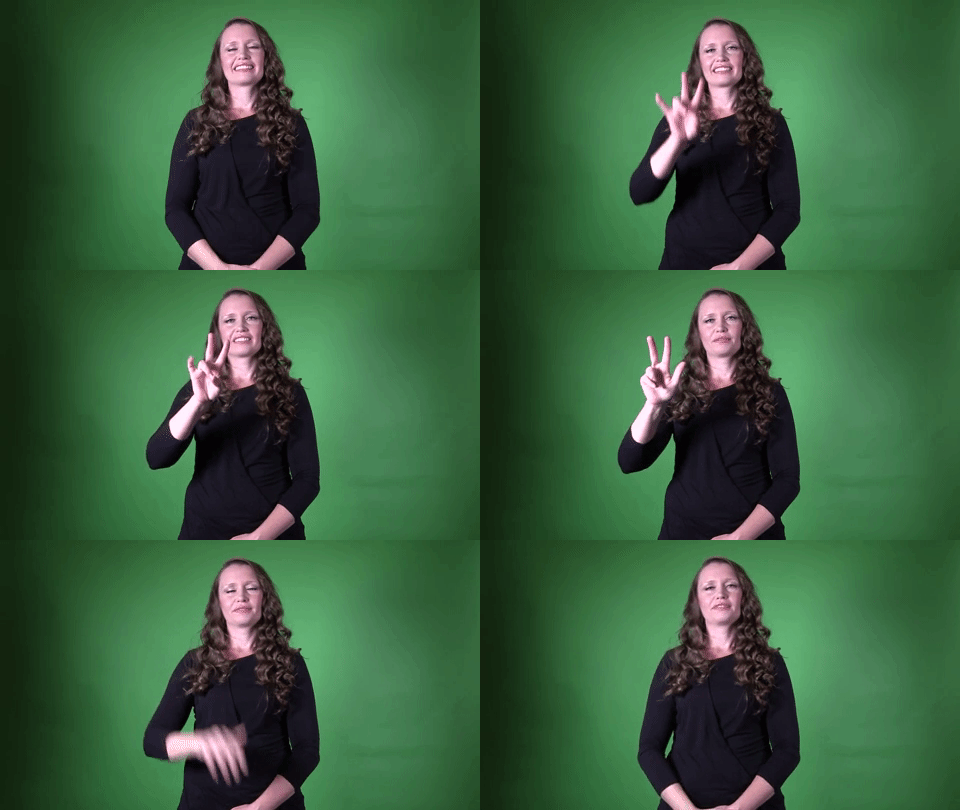
Sign for THE NUMBER SEVENTY-THREE in ASL | 🔢 ASL Dictionary

Definition: Refers to the number seventy-three

Sign for THE NUMBER SEVENTY-THREE in ASL 

YouTube player

Practice Activities:

Begin by practicing the sign for the number seventy-three in ASL in isolation. Repeatedly sign it while looking in a mirror to ensure proper handshape and movement. Say the number aloud as you sign to reinforce the connection between the numerical concept and its ASL representation.

Once you feel comfortable, try incorporating the sign for the number seventy-three in ASL into counting exercises. Count aloud from seventy to seventy-five while signing each number in sequence. Then, mix up the order and sign randomly chosen numbers between seventy and seventy-five to challenge your memory and accuracy.

Create real-world scenarios that require the number seventy-three. For example, practice signing a sentence like “My grandmother is seventy-three years old” or “The building has seventy-three floors.” Say the sentence aloud while signing to strengthen your fluency.

For partner practice, quiz each other using flashcards with numbers written on them. One person shows a number card, and the other signs it correctly. Use a timer to see how quickly and accurately the sign for the number seventy-three in ASL can be produced.

Incorporate seventy-three into storytelling. Create a small narrative where this number is relevant, such as describing a long road trip covering seventy-three miles or a sports game where a team scored seventy-three points. Sign the story while maintaining fluidity and expression.

Practice identifying the sign when used in conversation. Watch videos or interact with other signers, paying attention to how the number seventy-three naturally appears. Challenge yourself to recognize it quickly and respond appropriately.

Finally, play number-related games with friends or online practice groups. Bingo, number matching, or rapid-response number drills all help reinforce the correct production of the sign for the number seventy-three in ASL while making learning fun.

Cultural Context:

The sign for the number seventy-three in ASL follows the standard pattern for cardinal numbers in American Sign Language, combining movement and handshape to convey the numerical value. This number is an essential part of daily communication, useful in expressing age, measurements, prices, and other numerical data. When learning the sign for the number seventy-three in ASL, it’s important to focus on handshape accuracy and fluid motion.

Numbers play a crucial role in ASL, as they do in any language, helping to express precise information quickly and efficiently. The sign for the number seventy-three in ASL follows a logical structure like other two-digit numbers, making it easier to remember once you recognize the pattern. Mastering numbers in ASL helps improve overall fluency and comprehension when signing about dates, statistics, and quantities.

American Sign Language incorporates numbers into everyday conversations, whether discussing financial transactions, addresses, or sports scores. The sign for the number seventy-three in ASL is frequently used in various contexts, including educational and professional settings. Understanding ASL numbers allows deaf and hard-of-hearing individuals to engage effectively in discussions involving numerical concepts.

Learning the sign for the number seventy-three in ASL also enhances number recognition skills, which are beneficial for both new learners and fluent signers. ASL numbers follow a system based on hand orientation and movement, making them visually distinct from one another. Practicing the sign for the number seventy-three in ASL ensures clear and effective communication when signing with others.

In deaf culture, numbers are often incorporated into storytelling, games, and everyday interactions, making them a fundamental part of communication. The sign for the number seventy-three in ASL is one of many that ASL users rely on when counting or sharing numerical details. Whether signing dates or keeping track of sequences, knowing ASL numbers ensures accessibility and understanding in different situations.

Mastering the sign for the number seventy-three in ASL is an important step in building strong numerical literacy within the language. It allows for seamless interaction in settings ranging from classrooms and workplaces to social gatherings and public events. Becoming proficient in ASL numbers, including seventy-three, promotes confidence in expressing numerical information effectively.

The sign for the number seventy-three in ASL exemplifies the visual and gestural nature of the language. Practicing consistency in handshape and movement ensures a clear and recognizable sign that others can easily understand. Using the correct ASL number signs fosters smooth communication and prevents misunderstandings during conversations.

Understanding

Extended Definition:

The sign for the number seventy-three in ASL follows the standard numbering system used in American Sign Language. It is a combination of two distinct number signs, seventy and three, performed in a smooth, natural motion. This sign is an essential part of learning ASL numbers and is commonly used in counting, math, and everyday communication.

To sign the number seventy-three in ASL, start by forming the number seven, then transition smoothly into the number three. The movement should be fluid and clear, allowing for easy recognition by other signers. Handshape accuracy and palm orientation are crucial to ensuring correct execution of this number sign.

Numbers play an important role in ASL, and the sign for the number seventy-three in ASL follows a pattern consistent with other two-digit numbers. Learning these number signs helps improve fluency and understanding of numerical concepts in conversations. Whether discussing age, quantities, or addresses, signing numbers correctly makes communication more effective.

ASL uses a visual and gestural approach to convey meaning, making it unique from spoken languages. When signing the number seventy-three in ASL, facial expressions and body language remain neutral since numbers typically do not require additional emotional emphasis. However, context can change the meaning, making it important to sign clearly and accurately.

People learning ASL may find it helpful to practice number signs regularly to build confidence. The sign for the number seventy-three in ASL should be repeated until it feels natural and effortless. Watching native ASL users or using ASL learning resources can help improve signing skills.

Numerical signs like seventy-three are frequently used in school settings, workplaces, and daily life. Mastering numbers in ASL ensures smooth communication, especially when discussing money, dates, or statistics. Consistently practicing the sign for the number seventy-three in ASL helps reinforce memory and signing ability.

Fingerspelling is different from number signs, so it’s important to learn them separately. The sign for the number seventy-three in ASL is a standard numerical sign, not fingerspelled, making it distinct from spelling out words. Understanding the difference between fingerspelling and number signing enhances overall ASL fluency.

ASL learners should focus on handshape, position, and motion when practicing the sign for the number seventy-three in ASL. Proper use of space and movement ensures clarity and prevents confusion. Engaging with deaf communities and practicing numbers in real-life situations will strengthen signing skills.

Numbers in ASL follow

Synonyms: seventy-three, number seventy-three, number 73, the number 73, the number seventy-three

Educational resources: Find related learning materials in our course bank!

Want more? Check out some of our popular learning activities on the homepage!

Need to look up a sign? Use our highly rated dictionary: https://aslinteractive.com/best-asl-dictionary/

Follow us on tiktok: https://www.tiktok.com/@aslinteractive. More social media links at the bottom of this page!

Long-tail Keywords: What is the sign for the number seventy-three in ASL, How do you sign the number seventy-three in American Sign Language, ASL sign for the number seventy-three

Categories: Numbers – Basics, Numbers 71-80, cardinal numbers

tags: Numbers 71-75, Numbers, Language Learning, Mathematics, Education

Parameters

*Handshape*:

The sign for the number seventy-three in ASL uses a two-handed number formation. The dominant hand begins with a “7” handshape, where the index and middle fingers are extended while the ring and pinky fingers stay bent toward the palm. Then, the hand transitions smoothly to a “3” handshape by folding the middle finger down while extending the thumb, index, and pinky. This quick movement visually represents seventy-three in ASL. ✋

*Palm Orientation*:

The palm orientation for the sign for the number seventy-three in ASL starts with the palm facing outward. The hand transitions from a “7” shape to a “3” shape without changing direction. This motion keeps the palm visible to the viewer, ensuring clarity. Consistency in hand positioning is important for accuracy when signing the number.

*Location*:

The sign for the number seventy-three in ASL is produced in the neutral space in front of the signer’s torso. The dominant hand begins with the number seven handshape, then transitions smoothly into the number three handshape. The movement is fluid, with the fingers adjusting quickly between the two positions. The location remains in front of the chest, ensuring clear visibility for the person receiving the sign.

*Movement*:

To sign for the number seventy-three in ASL, begin with the palm facing outward and form the number seven by extending the index and middle fingers while keeping the ring and pinky curled in. Then, smoothly transition into the number three by extending the thumb, index, and middle fingers while tucking in the ring and pinky. The movement should be fluid, with a slight wrist pivot when changing from seven to three.

*Non-Manual Signals*:

Facial expressions are typically neutral or slightly focused when signing the sign for the number seventy-three in ASL. The eyebrows remain relaxed, and the mouth may stay slightly open or closed, depending on the context. If emphasizing comparison or counting, a slight head tilt or nod might accompany the sign for the number seventy-three in ASL to show engagement. Maintaining steady eye contact ensures clarity and focus during the communication.

*Prosody, Dominant/Non-Dominant Hand*:

The sign for the number seventy-three in ASL uses the dominant hand only. Start with the number seven by extending the thumb and ring finger while the other fingers remain folded. Transition smoothly into the number three by extending the thumb, index, and middle fingers while closing the ring and pinky fingers. The motion should be fluid as the numbers shift in place, with palm orientation facing outward. Maintain a steady rhythm to keep the numbers distinct.

Tips for Beginners:

Mastering the sign for the number seventy-three in ASL requires coordinating hand movements smoothly. This number follows the palm-forward rule used in ASL number signs. It combines the numeral seven transitioning directly into three in one continuous motion, which should be fluid and effortless.

A common mistake in signing the number seventy-three in ASL is separating the digits too much. Instead of signing “seven” and then “three” in a rigid way, allow your fingers to transition naturally. Your dominant hand should maintain a steady palm orientation, avoiding unnecessary twisting.

Finger dexterity is crucial when forming the number seventy-three. Work on flexibility by practicing individual number signs first. Ensure that your fingers remain properly extended for clarity, as poorly shaped numbers might resemble other numerical signs. It helps to exaggerate the initial motions until your hand adapts to the specific shape transition.

Another tip is to pay attention to hand positioning. Keep your hand in a comfortable space in front of your chest so that the sign is easy to see. Avoid overextending or pulling your hand backward, as this can distort the shape of the sign for the number seventy-three in ASL, making it hard to read.

Practicing in front of a mirror can help with accuracy. Watching your hand movements allows you to self-correct in real-time. Recording yourself signing can also be helpful, as you can compare your motion with native signers to see if you need adjustments. Consistent practice will help you develop speed and confidence.

Repetition is key to mastering fluency. Start slowly and increase speed as you gain control over the movement. With time, the sign for the number seventy-three in ASL will become second nature, making communication smoother and more natural.

Connections to Other topics:

The sign for the number seventy-three in ASL is part of a pattern used for numbers in the seventy range, where the handshape changes fluidly between the digits. This number follows the standard non-manual marker conventions used for cardinal numbers, which influences the way many multi-digit numbers are produced in ASL. Understanding the sign for the number seventy-three in ASL helps improve fluency with numerical signs and enhances number comprehension in everyday conversations.

Number signs like the sign for the number seventy-three in ASL are essential in various contexts, such as giving addresses, discussing statistics, and talking about years. The ability to smoothly transition between numerical handshapes is a skill that connects to other numerical concepts, including age, money, and quantity. Learning the specific movement pattern for seventy-three helps reinforce similar transitions found in numbers like sixty-three or eighty-three.

In addition to personal number use, the sign for the number seventy-three in ASL relates to sports scores, business transactions, and historical references. When signing percentages, financial amounts, or jersey numbers, clear numerical articulation is crucial. Practicing similar numbers, such as seventy-one through seventy-five, allows for improved dexterity and accuracy when signing larger figures.

Many ASL learners benefit from recognizing number patterns in both cardinal and ordinal forms. While seventy-three is primarily a cardinal number, knowing how similar numbers function in sequences can help when discussing rankings or events. This understanding expands into broader numerical literacy within ASL and strengthens overall clarity in communication.

Summary:

The sign for the number seventy-three in ASL follows a distinct pattern within the general number system of American Sign Language. Like other two-digit numbers in the seventy range, it maintains a fluid transition from one digit to the next. This allows for efficient and clear communication while maintaining visual accuracy.

To sign the number seventy-three in ASL, you start with your dominant hand in the number seven handshape. The thumb and ring finger touch while the other three fingers remain extended. From there, the hand smoothly transitions into the number three handshape, with the thumb, index, and middle fingers extended and spread apart.

The motion between the two numbers is a slight twist of the wrist, facilitating a clear visual distinction between seventy and three. This transition is subtle yet intentional, ensuring the numbers are articulated without ambiguity. Fluidity in movement helps make the sign recognizable and prevents confusion with similar numbers.

The sign for the number seventy-three in ASL follows the broader pattern of two-digit numbers in ASL. Numbers in the seventies are typically formed by transforming the handshape from one digit to the other in a single motion. This consistent structure allows signers to quickly interpret multi-digit numbers with ease.

Numbers in ASL are signed with either a palm-in or palm-out orientation depending on the regional variation and context. For the number seventy-three, the palm orientation typically faces outward to maximize visibility. This helps distinguish it from other similar numbers and ensures clarity in communication.

ASL numbers are influenced by the need for visual efficiency, meaning that the number seventy-three must be signed fluidly. Jerky or disjointed movements can create confusion, especially in fast-paced conversations. Understanding and practicing smooth transitions between digits is a crucial part of mastering ASL numbers.

The sign for the number seventy-three in ASL follows a common numerical pattern found in number sequences. Many signs for multi-digit numbers follow a rhythmic flow that allows for quick identification by fluent signers. Maintaining consistent hand positioning reduces the cognitive load of both the signer and the viewer.

The number seventy-three has significance in various cultural, historical, and mathematical contexts. In sports, jersey numbers often include seventy-three, particularly in football and hockey. When discussing such numbers in ASL, signers must ensure precision to avoid unintended numerical substitutions.

Certain numbers in ASL, including seventy-three, are used in age, dates, addresses, and statistics. When signing complex numerical data, being able to fluently move between digits ensures accuracy. Miscommunication of numbers in these contexts can lead to significant errors, emphasizing the importance of clear signing.

There is a strong linguistic connection between ASL numbers and broader sign language structures. The way numbers like seventy-three are formed reflects ASL’s emphasis on visual-spatial grammar. This grammar enhances clarity without relying on spoken or written form, making signed numbers highly efficient.

Many ASL learners encounter difficulty with fluid number transitions, especially in the seventy range. The number seventy-three requires practice to navigate the shift between the seven and three handshapes smoothly. Mastering such transitions contributes greatly to overall ASL fluency.

In applied linguistics, the sign for the number seventy-three in ASL exemplifies the role of movement in language. Unlike spoken languages where sound differentiates numerals, ASL relies on structured, repeatable gestures. This visual differentiation ensures that even rapid sign exchanges remain comprehensible.

Mathematics and number discussions within ASL use structured signing techniques to relay information effectively. The sign for the number seventy-three in ASL fits within these structures, keeping numerical conversations efficient. In educational settings, mastering number transitions supports broader mathematical comprehension.

Signed numbers, including seventy-three, are often reinforced through repetition and contextual clueing. When discussing numerical values, signers might incorporate additional context to reinforce meaning. This is particularly useful when conveying large numbers or statistical information.

ASL incorporates numerical signs fluidly into broader sentences without needing separate numerical classifiers. The number seventy-three can integrate into sentences about quantities, identifiers, and statistics without additional markers. This integration aligns with ASL’s overall grammatical efficiency.

Technology and digital communication have influenced how numbers like seventy-three are used in ASL. Video communication platforms have emphasized the importance of clarity in number signs. Proper lighting and angle adjustments ensure that visual distinctions between numbers remain clear.

Some numbers, such as seventy-three, may have regional variations in signing style. While the standard transition is widely accepted, slight modifications may be observed based on the signer’s background. Awareness of these variations is crucial for effective cross-regional communication.

The number seventy-three in ASL is part of a larger system of numerical representation used across various contexts. Being mindful of signing speed and precision ensures that the number is correctly understood. Effective number signing is especially important in professions requiring numerical precision, such as finance and science.

Unlike spoken number systems, ASL numbers like seventy-three are tied to handshape memory. Muscle

Want more? Check out some of our popular learning activities!

ASL Interactive Resources

ASLInteractive YouTube Channel

Follow us on tiktok: @aslinteractive.com

Follow us on Instagram: aslinteractive

Facebook page: aslinteractive

Facebook group: aslinteractive

LInkedIn: ASL Interactive LLC

Twitter: @ASL_interactive

*Some information on this page is AI-generated. AI can make mistakes. Please check the information.

Sign for THE NUMBER 73 in ASL, Sign for NUMBER 73 in ASL, Sign for THE NUMBER SEVENTY-THREE in ASL 

Responses