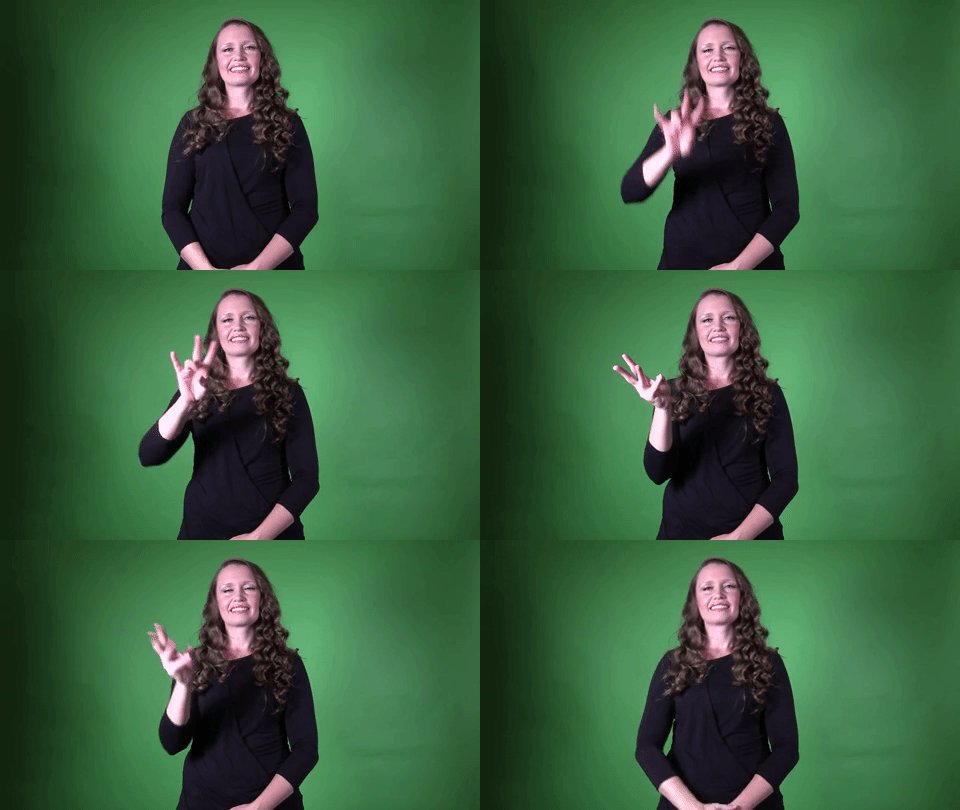
Definition: Refers to the number seventy-six
Sign for THE NUMBER SEVENTY-SIX in ASL

Practice Activities:
To practice the sign for the number seventy-six in ASL, start by focusing on finger movement and hand position. Sign the number seventy by transitioning from the number seven to zero in a fluid motion, then move directly into the number six by forming the correct handshape. Repeat this transition slowly at first, then increase speed while maintaining accuracy.
Try signing the number in isolation first, then incorporate it into a sequence of numbers, such as seventy-four, seventy-five, seventy-six, seventy-seven. This helps reinforce the unique movement of the sign for the number seventy-six in ASL. Challenge yourself or a partner by signing sequences while the other person identifies them.
Create simple math problems using ASL numbers, like “seventy-six minus ten” or “thirty-eight times two,” and sign both the equations and answers. This helps reinforce number fluency while keeping the focus on correct handshapes. Play a game where one person fingerspells a fact—like “There are seventy-six trombones in the famous song”—while another person signs the number.
Practice using the number conversationally. Sign your birth year, address, or a sports jersey number that includes seventy-six. Tell a short story that includes this number, such as describing a historical event from the year 1976. Role-play cashier and customer interactions where prices include seventy-six cents or dollars, helping to incorporate the sign for the number seventy-six in ASL into real-world situations.
Review your speed and accuracy in a mirror or by recording yourself to ensure clear handshapes. Partner with a friend and quiz each other on randomly signed numbers. Engage in fun activities like number bingo or speed drills to reinforce muscle memory. Practicing regularly helps build confidence in using this number in conversation.
Cultural Context:
The sign for the number seventy-six in ASL is part of the American Sign Language numbering system, which plays an important role in daily communication. Numbers are used frequently in ASL for counting, addresses, phone numbers, and describing ages. Mastering numbers like the sign for the number seventy-six in ASL is essential for fluency.
The number seventy-six carries historical significance in American culture, especially in reference to the year 1776, when the United States declared independence. Because of this connection, the sign for the number seventy-six in ASL may be used in discussions about history or patriotic events. Understanding the cultural context of numbers enriches ASL communication and helps connect meaning beyond the handshape.
In sports, significant years, or milestone anniversaries, the number seventy-six can be important. People may use the sign for the number seventy-six in ASL to discuss birthdays, team statistics, or historical events. Knowing how to sign numbers accurately ensures clarity and avoids misunderstandings in conversations.
ASL users often incorporate numerical signs into personal and professional interactions. Whether signing phone numbers, listing items, or discussing dates, the sign for the number seventy-six in ASL is useful in many situations. Regular practice helps improve number fluency and strengthens overall ASL skills.
Expressing numbers properly in ASL requires awareness of movement and orientation. The sign for the number seventy-six in ASL follows the conventional rules for signing multi-digit numbers. Proper handshape formation helps maintain accuracy, ensuring that numbers are understood correctly in conversations.
Numbers in ASL follow specific patterns that make them efficient and clear. The sign for the number seventy-six in ASL follows a sequence similar to other two-digit numbers in ASL. Understanding this system helps signers quickly learn new numbers and apply them effectively in different contexts.
Learning numerical signs within ASL enhances both receptive and expressive skills. The sign for the number seventy-six in ASL is part of basic ASL vocabulary that improves confidence in signing numbers. With practice, ASL users can seamlessly integrate numbers into conversations without hesitation.
American Sign Language is a dynamic and expressive language used by the Deaf and hard-of-hearing community. Knowing numerical signs, including the sign for the number seventy-six in ASL, is essential for communication in education, business, and daily life. Numeracy in ASL is as important as vocabulary and grammar for full language proficiency.
Technology has increased accessibility to ASL resources, allowing learners to practice
Extended Definition:
The sign for the number seventy-six in ASL is a combination of the signs for seventy and six. In American Sign Language, number signs follow specific patterns that make them easy to recognize and produce. This number follows the typical palm orientation and handshape rules for signing numbers in ASL.
To sign for the number seventy-six in ASL, start with the hand in the shape of the number seventy and smoothly transition into the handshape for six. The movement between these two numbers should be fluid, keeping the palm facing outward. This smooth transition helps maintain clarity and ensures easy understanding by other ASL users.
Numbers in ASL often follow a rhythmic pattern, making them easier to remember. The sign for the number seventy-six in ASL follows this pattern and should be signed in one continuous motion. Practicing in front of a mirror can help with the transition between the two numbers.
American Sign Language has a structured system for signing numbers, including cardinal and ordinal forms. The sign for the number seventy-six in ASL is mostly used in cardinal form, meaning it represents a specific numerical value. In some cases, context may require modifying the sign slightly for clarity.
When learning the sign for the number seventy-six in ASL, it’s helpful to practice with other numbers in the seventies range. Recognizing the structure of these number signs allows for quicker and more accurate signing. Repetition and visualizing number sequences improve fluency in signing large numbers.
ASL numbers play an essential role in everyday conversation, from discussing prices to sharing addresses. The sign for the number seventy-six in ASL may come up in various contexts, such as describing a year, age, or counting objects. Understanding number signs ensures effective communication in different situations.
Fingerspelling is not typically used for numbers like seventy-six since ASL has designated number signs. Using the sign for the number seventy-six in ASL instead of fingerspelling keeps signing efficient. This approach follows ASL grammar rules and enhances natural conversation flow.
Some numbers in ASL can look similar due to handshape similarities, so practicing differentiation is important. The sign for the number seventy-six in ASL may resemble other numbers if hand placement or motion isn’t executed clearly. Paying attention to hand orientation reduces potential confusion.
Context plays a crucial role in ASL number signs. The sign for the number seventy-six in ASL might be used differently when discussing math problems versus giving an address. Knowing how to adapt
Synonyms: seventy-six, number seventy-six, number 76, the number 76, the number seventy-six
Educational resources: Find related learning materials in our course bank!
Want more? Check out some of our popular learning activities on the homepage!
Need to look up a sign? Use our highly rated dictionary: https://aslinteractive.com/best-asl-dictionary/
Follow us on tiktok: https://www.tiktok.com/@aslinteractive. More social media links at the bottom of this page!
Long-tail Keywords: What is the sign for the number seventy-six in ASL, How do you sign the number seventy-six in American Sign Language, Learn how to sign the number seventy-six in ASL
Categories: Numbers – Basics, Numbers 71-80, cardinal numbers
tags: Numbers, Numbers 76-80, Numbers 76 78 79, Rocking Numbers, Language Learning
Parameters
*Handshape*:
The sign for the number seventy-six in ASL uses a shifting handshape to represent both digits. Begin with the number seven handshape, where the thumb and ring finger touch while other fingers remain extended. Then, smoothly transition into the number six handshape, touching the thumb to the pinky while other fingers stay extended. This movement should be fluid to maintain clarity and accuracy in signing the number seventy-six in ASL.
*Palm Orientation*:
The palm orientation for the sign for the number seventy-six in ASL starts with the palm facing outward. The movement transitions from the number seven to the number six, keeping the hand open and fingers extended. Throughout the motion, the palm remains forward, ensuring clarity in the gesture. Hand positioning is key to accurately conveying the sign for the number seventy-six in ASL.
*Location*:
The sign for the number seventy-six in ASL is made in the neutral space in front of the body, typically at chest level. The dominant hand starts with the number seven handshape, then smoothly transitions into the number six handshape. This movement is fluid, with the fingertips flicking from one number to the next without hesitation. The hand maintains a slightly forward orientation, ensuring clarity and visibility.
*Movement*:
For the sign for the number seventy-six in ASL, start with the number 7 handshape—thumb and ring finger touching, with the other fingers extended. Then, smoothly transition into the number 6 handshape by bringing the pinky and thumb together while the other fingers remain extended. The movement should be fluid, with a slight bounce or shift between the two numbers to indicate the transition clearly.
*Non-Manual Signals*:
When signing the sign for the number seventy-six in ASL, keep a neutral yet engaged facial expression to maintain clarity. Eyebrows may remain relaxed unless emphasizing or questioning. Mouth movements can be minimal, though some signers subtly articulate “seventy-six” to reinforce meaning. Eye contact should be steady but natural, ensuring effective communication. Slight head nodding can accompany the motion to provide additional emphasis or affirmation when needed. Avoid exaggerated facial expressions unless conveying emotion or context.
*Prosody, Dominant/Non-Dominant Hand*:
The sign for the number seventy-six in ASL uses the dominant hand only. Start with the number 7️⃣ handshape, palm facing outward. Then smoothly transition into the number 6️⃣ handshape by bringing the thumb and pinky together while keeping the other fingers extended. The motion should be fluid, with no pause between the transitions. There is no involvement of the non-dominant hand in this number sign.
Tips for Beginners:
When learning the sign for the number seventy-six in ASL, focus on fluidity and handshape. The number is signed by transitioning smoothly between the number seven and the number six. Ensure your hand maintains a consistent position in front of your dominant shoulder without moving excessively.
A common mistake beginners make with the sign for the number seventy-six in ASL is muddling the transition between the numbers. Avoid pausing between the digits or shifting hand placement, as this can make the number unclear. Keep your fingers steady and relaxed to maintain accuracy.
Finger positioning is crucial for clarity. Your index and middle fingers should be extended for seven, with your thumb touching the ring finger. When moving to six, fold down your index, middle, and ring fingers while keeping your pinky extended, and touch your thumb to your pinky.
Hand orientation should remain palm-forward for proper visibility. Keep your hand steady and ensure that each digit change is distinct yet fluid. Pronounced movements or twisting of the wrist can lead to confusion, making it harder for others to recognize the number correctly.
Practicing in front of a mirror can help refine your technique. Repeating the sign for the number seventy-six in ASL in slow motion before speeding up gradually will improve accuracy. Watching experienced signers or using ASL learning apps can reinforce handshape transitions.
Using the correct facial expressions isn’t essential for numbers, but clarity matters. Keep a neutral expression and focus on confidence in your movements. Developing muscle memory will make signing numbers feel more natural over time.
Consistency is key, so practice daily. Signing numbers frequently in real-life situations, such as stating phone numbers or addresses, will help reinforce proper technique. With patience and persistence, your accuracy and confidence will improve.
Connections to Other topics:
The sign for the number seventy-six in ASL follows the numerical pattern commonly used for numbers in the 70s. It is an example of a shifting-handshape number sign, where the hand transitions smoothly between two different numerical handshapes. This movement connects to other two-digit numbers that use similar shifting transitions, such as seventy-five or seventy-seven, reinforcing consistency in ASL number formation.
In conversational ASL, the sign for the number seventy-six in ASL may appear in contexts involving age, money, addresses, and dates. Numbers like seventy-six often combine with classifiers when discussing quantities, such as describing seventy-six items spread across a surface. Understanding how number signs integrate into sentence structures is important for fluency in ASL communication.
This sign also connects to broader number-related signs, like ordinal numbers. While the number seventy-six itself remains a cardinal number, ordinal forms like seventy-sixth require an added twisting motion. This pattern is useful when discussing rankings, positions, or sequential events. Recognizing these variations helps signers make precise distinctions in numerical contexts.
Another connection relates to historical and cultural references, such as the year 1776, an important milestone in American history. The sign for the number seventy-six in ASL might appear when discussing historical topics, making it relevant for educational or storytelling settings. Likewise, it may arise when talking about themed events, like the Spirit of ’76 in patriotic discussions.
The sign for the number seventy-six in ASL also demonstrates ASL’s economy of motion, where handshape shifts enable a fluid, natural expression of numerical information. This principle applies to many other numerical signs and contributes to efficient signing. By mastering number transitions, signers develop greater confidence when expressing larger figures in everyday use.
Summary:
The sign for the number seventy-six in ASL is a two-digit number that combines handshape transitions. It starts with the hand forming the number seven, followed by a smooth transition to the number six. This change happens fluidly, maintaining clarity and precision in movement.
Both numbers must be clearly articulated to avoid confusion with similar signs. The number seven is signed with the thumb and ring finger touching, while the number six is signed with the thumb and pinky finger touching. The transition should be natural while keeping the palm typically facing forward.
In ASL, numbers often follow a structured format that differs from English conventions. The sign for the number seventy-six in ASL follows the pattern of two-digit numbers, which requires accuracy in transitioning between numerals. Since ASL is a visual language, hand positioning and palm orientation are crucial to prevent misinterpretation.
Signers must ensure that their fingers make proper contact in both numbers to maintain their distinct forms. In rapid counting or casual conversation, numbers can sometimes flow more smoothly, but precision should not be sacrificed. The transition between seventy and six should be crisp, ensuring each digit stands out clearly.
Number signs in ASL have variations depending on context and regional influences. The sign for the number seventy-six in ASL generally follows a consistent structure, but minor variations may appear in different ASL communities. Understanding these nuances helps ensure clear communication across diverse signing groups.
In ASL, numbers play a significant role in everyday interactions, from discussing age to financial transactions. The sign for the number seventy-six in ASL may appear when talking about historical dates, scores, money, or personal ages. Since numbers are used frequently in ASL, mastering their transitions enhances fluency.
The sequence used in signing seventy-six reflects ASL’s structured numerical system. Unlike English, which has spoken numerical patterns, ASL relies on visual distinctions. This makes clarity in handshapes essential, ensuring that seventy and six remain easily recognizable.
ASL shares numerical similarities with other signed languages but has distinctions that set it apart. The sign for the number seventy-six in ASL may look similar to numbers in other signed languages but follows ASL-specific grammar rules. Familiarity with ASL’s numerical system is necessary for effective bilingual signers.
Numbers in ASL also take on cultural significance, appearing in historical contexts and storytelling. The sign for the number seventy-six in ASL might be used in discussing the U.S. Bicentennial or historical events related to the year 1776. Numerical storytelling often integrates ASL classifiers and descriptive language.
Mathematics and data are also conveyed through ASL numbers. The sign for the number seventy-six in ASL can be used in academic settings, business discussions, or casual exchanges. Proficiency in numerical communication allows for greater precision and understanding across various subjects.
Expressing numbers fluidly in ASL requires careful attention to hand movement. The sign for the number seventy-six in ASL should be executed with controlled movements to ensure clarity. Pausing slightly between the numbers before transitioning can help maintain precision.
Because ASL is a three-dimensional language, facial expressions and body language can add meaning. While signing the number seventy-six, a signer may incorporate facial expressions to indicate emphasis, questioning, or urgency. This non-manual component enhances communication and ensures messages are correctly received.
ASL learners often focus on numerical fluency to improve overall language abilities. Practicing the sign for the number seventy-six in ASL alongside other two-digit numbers enhances dexterity and comprehension. Training in clear number sign transitions strengthens sign production skills.
Digital communication has also influenced how numbers are used in ASL. The sign for the number seventy-six in ASL may be incorporated into videophone conversations, texting, or online signing spaces. ASL’s visual nature makes number signs useful in both formal and casual digital interactions.
Because signing involves muscle control and coordination, finger exercises can improve accuracy. When forming the sign for the number seventy-six in ASL, flexibility in finger positioning is key to smooth execution. Strength exercises for the fingers and hands can enhance clarity in rapid numerical signing.
Some ASL users may modify signing speeds depending on context. In formal settings, the sign for the number seventy-six in ASL may be articulated more deliberately. Casual conversations may involve quicker transitions, but maintaining clear differentiation between seven and six is essential.
Knowing how to sign numbers correctly aids in effective communication across different topics. The sign for the number seventy-six in ASL might appear in discussions about finances, historical years, or measurements. Mastering ASL numbers supports clear expression in various social and professional contexts.
Numbers also extend into ASL storytelling and poetry. The sign for the number seventy-six in ASL could be included in creative narratives where numerical patterns carry symbolic meaning. This artistic aspect of ASL emphasizes the importance of visual structure and rhythm.
ASL’s numerical system connects with broader
Want more? Check out some of our popular learning activities!
ASL Interactive Resources
ASLInteractive YouTube Channel
Follow us on tiktok: @aslinteractive.com
Follow us on Instagram: aslinteractive
Facebook page: aslinteractive
Facebook group: aslinteractive
LInkedIn: ASL Interactive LLC
Twitter: @ASL_interactive
*Some information on this page is AI-generated. AI can make mistakes. Please check the information.


Responses