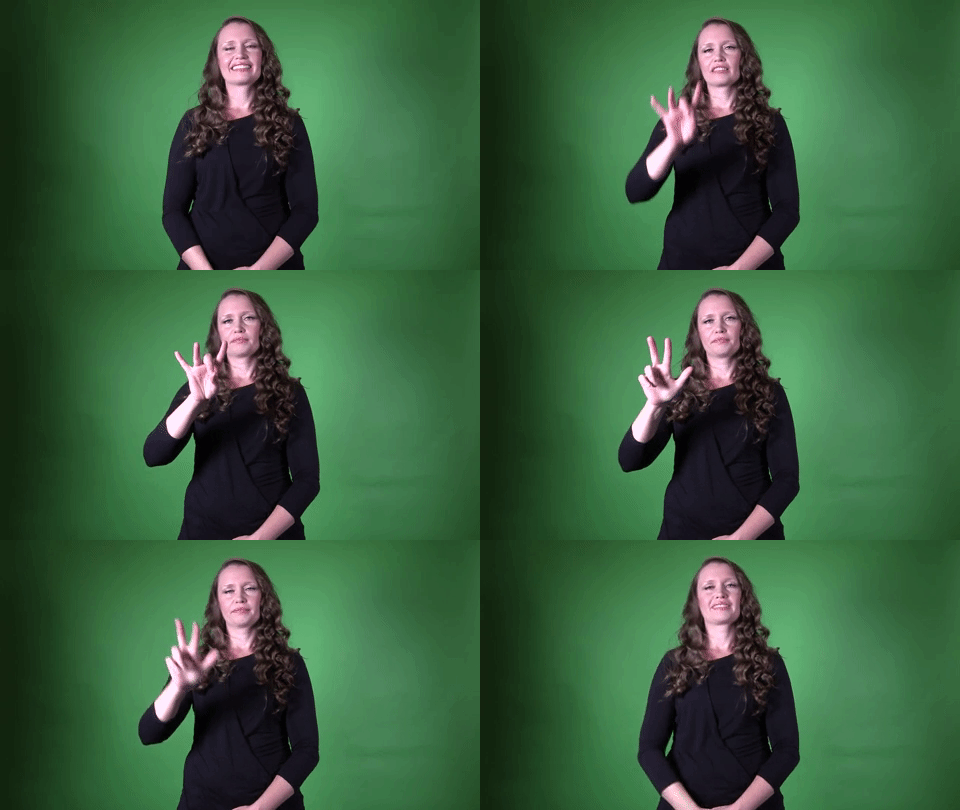
Definition: Refers to the number eighty-three
Sign for THE NUMBER EIGHTY-THREE in ASL

Practice Activities:
Begin by practicing the sign for the number eighty-three in ASL in isolation. Form the number slowly and carefully, ensuring accuracy in handshape and movement. Repeat the sign multiple times while watching yourself in a mirror or recording a video for self-assessment.
Next, incorporate the sign for the number eighty-three in ASL into simple counting exercises. Count aloud from seventy-five to ninety to develop fluency. Practice switching between numbers smoothly, focusing on hand transitions to ensure clarity and precision.
Use the sign for the number eighty-three in ASL in real-life contexts. Imagine ordering something and mentioning the number, such as an address or a price. For example, practice signing “The total is eighty-three dollars” or “He turned eighty-three this year” to build confidence in using the number naturally.
Engage in a partner activity where one person signs a random number between seventy and ninety, and the other identifies it. This helps reinforce recognition and recall of similar numbers, ensuring the sign for the number eighty-three in ASL is distinguished correctly.
Create a short story or scenario where the number is relevant. For instance, sign a brief narrative involving someone celebrating an eighty-third birthday or discussing an event that happened in 1983. Adding storytelling elements makes practicing numbers more engaging and memorable.
Challenge yourself by incorporating speed drills. Sign numbers in sequence quickly while maintaining clarity and accuracy. Try increasing your speed gradually while still ensuring correct form, which strengthens number fluency and dexterity.
Lastly, mix up number recognition using flashcards with digits written on them. Shuffle the cards and sign each number upon revealing it. This simple exercise reinforces the ability to recall and sign numbers accurately in ASL.
Cultural Context:
The sign for the number eighty-three in ASL follows the standard numerical pattern in American Sign Language. Numbers in ASL are an essential part of communication, often used in daily life for counting, addresses, prices, and other numerical concepts. Understanding the sign for the number eighty-three in ASL helps improve both receptive and expressive signing skills.
ASL numbers have a unique structure that combines handshape, palm orientation, and movement. The sign for the number eighty-three in ASL uses handshapes that represent both digits, following ASL number formation rules. Learning to sign numbers fluently enhances overall communication in both casual and professional settings.
The Deaf community frequently uses numbers in conversations about dates, ages, and measurements. The sign for the number eighty-three in ASL is useful for discussing prices, telephone numbers, and statistics. Being able to sign numbers clearly is an important part of effective ASL communication.
Deaf culture values precision in signed numbers because communication relies on accuracy. When signing the number eighty-three in ASL, maintaining the correct handshape and palm orientation ensures clarity. Practicing ASL numbers regularly helps build confidence and fluency.
Many ASL learners find numbers to be challenging, but consistent practice makes a difference. The sign for the number eighty-three in ASL is part of a logical numerical system that follows a recognizable pattern. Mastering number signs allows signers to engage in more complex conversations and navigate everyday interactions.
ASL numbers are used frequently in appointments, financial transactions, and classroom settings. The sign for the number eighty-three in ASL may come up in various real-life situations, such as discussing inventory, sports scores, or counting objects. Recognizing and signing numbers efficiently improves overall signing ability.
In American Sign Language, signing accuracy matters to avoid confusion. The sign for the number eighty-three in ASL involves distinct finger movements, making it essential to practice regularly. Paying attention to small details in finger positioning helps maintain clarity and prevents miscommunication.
ASL students often learn number signs early in their studies, as numbers are used consistently in daily life. The sign for the number eighty-three in ASL is an important part of numerical literacy in the Deaf community. Developing strong numerical skills in ASL enhances interactions with both Deaf and hearing individuals.
Using ASL numbers correctly improves confidence when engaging with fluent signers. The sign for the number eighty-three in ASL is just one example of how numerical signs blend seamlessly into conversations.
Extended Definition:
The sign for the number eighty-three in ASL is a combination of handshapes that represent the digits eight and three. This sign follows the standard number formation rules in American Sign Language, blending clarity with efficient hand movements. Learning how to form and recognize the sign for the number eighty-three in ASL is essential for communicating numerical information fluently.
To sign the number eighty-three in ASL, begin by forming the number eight handshape, where your thumb meets the tip of your middle finger while the other fingers remain extended. Transition smoothly into the number three handshape, extending your thumb, index, and middle fingers while keeping the ring and pinky fingers folded. The movement should be fluid to ensure the sign is easily understood in conversations.
Numbers in ASL follow a specific structure that helps maintain consistency across different signs. The sign for the number eighty-three in ASL is commonly used in conversations related to counting, measurements, statistics, and addresses. Recognizing and practicing this sign ensures accuracy when discussing numerical information in various contexts.
Number signs in ASL are an essential part of daily communication, especially when discussing age, money, and time. The sign for the number eighty-three in ASL is useful when providing specific numerical details in discussions and storytelling. This makes it a valuable sign for students, educators, and interpreters who need to convey numbers clearly.
Consistent practice helps improve signing speed and clarity when using the sign for the number eighty-three in ASL. Watching fluent signers and practicing in front of a mirror can help reinforce proper handshapes and transitions. Engaging in conversations that involve numbers will also strengthen numeric signing skills.
In deaf culture, numbers are frequently used in daily interactions, making number fluency an important skill. The sign for the number eighty-three in ASL allows signers to communicate efficiently in both casual and formal situations. Understanding number signs enhances overall signing proficiency, creating smoother conversations.
When learning the sign for the number eighty-three in ASL, pay attention to hand orientation and positioning. Incorrect movements or hand placements can change the meaning of a sign, leading to confusion. Practicing with native signers or video resources can help ensure accuracy.
The sign for the number eighty-three in ASL is commonly used in educational settings, business transactions, and general communication. Being able to sign numbers correctly improves confidence and ensures effective communication. Mastering number signs creates a strong foundation for learning more complex ASL vocabulary.
Finger dex
Synonyms: eighty-three, number eighty-three, number 83, the number 83, the number eighty-three
Educational resources: Find related learning materials in our course bank!
Want more? Check out some of our popular learning activities on the homepage!
Need to look up a sign? Use our highly rated dictionary: https://aslinteractive.com/best-asl-dictionary/
Follow us on tiktok: https://www.tiktok.com/@aslinteractive. More social media links at the bottom of this page!
Long-tail Keywords: what is the sign for the number eighty-three in ASL, how do you sign the number eighty-three in ASL, learn the number eighty-three in American Sign Language
Categories: Numbers – Basics, Numbers 81-90, cardinal numbers
tags: Numbers, Numbers 81-90, Math, Language Learning, Educational Content
Parameters
*Handshape*:
The sign for the number eighty-three in ASL uses a transition of two distinct handshapes. First, form the number eight by touching the tip of the thumb to the tips of the middle and index fingers, with the other fingers extended. Then, smoothly transition into the number three by extending the index, middle, and thumb while curling the ring and pinky fingers inward. This motion keeps the sign for the number eighty-three in ASL clear and easily recognizable. ✋
*Palm Orientation*:
The palm orientation for the sign for the number eighty-three in ASL starts with the palm facing outward. As the sign is formed, the fingers transition smoothly while maintaining a forward-facing position. This ensures clarity and visibility for the receiver. The hand remains steady, and proper finger placement is crucial to differentiate it from similar number signs. Keeping the palm outward helps maintain accuracy when signing the number eighty-three in ASL.
*Location*:
The sign for the number eighty-three in ASL is produced in the neutral space in front of the body. The dominant hand forms the number eight, then transitions smoothly into the number three. This movement happens at chest level, ensuring clear visibility.
To correctly sign the number eighty-three in ASL, keep the wrist steady while shifting between the two handshapes. The placement should remain consistent, avoiding unnecessary movement up or down. Proper hand positioning and clarity help ensure the sign is easily understood.
*Movement*:
The sign for the number eighty-three in ASL uses a combination of the number 8 and the number 3. Begin with the dominant hand in the “8” handshape, with the thumb touching the middle finger. Then, transition smoothly to the “3” handshape by extending the index and middle fingers while the thumb remains extended. The movement is fluid and natural, ensuring clarity when signing the number eighty-three in ASL.
*Non-Manual Signals*:
When signing the sign for the number eighty-three in ASL, maintain a neutral or slightly focused facial expression to convey clarity. Eyebrows remain in a natural position, not raised or furrowed, as this is a declarative number sign. Keep your head steady with minimal movement, ensuring the sign for the number eighty-three in ASL is clear. Avoid excessive mouthing, though a subtle formation of “eighty-three” with the lips may help reinforce understanding.
*Prosody, Dominant/Non-Dominant Hand*:
The sign for the number eighty-three in ASL uses the dominant hand. Start with the number eight handshape, where the thumb touches the middle fingertip while the other fingers remain extended. Then, transition smoothly into the number three handshape by extending the index, middle, and thumb while folding the other fingers down. This shift happens in a fluid motion without excessive movement, maintaining a relaxed wrist and neutral space in front of the body.
Tips for Beginners:
When learning the sign for the number eighty-three in ASL, start by ensuring you have practiced counting from one to ten with clarity. Since numbers in ASL require precise finger movements, warming up your fingers with some simple stretches can improve dexterity. The sign for the number eighty-three in ASL follows ASL number formation rules, so understanding how numbers transition in multiples of ten will help.
Pay close attention to your palm orientation. Your palm should face outward, ensuring that your numbers are visible to the viewer. If your palm faces inward, the sign may be misunderstood. Make sure your fingers transition smoothly between the eight and three to maintain fluency.
A common mistake is not extending the correct fingers enough while maintaining control of the hand shape. Be consistent with finger placement so that both numbers are clearly formed. New signers may struggle with forming the number eight properly, so practice making a strong “8” before moving to the three.
Speed can impact accuracy, so practice the sign for the number eighty-three in ASL slowly at first before increasing speed. Avoid rushing through the transition between digits, as this can make the sign unclear. With regular practice, the movement will become more fluid and natural.
It helps to practice in front of a mirror or record yourself signing. Watching your handshape can reveal small mistakes that might go unnoticed otherwise. Additionally, compare your signing with ASL videos or native signers to ensure accuracy.
If you’re signing the number in a conversation, context is key. Some numbers can look similar, so be prepared to clarify using additional fingerspelling or repeating the sign if needed. The sign for the number eighty-three in ASL will become second nature with daily repetition and mindfulness of hand positioning.
Connections to Other topics:
The sign for the number eighty-three in ASL follows the standard formation of ASL numbers, blending influences from basic numerical handshapes. Numbers are a crucial part of ASL, often appearing in discussions about age, money, measurements, and addresses. Mastery of number signs helps in describing phone numbers, dates, and statistics. The number eighty-three also fits into patterns of counting sequences, reinforcing the importance of consistency in number signing.
The sign for the number eighty-three in ASL connects with other numerical signs that follow a similar movement structure. Higher numbers in ASL often incorporate changes in palm orientation or movement to distinguish them, much like how eighty-three is formed by transitioning between eight and three. Recognizing these number shifts enables fluid counting and efficient communication in financial and educational settings. In sports, stats and scores frequently involve numbers like eighty-three, demonstrating the practical real-world use of number signs.
Understanding the sign for the number eighty-three in ASL also ties into signs used for expressing percentages and fractions. Because ASL allows number incorporation into certain classifiers, it is common to see numbers combined with movement to show concepts like time durations or quantity amounts. For example, the number eighty-three could be used in measurements when discussing distances or speeds in academic and professional fields. Additionally, learning the pattern of signing double-digit numbers helps with signing addresses and large sums in banking or business discussions.
The numerical system in ASL follows logical visual groupings that are useful beyond just signing numbers. Learning number signs reinforces key finger dexterity and shape recognition, skills that assist in fingerspelling fluency. Since numbers often appear alongside time concepts, understanding them strengthens comprehension of scheduling and timelines in conversations. Mastering the sign for the number eighty-three in ASL improves overall numerical fluency, ensuring smooth and accurate communication in any context where numbers are essential.
Summary:
The sign for the number eighty-three in ASL combines numerical handshapes in a fluid motion. It begins with the number eight, using the thumb and middle finger touching while the other fingers remain extended. The transition to three involves shifting the handshape so that the thumb, index, and middle fingers are extended while the ring and pinky fingers close.
Numbers in ASL follow a consistent system, but slight variations exist depending on regional or generational influences. The sign for the number eighty-three in ASL falls within the category of compound number signs. It is expressed smoothly with a natural flow, avoiding any abrupt movements.
The handshape remains prominent as clarity is necessary when communicating numbers. Ensuring each finger is distinctly positioned helps avoid confusion with visually similar numbers. The transition between eight and three should feel seamless, almost like a natural unfolding of the fingers.
ASL numbers have a strong linguistic foundation, showcasing the evolution of American Deaf culture. The sign for the number eighty-three in ASL is part of this broader system that reflects efficiency and clarity in communication. These numerical signs also reinforce how ASL prioritizes visual expressiveness.
Understanding numerical signs is essential for discussing dates, prices, counts, and other numerical data. The sign for the number eighty-three in ASL could be relevant in contexts like recounting statistics or expressing an age. The ability to sign numbers fluently enhances overall ASL proficiency.
Numeric signs in ASL are sometimes modified depending on context. For example, money signs may include a small rocking motion or a dollar-handshape variation. However, when signing a number alone, such as the number eighty-three in ASL, maintaining a neutral hand movement is appropriate.
Fluency with numbers can be particularly important in academic and professional settings. The sign for the number eighty-three in ASL may be needed for signing addresses, phone numbers, or financial figures. A signer must ensure consistent hand positioning and movement to convey numbers accurately.
Cultural perspectives also shape how numbers are signed. In some cases, signers may adjust their numerical signs based on regional dialects within ASL. The sign for the number eighty-three in ASL, though standardized, could have slight stylistic differences depending on the signer’s background.
Numerical fluency in ASL plays an important role in daily interactions. Whether discussing quantities, prices, or statistics, being able to sign the number eighty-three in ASL quickly and accurately is valuable. Practicing number signs regularly helps in maintaining smooth hand transitions.
Numbers larger than ten in ASL generally rely on sequential handshape transitions. This applies to the sign for the number eighty-three in ASL, where two distinct numbers are formed in succession. The transition needs to be fluid to ensure clear visual recognition.
ASL incorporates numerical structure as an integral part of its grammar. Signs like the number eighty-three in ASL follow established conventions to eliminate ambiguity. Mastery of these signs supports broader ASL fluency and comprehension.
When signing numbers, hand positioning relative to the body remains important. The sign for the number eighty-three in ASL is usually performed within the signing space around the chest. Keeping fingers clearly positioned reduces the chance of misinterpretation.
Some ASL users might introduce variations depending on context or signing speed. A rapid execution of the sign for the number eighty-three in ASL may appear slightly different from a deliberately slow articulation. Signers can adjust their speed to match communicative needs.
Numerical signs in ASL often carry connotations beyond the straightforward quantity. The number eighty-three in ASL could be relevant in storytelling, historical references, or personal milestones. Numbers sometimes take on special meaning within the Deaf community for specific events or dates.
Numbers also play a role in classifiers, though the sign for the number eighty-three in ASL functions primarily as a static numerical expression. ASL classifiers can include numbers to specify objects, sequences, or movements. However, standalone numbers follow distinct rules for clarity.
ASL learners must practice numerical transitions to build fluency. The sign for the number eighty-three in ASL is useful for drills focusing on multi-digit number formations. Repeated practice improves speed and confidence in communicating numbers effectively.
Since ASL is a visual language, the clarity of handshapes is paramount. The sign for the number eighty-three in ASL should be executed with distinct finger movements to prevent miscommunication. Proper lighting and visual framing also enhance its visibility.
Certain numbers in ASL have similar handshapes, requiring careful attention to distinctions. The sign for the number eighty-three in ASL should not be confused with similar-looking numbers like eighty-eight or eighty-five. Hand positioning and movement patterns help maintain differentiation.
ASL’s numerical system also intersects with other signing conventions like time and age indicators. The sign for the number eighty-three in ASL might be used in phrasing like “eighty-three years old.” Context determines whether the number is a standalone figure or part of a phrase.
Numerical literacy in ASL
Want more? Check out some of our popular learning activities!
ASL Interactive Resources
ASLInteractive YouTube Channel
Follow us on tiktok: @aslinteractive.com
Follow us on Instagram: aslinteractive
Facebook page: aslinteractive
Facebook group: aslinteractive
LInkedIn: ASL Interactive LLC
Twitter: @ASL_interactive
*Some information on this page is AI-generated. AI can make mistakes. Please check the information.


Responses