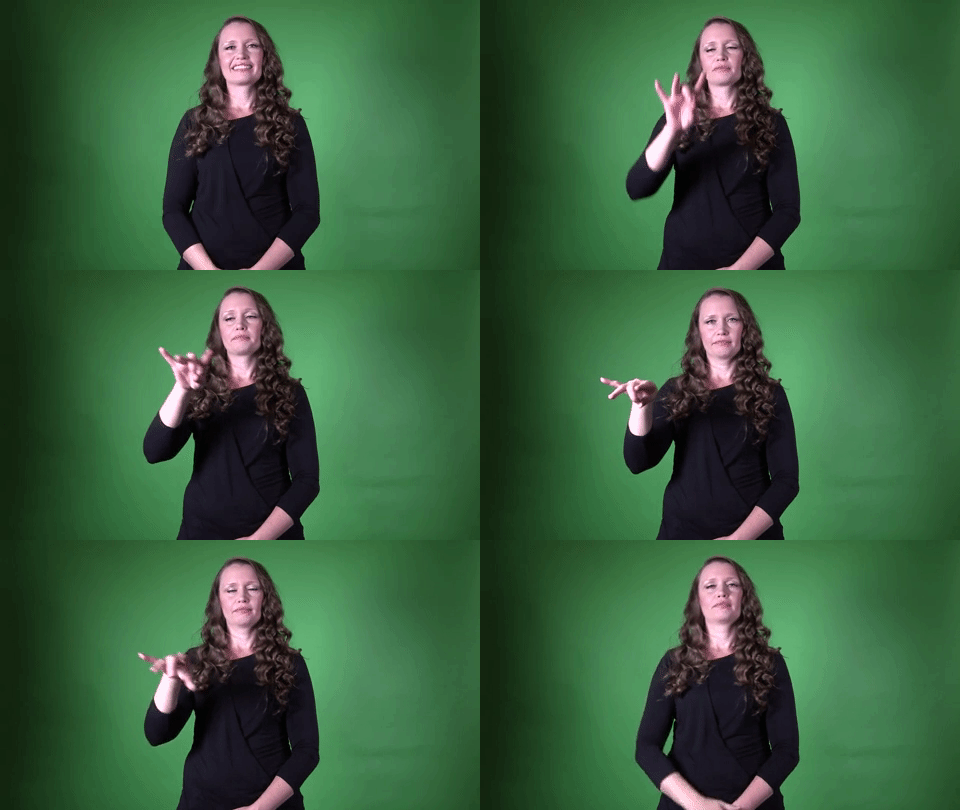
Sign for NUMBER 88 in ASL | 🔢 ASL Dictionary

Definition: Refers to the number eighty-eight

Sign for NUMBER 88 in ASL

YouTube player

Practice Activities:

Practicing the sign for number 88 in ASL effectively involves repetition and application in various contexts. Start by forming the sign repeatedly in front of a mirror to ensure correct handshape and movement. Since 88 is a repeated movement number, focus on making both movements identical and clear. Switch between signing 88 and other double-digit numbers like 77, 99, and 55 to improve fluency and differentiate the motions.

Use the sign for number 88 in ASL in real-world scenarios. Imagine you’re a cashier giving someone change and practice saying aloud, “Your total is 88 cents,” while signing 88. Try writing a fictional grocery list where items cost amounts that include 88 cents or $88 and sign all the relevant numbers as you read the list.

Engage in partner practice by quizzing each other on random two-digit numbers that include 88. Ask your partner to sign numbers at different speeds, and try to identify and replicate them. Another fun game is “Number Bingo,” where you randomly draw numbers, and players must sign what they see—reward accuracy and speed for extra challenges.

Storytelling activities can be useful for reinforcing the sign for number 88 in ASL. Come up with a short story about an event occurring in the year 1988, emphasizing the number 88 in the narrative. Try retelling historical events or discussing birth years that involve 88 to give the sign practical context.

Practice signing the number in phone numbers, addresses, and years. Create a fictional phone number that contains 88 and challenge yourself to sign it smoothly. For an extra challenge, try signing sequences like 1888, 2888, or 8811 to improve consistency and comfort when using the handshape.

Cultural Context:

In American Sign Language, the sign for number 88 in ASL follows a common pattern used for repeating double-digit numbers. The movement and handshape used make it distinct and easy to recognize among other number signs. Understanding how to sign number 88 in ASL is useful for everyday conversations, sports scores, and historical references.

Numbers in ASL play an important role in communication, from counting and math to discussing prices and statistics. The sign for number 88 in ASL is part of the larger number system that includes unique movements for double numbers. Learning and practicing these numbers helps improve fluency and comprehension.

The repetition in the hand movement for the sign for number 88 in ASL makes it fun to learn. ASL numbers often incorporate subtle shifts in movement that differentiate similar signs. Mastering these small details ensures clarity and accuracy when signing numbers.

Whether discussing a birth year, an event in 1988, or simply counting, the sign for number 88 in ASL is frequently used. Knowing ASL numbers allows for clear and effective communication in various settings, including school, business, and casual conversation. The ability to sign numbers correctly adds to overall confidence in using ASL.

Cultural context plays a role in the use of numbers in ASL, especially for Deaf storytelling and historical discussions. The sign for number 88 in ASL may be used when referring to key events, such as Deaf sports competitions or anniversaries. Understanding numerical signs enhances one’s ability to engage in deeper conversations within the Deaf community.

Since ASL is a visual language, numbers are expressed through movement rather than spoken words. The sign for number 88 in ASL relies on this visual nature, making it an essential part of numerical expression. Recognizing numeric signs quickly is an important skill for effective ASL communication.

Learning the sign for number 88 in ASL alongside other number signs improves overall signing ability. Practicing numbers with fluent signers helps reinforce correct handshapes and movements. Consistent exposure to ASL numbers builds confidence and fluency in conversations.

Numbers frequently appear in everyday signing, from phone numbers to addresses and ages. The sign for number 88 in ASL may be used in discussions involving statistics, scores, or personal milestones. Recognizing and signing numbers properly helps avoid confusion in communication.

Using ASL numbers correctly also supports literacy and numeracy skills within the Deaf community. The sign for number 88 in ASL is just

Extended Definition:

The sign for number 88 in ASL is a two-handed number sign that follows the common pattern for repeated-digit numbers in American Sign Language. It uses the number 8 handshape on both hands, with a slight movement to indicate repetition. This sign belongs to the category of two-digit numbers that require a bouncing or sliding motion.

When signing the number 88 in ASL, both hands are formed into the number 8 handshape with fingers extended and touching the thumb. The hands move slightly outward or bounce once to show repetition of the digit. This movement helps differentiate it from single-digit numbers and keeps the number visually clear.

Like other repeated-digit numbers in ASL, the sign for number 88 follows a consistent pattern seen in numbers such as 33, 44, 55, and beyond. The bouncing or sliding motion distinguishes it from numbers with different second digits. This method is essential for clarity and helps maintain fluency in ASL communication.

Numbers like 88 are commonly used in everyday conversations, especially when discussing addresses, identification numbers, sports jerseys, or years. When fingerspelling or numbering in ASL, it’s important to use the correct motion to avoid confusion with other numbers. Proper technique ensures clear communication and understanding.

The number 88 in ASL follows standard number-signing guidelines within American Sign Language. It is important to practice movements smoothly and naturally to maintain fluidity in conversations. Signing numbers correctly helps improve overall ASL proficiency and comprehension.

Mastering the sign for number 88 in ASL is helpful for both beginners and advanced signers. Learning number signs accurately enhances numerical communication in various contexts. Practicing regularly will make the motion easier and more intuitive.

When teaching or learning the numbers in American Sign Language, focusing on repeated digits like 88 can help reinforce number-signing patterns. Recognizing these patterns makes it easier to recall and produce similar numbers when needed. This approach also improves speed and accuracy when using ASL numbers in daily interactions.

Using the proper handshapes and movements for 88 in ASL will help in both formal and informal signing situations. Whether discussing statistics, measurements, or general numerical information, having fluency in number signs enhances overall communication skills. This is especially beneficial in educational, professional, and social settings.

Numbers are an essential part of ASL, and mastering signs like 88 ensures effective communication. Practicing with others or using mirrors to check handshapes and movements can be

Synonyms: eighty-eight, number eighty-eight, number 88, the number 88, the number eighty-eight

Educational resources: Find related learning materials in our course bank!

Want more? Check out some of our popular learning activities on the homepage!

Need to look up a sign? Use our highly rated dictionary: https://aslinteractive.com/best-asl-dictionary/

Follow us on tiktok: https://www.tiktok.com/@aslinteractive. More social media links at the bottom of this page!

Long-tail Keywords: what is the sign for number 88 in ASL, how do you sign number 88 in ASL, number 88 in American Sign Language

Categories: Numbers – Basics, Numbers 81-90, cardinal numbers

tags: Numbers, Numbers 81-90, Math, Language Learning, Educational Content

Parameters

*Handshape*:

The sign for NUMBER 88 in ASL uses both hands in an “8” handshape. The fingertips and thumb tips of each hand slightly touch, then separate while maintaining the “8” shape. This movement emphasizes the repetition of the number. The sign for NUMBER 88 in ASL is typically made at chest level with a slight bouncing or sliding motion. Proper hand positioning ensures clarity, making it easily understood in conversations.

*Palm Orientation*:

The palm orientation for the sign for number 88 in ASL is outward, facing away from the signer. The handshape consists of the number eight handshape on both hands. Both hands move slightly to the side in a repeated motion while maintaining the same palm orientation. The fingers should be relaxed but clearly form the number eight, ensuring clarity when signing. This movement and orientation distinguish the sign for number 88 in ASL from other number signs.

*Location*:

The sign for number 88 in ASL is produced in the neutral space in front of the body, around chest level. Both hands form the number eight handshape, with the thumb and middle finger making contact. The hands bounce slightly as they repeat the motion once. This movement distinguishes 88 from other number signs. The neutral space ensures visibility, making it clear and easy to recognize. ✋

*Movement*:

To sign for number 88 in ASL, form the number 8 with both hands by touching the tip of the thumb to the tip of the middle finger while the other fingers remain extended. Hold both hands in front of you, palms facing outward. Bounce the handshape slightly to the right once to show repetition. The motion is small and controlled, ensuring clarity in communication.

*Non-Manual Signals*:

Facial expressions remain neutral or slightly affirmative when producing the sign for number 88 in ASL. Eyebrows may lower slightly if confirming or questioning the number, while a small head nod can add emphasis when stating it confidently. Eye contact should be maintained to reinforce clarity. If used in an enumerative context, slight mouth movements like “eighty-eight” may be present to support meaning. A relaxed posture ensures that the sign for number 88 in ASL is fluid and natural.

*Prosody, Dominant/Non-Dominant Hand*:

The sign for number 88 in ASL uses the dominant hand, forming the number 8 handshape (thumb touches the middle finger). The hand starts in a neutral space and moves slightly outward while repeating the 8 handshape twice. The movement is a small, controlled bounce, maintaining a steady rhythm. Only the dominant hand is used, with the palm facing forward. This sign is fluid, ensuring clarity and accuracy when conveying numerical information.

Tips for Beginners:

The sign for NUMBER 88 in ASL is formed by using the number 8 handshape on both hands and making a slight side-to-side movement. It is important to keep the fingers extended while maintaining a firm yet relaxed posture. Ensure that both hands mirror each other exactly, as misalignment can cause confusion.

One common mistake beginners make when signing NUMBER 88 in ASL is failing to keep the thumb and middle finger of each hand properly in contact. If the handshape is not clear, it may be mistaken for a different number. Practicing in front of a mirror can help ensure correct positioning and symmetry.

Smooth and controlled movement is key to signing NUMBER 88 in ASL correctly. Avoid excessive bouncing or shaking, as this can make the sign unclear. A slight horizontal movement is all that is needed to differentiate 88 from other double-digit numbers. Watching experienced signers can help you develop a more natural motion.

Hand positioning is essential when signing NUMBER 88 in ASL. Keep your hands at chest level and within your signing space. If your hands are too far apart or too low, the sign may not be easily recognized. Keeping your elbows slightly bent will give more fluidity to the movement.

Finger strength and dexterity can make a difference when forming the number 8 handshape. If your fingers feel weak, try simple hand exercises to improve control. Stretching your hands before practice can also help prevent strain and ensure a crisp sign.

Practicing regularly will help you reinforce your muscle memory for the sign for NUMBER 88 in ASL. Incorporate number sequences into your daily practice so that signing numbers feels more natural. The more you use the sign in context, the more confident and accurate you will become.

Connections to Other topics:

The sign for NUMBER 88 in ASL connects to broader numerical patterns in ASL, particularly in how repeating digits are expressed. Numbers like 77, 99, and 88 are shown with a repeated movement, reinforcing how ASL incorporates movement to indicate repetition. This is important for understanding how other number patterns are signed, making it easier to grasp larger numerical sequences in ASL.

This sign also relates to classifiers and measurements, as numbers in ASL are often embedded in phrases for dates, addresses, and mathematics. In contexts like sports scores or financial transactions, the sign for NUMBER 88 in ASL is used just as naturally as saying the number in spoken English. Recognizing how numbers integrate into daily conversations helps learners understand the fluid use of numerical signs.

Another connection is with ordinal numbers, which signify ranking or order. Though the sign for NUMBER 88 in ASL itself is not ordinal, knowing how to transition between cardinal and ordinal numbers is essential. For instance, shifting “88” into “88th” involves a slight modification in the movement, reinforcing how small changes in signs can alter meaning significantly.

Additionally, patterns in number signs are consistent across different signs for age, money, and time. The structure of the sign for NUMBER 88 in ASL resembles other double-digit numbers, reinforcing the importance of handshape consistency. These patterns become useful when signing years, prices, or phone numbers, highlighting how consistent numerical forms make communication more efficient.

The concept of reduplication in ASL finds relevance in number signs as well. Some words in ASL repeat motion to indicate multiple instances or intensification, similar to how the sign for NUMBER 88 in ASL doubles the handshape and movement. Understanding this concept helps in recognizing how repetition often creates meaning within ASL, especially in quantifiable contexts.

Summary:

The sign for number 88 in ASL follows a specific numerical pattern commonly used for double-digit numbers in American Sign Language. To produce the sign, both hands form the number 8 with the thumb and middle finger touching. The hands then move slightly to the side in a small, repetitive motion, maintaining the 8 handshape throughout.

Numbers like 88 in ASL follow a pattern that applies to other double numbers such as 77 or 99. The repeated motion distinguishes them from single-digit numbers and ensures clarity in communication. This slight bounce or shift is an identifying feature of ASL number signs in this range.

The number 88 is often used in everyday conversations, such as discussing years, sports jerseys, or numerical values. Whether referring to someone’s birth year or a highway number, recognizing this sign’s proper production ensures effective communication. Accuracy with double-digit numbers helps maintain fluency in ASL.

Understanding the sign for number 88 in ASL is essential for anyone learning numerical expressions within the language. Unlike spoken English, which relies on vocal tone for emphasis or distinction, ASL uses subtle hand movements and spatial shifts. These nuances allow numbers to be visually distinct and easily understood in fast-paced conversations.

Linguistically, ASL numbers follow a structured rule set that helps categorize their movement and shape changes. The sign for number 88 in ASL belongs to a group of repeated numbers where the motion conveys repetition rather than redundancy. This system is a distinctive part of ASL’s numerical grammar and contrasts with single-digit or sequential numbers.

In learning ASL numbers, mastery of the handshape and repetition patterns is crucial. The rhythm and consistency of movement play a significant role in comprehension. Not maintaining the correct bounce or motion can cause confusion, especially when communicating with fluent signers or in rapid discussions.

The sign for number 88 in ASL also has cultural relevance, as numbers frequently appear in Deaf community conversations. They may indicate historical dates, sports references, or significant events tied to the Deaf experience. Understanding numerical signs helps deepen engagement with ASL users and their shared context.

Numbers in ASL also follow specific palm orientation rules. When signing 88, the palm generally faces outward so that the number is clearly visible to the recipient. Changes in orientation can alter meanings or cause misunderstandings, making precision vital.

In applied linguistics, numerical depiction in ASL is studied for its efficiency and visual clarity. The structure of double-digit number signs, such as the sign for number 88 in ASL, reflects ASL’s optimization for visual communication. By using repeated motion instead of additional symbols, the language minimizes effort while maximizing comprehension.

Numerical expressions in ASL have parallels to spoken languages’ intonations or emphasis strategies. Just as stress patterns in spoken language change the meaning or clarity of a word, the positioning and movement of ASL numbers convey essential distinctions. This visual inflection system allows ASL to function in a grammatically precise and natural way.

The development of ASL number signs, including the sign for number 88 in ASL, showcases the language’s evolution. Over time, fingerspelling and numerical systems adapted to support faster, more expressive signing. These modifications demonstrate linguistic economy—simplifying communication while maintaining clarity.

ASL numbers also integrate into various sign contexts, appearing in calendar dates, money amounts, and measurements. Their frequency of use reinforces why learning numerical signs is foundational for ASL fluency. The consistent recognition of patterns like the movement in 88 strengthens overall competency in the language.

For ASL learners, understanding how to sign 88 properly also improves broader number recognition. Because it follows the same structural rules as other repeated digit numbers, mastering 88 aids in learning related numbers efficiently. This principle applies widely across ASL’s structured numerical system.

Within Deaf culture, numeric sequences hold particular significance, especially in education and social settings. Numbers often appear in classroom settings, workplace discussions, and personal conversations, making numerical fluency essential. Using the sign for number 88 in ASL correctly contributes to effective and authentic communication in these contexts.

Comparing signing numbers to spoken number systems highlights key differences in communication modalities. ASL prioritizes clarity through movement, distinguishing similar-looking numbers with spatial shifts. This contrasts with spoken numbers, which rely on tonal or contextual differentiation in sound.

Technology has influenced ASL number signs, particularly with the digital era emphasizing numerical literacy. Video communication and Deaf-friendly applications require clear number signing for accessibility. Signs like 88 remain crucial for conveying numerical information across different digital and live ASL platforms.

In sports, numerical signs like 88 are commonly used to reference player numbers or statistics. Fans who use ASL benefit from knowing these signs, as sports conversations frequently include numerical discussions. The accuracy of these signs ensures seamless interactions within the Deaf community’s sports culture.

Mastering the nuances of the sign for number 88 in AS

Want more? Check out some of our popular learning activities!

ASL Interactive Resources

ASLInteractive YouTube Channel

Follow us on tiktok: @aslinteractive.com

Follow us on Instagram: aslinteractive

Facebook page: aslinteractive

Facebook group: aslinteractive

LInkedIn: ASL Interactive LLC

Twitter: @ASL_interactive

*Some information on this page is AI-generated. AI can make mistakes. Please check the information.

Sign for 88 in ASL, Sign for EIGHTY-EIGHT in ASL, Sign for NUMBER EIGHTY-EIGHT in ASL, Sign for THE NUMBER EIGHTY-EIGHT in ASL, Sign for THE NUMBER 88 in ASL, Sign for NUMBER 88 in ASL

Responses