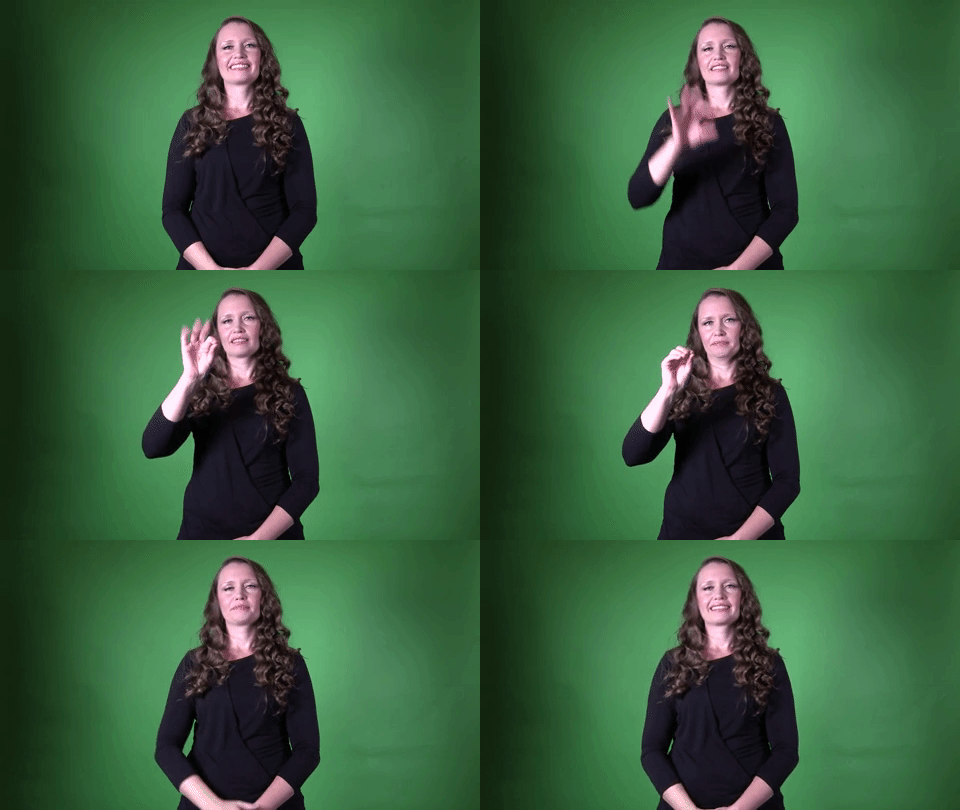
Sign for THE NUMBER 90 in ASL | 🔢 ASL Dictionary

Definition: Refers to the number ninety

Sign for THE NUMBER 90 in ASL 

YouTube player

Practice Activities:

To practice the sign for the number 90 in ASL, begin by signing it repeatedly in front of a mirror. Pay attention to the shape of your dominant hand moving from the 9 handshape to the 0 handshape. Make sure your movements are fluid and natural.

Try incorporating the sign for the number 90 in ASL with other numbers. Count by tens from 10 to 100, making sure to emphasize 90 when you reach it. You can also sign random numbers and switch between them quickly to improve recognition and recall.

Use the sign for the number 90 in ASL in sentences to reinforce its usage. Practice signing, “My grandfather is 90 years old” or “There are 90 students in the school.” Challenge yourself by creating five new sentences using 90 in different contexts, such as ages, prices, or distances.

Engage in a fun number trivia game with a partner. One person asks questions like, “How many minutes are in an hour and a half?” and the other answers using ASL numbers. Make sure to respond with 90 whenever appropriate. Switch roles to practice both recognizing and producing the number.

Create a short story that involves the sign for the number 90 in ASL. It could be about a character who finds 90 dollars, rides a bike for 90 miles, or spends 90 minutes on an exciting adventure. Sign the story out loud and focus on conveying meaning with facial expressions and movements.

For an interactive challenge, write a list of several numbers, including 90, and have a partner sign them randomly. Your goal is to recognize and sign back the correct numbers. If possible, time yourself and try to improve your speed and accuracy with each round.

Cultural Context:

The sign for the number 90 in ASL is part of the number system used in American Sign Language. Learning ASL numbers is essential for communication, whether discussing ages, addresses, prices, or math concepts. The sign for the number 90 in ASL follows a logical pattern similar to other numbers in the 90s series.

ASL numbers play a significant role in everyday interactions within the Deaf community. The sign for the number 90 in ASL is used in contexts like counting, measurements, and even sports scores. Understanding how to sign numbers correctly helps ensure clear communication in conversations.

When signing the number 90, handshape and movement are crucial. The sign for the number 90 in ASL combines elements of the number 9 and the number 0. Consistency in forming numbers is important so that signs are easily understood by fluent users of ASL.

Learning ASL numbers strengthens overall fluency in American Sign Language. The sign for the number 90 in ASL, along with other number signs, helps signers participate in discussions about dates, times, and money. Mastering numbers is a fundamental part of ASL education for new learners and experienced signers alike.

The Deaf community values precise and expressive signing, including numbers. The sign for the number 90 in ASL is part of this visual language that relies on handshapes, facial expressions, and movement. Practicing ASL numbers improves communication skills and confidence in signing.

ASL has a unique numerical system that differs from spoken languages. The sign for the number 90 in ASL follows a structured formation that aligns with ASL grammar and syntax. Understanding these patterns makes it easier to sign and recognize numbers in everyday conversations.

Accurate number signing ensures clear understanding, whether discussing statistics or personal details. The sign for the number 90 in ASL is frequently used in various settings, from classrooms to business environments. Mastering numerical signs enhances fluency and ensures effective communication in ASL.

Numbers are a foundational aspect of American Sign Language. The sign for the number 90 in ASL is just one of many numerical signs that help convey important information. Learning to sign numbers accurately enables better engagement in discussions within the Deaf community.

Finger spelling and number signs support effective communication in ASL. The sign for the number 90 in ASL is a critical part of this visual language. Becoming comfortable with number signs helps signers express themselves clearly and confidently in

Extended Definition:

The sign for the number 90 in ASL is a combination of the signs for the number 9 and the number 0. It follows the standard number system in American Sign Language, making it easy to form and recognize. Learning to sign this number correctly is important for clear communication in ASL.

To make the sign for the number 90 in ASL, start by forming the number 9 with your dominant hand. Your index finger and thumb should touch, creating a circular shape while the other fingers remain extended. Then, smoothly transition from 9 to 0 by bringing your fingers into the shape of the number 0, which is done by forming an “O” handshape.

The transition between the two numbers should be fluid to maintain natural signing rhythm. Just like other double-digit numbers, clarity and speed in signing help ensure that the number is easily understood. Practicing the movement will help build confidence in using the sign for the number 90 in ASL correctly.

In everyday conversations, numbers are frequently used for dates, addresses, prices, and counting. The sign for the number 90 in ASL may come up when discussing ages, sports scores, or measuring time. Knowing how to accurately sign numbers is essential for both beginners and advanced signers.

ASL numbers follow specific grammar and structure rules, ensuring consistency in communication. The sign for the number 90 in ASL is part of the broader numerical system that includes cardinal and ordinal numbers. Learning these foundational signs will enhance fluency and comprehension in American Sign Language.

Many ASL users rely on visual communication, so handshape clarity is critical. The sign for the number 90 in ASL is visually distinct, making it easy to differentiate from similar numbers. Keeping the movement smooth and maintaining an appropriate pace can prevent confusion.

There are slight variations in number signs across different ASL users and regions. Some signers may make subtle modifications based on personal style or regional influence. However, the general structure of the sign for the number 90 in ASL remains the same across most ASL communities.

Practicing ASL numbers regularly can improve signing speed and accuracy. Watching native signers and using ASL resources can help reinforce proper technique. Signing numbers like 90 confidently can make conversations smoother and more efficient.

American Sign Language is a dynamic visual language used by the Deaf and Hard of Hearing community. Numbers play a crucial role in conversations and everyday interactions. Mastering the sign

Synonyms: ninety, number ninety, number 90, the number 90, the number ninety

Educational resources: Find related learning materials in our course bank!

Want more? Check out some of our popular learning activities on the homepage!

Need to look up a sign? Use our highly rated dictionary: https://aslinteractive.com/best-asl-dictionary/

Follow us on tiktok: https://www.tiktok.com/@aslinteractive. More social media links at the bottom of this page!

Long-tail Keywords: what is the sign for the number 90 in ASL, how do you sign the number 90 in American Sign Language, ASL sign for the number 90

Categories: Numbers – Basics, Numbers 81-90, cardinal numbers

tags: Numbers, Numbers 81-90, Math, Language Learning, Educational Content, rocking numbers, 86, 87, 89 rocking numbers

Parameters

*Handshape*:

The sign for the number 90 in ASL uses a changing handshape. Start with the number 9 handshape, where the thumb and index finger touch to form a circle while the other fingers extend upward. Then, smoothly transition into the number 0 handshape by bringing all the fingers together into a rounded shape. This transformation happens naturally as the number is signed. The sign for the number 90 in ASL is performed in one fluid motion with the dominant hand.

*Palm Orientation*:

The palm orientation for the sign for the number 90 in ASL begins with the palm facing outward. While forming the number 9 with the dominant hand, the thumb and index finger create a circular shape. The transition to 0 involves smoothly folding the fingers into an “O” shape while maintaining a forward-facing palm. This movement ensures clarity in expressing the sign for the number 90 in ASL. ✋

*Location*:

The sign for the number 90 in ASL is produced in the neutral space in front of the body, typically at chest level. The hand starts in the 9 handshape—thumb and index finger touching while the other fingers remain extended—then transitions smoothly to the 0 handshape, with all fingers forming a closed circle. This movement ensures clarity and maintains the correct numerical representation in American Sign Language.

*Movement*:

Start by forming the number 9 with your dominant hand. Touch the tip of your thumb and index finger together to create a circular shape while keeping the remaining fingers extended. Then, smoothly transition into the number 0 by bringing your fingers together into a closed O shape. The sign for the number 90 in ASL flows naturally from one shape to the next in a fluid motion. Maintain a steady movement without abrupt pauses.

*Non-Manual Signals*:

When signing the sign for the number 90 in ASL, maintain a neutral or slightly focused expression. Eyebrows may be slightly raised if emphasizing the number, such as when distinguishing between similar numbers. The mouth should remain relaxed, though slight lip movements may accompany counting or clarification. Head tilts subtly when needed for emphasis, ensuring clear communication. Keep eye contact with your conversation partner to confirm understanding.

*Prosody, Dominant/Non-Dominant Hand*:

The sign for the number 90 in ASL uses the dominant hand. Begin with the number 9 handshape, where the thumb and index finger form a circle while the other fingers extend. Then smoothly transition into the number 0 handshape by bringing all fingertips together, forming a complete circle. This motion should be fluid, maintaining a natural transition between the two numbers. Non-dominant hand remains inactive. ✋

Tips for Beginners:

When learning the sign for the number 90 in ASL, start by forming the handshape for the number 9 with your dominant hand. This means extending the thumb and index finger into an “open 9” handshape while keeping the other three fingers folded. Then, transition smoothly into the number 0 by forming a closed “O” handshape. Practice this movement fluidly to maintain clarity in your signing.

A common mistake beginners make when practicing the sign for the number 90 in ASL is failing to keep the transitions between the numbers clear. Ensure that both the 9 and the 0 are distinct by holding each shape momentarily before switching. Your fingers should not rush through the motion, as this can make the number look unclear or resemble a different sign.

Hand orientation and positioning are key to making the sign for the number 90 in ASL visually accurate. Keep your palm facing outward as you sign to ensure that your hand is easily readable by your audience. If your palm faces inward or to the side, the number may not be recognizable to fluent signers. Practicing in the mirror or recording yourself can help you check and correct your orientation.

Speed and fluidity come with repetition, so practice signing different numbers in sequence, including 90. Try counting in tens (80, 90, 100) to get used to natural movements between numbers. This will help you become more comfortable with number transitions and improve signing accuracy in everyday conversations.

Finger flexibility and smooth transitions will enhance the clarity of the sign for the number 90 in ASL. Stretching your fingers and doing warm-up exercises can help if you find the handshape change difficult. Over time, muscle memory will make switching between the 9 and the 0 effortless.

Connections to Other topics:

The sign for the number 90 in ASL connects directly to the ASL number system, which follows a logical progression based on handshape transformations. It is formed by showing the number 9 handshape and transitioning smoothly into a 0. This demonstrates how numbers in ASL can be expressed efficiently using minimal movement while maintaining clarity. Understanding how the sign for the number 90 in ASL follows this pattern helps learners recognize similar number transitions, such as 80 or 70, which follow the same structure.

This sign also relates to larger numerical concepts, including percentages, monetary values, and measurements. For example, 90% can be signed by first forming the sign for the number 90 in ASL followed by the sign for “percent.” When discussing prices, like 90 dollars, you can sign the number first and follow with the dollar sign. These variations show how numerical signs integrate naturally into financial and statistical discussions within ASL.

Another connection can be made to counting sequences and milestones, as the number 90 appears in various contexts such as birthdays, historical events, and age-related discussions. In storytelling, describing a grandparent who is turning 90 can be emphasized using facial expressions or additional signs indicating celebration or longevity. This demonstrates how numbers are not just about quantity but also carry meaning based on context.

The sign for the number 90 in ASL also connects to sports and academic grading, where percentages are commonly referenced. A score of 90 in a game or an exam can indicate high achievement, reinforcing the importance of numerical fluency in discussions about performance. By understanding how to sign numbers fluidly, signers can express a wide range of ideas, from simple counting to detailed statistics and personal milestones.

Summary:

The sign for the number 90 in ASL follows the same pattern as other numbers ending in zero. It uses a combination of two handshapes, smoothly transitioning from one digit to the next. Mastering the sign for the number 90 in ASL helps reinforce number fluency in signing conversations.

To produce the sign, start with the hand in the “9” handshape, which means the index finger and thumb form a small open circle while the other three fingers extend outward. Then, smoothly transition to the “0” handshape, where all fingertips come together, forming a standard “O” shape. This movement should be fluid, reflecting a natural number pattern.

The transition from “9” to “0” should be crisp but not overly rigid. The hand remains in a comfortable signing space, typically positioned at chest height. This movement mirrors other tens-based numbers in ASL, such as 70 or 80.

ASL numbers carry an internal rhythm that helps with clarity. The sign for the number 90 in ASL follows this rhythmic consistency, making it easier for fluent signers to recognize within a numerical sequence. Consistency in number signs prevents misunderstandings, particularly when discussing prices, ages, or mathematical concepts.

Numbers in ASL often follow predictable linguistic patterns. Just like spoken language, ASL uses systematic structures for counting. The sign for the number 90 in ASL follows this structure, showing how sign language maintains logical numerical progression.

The way numbers are signed can vary slightly based on regional dialects or signing speed. Some signers may shift more quickly from “9” to “0,” while others maintain a clear deliberate movement. However, the basic visual representation stays the same to ensure understanding.

Numbers hold significant cultural meaning. The number 90 can symbolize longevity, time periods, or milestones. In Deaf culture, milestone birthdays like 90 can hold special significance, much like in hearing culture.

Historical events tied to the number 90 may also arise in signed discourse. People use ASL to discuss historical moments, dates, and anniversaries. The ability to sign the number smoothly allows for richer storytelling and better historical discussions among Deaf communities.

Learning to sign linguistic patterns enhances overall ASL skills. The sign for the number 90 in ASL helps learners build confidence in handling two-part number transitions. Mastering this ensures smoother communication when discussing larger numerical values.

Related signs include the numbers in the 90s family, such as 91, 92, and 93. These all share the same “9” beginning but differ in their second digit. Practicing these related numbers together solidifies numerical fluency in ASL.

Signers also use numerical incorporation in other contexts. Concepts like money or age often combine numbers into a single fluent motion. Recognizing and practicing the sign for the number 90 in ASL prepares signers for these advanced linguistic features.

Numbers play an essential role in daily communication. Time, prices, years, and statistics all rely on clear number signs. The sign for the number 90 in ASL fits into this broader numerical system, reinforcing communication efficiency.

In conversations, signers often sequence numbers with other important details. For example, discussing percentages, addresses, or statistics requires precise number use. The ability to sign the number 90 accurately enhances these interactions.

Mathematical concepts also utilize ASL numbers extensively. Addition, subtraction, and statistics frequently require number signing in discussions. The sign for the number 90 in ASL is part of this network of numerical communication.

Certain ASL-modified linguistic structures apply to numbers. Classifiers and noun incorporation sometimes modify how numbers appear in context. Becoming comfortable with the sign for the number 90 in ASL strengthens a signer’s ability to apply it in these broader grammatical contexts.

Age-related discussions often involve numbers, especially milestone ages. Someone discussing a 90-year-old family member or historical figure benefits from clear number signs. Using the sign for the number 90 in ASL in such contexts keeps the conversation fluid.

Dates and anniversaries also utilize numerical sequences. When discussing years or historical events, numbers must be signed clearly and accurately. The sign for the number 90 in ASL contributes to this necessary skill set.

Teaching ASL involves reinforcing consistent number signs. Teachers often practice multiple number transitions to ensure students develop accurate handshapes. The sign for the number 90 in ASL serves as an excellent exercise for reinforcing smooth transitions.

Digital communication has influenced number signing. Video calls and online ASL instruction require extra clarity in number movements. Signing the number 90 correctly ensures it remains visually recognizable, even in a digital setting.

Hand dominance affects signing styles. A right-handed signer will use their dominant hand for the number, while a left-handed signer mirrors it. Maintaining proper handshapes for the number 90 remains crucial regardless of dominance.

Numerical

Want more? Check out some of our popular learning activities!

ASL Interactive Resources

ASLInteractive YouTube Channel

Follow us on tiktok: @aslinteractive.com

Follow us on Instagram: aslinteractive

Facebook page: aslinteractive

Facebook group: aslinteractive

LInkedIn: ASL Interactive LLC

Twitter: @ASL_interactive

*Some information on this page is AI-generated. AI can make mistakes. Please check the information.

Sign for 90 in ASL, Sign for NINETY in ASL, Sign for NUMBER NINETY in ASL, Sign for THE NUMBER NINETY in ASL, Sign for THE NUMBER 90 in ASL  

Responses