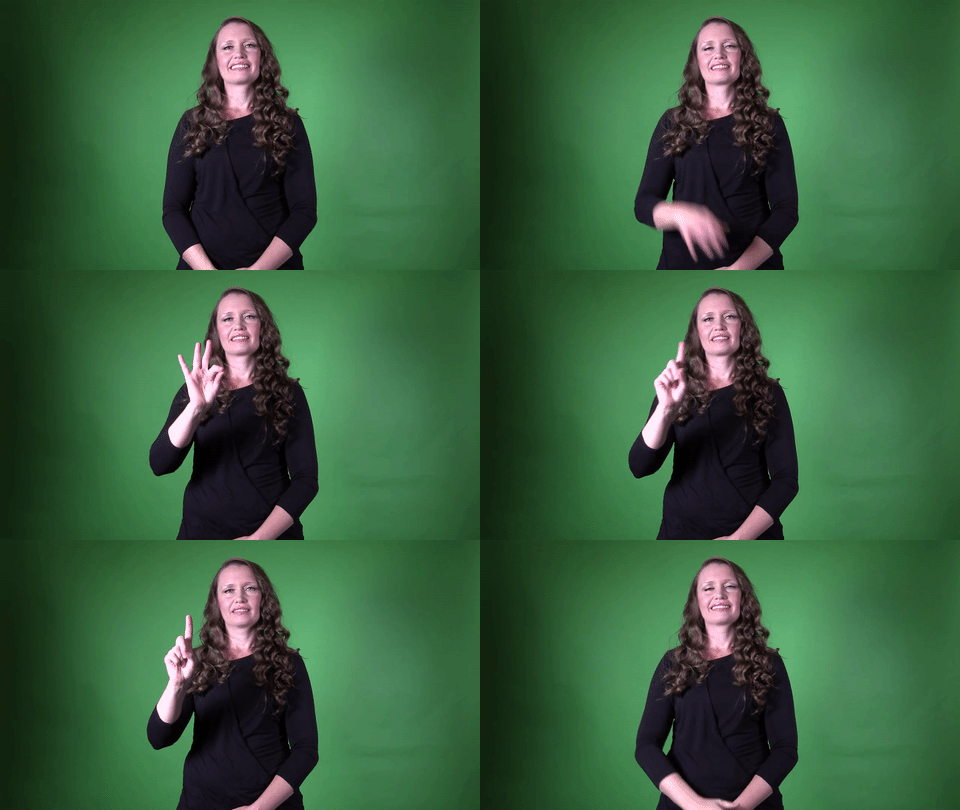
Definition: The number ninety-one.
Sign for 91 in ASL

Practice Activities:
Practicing the sign for 91 in ASL can help reinforce fluency with numbers. Start by signing 91 repeatedly in front of a mirror to ensure accuracy in handshape and movement. Then, slowly transition from 90 to 91 and continue counting up to 99 to strengthen number sequencing.
Use the sign for 91 in ASL while counting real-life objects, such as small items like beads, paperclips, or coins, to create a practical connection. Try signing numbers in a random sequence to challenge recall and prevent reliance on repetitive order. Recording yourself signing numbers and reviewing for accuracy can also be helpful.
Create simple math problems and sign the solutions. For example, sign 80 plus 11 and then sign 91 as the answer. Work with a partner to quiz each other by signing a number and asking the other person to identify it. This approach reinforces both receptive and expressive skills.
Tell a story about an imaginary event where the number 91 plays an important role. For example, you could describe a sports team winning a game with a score of 91 points or an elderly person celebrating their 91st birthday. Add other signs to make the storytelling experience dynamic and engaging.
Engage in a challenge where one person quickly flashes various numbers, including 91, and the other person must recognize and sign them back. This helps with quick recall and strengthens comprehension. Practice incorporating the sign for 91 in ASL when discussing years, addresses, or other contexts where numbers naturally occur.
Cultural Context:
The sign for 91 in ASL is an essential part of American Sign Language number systems. ASL uses a combination of handshapes and movement to express numbers clearly and efficiently. To sign 91 in ASL, understanding number formation and hand placement is key.
Numbers are an important aspect of ASL, used in daily conversations, addresses, phone numbers, and storytelling. The sign for 91 in ASL follows a specific pattern within the ASL numbering system. Learning numbers in ASL helps with fluency and comprehension in conversations.
The ASL numbering system has two main categoriesācardinal and ordinal numbers. The sign for 91 in ASL falls under cardinal numbers, which represent counting and quantities. These number signs are commonly used in financial transactions, sports scores, and mathematical contexts.
Signers use number signs frequently in their daily interactions. Knowing the sign for 91 in ASL is useful when discussing dates, ages, and historical references. Whether talking about a birth year or an anniversary, number signs play a vital role in communication.
ASL numbers are usually formed with the dominant hand, using specific finger movements. The sign for 91 in ASL involves a transition from one digit to the next in a fluid motion. Mastering number transitions enhances clarity and accuracy while signing.
Signers use facial expressions and slight hand movements to ensure numbers are conveyed correctly. To accurately produce the sign for 91 in ASL, proper finger positioning and hand orientation are crucial. Practice helps develop confidence in signing numbers smoothly.
Numbers in ASL maintain a structured pattern for easy recognition. The sign for 91 in ASL follows the rules applied to most two-digit numbers. By observing native signers, learners can pick up the rhythm and flow of number signs more naturally.
Many ASL learners find number signs challenging at first but improve with regular use. The sign for 91 in ASL, like other numbers, becomes easier with repetition and practice. Engaging in ASL conversations helps reinforce number recognition and comprehension.
Number signs are frequently used in education, business, and everyday interactions. The sign for 91 in ASL can appear in math lessons, money exchanges, or historical discussions. Numbers are an integral part of ASL that bridge communication gaps in various settings.
Understanding ASL number signs enhances overall signing skills. The sign for 91 in ASL is part of a broader numeric system essential for effective communication. Practicing numbers within
Extended Definition:
The sign for 91 in ASL is formed using a combination of two handshapes that represent the numbers 9 and 1. American Sign Language uses a structured system for numbers, and this sign follows the standard rules for forming two-digit numbers. When signing 91, make sure your hand is clearly visible to ensure effective communication.
Numbers in ASL are signed with one hand, and the sign for 91 in ASL follows the common method of signing two-digit numbers. First, sign the number 9 by forming an open hand with the thumb touching the tip of the middle finger. Then, quickly transition to the number 1 by extending the index finger while keeping the other fingers curled.
Mastering numbers in ASL is essential for discussing ages, dates, and addresses. The sign for 91 in ASL is useful for stating a specific number in various contexts, such as identifying an age or mentioning a year. It is important to practice smooth transitions between digits to ensure clarity.
When learning ASL numbers, consistency in handshape and movement is crucial. The sign for 91 in ASL should be practiced regularly to build fluency in counting and numerical communication. Watching native signers or using ASL videos can help learners improve their signing accuracy.
Different regions or signing communities may have slight variations in number signs, but the basic structure of the sign for 91 in ASL remains the same. It’s beneficial to engage with other ASL users to reinforce proper technique. By practicing regularly, the movements will become more natural over time.
Facial expressions and body language are key components of ASL. When signing 91, maintaining eye contact and clear hand movements increases comprehension. Numbers play a major role in ASL conversations, so accuracy in forming them is essential.
ASL numbers are commonly used in everyday interactions, from discussing prices to talking about historical years. The sign for 91 in ASL is just one example of how numbers are incorporated into conversations. Becoming comfortable with number signs enhances overall ASL proficiency.
Learning ASL numbers involves both memorization and hands-on practice. The sign for 91 in ASL, like other number signs, should be practiced in different contexts to reinforce understanding. Regular exposure to ASL conversations improves recognition and recall of number signs.
Using ASL resources such as dictionaries, videos, and tutors can help with signing accuracy. The sign for 91 in ASL follows the standard rules of numerical formation,
Synonyms: ninety-one, number ninety-one, number 91, the number 91, the number ninety-one
Educational resources: Find related learning materials in our course bank!
Want more? Check out some of our popular learning activities on the homepage!
Need to look up a sign? Use our highly rated dictionary: https://aslinteractive.com/best-asl-dictionary/
Follow us on tiktok: https://www.tiktok.com/@aslinteractive. More social media links at the bottom of this page!
Long-tail Keywords: what is the sign for 91 in ASL, how do you sign 91 in ASL, ASL sign for 91
Categories: Numbers – Basics, Numbers 91-100, cardinal numbers
tags: Numbers, Numbers 91-100, Math, Language Learning, Educational Content
Parameters
*Handshape*:
The sign for 91 in ASL uses a two-part movement. First, form the number 9 by extending the index finger and thumb while the other fingers remain curled. Then, smoothly transition to the number 1 by extending just the index finger while the remaining fingers close into a fist. The hand maintains a neutral position, typically facing outward. This motion ensures clarity when conveying the sign for 91 in ASL in fluent signing.
*Palm Orientation*:
The palm orientation for the sign for 91 in ASL varies slightly depending on regional preferences. Typically, the dominant hand faces outward with the palm facing forward as the number 9 is formed, followed by smoothly transitioning into the number 1 while maintaining the same orientation. Some signers may slightly tilt the palm to the side for better visibility. This ensures clarity and fluidity while signing the sign for 91 in ASL.
*Location*:
the sign for 91 in ASL is produced in the neutral space in front of the body. The dominant hand forms the number 9 with the palm facing outward, then transitions smoothly into the number 1 in the same location. This movement ensures clarity and maintains visual consistency when signing the sign for 91 in ASL. The hand remains at chest level, keeping the motion fluid and natural.
*Movement*:
To sign for 91 in ASL, start by forming the number 9 with your dominant hand. Extend the index finger and thumb while keeping the remaining fingers curled inward. Then, smoothly transition into the number 1 by extending only the index finger while the other fingers remain curled. The movement should be fluid and natural, ensuring a clear visual transition between the numbers 9 and 1.
*Non-Manual Signals*:
When signing the sign for 91 in ASL, maintain a neutral or slightly focused facial expression to ensure clarity. Your eyebrows may be slightly raised as you transition between the digits, emphasizing the change in handshape. Keep your head steady but natural, avoiding excessive movement that could distract from the numerical formation. Eye contact should remain on the hand to reinforce understanding, especially when communicating with someone learning numbers in ASL.
*Prosody, Dominant/Non-Dominant Hand*:
The sign for 91 in ASL uses the dominant hand only. Start by forming the number 9 with the dominant hand, with the palm facing outward. Then, smoothly transition into the number 1 by extending the index finger while folding the other fingers down. The motion should be fluid to clearly indicate the numerical sequence. Maintain a steady pace to ensure clarity while signing the sign for 91 in ASL.
Tips for Beginners:
When learning the sign for 91 in ASL, focus on forming the numbers clearly and smoothly. The number 9 is signed by forming an “F” handshape, where the index finger and thumb touch to create a circle while the other fingers remain extended. The number 1 follows by extending the index finger while the other fingers remain tucked in.
A common mistake beginners make with the sign for 91 in ASL is rushing through the transition between the two numbers. Be sure to distinctly sign 9 before smoothly shifting to 1. Keep your hand steady and within your signing space, generally near shoulder or chest level, to ensure visibility.
Hand orientation matters when signing 91. The palm should be facing outward as you sign the 9 and remain outward as you transition to 1. Avoid angling your hand inwards or tilting it too much, which may make the numbers unclear. Practicing in front of a mirror or recording yourself can help you adjust positioning.
Consistent finger dexterity is key to mastering the sign for 91 in ASL. If your fingers feel shaky or stiff, try warming up by opening and closing your hand a few times before signing. Maintaining relaxed fingers will help create a smoother transition between numbers.
Pay attention to pacing when using the sign for 91 in ASL in conversation. Native signers often sign numbers fluidly, so work on increasing your speed gradually while ensuring clarity. Itās better to be clear and a little slow than fast and difficult to understand.
Engage in real-life practice by signing numbers frequently in daily routines. Try signing the number 91 when reading price tags, addresses, or page numbers. Repetition will strengthen muscle memory and improve confidence in using the sign for 91 in ASL naturally.
Connections to Other topics:
The sign for 91 in ASL connects to broader number concepts within the language. ASL uses a base-ten numbering system, making it efficient for expressing numbers quickly. The sign for 91 in ASL shares structural similarities with other numbers in the 90s, such as 92 and 93, showing how number signs follow a predictable pattern.
Understanding the sign for 91 in ASL also helps with signing years, prices, and counting sequences. When signing dates like “1991,” the number is typically split into two parts: “19” followed by “91.” This approach is consistent with other four-digit years in ASL. Recognizing patterns in numerical signs makes learning large numbers easier and more intuitive.
The sign for 91 in ASL also connects to similar numerical sequences in concepts like age, addresses, and lists. For example, if someone is 91 years old, the number appears before “YEAR” to indicate age. When listing numbers in ascending or descending order, the rhythm and flow of numeral signs play a crucial role in clarity.
Cardinal numbers like the sign for 91 in ASL differ from ordinal numbers, which indicate order or ranking. If referring to “91st place” in a competition or an event, a different signing structure is used. Understanding the distinction between these number types ensures accuracy in ASL conversations.
Learning the sign for 91 in ASL also helps with signing larger figures such as “9,100” or “91,000.” Knowing number structure in ASL improves mathematical discussions, financial transactions, and statistics-related conversations. Mastering number signs enables fluid communication in contexts requiring precision and numerical accuracy.
Summary:
The sign for 91 in ASL follows a structured number system common in American Sign Language. To form this number, the signer begins with the sign for 9, using the dominant hand, with the index finger and thumb touching while the other three fingers extend. The hand is positioned upright and faces outward, maintaining a clear, visible placement for easy recognition.
After displaying 9, the transition to 1 must be fluid. The signer smoothly shifts from the 9 handshape to a handshape where only the index finger extends, with all other fingers curled into the palm. A slight pause between the two digits ensures clarity while maintaining natural movement between them.
The sign for 91 in ASL follows the two-part structure used for numbers in the 90s. This convention of showing higher double-digit numbers separately enhances the ease of understanding. Since ASL is highly visual, ensuring a distinct transformation from one number to the next prevents confusion.
Numbers in ASL use a logical pattern of formation that aligns with the base-ten system. However, finger placement and movement must be precise, as variations in motion might alter meaning. The hand must remain steady with sharp transitions to maintain fluency.
In everyday ASL conversations, numbers appear frequently, including those for addresses, money, age, and counting objects. The sign for 91 in ASL plays a role in daily communication, especially in contexts where specificity is necessary. Learning number signs like 91 ensures clarity when conveying numerical information.
The history of ASL number signs reveals influences from both French Sign Language (LSF) and adaptations unique to American Deaf culture. Early sign language systems relied heavily on visual representations of numerical concepts. Over time, ASL developed a structured method of representing numbers that remains in use today.
One challenge with ASL numbers, including the sign for 91 in ASL, is ensuring proper hand orientation and movement. Novice signers sometimes mix up finger placements or confuse similar-looking numbers. Practicing smooth transitions can help reinforce recall and prevent errors during signed conversations.
ASL numbers are an essential component of the languageās broader grammatical system. Unlike English, where numbers are spoken sequentially, ASL relies on precise movements and clear hand positioning. Numbers must be signed distinctly to convey accurate information.
Sign variations may exist depending on location and signing style. Some signers may integrate slight differences in finger movement while maintaining comprehension. However, the standard structure of the sign for 91 in ASL remains widely recognized.
Deaf culture values precision in signing, especially with numbers, since they often appear in personal data. Whether discussing birth years, prices, or measurements, correctly forming number signs like 91 ensures effective communication. Accuracy in number signs is a linguistic necessity.
In Deaf education, learning numbers is one of the first steps in ASL acquisition. Students develop familiarity with counting, then progress to higher numbers, including the sign for 91 in ASL. Mastery of number signs builds confidence in using ASL for practical conversations.
Number signs also appear in sports scores, statistics, and gaming discussions. In competitive settings, signers quickly display numbers for scorekeeping or rankings. Knowing how to sign 91 fluently enables smooth participation in numerical exchanges.
In applied linguistics, research on number signs in ASL highlights cognitive processing differences between signed and spoken languages. Studies show that signers rely on visual-spatial memory when recalling numerical signs. This differs from spoken language users who primarily process numbers auditorily.
When signing in professional or academic settings, numerical signs must be executed clearly to avoid misinterpretation. The sign for 91 in ASL should be articulated properly when discussing financial figures, research data, or statistical findings. Precision is important in formal ASL communication.
Number signs also intersect with ASL classifiers in discussions involving quantity, measurements, or ranking systems. When referencing numbered lists or ordered sequences, the sign for 91 in ASL might be integrated into broader structured expressions. ASL’s numerical incorporation influences linguistic structure.
In storytelling, numbers add descriptive detail and context. Whether recounting a personal anecdote, historical event, or fictional tale, signers use number signs like 91 to establish timelines or reference dates. Clarity in numerical expression strengthens message conveyance.
Technologyās role in ASL also supports the learning and use of number signs. Digital platforms and ASL interpretation services encourage precise numeric signing. Online resources further reinforce the importance of correct form when signing numbers like 91.
ASL number signs reflect broader linguistic principles of spatial structuring and visual memory retention. The efficiency of the ASL number system enables concise and expressive numerical communication. Mastery of numbers like 91 enhances fluency in everyday ASL use.
In cross-cultural exchanges, ASL number signs may differ from those in other signed languages. While many sign languages share visual similarities, some number formations vary. Understanding differences ensures effective international communication among
Want more? Check out some of our popular learning activities!
ASL Interactive Resources
ASLInteractive YouTube Channel
Follow us on tiktok: @aslinteractive.com
Follow us on Instagram: aslinteractive
Facebook page: aslinteractive
Facebook group: aslinteractive
LInkedIn: ASL Interactive LLC
Twitter: @ASL_interactive
*Some information on this page is AI-generated. AI can make mistakes. Please check the information.


Responses