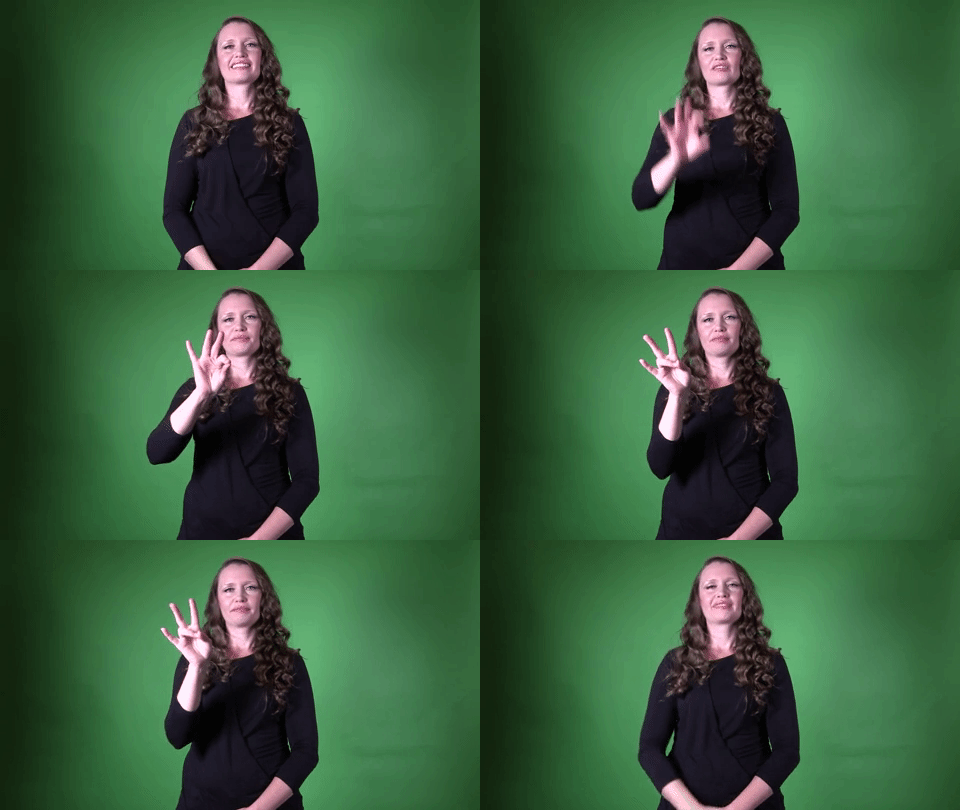
Sign for 97 in ASL | 🔢 ASL Dictionary

Definition: The number ninety-seven.

Sign for 97 in ASL 

YouTube player

Practice Activities:

Practicing the sign for 97 in ASL starts with mastering the handshape and motion. Hold up a 9-handshape, then smoothly transition to a 7-handshape while keeping your palm facing outward. Repeat this movement slowly at first, then increase your speed while maintaining clarity and accuracy. Try signing it five times in a row while watching your hand in a mirror.

Use the sign for 97 in ASL within number sequences to enhance fluency. Count aloud while signing 90 through 100 to reinforce numerical transitions. Pair up with a partner and take turns signing random two-digit numbers, including 97, to test recognition and recall. Writing the numbers down first and then signing them can further reinforce memorization.

Practice real-world applications by including the sign for 97 in ASL in everyday conversations. Pretend to say a price, such as “$97 for a pair of shoes.” Sign years and ages, like “My grandfather is 97 years old.” Using it in familiar contexts will strengthen retention and confidence.

Engage in storytelling to use the sign in a natural flow. Create a short story where a key detail involves the number 97, such as “There were 97 balloons at the party.” Challenge yourself to tell the whole story while signing all numbers correctly. If working with a partner, exchange stories and ask each other comprehension questions.

For additional fluency, incorporate speed drills with a timer. Set a goal to sign 97 correctly as many times as possible within a minute. If errors occur, slow down and focus on precision before increasing speed again. Regular practice will improve accuracy and make recalling the sign for 97 in ASL effortless.

Cultural Context:

The sign for 97 in ASL follows a common numerical pattern in American Sign Language. Numbers in ASL are signed with one hand and use a specific movement or handshape to represent each number. The sign for 97 in ASL combines the digits 9 and 7 in a fluid motion.

Numbers play an essential role in everyday ASL communication, from expressing age to stating addresses and counting objects. The sign for 97 in ASL follows standard number signing rules, ensuring clarity and ease of understanding. It is an important part of learning ASL numbers fluently.

Deaf culture values clear and efficient communication, making number signs an integral part of daily interactions. The sign for 97 in ASL is commonly used in conversations about dates, prices, and statistics. Mastering number signs helps improve overall fluency in ASL.

Teaching the sign for 97 in ASL to ASL learners helps them build confidence in signing numbers. Many ASL classes and Deaf community events include number games to reinforce learning. Understanding number signs like 97 ensures smoother conversations with fluent signers.

In ASL storytelling and poetry, numbers are sometimes incorporated to enhance meaning. The sign for 97 in ASL could be a reference to historical dates or numerical symbolism in creative works. Numbers add depth to ASL expression beyond just basic counting.

Technology and media have made learning ASL easier, including number signs like the sign for 97 in ASL. Many online resources, videos, and mobile apps teach ASL numbers visually. Consistent practice is key to remembering number signs accurately.

In everyday life, the sign for 97 in ASL may appear in discussions about money, sports scores, and measurements. Deaf children learn these signs early to communicate numbers efficiently. Adults and beginners alike benefit from practicing ASL numbers frequently.

The sign for 97 in ASL is an example of ASL’s unique numerical system, differing from spoken language structure. Understanding ASL numbers enhances overall ASL fluency and communication skills. Learning ASL numbers opens doors to deeper connections within the Deaf community.

Extended Definition:

The sign for 97 in ASL is a two-digit number sign that follows the standard pattern for signing numbers in American Sign Language. When signing 97, the handshape and movement are important to ensure clarity and accuracy. Proper finger placement and fluid motion help maintain clear communication.

In ASL, numbers from 67 to 98 follow a specific rocking movement pattern. The sign for 97 in ASL starts with the hand in a “9” shape before transitioning smoothly to a “7” shape. This rocking motion helps differentiate similar-looking numbers and improves readability.

Using the correct handshape is key when signing 97. The dominant hand forms the “9” with the thumb and index finger touching while keeping the other fingers extended. Then, without breaking the motion, the hand smoothly shifts into the “7” position, where the thumb and ring finger make contact.

When signing numbers, palm orientation also affects clarity. The sign for 97 in ASL typically has the palm facing outward, but in some contexts, the palm direction may vary slightly based on regional preferences or signing style. Ensuring a clear transition between digits helps avoid confusion.

Facial expressions and context also matter when using the sign for 97 in ASL. If you’re providing a quantity, an age, or referencing a specific year, signing 97 with the appropriate facial expressions enhances understanding. Numbers can be reinforced with additional context to ensure accurate communication.

ASL follows unique grammatical rules, and numbers often appear alongside classifiers or within specific sentence structures. The sign for 97 may be used in conversations about prices, dates, statistics, or general numeracy. Practicing numbers in everyday phrases strengthens signing fluency.

Clear and precise movements help distinguish numbers from similar-looking signs. The sign for 97 in ASL might resemble other two-digit numbers, but mastering the unique rocking motion ensures better recognition. Consistent practice with number transitions improves accuracy and speed.

Understanding ASL numbering rules is essential for effective communication. The sign for 97 in ASL follows standard numerical patterns, making it easier for fluent signers to recognize. Whether discussing math, years, or counting objects, using the correct sign ensures clarity.

When learning number signs, repetition and observation help reinforce muscle memory. Watching fluent signers demonstrate the sign for 97 in ASL allows learners to grasp the subtle movements. Interactive practice with sign language partners also aids in retention and fluency.

ASL is a visual language

Synonyms: ninety-seven, number ninety-seven, number 97, the number 97, the number ninety-seven

Educational resources: Find related learning materials in our course bank!

Want more? Check out some of our popular learning activities on the homepage!

Need to look up a sign? Use our highly rated dictionary: https://aslinteractive.com/best-asl-dictionary/

Follow us on tiktok: https://www.tiktok.com/@aslinteractive. More social media links at the bottom of this page!

Long-tail Keywords: what is the sign for 97 in ASL, how do you sign 97 in American Sign Language, learn how to sign 97 in ASL

Categories: Numbers – Basics, Numbers 91-100, cardinal numbers

tags: Numbers, Numbers 91-100, Math, Language Learning, Educational Content, 96 97 98 rocking numbers, rocking numbers

Parameters

*Handshape*:

The sign for 97 in ASL uses a shifting handshape transition. Start with the number 9 handshape, where the thumb and index finger create an open circle while the remaining fingers extend upward. Then smoothly transition into the number 7 handshape by shifting the thumb to make contact with the ring finger while keeping the other fingers extended. This movement ensures clarity when signing the sign for 97 in ASL. ✋

*Palm Orientation*:

the palm orientation for the sign for 97 in asl starts with the palm facing outward as the number 9 is formed using the index finger and thumb touching in an open circle, with the remaining fingers extended. Then, the hand transitions to form the number 7, where the thumb touches the ring finger while the index, middle, and pinky fingers remain extended. Throughout the movement, the palm maintains an outward orientation for clarity. ✋

*Location*:

the sign for 97 in ASL is produced in the neutral space in front of the signer’s body, typically at chest level. The dominant hand forms the number nine handshape, then transitions smoothly into the number seven handshape. This movement happens without dropping the hand too low or raising it too high, keeping it clearly visible to the viewer. Maintaining a steady hand position ensures clarity while signing numbers.

*Movement*:

To produce the sign for 97 in ASL, form the number 9 by extending the thumb and index finger in a circular shape, while the other fingers remain folded. Then, transition smoothly to the number 7 by extending the index and middle fingers while touching the tip of the ring finger to the thumb. Maintain a steady hand position while shifting from one number to the next, ensuring clarity and fluidity in movement.

*Non-Manual Signals*:

When performing the sign for 97 in ASL, maintain a neutral yet engaged facial expression. Eyebrows remain relaxed and natural since numbers do not typically require exaggerated expressions. Mouth movements may be minimal, but some signers subtly mouth the number for clarity. Eye contact should be steady, focusing on the recipient to ensure effective communication. Keep head movements smooth and natural to maintain the flow of signing.

*Prosody, Dominant/Non-Dominant Hand*:

The sign for 97 in ASL is produced using the dominant hand. Start with the number 9 handshape (thumb and index finger forming a circle while the other fingers extend), then smoothly transition to the number 7 handshape (thumb and ring finger touching while the other fingers remain extended). Maintain a palm-out orientation throughout the movement. The transition should be fluid to ensure clarity in signing.

Tips for Beginners:

When learning the sign for 97 in ASL, it’s essential to maintain fluid motion between the two numbers. The sign begins by forming the number 9 with your dominant hand, touching the tip of the thumb to the tip of the index finger while keeping the other fingers extended. Then smoothly transition to the number 7 by touching the tip of the thumb to the tip of the ring finger while keeping the other fingers extended.

Beginners often struggle with the transition between 9 and 7, so practicing each number separately before combining them can help. Keep your hand steady and in a comfortable position at shoulder level to enhance clarity. Avoid twisting your wrist or moving your hand excessively, as this can make the sign unclear.

Repetition is key when mastering the sign for 97 in ASL. Practicing in front of a mirror can help ensure hand positioning is correct. Also, try signing numbers in sequence, such as 95, 96, 97, 98, to build confidence and fluency. Watching fluent signers can also improve recognition and production of the sign.

A common mistake is reversing the finger positioning for 7, leading to confusion with similar numbers like 8. Double-check that your thumb is touching the correct finger when forming 7. Another frequent issue is dropping the hand too much, which can obscure the sign for those viewing it.

Finger flexibility is important, so stretching your fingers before signing can make transitions smoother. Hand fatigue is normal for beginners, so take breaks when needed. Consistent practice with real-life situations will help reinforce the sign for 97 in ASL, making it second nature over time.

Connections to Other topics:

The sign for 97 in ASL follows the same numerical pattern as other two-digit numbers in ASL, showing a strong connection to counting, years, and percentages. Like other numbers in the 90s, it combines the handshape of 9 with a transition to 7, making it part of a broader numerical system. This format aligns with the numbers from 90 to 99, reinforcing consistency in ASL numerical structure.

Numbers in ASL frequently appear in contexts such as age, addresses, and measurements, making the sign for 97 in ASL useful beyond basic counting. It can help describe concepts in academic subjects such as math, science, and history, where specific numbers are frequently referenced. For example, discussing events from the year 1997 requires knowing how to sign 97 efficiently within a larger numerical sequence.

ASL users often combine numbers with classifiers to express more complex meanings. For example, combining the sign for 97 in ASL with a classifier for money or ranking can help specify prices or placement in a competition. This flexibility allows numbers to be integrated naturally into conversations, whether discussing historical events, salaries, or sports scores.

When working with numbers in ASL, it is important to understand how palm orientation affects meaning. Since larger numbers such as the sign for 97 in ASL can be signed with slight variations depending on regional or stylistic preferences, exposure to different signing styles helps with fluency. Recognizing these nuances refines an ASL learner’s ability to convey numbers clearly and accurately.

Incorporating numbers into daily sign language use strengthens overall fluency and comprehension. Learning the sign for 97 in ASL along with related numbers enhances the ability to describe dates, statistics, and other numerical concepts. These connections ensure a well-rounded understanding of ASL’s numerical system and its practical applications in conversation.

Summary:

The sign for 97 in ASL follows the standard pattern used for most two-digit numbers in American Sign Language. To produce the sign, the signer begins by forming the number 9 with their dominant hand, which is done by extending the thumb and index finger while curling the rest of the fingers. After briefly holding the 9 shape, the signer transitions into the number 7 by extending the index and middle fingers while tucking in the remaining fingers and placing the thumb against the ring finger.

Numbers in ASL are extremely important for basic communication, and the sign for 97 in ASL is no exception. It follows ASL’s general number system, which relies on quick handshapes and smooth transitions. The numbers 90-99 in ASL all start with the number 9 and move into each respective second digit. The movement between these numbers must be fluid for clear communication.

One key aspect of signing 97 in ASL correctly is maintaining a consistent hand position and orientation. The palm typically faces outward when forming both 9 and 7 to ensure clarity. Some signers may slightly rotate their wrist as they transition from 9 to 7, but the motion should not be exaggerated. Precision is crucial, especially when using numbers in conversations about addresses, prices, or years.

ASL numbers can vary slightly between different regions and communities. While the sign for 97 in ASL follows a general pattern, variations may exist depending on the signer’s background. Some signers may execute the transition between the 9 and the 7 with a subtle bounce, while others may simply shift their fingers with minimal movement. These differences are minor but can still be observed in fluent signers.

Numbers in ASL carry grammatical importance and can be used in different sentence structures. The sign for 97 in ASL might be used in mathematical equations, dates, statistics, and quantities. When incorporating numbers into conversations, a signer must ensure they flow naturally with the surrounding signs. Pausing too long between digits can make the numbers appear disjointed or unclear.

The number system in ASL is highly influenced by visual perception. Since ASL is a visual language, clarity and precision in forming numbers like the sign for 97 in ASL ensure effective communication. Deaf individuals and ASL users rely on quick recognition of number signs to follow conversations, especially in educational or financial discussions. Misrepresentation of numbers can lead to confusion, so accuracy is key.

Learning to smoothly transition between different number signs is a skill that develops over time. The sign for 97 in ASL may seem simple, but mastering fluidity can take practice. Speed and clarity must be balanced when signing numbers to ensure legibility while maintaining conversational pace. Watching native signers or practicing in front of a mirror can help improve precision and confidence.

Hand dominance plays a role in signing numbers, including the sign for 97 in ASL. Typically, the dominant hand is used for single-handed number signs, while the non-dominant hand remains inactive. However, if a person is injured or unable to use one hand, modified versions of the number signs may be necessary. In such cases, context and consistency become crucial for comprehension.

Fingerspelling and number signs share similarities in ASL, both relying on precise handshapes and movements. The sign for 97 in ASL is a good example of how number signs differ from letters but still require similar dexterity. Unlike fingerspelled words, number signs are more compact and follow specific transition patterns that must be maintained for clarity. This distinction helps signers differentiate between numbers and letters visually.

Cultural familiarity with ASL numbers is important for seamless communication among deaf and hard-of-hearing individuals. In the Deaf community, numbers are frequently used in discussions of age, dates, money, and measurements. The sign for 97 in ASL, like other numbers, must be easily recognizable in conversations. Mastering number signs ensures that interactions involving numbers remain efficient and effective.

ASL linguistics plays a significant role in understanding number signs. The sign for 97 in ASL follows the numerical structure found in ASL’s counting system, which differs from spoken English. In ASL, numbers are integrated into expressions visually rather than being spoken in sequence. This visual structuring makes ASL a highly spatial language that conveys numerical concepts efficiently.

Practice is necessary for increasing speed and fluency when signing numbers. The sign for 97 in ASL should be rehearsed along with other numbers to build automaticity. Drills that involve counting sequences or exchanging numbers in sign language conversations help solidify muscle memory. With enough repetition, signers can smoothly incorporate numbers into their signing without hesitation.

Mathematical discussions within ASL often rely heavily on number fluidity. The sign for 97 in ASL may appear in financial transactions, statistical conversations, or historical references. Fluency in signing numbers ensures that information

Want more? Check out some of our popular learning activities!

ASL Interactive Resources

ASLInteractive YouTube Channel

Follow us on tiktok: @aslinteractive.com

Follow us on Instagram: aslinteractive

Facebook page: aslinteractive

Facebook group: aslinteractive

LInkedIn: ASL Interactive LLC

Twitter: @ASL_interactive

*Some information on this page is AI-generated. AI can make mistakes. Please check the information.

Sign for 97 in ASL 

Responses