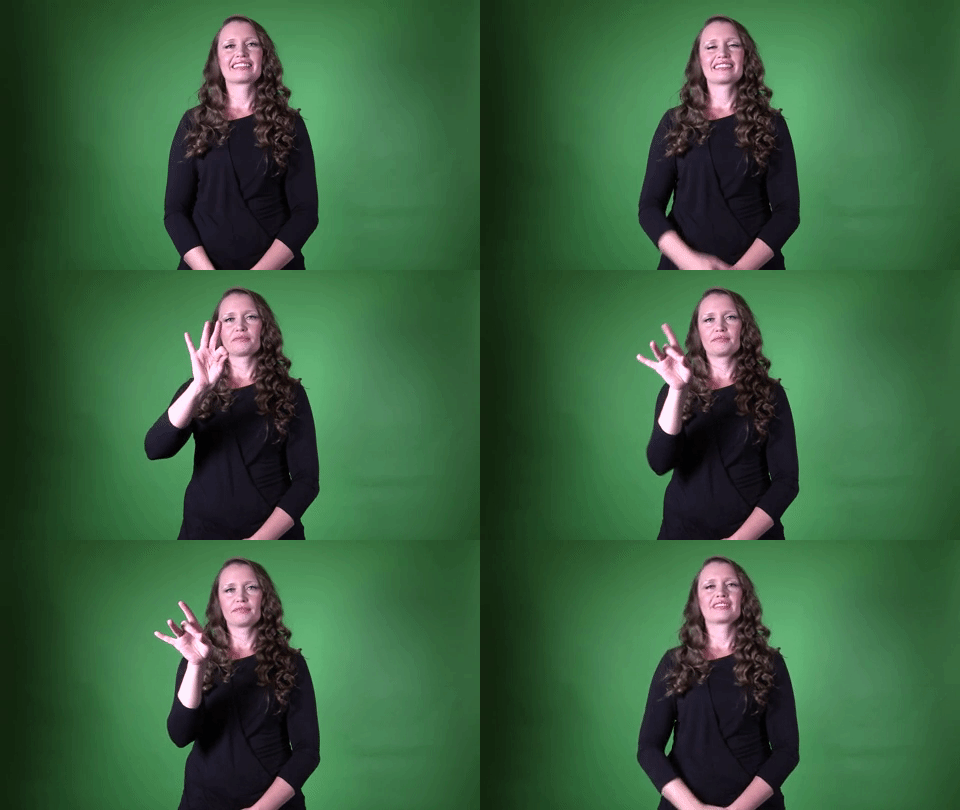
Definition: The number ninety-eight.
Sign for 98 in ASL

Practice Activities:
To practice the sign for 98 in ASL, start by repeatedly signing the number while saying it aloud to reinforce muscle memory. Focus on maintaining a smooth transition between the digits as you sign. Try signing it in front of a mirror to check your handshape and movement.
Once comfortable, incorporate the sign for 98 in ASL into counting sequences. Sign numbers 90 through 99 slowly, then speed up as fluency increases. You can also count down from 100 to 90 to build recognition of number patterns.
Use the sign for 98 in ASL within real-life contexts. When discussing ages, practice asking and answering, “How old are you?” with responses incorporating different numbers. You can also imagine prices and sign “$98” while pretending to shop.
Create a short story that includes the number 98. For example, you could describe a grandparent’s age, a score on a test, or a distance marker on the highway. Add other numbers to your story to improve fluency in switching between them.
Try a partner activity where one person fingerspells a number, and the other signs it correctly. Take turns and increase speed when both partners feel confident. Another option is to play a memory game where numbers are briefly shown on a card, and the signing partner must recall and sign them.
Challenge yourself by signing numbers randomly rather than sequentially to test recall. Mix in numbers from various ranges to ensure you can sign 98 smoothly without hesitation. Recording yourself signing and watching the playback can also help make improvements.
By practicing in different contexts and activities, you will build confidence and accuracy when using the sign for 98 in ASL.
Cultural Context:
American Sign Language reflects both numerical concepts and cultural significance. The sign for 98 in ASL is a combination of numbers, following the pattern for signing multi-digit numbers. This system helps maintain clarity and consistency while communicating numbers in ASL.
Numbers play an important role in everyday conversations within the Deaf community. Whether discussing prices, years, or sports scores, signing numbers accurately is essential. The sign for 98 in ASL follows the standard structure, making it easy for fluent signers to incorporate into conversations.
ASL numbers, including the sign for 98 in ASL, use a combination of handshapes and movements. Each number from 67 to 98 involves a shifting motion between digits, creating a fluid representation of numerical values. This movement ensures better visibility and understanding among signers.
Culturally, numbers have significance beyond simple counting in ASL. The sign for 98 in ASL might be used when referencing birth years, anniversaries, or historical events. Understanding number signs is key to fully participating in both casual and formal settings within the Deaf community.
In educational settings, learning the sign for 98 in ASL is part of mastering ASL number patterns. Teachers emphasize handshape precision and movement to ensure clarity. Proper execution of ASL numbers, including 98, enhances smooth communication.
Numbers in ASL are also frequently used in business transactions and legal discussions. The sign for 98 in ASL may come up when discussing contracts, salaries, or statistical data. Knowing how to correctly sign numbers prevents misunderstandings in professional settings.
Sports and gaming events also rely on numerical accuracy in ASL communication. The sign for 98 in ASL could appear in scorekeeping, jersey numbers, or player statistics. Signers need to recognize number signs quickly to keep up with fast-paced discussions.
Within ASL storytelling, numbers add detail and structure to narratives. When telling a story that includes a date or specific number, the sign for 98 in ASL is presented smoothly to maintain the flow of communication. Correct signing ensures clarity and comprehension for the audience.
Whether discussing years, prices, or sports, mastering the sign for 98 in ASL is necessary for effective communication. Learning to sign numbers fluently enhances interactions in both informal and professional situations. By practicing regularly, signers can ensure confidence and accuracy with numerical ASL signs.
Extended Definition:
The sign for 98 in ASL is a combination of numerical handshapes that represent the digits nine and eight. American Sign Language uses a unique system of number signs that allow for easy communication of numerical information. Understanding how to form and use the sign for 98 in ASL can help improve your number-signing skills.
To sign 98 in ASL, start by forming the number nine with your dominant hand. This involves extending the thumb and index finger while keeping the other fingers curled. Then transition smoothly into the number eight, touching the tip of the thumb to the tip of the middle finger while the other fingers remain extended.
Movement and handshape are important when signing numbers in ASL. The transition between nine and eight should be fluid, with a slight flick or change in handshape. Consistency in finger positioning and hand orientation ensures clarity and prevents misinterpretation.
ASL numbers are often used in various contexts, including counting, money, addresses, and ages. The sign for 98 in ASL might appear in everyday conversations or more formal discussions involving numerical data. Mastering ASL number signs enhances communication and helps build fluency in the language.
Facial expressions and body language play a role in conveying meaning in ASL. When signing 98 in ASL, maintaining eye contact and using appropriate expressions can reinforce understanding. Non-manual markers like slight head movement or emphasis can help ensure the number is clearly communicated.
Different regions or signers may have variations in how they sign specific numbers. While the sign for 98 in ASL follows a standard format, slight differences in speed or style can occur. Practicing with native signers or watching ASL number videos can help learners develop accuracy and confidence.
Learning ASL numbers, including how to sign 98, is essential for both beginners and advanced signers. Numbers are used frequently in conversation, making it important to recognize and produce them effortlessly. Regular practice will make transitioning between numbers like nine and eight more natural.
ASL numbers are also important in educational settings, especially in math and financial discussions. Knowing how to sign numbers like 98 in ASL can be useful for students, teachers, and professionals working with the Deaf community. Effective communication of numbers helps ensure clear understanding in different contexts.
Using ASL number signs in daily life reinforces skills and improves retention. Whether discussing prices, dates, or scores, recognizing and using the sign for 98 in ASL helps build
Synonyms: ninety-eight, number ninety-eight, number 98, the number 98, the number ninety-eight
Educational resources: Find related learning materials in our course bank!
Want more? Check out some of our popular learning activities on the homepage!
Need to look up a sign? Use our highly rated dictionary: https://aslinteractive.com/best-asl-dictionary/
Follow us on tiktok: https://www.tiktok.com/@aslinteractive. More social media links at the bottom of this page!
Long-tail Keywords: what is the sign for 98 in ASL, how do you sign 98 in American Sign Language, ASL sign for the number 98
Categories: Numbers – Basics, Numbers 91-100, cardinal numbers
tags: Numbers, Numbers 91-100, Math, Language Learning, Educational Content, 96 97 98 rocking numbers, rocking numbers
Parameters
*Handshape*:
The sign for 98 in ASL uses a two-part movement with distinct handshapes. Begin with the number 9, where the thumb and index finger form an open circle while the other fingers remain extended. Then transition smoothly to the number 8 by bringing the thumb and middle finger together in an open circle while the remaining fingers stay extended. This quick shift between handshapes clearly expresses the sign for 98 in ASL.
*Palm Orientation*:
the palm orientation for the sign for 98 in asl starts with the palm facing outward as the number 9 is formed with the dominant hand. When transitioning to 8, the palm remains outward, ensuring a clear distinction between the digits. The movement should be fluid, without flipping the palm, to maintain natural hand positioning. Proper palm orientation helps visually distinguish the sign for 98 in asl from similar number signs.
*Location*:
The sign for 98 in ASL is produced in the neutral signing space in front of the body. It typically stays within the mid-chest area to maintain clear visibility. The movement is smooth and fluid, allowing for easy differentiation from other numbers. When forming the sign for 98 in ASL, ensure the hand remains steady and in a natural position to promote clarity and accuracy.
*Movement*:
To sign for 98 in ASL, use the dominant hand in a “9” handshape (thumb and index fingertip touching in an open circle, other fingers extended). Rotate the wrist slightly, then transition smoothly to an “8” handshape (thumb and middle fingertip touching in a small circle) in the same location. This movement should be fluid and natural, ensuring clarity when expressing the number.
*Non-Manual Signals*:
When performing the sign for 98 in ASL, maintain a neutral or slightly focused facial expression to ensure clarity. Your eyebrows should remain relaxed, and your mouth can stay slightly open or in a natural resting position. If emphasizing or clarifying the number, a slight head nod or raised eyebrows may be used. Smooth execution of the sign for 98 in ASL ensures effective communication without unnecessary exaggeration.
*Prosody, Dominant/Non-Dominant Hand*:
The sign for 98 in ASL uses the dominant hand, forming the number 9 with the index finger and thumb touching in a circular shape. The hand then transitions smoothly to the number 8 by bringing the middle finger to touch the thumb instead. This movement is fluid, maintaining a consistent orientation without major shifts in hand position. The non-dominant hand is not used, as the sign for 98 in ASL relies solely on the dominant hand’s motion. ✋
Tips for Beginners:
To master the sign for 98 in ASL, focus on smooth number transitions. The sign involves forming a “9” handshape, then changing to an “8” in a fluid motion. Keep your palm facing outward and ensure your fingers maintain clear distinctions in both handshapes.
Beginners often struggle with switching between numbers too quickly or too rigidly. Take your time practicing the sign for 98 in ASL slowly before increasing speed. Ensure your thumb and index fingers form a clear “9” and transition properly to “8” without unnecessary movement.
Finger dexterity plays a key role in making the transition look natural. If your fingers feel stiff, try some warm-up exercises, such as stretching them or practicing individual numbers first. Consistency in finger placement will make the number appear clearer to viewers.
Avoid closing your hand too much when forming the “9” or “8.” Some beginners accidentally make a “6” instead of switching to “8” because the thumb placement gets too loose. Always check your handshape in a mirror or with a fluent signer to ensure accuracy.
Rhythm is important, especially when signing multiple numbers in a row. The sign for 98 in ASL should flow smoothly, not appear disjointed. Practicing number sequences like 97-98-99 repeatedly can improve overall fluidity.
You can also reinforce learning by watching videos of fluent signers. Observing how the hand moves between digits will give you a better sense of the appropriate motion. Break the movement down into two distinct handshapes before working on a continuous transition.
Lastly, relax your hand and wrist to avoid stiffness. Keeping your movements natural will prevent robotic-looking signs and make communication clearer. With consistent practice, signing numbers will feel effortless and automatic.
Connections to Other topics:
The sign for 98 in ASL connects to the broader system of number signs in American Sign Language. ASL numbers follow logical handshape patterns, and the sign for 98 in ASL follows the typical pattern of transitioning between two digits smoothly. Understanding how ASL numbers work, including the shift between individual digits in multi-digit numbers, is essential for fluency in counting, math concepts, and everyday conversations involving numerical data.
The sign for 98 in ASL also relates to the concept of cardinal versus ordinal numbers. Cardinal numbers indicate quantity, while ordinal numbers indicate order (such as first, second, or third). Because 98 is a cardinal number, it is signed in a standard numerical sequence. If expressing “98th,” an additional twist of the wrist or movement to indicate ranking might be necessary.
This number also connects with financial signs, prices, and ages. For example, when discussing money, the dollar sign may follow the number depending on context (such as $98). Similarly, age signs can incorporate the 98 handshape if referring to someone’s age. Understanding these extensions makes the sign for 98 in ASL more practical in real-world use.
Additionally, numbers in ASL often appear in addresses, phone numbers, and years, which makes fluency in signing numbers essential for conversations involving personal or historical details. When signing a year that includes 98, such as 1998, the signer often splits the four-digit number into two parts—19 and 98—using the typical ASL number format. This consistency in numerical structure helps maintain clarity and efficiency in signing.
Mastering numbers like 98 in ASL strengthens one’s ability to discuss dates, quantities, sports scores, and measurements. By practicing numerical transitions and recognizing common patterns, signers can improve accuracy and speed in both casual and formal ASL conversations.
Summary:
The sign for 98 in ASL follows the standard structure for combining number signs in American Sign Language. Numbers in ASL are signed using a combination of handshapes, location, and movement to convey numerical information efficiently. The number 98 is formed by sequentially signing 9 and then 8 in a smooth motion.
In ASL, numbers are an essential part of everyday signing and are often incorporated into conversations involving age, time, money, addresses, and measurements. Fluent signers aim to produce numbers naturally and fluidly, particularly when signing multi-digit numbers like 98. Aligning with ASL grammar, the sign for 98 in ASL should follow a predictable numeral pattern.
The sign for 98 in ASL begins with the handshape for 9, which is formed by extending the thumb and index finger while keeping the remaining fingers closed. The fingertips of the extended fingers should not touch. Immediately following this sign, the handshape transitions into the number 8 by bringing the thumb and middle finger together while the other fingers remain extended.
Smoothness is key when producing the sign for 98 in ASL. A common mistake is pausing unnaturally between the digits, which can make the number look disjointed. Skilled signers make the transition seamless by practicing number combinations for fluency.
Like other two-digit numbers, the sign for 98 in ASL relies on the signer’s ability to smoothly shift between handshapes. Signing numbers clearly is important in ASL because slight differences in handshape or movement can result in a completely different number. Since ASL is a visual-spatial language, movement and positioning carry meaning.
Numbers play a crucial role in everyday conversations within the Deaf community. Whether discussing age, financial transactions, or addresses, having fluency with numbers like the sign for 98 in ASL is essential. Signers encountering a new numerical sequence should practice transitions to ensure clarity.
The sign for 98 in ASL is often used in discussions about dates, particularly when referring to years like 1998. When signing years, ASL signers typically break numbers into two segments (e.g., 19 and 98 separately). This maintains the natural flow of numbers in historical and personal references.
Context dictates how the sign for 98 in ASL is used. When referring to money, for example, signers may accompany the number with the sign for dollars or cents. Numerals frequently appear alongside other signs to clarify meaning in conversations about prices, measurements, and time.
ASL numbers vary slightly between regions and within different signing communities. Some signers may articulate multi-digit numbers differently based on personal habit or regional influence. However, the generally accepted method for signing the sign for 98 in ASL is widely understood across ASL users.
Numerals in ASL follow a pattern that allows fluent users to quickly recognize and process information. The sign for 98 in ASL benefits from this structured approach because once a signer learns individual numbers, combining them becomes intuitive. This efficiency is one of ASL’s strengths as a visual language.
Using numbers correctly in ASL is essential for clarity in communication. ASL learners striving for fluency should focus on mastering number sequences, including the sign for 98 in ASL. Practicing different numerical contexts helps signers use numbers more naturally.
Signers use ASL numbers in a variety of settings, including formal, academic, and casual environments. Mastering two-digit numbers like the sign for 98 in ASL is practical for making transactions, filling out forms, or simply telling a story. Numerical accuracy enhances communication effectiveness.
Number signs in ASL do not require the use of mouth movements, but some signers naturally incorporate slight mouthing for emphasis or clarification. While this is not required, it can sometimes aid in distinguishing similar-looking signs. The sign for 98 in ASL should be clearly understood through handshape and movement alone.
ASL numbers have evolved over time alongside changes in Deaf education and communication preferences. The sign for 98 in ASL follows a long-standing convention where multi-digit numbers retain consistency in structure. Consistency allows for easy understanding among signers of all backgrounds.
Non-manual markers, such as eyebrows raising or slight nodding, are sometimes used when signing numbers in ASL. These markers can add emphasis, particularly when numbers are critical within a conversation. However, they are not necessary for producing the sign for 98 in ASL correctly.
Numbers are essential in many fields, including sports, finance, and science. The sign for 98 in ASL might be used when referencing statistics, scores, or other numerical data. Mastering number signs helps Deaf professionals and students engage in academic discussions more naturally.
Signers who frequently use numbers in their professions benefit from practicing larger numerical combinations. The sign for 98 in ASL is often part of broader numerical discussions in financial and technical settings. Accuracy is crucial, especially when dealing with critical numerical data
Want more? Check out some of our popular learning activities!
ASL Interactive Resources
ASLInteractive YouTube Channel
Follow us on tiktok: @aslinteractive.com
Follow us on Instagram: aslinteractive
Facebook page: aslinteractive
Facebook group: aslinteractive
LInkedIn: ASL Interactive LLC
Twitter: @ASL_interactive
*Some information on this page is AI-generated. AI can make mistakes. Please check the information.


Responses