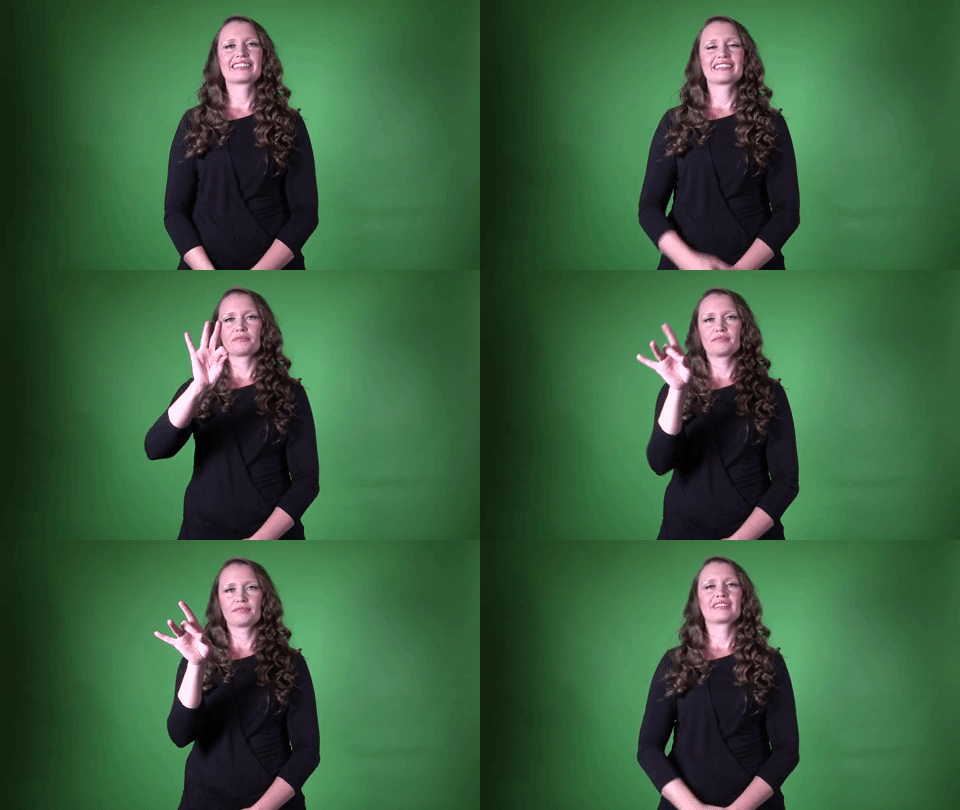
Definition: Refers to the number ninety-eight
Sign for NUMBER 98 in ASL
Practice Activities:
To practice the sign for number 98 in ASL, begin by signing numbers 90 through 99 repeatedly to reinforce fluency with this number range. Focus on the smooth transition between the digits 9 and 8, ensuring that each movement is distinct but fluid. Practicing in front of a mirror can help learners check hand positioning and clarity.
Use the sign for number 98 in ASL while counting forward and backward from 90 to 100. This will enhance number sequencing skills and reinforce accuracy. Try saying each number aloud while signing or practice silently to concentrate fully on the movement.
Create real-world math scenarios that involve the number 98. For example, pretend to give change from a $100 bill and show the number 98 on your hands. Another activity is tracking imaginary purchases and using the sign for number 98 in ASL to indicate a price or total.
Challenge a partner with a number quiz using ASL. One person signs random numbers between 90 and 100 while the other writes them down or signs them back. Reverse roles to ensure both participants get equal practice.
Incorporate the number into storytelling by imagining scenarios where 98 is significant. For instance, describe a basketball game where someone scores 98 points or a classroom with 98 students. Signing in full sentences encourages contextual understanding and fluency.
For additional reinforcement, practice fingerspelling numbers around 98, like 97 or 99, and compare how they feel to the sign for number 98 in ASL. This helps distinguish finger movements and build consistency. Use everyday interactions, such as discussing ages, scores, or money, to make the number feel more natural in conversation.
Cultural Context:
The sign for number 98 in ASL is part of a structured numbering system that follows specific handshape patterns. American Sign Language uses a combination of hand movements and finger placements to represent numbers clearly and concisely. Understanding the sign for number 98 in ASL helps improve fluency when signing numerical information.
Numbers play an essential role in everyday ASL conversations. The sign for number 98 in ASL is useful in various contexts, such as talking about ages, addresses, prices, and historical years. Knowing how to sign numbers correctly helps ensure clear communication within the Deaf community.
Many ASL number signs follow a predictable pattern based on hand orientation and movement. The sign for number 98 in ASL follows the same structure used for signing numbers in the 90s series. Once you understand this pattern, recognizing and signing other two-digit numbers becomes much easier.
Using the correct number sign is crucial when conveying precise information. The sign for number 98 in ASL ensures clarity when discussing detailed topics, such as sports scores, statistics, or countdowns. Mastering ASL numbers enhances overall sign language proficiency.
ASL number signs are commonly used in classrooms, workplaces, and social settings. The sign for number 98 in ASL may come up in math discussions, business transactions, or time-related conversations. Learning number signs allows for seamless communication in diverse situations.
The sign for number 98 in ASL is part of a larger numerical system used in both formal and informal signing. Whether signing about historical events, listing items, or announcing a countdown, knowing how to sign numbers correctly is essential. Fluency in ASL numbers helps express ideas efficiently.
Numbers in ASL are often incorporated into storytelling and explanations. The sign for number 98 in ASL might be used when recounting past events or discussing specific numerical values. Numbers add depth and clarity to signed narratives.
ASL learners benefit from practicing numbers regularly. The sign for number 98 in ASL is just one of many numerical signs that can be mastered through repetition. Regularly using number signs improves speed and accuracy in ASL communication.
Accuracy matters when signing numbers, especially in professional settings. The sign for number 98 in ASL is frequently used in financial transactions, measurements, and statistics. Clear and precise number signs make conversations more effective.
Since ASL is a visual language, number signs help convey nonverbal information quickly. The sign for number 98 in
Extended Definition:
The sign for number 98 in ASL is a combination of two number signs: 9 and 8. It follows the standard pattern for signing two-digit numbers in American Sign Language. This sign is commonly used in various contexts, including counting, math, and everyday conversations.
When signing the number 98 in ASL, the dominant hand forms the number 9, followed by the number 8. The movement is smooth and fluid, transitioning naturally between the two handshapes. Proper hand positioning and palm orientation are essential for clarity.
American Sign Language uses a structured numerical system that ensures consistency and understanding. The sign for number 98 in ASL fits into the general pattern used for numbers in the 90s. This makes it easy for signers to recognize and utilize in conversations.
Numbers in ASL are often used in educational, financial, and social settings. Knowing how to correctly sign the number 98 in ASL can be especially helpful in classrooms, business transactions, and casual discussions. Accuracy in numeric signs helps prevent misunderstandings.
In ASL, facial expressions and slight modifications can change the meaning of a signed number. Context plays a significant role when using the sign for number 98 in ASL. Whether discussing age, money, or statistics, the way the sign is used can provide additional meaning.
Learning American Sign Language numbers is an essential skill for both beginners and advanced signers. Practicing the sign for number 98 in ASL along with other numbers improves fluency. Regular use in daily conversations enhances speed and accuracy.
ASL number signs also appear in sports, measurements, and phone numbers. The sign for number 98 in ASL may be seen in scores, addresses, and statistics. Mastering numeric signs contributes to overall ASL communication confidence.
Consistency in handshape and motion is important for clear communication. When signing the number 98 in ASL, ensure that each digit is properly formed. A slight hesitation or incorrect movement can alter the number being conveyed.
Using the correct technique for signing numbers in ASL ensures effective communication. The sign for number 98 in ASL follows a logical sequence that aligns with other number signs. Practicing with a fluent signer or using ASL resources can help refine your signing skills.
Numbers play a vital role in everyday ASL interaction. The sign for number 98 in ASL is useful in discussing dates, quantities, and numerical data. Becoming proficient in these signs
Synonyms: ninety-eight, number ninety-eight, number 98, the number 98, the number ninety-eight
Educational resources: Find related learning materials in our course bank!
Want more? Check out some of our popular learning activities on the homepage!
Need to look up a sign? Use our highly rated dictionary: https://aslinteractive.com/best-asl-dictionary/
Follow us on tiktok: https://www.tiktok.com/@aslinteractive. More social media links at the bottom of this page!
Long-tail Keywords: what is the sign for 98 in ASL, how do you sign 98 in American Sign Language, learn how to sign 98 in ASL
Categories: Numbers – Basics, Numbers 91-100, cardinal numbers
tags: Numbers, Numbers 91-100, Math, Language Learning, Educational Content, 96 97 98 rocking numbers, rocking numbers
Parameters
*Handshape*:
The sign for NUMBER 98 in ASL uses a combination of two handshapes. Start with the number 9, forming an open “F” handshape with the thumb and index finger touching in a circle while the other fingers extend outward. Then smoothly transition into the number 8 by bringing the middle finger to touch the thumb in a similar circular formation. This movement maintains fluidity, ensuring the number sequence remains clear and visually distinct. ✋
*Palm Orientation*:
The palm orientation for the sign for NUMBER 98 in ASL starts with the palm facing outward while forming the number nine with the dominant hand. The thumb and index finger touch in a circular shape while the other fingers remain extended. Then, the hand transitions smoothly into the number eight, keeping the palm facing outward while bringing the thumb and middle finger together. Throughout the movement, the palm remains in a consistent outward-facing position.
*Location*:
The sign for number 98 in ASL is produced in the neutral space in front of the body, typically at chest level. The dominant hand forms the number 9, with the index finger and thumb touching while the other fingers remain extended. Then, the hand shifts slightly as it transitions into the number 8, where the thumb and middle finger come together while the other fingers stay extended.
*Movement*:
To produce the sign for number 98 in ASL, begin with the dominant hand in the “9” handshape, with the palm facing outward. Flick the thumb and index finger together once. Then transition smoothly to the “8” handshape by tucking the middle finger to tap against the thumb, maintaining a consistent palm orientation. This sign is part of the sequential number system in ASL and follows the standard formation for two-digit numbers.
*Non-Manual Signals*:
When signing the sign for number 98 in ASL, maintain a neutral facial expression unless emphasizing or clarifying the number. If confirming or correcting, slightly raise your eyebrows and tilt your head forward. Avoid excessive mouth movement, but naturally say “ninety-eight” if needed for clarity. Keep eye contact with the conversation partner to reinforce understanding. A slight nod may accompany the sign for number 98 in ASL to indicate affirmation.
*Prosody, Dominant/Non-Dominant Hand*:
The sign for number 98 in ASL uses the dominant hand, forming the number 9 handshape (thumb and index finger touching in a circular shape, other fingers extended). The hand transitions smoothly to the number 8 handshape (thumb touching the middle finger while other fingers remain extended). This movement typically occurs in a slight downward motion or remains in place. The non-dominant hand is not used in the sign for number 98 in ASL.
Tips for Beginners:
When learning the sign for NUMBER 98 in ASL, focus on forming the numbers 9 and 8 correctly. Begin with the number 9 by touching the tip of your thumb to the tip of your index finger, forming a small circle, while keeping the other three fingers extended. Then smoothly transition to the number 8 by touching the tip of your thumb to the tip of your middle finger, keeping the rest of the fingers extended.
A common mistake is unclear finger positioning or rushing through the sign. Make sure your fingers are distinct and well-formed to avoid confusion between similar-looking numbers like 98, 89, or 88. Keep your hand steady and facing forward so the numbers are visible to your conversation partner.
Practice fluid movements when switching from 9 to 8. It’s helpful to practice signing other two-digit numbers in sequence to develop muscle memory. Try signing 97, 98, 99 several times to build confidence and accuracy. If you struggle with finger control, slow down and make deliberate movements until they feel natural.
Another tip is maintaining a relaxed hand. If your fingers are too stiff, it can make transitions awkward. Shake out your hands before practicing the sign for NUMBER 98 in ASL to keep them flexible. If needed, position your dominant hand slightly higher in your signing space for clear visibility.
When using this number in sentences, make sure to check the context. In casual conversations, native signers tend to sign numbers quickly, but beginners should prioritize clarity over speed. Keep practicing, and over time, forming 98 with your fingers will feel natural and effortless.
Connections to Other topics:
The sign for number 98 in ASL follows the general pattern of two-digit number signs, which often transition seamlessly from one digit to the next. The movement used in numbers like this helps reinforce number fluency, an essential skill in ASL. Similar patterns can be observed in signs for other two-digit numbers, such as the sign for number 97 or number 99 in ASL, making it easier for learners to grasp number sequences.
Numbers play an essential role in ASL beyond simple counting. The sign for number 98 in ASL can be incorporated into dates, addresses, and measurements. For example, this number may appear in references to historical years, such as the year 1998, where both 19 and 98 are signed separately but fluidly. This reinforces how number structures in ASL can be used in different contexts rather than in isolation.
Ordinal numbers share a close connection with cardinal numbers in ASL, and the sign for number 98 in ASL can become ninety-eighth by adding a small twisting movement. This transformation is applicable to rankings, sequences, and sports standings. Learning this pattern makes it easier to sign phrases such as “98th place” in school tests, competitions, or events.
Multiples of 98 can also influence how numbers are signed when discussing math, budgeting, or shopping scenarios. The sign for number 98 in ASL may be used in financial contexts, such as prices or large quantities. For instance, “$98” would involve a slight shift in signing to include a dollar sign, illustrating how numbers are modified for real-world applications. Understanding these variations ensures fluent communication in academic and everyday settings.
Summary:
The sign for number 98 in ASL is a combination of the numeral handshapes for 9 and 8, performed fluidly in sequence. The dominant hand is used, beginning with the 9-handshape, where the thumb and index finger touch to form a circle while the other three fingers extend upward. It then transitions smoothly into the 8-handshape by bringing the thumb and middle finger together while the remaining fingers stay extended.
Hand orientation is crucial when signing the sign for number 98 in ASL. The palm typically faces outward, mirroring other number signs for clarity. The movement should be crisp yet fluid, maintaining the natural numerical counting rhythm used in ASL. Proper orientation ensures the recipient clearly understands the intended number without confusion with similar signs like 88 or 99.
ASL number signs follow a distinct pattern that helps establish numerical accuracy. The sign for number 98 in ASL aligns with the standard counting method, utilizing forward-facing handshapes rather than palm-inward orientations. This convention makes it easier for signers to differentiate numbers quickly. Fluency comes with practice, ensuring that transitions between 9 and 8 remain seamless.
Numbers in ASL serve multiple linguistic roles, from basic counting to indicating rankings, prices, ages, and more. The sign for number 98 in ASL is commonly used in contexts such as history, discussions of high quantities, or when referring to dates and statistics. As with all numerical expressions, clarity of execution enhances comprehension. It is particularly significant when giving addresses, phone numbers, or other precise information.
The historical development of ASL numerals has been shaped by the natural evolution of handshapes and efficiency in sign production. The sign for number 98 in ASL reflects this efficiency by combining two distinct handshapes in a swift but deliberate motion. Early Deaf communities established numerical systems that allowed for quick recognition, supporting trade, time keeping, and education. The number system remains a foundational aspect of Deaf culture and communication.
In applied linguistics, numerical signs like the sign for number 98 in ASL demonstrate the cognitive interplay between motor memory and visual comprehension. Fluent ASL users process numerical sequences rapidly, leveraging spatial memory to recall patterns. Research suggests that number recognition in ASL may activate different cognitive pathways compared to spoken language numbers. This reinforces the importance of clear articulation in numerical sequences.
The use of numerical signs varies based on context, and the sign for number 98 in ASL may have nuanced meanings depending on placement in conversation. It can reference a year (such as 1998), a cost ($98), or a numerical ranking. Surrounding signs provide context, ensuring accurate interpretation without additional clarification. Proficient ASL users instinctively adjust speed and emphasis based on conversational needs.
Culturally, numbers in ASL represent more than just counting. The sign for number 98 in ASL may be linked to historical events, personal milestones, or references in pop culture. Numbers in the Deaf community often appear in structured discussions such as academic settings and sports statistics. Within these conversations, numbers serve as markers of important achievements or timelines.
The grammatical rules surrounding the use of the sign for number 98 in ASL follow standard ASL syntactic order. Numbers often appear before the noun they modify, such as “98 dollars” or “98 students” in ASL word order. However, when signing dates or addresses, slight modifications to signing style may occur based on conversational norms. Mastery of these variations enhances overall fluency.
Hand dominance plays an essential role in signing numbers, ensuring consistency in communication. Right-handed signers will form the sign for number 98 in ASL with their right hand, while left-handed signers will use their left hand. Consistency prevents confusion and maintains clarity. This principle extends to all number signs, reinforcing muscle memory and precision.
While numerical order in ASL follows a structured system, visual adjustments occur to suit expressive needs. The sign for number 98 in ASL may appear with a slight forward movement if emphasizing an amount, while remaining neutral during casual usage. Adjusting pace and intensity adds meaning without redundancy. Skilled signers incorporate subtle variations without changing the fundamental handshapes.
ASL number signs differ from spoken language digits in their reliance on visual modality. The sign for number 98 in ASL must be clear in its form to prevent misunderstandings, as ASL does not have the auditory reinforcement available in spoken languages. Signers rely on precise handshapes, spacing, and motion for accurate comprehension. This distinction highlights ASL’s rich linguistic structure.
Beyond everyday conversation, numbers appear in specialized ASL fields such as mathematics and sports. The sign for number 98 in ASL might be used to discuss statistical analysis, sports jersey numbers, or historical years. The ability to sign numbers swiftly is essential in professional and academic settings, supporting discussions that require numerical accuracy. Mathematical
Want more? Check out some of our popular learning activities!
ASL Interactive Resources
ASLInteractive YouTube Channel
Follow us on tiktok: @aslinteractive.com
Follow us on Instagram: aslinteractive
Facebook page: aslinteractive
Facebook group: aslinteractive
LInkedIn: ASL Interactive LLC
Twitter: @ASL_interactive
*Some information on this page is AI-generated. AI can make mistakes. Please check the information.


Responses