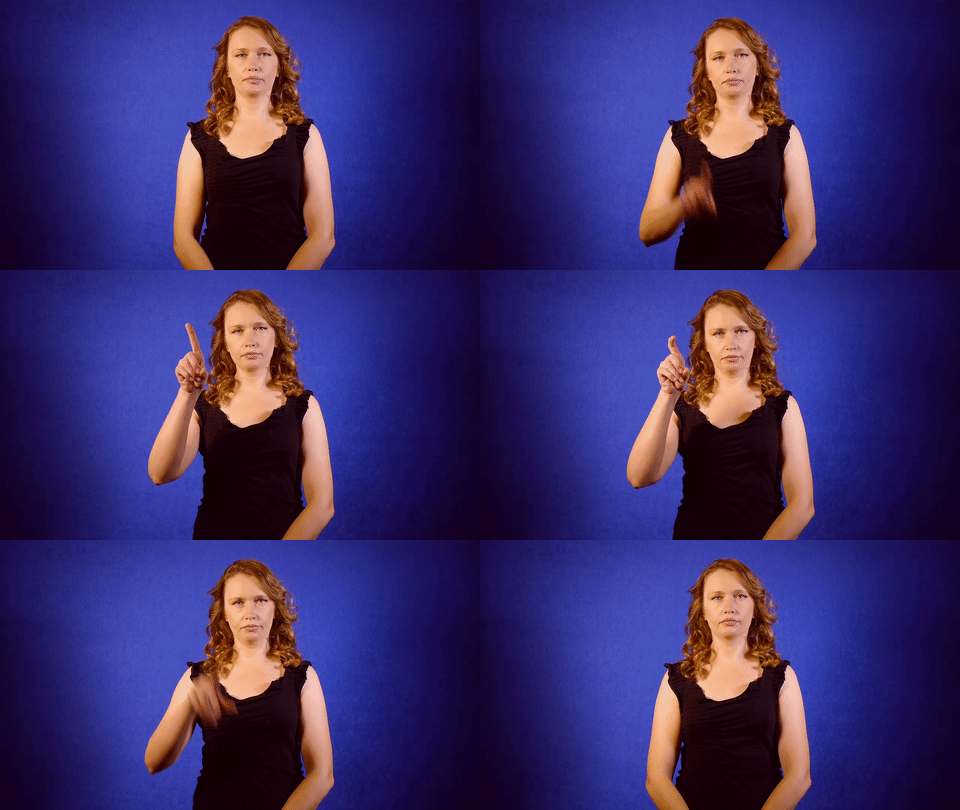
Definition: Refers to the number one hundred v2
Sign for THE NUMBER 100 V2 in ASL
Practice Activities:
Practicing the sign for the number 100 v2 in ASL can help reinforce number recognition and signing fluency. Start by signing the number repeatedly in isolation while watching yourself in a mirror. Focus on the handshape transition and maintain a steady movement to ensure clarity.
Try counting up to and down from the sign for the number 100 v2 in ASL to strengthen number sequencing skills. Count by tens, twenties, or fifties to build flexibility in signing large numbers. Challenge yourself by timing how quickly you can sign from 1 to 100 while maintaining accuracy.
Use flashcards with different numbers and practice spotting and signing the sign for the number 100 v2 in ASL when it appears. Partner with a friend and quiz each other on recognizing numbers quickly. Create a number matching game where one person signs a number, and the other has to write it down correctly.
Incorporate the sign into daily conversations by discussing prices, ages, or historical events. Say aloud sentences like “I saw a car that costs 100 dollars” or “There were 100 people at the event,” while correctly signing the number. Practice signing these sentences fluidly to increase confidence.
For a storytelling exercise, create a short narrative that includes the sign for the number 100 v2 in ASL. For example, tell a story about a marathon with 100 participants or a collection of 100 items. Record yourself and assess your fluency and clarity when signing.
A fun way to reinforce learning is by engaging in number challenges. Play math-related sign games where you add or subtract numbers leading up to 100. Compete with a friend to see who can sign numbers the fastest while keeping handshapes and movements accurate.
Cultural Context:
American Sign Language reflects the values and communication style of the Deaf community. The sign for the number 100 v2 in ASL showcases how numbers are visually represented in a clear and efficient way. Understanding number signs is essential for daily conversations, math, and expressing dates or prices.
The sign for the number 100 v2 in ASL is one of several ways to express this number. Different regions and generations within the Deaf community may favor one variation over another. Learning multiple versions of a number sign helps in understanding diverse ASL users.
Numbers are an important part of ASL because they are used frequently in daily life. The sign for the number 100 v2 in ASL is useful when discussing money, measurements, or counting. Whether in school, work, or casual conversation, knowing different number signs helps improve fluency.
ASL number signs are often influenced by historical changes in sign language. The sign for the number 100 v2 in ASL may have variations that reflect older or newer signing styles. Exposure to different number signs helps learners adapt to different signing communities.
Expressing numbers clearly is important for effective communication in ASL. The sign for the number 100 v2 in ASL allows signers to describe important numerical information accurately. Mastering number signs helps build confidence in using ASL in different settings.
Number signs in ASL can be modified for speed and efficiency. The sign for the number 100 v2 in ASL provides an easy way to express this number without extra movement. Many number signs are designed for practical and quick use in conversation.
When learning ASL numbers, it’s helpful to practice different ways they can be signed. The sign for the number 100 v2 in ASL might differ slightly depending on the signer’s background. Watching fluent signers can provide insight into how numbers are naturally incorporated into ASL conversations.
Math and financial discussions are common times when number signs are used. The sign for the number 100 v2 in ASL is often needed in banking, budgeting, or planning events. Knowing this sign makes numerical communication more precise when discussing important figures.
ASL numbers often follow a pattern that makes learning them easier. The sign for the number 100 v2 in ASL follows a logical structure that builds on lower numbers. This predictability helps learners quickly grasp how numbers progress in ASL.
Sign language evolves, and number signs can develop regional or generational differences. The sign
Extended Definition:
The sign for the number 100 v2 in ASL is a commonly used numerical sign in American Sign Language. It represents the number 100 and is part of the broader ASL numbering system. This variation of the sign may differ slightly from other versions, depending on the signer’s region or preference.
When signing the number 100 v2 in ASL, the movement starts with the number 1 handshape and transitions into a C shape. This motion represents the number in a fluid and natural way. Precision in handshape and movement is important for clarity and understanding.
ASL numbers are essential for communication in daily life, including counting, math, and financial discussions. The sign for the number 100 v2 in ASL is useful when discussing large numbers in conversations. Learning number signs enhances fluency and helps with effective communication in ASL.
There may be slight variations in how people sign numbers based on regional dialects or individual preferences. Some signers may use a different transition or handshape to sign the number 100 v2 in ASL. Exposure to different signing styles can help improve comprehension and adaptability.
Practicing ASL numbers regularly helps with retention and accuracy in signing. Using the sign for the number 100 v2 in ASL in context will reinforce its meaning and improve fluency. Watching videos or engaging with native signers can help learners master the correct technique.
Handshape and movement are crucial factors in conveying number signs correctly. The sign for the number 100 v2 in ASL should be executed smoothly to ensure clarity. Paying attention to finger placement and hand position helps prevent misunderstandings.
The number 100 is frequently used in educational settings, financial transactions, and storytelling. Knowing how to sign the number 100 v2 in ASL accurately is beneficial for effective communication. Mastering large number signs also aids in comprehension when watching or engaging in ASL conversations.
ASL numbers follow a logical pattern that becomes easier with practice. The sign for the number 100 v2 in ASL fits into this system and can be quickly learned with repetition. Consistent exposure to ASL numbers will help signers develop confidence in using numerical signs.
Engaging in ASL conversations that include numbers will improve fluency and comprehension. The more often a signer uses the sign for the number 100 v2 in ASL, the more natural it will become. Signing with native users enhances understanding and reinforces correct usage.
Watching ASL
Synonyms: hundred, one hundred, 100, century, 1 hundred
Educational resources: Find related learning materials in our course bank!
Want more? Check out some of our popular learning activities on the homepage!
Need to look up a sign? Use our highly rated dictionary: https://aslinteractive.com/best-asl-dictionary/
Follow us on tiktok: https://www.tiktok.com/@aslinteractive. More social media links at the bottom of this page!
Long-tail Keywords: What is the sign for the number 100 in ASL?, How do you sign the number 100 in ASL?, Learn how to sign the number 100 in American Sign Language
Categories: Numbers – Basics, Numbers 91-100, cardinal numbers
tags: Numbers, Numbers 91-100, Math, Language Learning, Educational Content
Parameters
*Handshape*:
The sign for THE NUMBER 100 V2 in ASL uses a one-handed approach. It begins with the index finger extended, forming the number 1. Then, the hand transitions into a “C” handshape to indicate the number 100. This movement is fluid, emphasizing the number change clearly. The sign for THE NUMBER 100 V2 in ASL is commonly used in counting and numerical contexts, making it an essential part of sign language communication.
*Palm Orientation*:
The palm orientation for the sign for the number 100 v2 in ASL starts with the dominant hand in a “1” handshape, palm facing forward . As the movement transitions, the hand changes into a “C” shape, with the palm slightly angled inward. This fluid motion is essential for clarity and distinguishes it from other numerical signs. When signing the number 100 v2 in ASL, ensure a smooth handshape shift to convey the intended meaning accurately.
*Location*:
The sign for the number 100 v2 in ASL is formed in the neutral space in front of the dominant side of the body. The sign begins near shoulder level and remains within a comfortable signing space without extending too far. The hand and fingers stay clear of the torso, allowing the sign for the number 100 v2 in ASL to be easily seen from a conversational distance.
*Movement*:
To make the sign for the number 100 v2 in ASL, start with the number 1 handshape, extending the index finger while the other fingers remain curled. Then, smoothly transition into a “C” handshape as you move slightly downward. The motion should feel fluid, maintaining a natural flow from the initial position to the final shape. This version of the sign for the number 100 v2 in ASL is commonly used in numerical contexts.
*Non-Manual Signals*:
Eyebrows may be slightly furrowed when signing the sign for the number 100 v2 in ASL, especially if emphasizing accuracy or counting. The mouth may form the shape of “hundred” or remain neutral, depending on the context. Head movement could be minimal, but a slight nod might accompany the sign for the number 100 v2 in ASL to reinforce clarity.
*Prosody, Dominant/Non-Dominant Hand*:
The sign for the number 100 v2 in ASL uses the dominant hand. Begin with the number “1” handshape, extending the index finger while the other fingers remain curled. Move the hand forward slightly, then transform into a “C” handshape as it arcs downward. The motion should be smooth and fluid, emphasizing the transition from 1 to 100. The non-dominant hand remains inactive during this sign.
Tips for Beginners:
When learning the sign for the number 100 v2 in ASL, focus on maintaining smooth hand movements. This variation involves forming the number 1 with your dominant hand and transitioning into a modified C shape. The motion should be fluid and natural to ensure clarity and recognition.
One common mistake beginners make when signing the number 100 v2 in ASL is stiff or exaggerated movement. The transition from 1 to the modified C should be subtle but intentional. Avoid jerky or overly slow motions, as this may lead to confusion.
Hand positioning is crucial for accurate signing. Keep your hand at a comfortable height, usually at chest level, when making the transition in the sign for the number 100 v2 in ASL. This prevents unnecessary strain and ensures better visibility for the conversation partner.
Finger tension should be controlled throughout the motion. Some beginners accidentally hold their fingers too tight, which can make the handshape appear awkward. Relax your fingers slightly while maintaining the proper handshape for a natural and confident execution.
Consistency in repetition is key to mastery. Practicing the sign for the number 100 v2 in ASL in front of a mirror can help you refine your movement. Watching native signers will also provide deeper insight into common variations and natural fluency.
Be mindful of facial expressions and overall body movement, as ASL relies on non-manual markers. Though the number itself does not require a dramatic expression, a neutral or slight affirmative head movement enhances communication effectiveness.
Lastly, practice signing numbers in sequence to improve fluency. Pair the sign for the number 100 v2 in ASL with other number signs to develop rhythm and speed. Over time, you will gain confidence in using this sign correctly in various situations.
Connections to Other topics:
The sign for the number 100 v2 in ASL is connected to the broader system of numbering in ASL, which often follows patterns that help learners recognize and construct larger numbers. In ASL, the way numbers transform often follows a predictable path, where the movement or shape of the hand conveys shifts between tens, hundreds, and thousands. The number 100, in both v1 and v2 variations, builds upon the formation of the number 1 and adapts it to convey the concept of one hundred.
Ordinal numbers, such as 100th, are closely related and use a modification of the sign for the number 100 v2 in ASL. Many numerical concepts work in tandem with classifiers, such as CL:5 to describe a group of 100 objects or people. Understanding the structure of numerical signs is essential for communicating costs, measurements, distances, and statistics in ASL.
The number 100 appears frequently in common phrases when discussing money, percentages, and time. For example, referring to a $100 bill or stating that someone is “100 percent sure” would incorporate the sign for the number 100 v2 in ASL. In financial and business contexts, this number might be modified slightly when discussing large figures like 1,000 or 10,000.
Learning how to sign 100 smoothly also supports counting higher numbers and combining figures seamlessly. When using the sign for the number 100 v2 in ASL in math-related discussions, it may be paired with operations like addition, subtraction, or multiplication. Understanding these numerical variations helps ASL learners communicate more clearly in academic, financial, and daily life applications.
Summary:
The sign for the number 100 v2 in ASL follows a structured movement that distinguishes it from other numerical signs. This variation is particularly useful in contexts where clarity is needed for numerical precision. While there are multiple ways to sign 100, this version emphasizes a smooth transition from the digit to the hundred value.
To form the sign for the number 100 v2 in ASL, begin with the “1” handshape, extending just the index finger while the other fingers remain curled. The palm typically faces forward, mimicking the standard numerical presentation. Then, transition into a “C” handshape to represent the hundred value, a method that visually reinforces the numeric structure.
The movement between the “1” and “C” handshape should be fluid, ensuring natural articulation. Some signers may slightly curve the motion, creating a more visually dynamic representation of the number. Accuracy in movement is key, as abrupt or altered gestures can change the intended meaning.
This variation of the sign for the number 100 v2 in ASL provides an alternative to the traditional “D” or bent-finger formation used by some signers. Regional and generational differences can influence which form a signer prefers. Understanding both variations allows for greater communication flexibility.
In ASL, numbers play an essential grammatical role, often functioning as quantifiers, identifiers, or mathematical markers. The sign for the number 100 v2 in ASL fits within this system, making it important for expressing age, money, distances, and statistics. A firm grasp of numerical variations enhances fluency and prevents misunderstanding.
The historical evolution of numerical signing in ASL reflects broader changes in linguistic development. Earlier numerical systems relied more on finger formations resembling written numerals, while modern versions are often more streamlined. The existence of multiple versions of 100 reflects this linguistic diversity.
Applying the sign for the number 100 v2 in ASL requires attention to context and signing speed. Slower, deliberate movements may be necessary when interacting with beginners, whereas fluent signers might execute the motion with a quick, natural flow. Context determines how exaggerated or subtle the movement should be.
Comparing the sign for the number 100 v2 in ASL to other numerical signs reveals patterns in ASL’s approach to number representation. Many hundred-level numbers in ASL follow a similar transition from digits into symbolic forms, making them easy to learn once the basic concept is understood. Recognizing these patterns helps in mastering larger numerical figures.
Facial expressions can enhance the clarity of numerical signing. While the sign for the number 100 v2 in ASL does not require emotive expressions, raised eyebrows or slight head movements may appear naturally in conversation. This non-manual marking can indicate emphasis, question formation, or numerical importance.
The cultural significance of the sign for the number 100 v2 in ASL extends into educational settings, financial discussions, and storytelling. Teachers often emphasize clear numerical signs when instructing young signers in math or counting exercises. The ability to quickly and accurately sign numbers is a marker of linguistic competency.
An applied linguistics perspective on the sign for the number 100 v2 in ASL reveals insights into visual-spatial language structures. The transition between handshapes mimics the cognitive processing of numbers in a visual format. Learning numerical signs strengthens spatial reasoning and fine motor coordination.
When discussing money, age, or measurements, this numerical sign plays a fundamental role. A signer discussing “$100” or “100 years” would incorporate this sign within a phrase fluidly. Numerical indicators in ASL often precede the noun they modify, following standard ASL syntax.
Signers using the sign for the number 100 v2 in ASL should remain aware of hand positioning to prevent misinterpretation. A slight deviation in handshape or movement direction can resemble other numerical signs, leading to confusion. Practicing in front of a mirror or with a fluent signer helps reinforce accuracy.
For students of ASL, mastering numerical variations strengthens overall signing comprehension. Exercises involving number sequences, money denominations, or address listings frequently incorporate the sign for the number 100 v2 in ASL. Repetitive practice with different numerical contexts ensures retention and fluency.
Technology has influenced the way numbers are signed, with video calls and social media emphasizing the need for clear, distinct hand movements. The sign for the number 100 v2 in ASL remains useful in digital communication where lag or pixelation may obscure finer movements. Ensuring clarity in virtual interactions is an evolving aspect of ASL use.
Comparisons between ASL and number signs in global sign languages show both similarities and key differences. Some sign languages use completely distinct gestures for 100, while others incorporate numerical transitions like ASL. Understanding these variations highlights the linguistic richness of signed languages worldwide.
Children learning ASL often grasp numerical concepts faster when paired with visual reinforcement, such as counting tangible objects.
Want more? Check out some of our popular learning activities!
ASL Interactive Resources
ASLInteractive YouTube Channel
Follow us on tiktok: @aslinteractive.com
Follow us on Instagram: aslinteractive
Facebook page: aslinteractive
Facebook group: aslinteractive
LInkedIn: ASL Interactive LLC
Twitter: @ASL_interactive
*Some information on this page is AI-generated. AI can make mistakes. Please check the information.


Responses