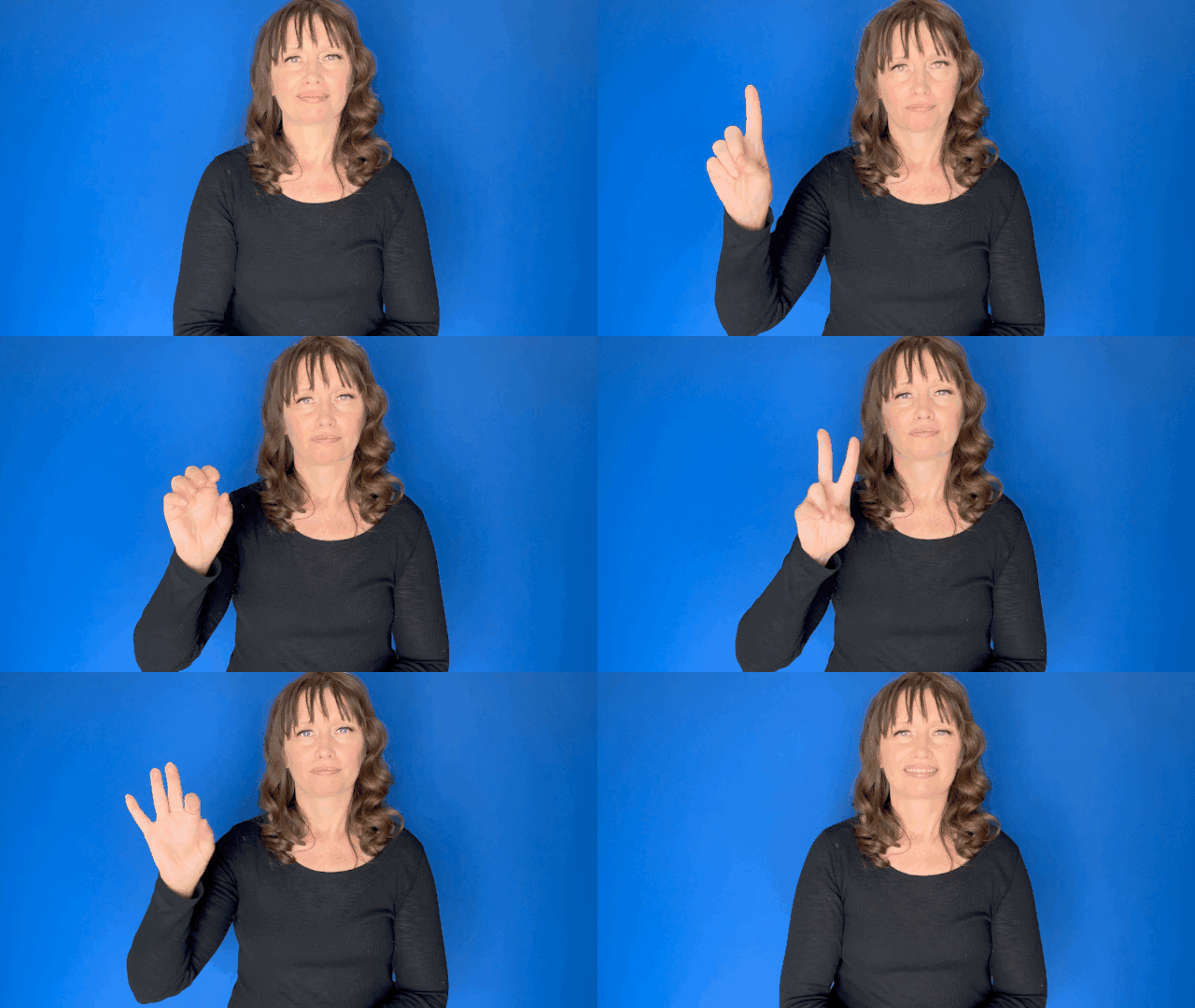
Definition: The Years 2000-2010
Sign for THE YEARS 2000-2010 in ASL
Practice Activities:
To practice the sign for the years 2000-2010 in ASL, start by signing each individual year in sequence. Use a mirror or record yourself signing 2000 through 2010 to reinforce accuracy and consistency. Pay attention to the difference in signing 2000 versus 2001-2009, ensuring a smooth transition when practicing the full range of years.
Next, incorporate the sign for the years 2000-2010 in ASL into example sentences. Sign important events that happened during those years, such as “In 2008, the Olympics were in China” or “In 2001, we moved to a new house.” This helps with fluency and making connections between numbers and historical events.
Try a storytelling exercise where you describe a fictional character’s journey through the years 2000-2010. For example, narrate their school years, major personal milestones, or technological advancements they experienced. Practicing these sequences will make it easier to recall and use the sign smoothly in conversation.
Engage in a partner activity where one person signs a year from 2000 to 2010, and the other partner has to recall and sign an event from that year. This will enhance retention and prompt real-world application of the sign for the years 2000-2010 in ASL. Switch roles to ensure both participants practice comprehensively.
A fun challenge is to quiz yourself or a friend by watching news clips or reading articles about events from the years 2000-2010, then signing the corresponding year. This not only builds proficiency but also reinforces knowledge of history and chronology. Keep practicing consistently to improve speed and confidence when signing the years accurately.
Cultural Context:
The sign for the years 2000-2010 in ASL reflects a unique period in recent history. During this decade, technology advanced rapidly, with the rise of smartphones, social media, and streaming services. The deaf and hard-of-hearing community benefited from improved video technology, making ASL communication more accessible.
In American Sign Language, number signs change depending on the era being discussed. The sign for the years 2000-2010 in ASL follows a specific pattern, emphasizing the transition from the late 1990s into the early 21st century. Understanding the structure of these number signs helps with clear and accurate communication.
During this decade, the deaf community saw significant progress in education, advocacy, and legal rights. Video relay services (VRS) became more widespread, allowing for smoother ASL conversations over long distances. Access to captioning also improved, making media consumption more inclusive for deaf individuals.
The sign for the years 2000-2010 in ASL is also influenced by how people referred to these years in spoken English. Some people called them “the two-thousands,” while others used individual numbers like “two-zero-zero-five.” These variations affect how ASL users convey the years visually.
Cultural shifts during this time impacted how deaf individuals engaged with technology and society. More online communities formed where ASL users could connect, learn, and advocate for their rights. Social media platforms like Facebook and YouTube helped spread awareness about ASL and deaf culture.
Mastering the sign for the years 2000-2010 in ASL is essential for discussing events from this period. From major global events to personal milestones, using the correct ASL structure ensures clarity. Signers continue to reference these years when talking about historical developments.
The increase in ASL resources during this decade paved the way for better education and accessibility. More schools and programs incorporated ASL into their curriculum, increasing awareness about deaf culture. Signing these years correctly helps preserve historical accuracy in ASL conversations.
Knowing the sign for the years 2000-2010 in ASL enables smoother storytelling and discussions about contemporary history. Whether recalling major technological innovations or cultural changes, accuracy in number signs is important. ASL users rely on proper handshapes and movements to convey specific timeframes effectively.
As younger generations learn ASL, understanding the sign for the years 2000-2010 in ASL remains valuable. The events from this decade
Extended Definition:
The sign for the years 2000-2010 in ASL follows a specific pattern that reflects how numbers are signed in American Sign Language. These years are typically expressed with a combination of number signs and specific movements that clarify the distinction between the thousands and individual years. Understanding the structure of these signs helps ensure clarity in communication.
When signing the years 2000-2010 in ASL, the most common method is to sign “2000” by moving the number “2” forward, followed by the sign for “thousand.” This is done by forming a “2” with your dominant hand, then transitioning into the sign for “thousand,” which involves touching the fingertips of the dominant hand to the non-dominant palm. For the following years, most signers use a combination of “20” followed by the individual year, such as “20-01” for 2001 or “20-10” for 2010.
In ASL, the numbers for these years are generally signed smoothly without separating digits too much. From 2001 onward, the signing structure becomes more predictable, as “20” is signed first, followed by the last two digits of the year. This approach reduces confusion and keeps the movement fluid and natural.
There may be slight variations among ASL users when signing the years 2000-2010. Some signers will fully articulate “2000” each time rather than abbreviating the years after 2001. However, the preferred method simplifies the movement and matches how similar numbers are signed in everyday ASL usage.
Context matters when using the sign for the years 2000-2010 in ASL. If discussing a specific event from that decade, signers may pause to emphasize a particular year. If using the full phrase within a conversation, the distinct sign for “from” or “through” may be incorporated to indicate the year range clearly.
Fingerspelling is not typically used for signing the years in ASL unless extra clarification is needed. Since ASL has a standardized way of signing large numbers, relying on fingerspelling for years would feel unnatural and cumbersome. Instead, using numerical signs with consistent movement provides a more effective way to communicate these years.
Learning how to sign the years 2000-2010 in ASL enhances fluency and comprehension. Since these number signs follow set patterns, mastering them makes it easier to discuss historical events, personal experiences, or timelines. Being familiar with
Synonyms: None
Educational resources: Find related learning materials in our course bank!
Want more? Check out some of our popular learning activities on the homepage!
Need to look up a sign? Use our highly rated dictionary: https://aslinteractive.com/best-asl-dictionary/
Follow us on tiktok: https://www.tiktok.com/@aslinteractive. More social media links at the bottom of this page!
Long-tail Keywords: what is the sign for the years 2000-2010 in ASL, how do you sign the years 2000-2010 in American Sign Language, ASL sign for the years 2000-2010
Categories: Numbers – Basics, years, year numbers
tags: Numbers, Years, Counting, Mathematics, Educational, Language Learning
Parameters
*Handshape*:
The sign for the years 2000-2010 in ASL uses a number-based handshape. To sign it, form the number 2️⃣ with the dominant hand, followed by two zeros made by curling the fingers into an “O” shape. This represents the year 2000. For subsequent years, sign 2️⃣, then zero, then the specific last two digits of the year. This method keeps the sign for the years 2000-2010 in ASL clear and easy to understand.
*Palm Orientation*:
The palm orientation for the sign for the years 2000-2010 in ASL varies depending on the specific number being signed. For “2000,” the dominant hand forms a “2” handshape, with the palm facing outward, then moves into a loose “5” handshape with the palm facing forward. For subsequent years, each number is signed sequentially with the appropriate handshapes, keeping the palm generally forward but adjusting naturally for clarity.
*Location*:
The sign for the years 2000-2010 in ASL is produced in the neutral space in front of the body, typically at chest level. The dominant hand forms a flat “O” or the number “2-0-0-0,” moving slightly forward to indicate the year 2000. For the years 2001-2010, the number is signed sequentially, often with a small pause to differentiate the thousand from the following digits. This sign maintains a consistent location near the chest area for clarity.
*Movement*:
To sign for the years 2000-2010 in ASL, start by forming the number “2” with your dominant hand. Then, shape a relaxed “C” hand for “thousand” and move slightly forward. After that, sign each subsequent year by forming the number “2” followed by the last two digits of the year (e.g., “03” for 2003). Keep movements smooth and fluid to convey the sequence clearly.
*Non-Manual Signals*:
Facial expressions are typically neutral or slightly raised eyebrows when signing the years in the sign for the years 2000-2010 in ASL, especially for clarity. Lip movements may follow the mouthed words of the years being signed to reinforce understanding. When emphasizing a specific year within the range, a slight head nod or a momentary pause may be used to draw attention.
When listing multiple years sequentially in the sign for the years 2000-2010 in ASL, the head may tilt slightly forward to indicate a timeline. If explaining or clarifying the range, the signer may shift their gaze slightly to different reference points, symbolizing the progression of years. Mouth movements might adjust subtly depending on whether the focus is on an entire decade or a specific year.
*Prosody, Dominant/Non-Dominant Hand*:
The sign for the years 2000-2010 in ASL typically involves representing each year individually. For 2000, the dominant hand forms the number “2” and then “0-0-0” with a slight forward movement. For the years 2001-2009, sign “2-0” followed by the last digit. For 2010, many sign “20” then “10.” Handshapes remain clear, with a steady motion to ensure accuracy while conveying the sign for the years 2000-2010 in ASL.
Tips for Beginners:
When learning the sign for THE YEARS 2000-2010 in ASL, it’s crucial to follow the proper numbering conventions. Typically, the year 2000 is signed by forming the number 2 with your dominant hand and then transitioning smoothly into the sign for thousand by bending your fingers into a slight arc. For the years 2001 to 2009, you sign 2 and then form the individual numbers separately.
A common mistake beginners make is rushing through the transitions, which can make the numbers unclear. Be sure to maintain steady hand movements and practice the correct finger positioning to avoid confusion. Watching native signers execute the sign for THE YEARS 2000-2010 in ASL can help with mastering the smooth flow.
For 2010, the sign is slightly different from 2001-2009. It often follows a “20-10” approach where you sign 20 first, followed by 10. Make sure the transition between the numbers is clear and well-spaced to avoid looking like you are signing “2,010” as a single number.
Practicing in front of a mirror or recording yourself can be an excellent way to refine your accuracy. Pay close attention to consistency in handshape, palm orientation, and transitions. Small details like hand direction and finger positioning can make a big difference when signing years correctly.
When using the sign for THE YEARS 2000-2010 in ASL in conversations, adjust for pacing based on context. If discussing past events quickly, you may abbreviate movement, but clarity should always be a priority. Watching videos of fluent ASL users and repeatedly signing the years in front of a partner can greatly improve fluency and confidence.
Connections to Other topics:
The sign for THE YEARS 2000-2010 in ASL connects to a broader understanding of how numbers and years are signed in ASL. The way numbers are incorporated when expressing years is important in ASL grammar, as different periods use distinct formats. For example, years like 1990-1999 are typically signed by splitting the four-digit number into two parts, while 2000-2010 follows a different structure due to the presence of the thousand digit.
Understanding the sign for THE YEARS 2000-2010 in ASL also relates to how numbers are used in other time-related signs, such as decades, centuries, and historical dates. The way ASL modifies numerical expressions to fit specific timeframes helps learners grasp patterns in signing dates. This is useful when signing about past events, forecasting future years, or discussing personal experiences related to specific years.
This sign also connects with related signs like YEAR, DECADE, and CENTURY, which use distinct movements and structures in ASL to convey duration effectively. A clearer understanding of these broader concepts helps signers discuss historical events, personal timelines, and future plans with specificity. The way years are formatted in ASL influences how other time-related concepts, such as BIRTHDAY, ANNIVERSARY, and HISTORY, can be signed properly in various contexts.
In discussions involving specific time periods, knowing how to modify the sign for THE YEARS 2000-2010 in ASL ensures accuracy when referencing milestones like graduation years, major world events, or personal achievements. ASL often applies numerical incorporation in a structured way, making it important for learners to recognize patterns in signing years correctly. Mastering these number structures also helps when discussing broader topics like timelines, future projections, and historical summaries.
Summary:
The sign for THE YEARS 2000-2010 in ASL follows a distinct numerical structure that differs from the way years are typically signed in English-based number systems. To sign these years, signers most often follow a pattern that acknowledges the turn of the millennium and the slight shift in numerical articulation that occurred between 2000 and 2010. Understanding this sign requires familiarity with ASL number signs and an awareness of how numerical sequences have evolved over time.
For the year 2000, signers touch on a specific movement. The number “2” is signed, followed by “thousand,” which involves a bent hand tapping into the palm. This creates a unique way to sign the round year without fully articulating each digit separately. This pattern set a precedent for how subsequent years within the decade are signed.
From 2001 to 2009, signers often adopt a different approach compared to the traditional signing of years in past centuries. They frequently sign “2” followed by “thousand” and then the individual last two digits of the year. This method ensures clarity while keeping the numerical sequence consistent within the decade. The goal is to maintain a natural flow in conversation while staying faithful to ASL numerical conventions.
An alternate method involves signing each individual digit separately—”2-0-0-1,” “2-0-0-2,” and so on. This approach is less common in casual signing but may be used for clarity in formal or educational settings. Context plays an essential role in determining which method is most appropriate for any given conversation.
The transition from 2009 to 2010 marks a shift in how numbers are signed. Instead of continuing the “two thousand” format, signers typically revert to the standard way of signing years: “20-10.” This reflects how ASL evolved in alignment with speech patterns, as spoken English also returned to saying “twenty-ten” rather than “two thousand ten.”
Numbers play a crucial role in the grammatical structure of ASL, and the sign for THE YEARS 2000-2010 in ASL demonstrates how numerical conventions adapt to historical and linguistic shifts. The turn of the millennium demanded a change in how numbers were expressed, leading to the more detailed approach for early 2000s years. This flexibility mirrors ASL’s broader linguistic adaptability.
Cultural and historical context also influences the way these years are signed. The early 2000s were a time of significant world events, technological advancements, and shifts in communication methods. The linguistic structure of signing these years reflects the evolving ways people conceptualized numbers in both spoken and signed languages.
Comparing ASL with other signed languages, some international sign languages sign years differently for 2000-2010. While ASL uses a broken-down structure with emphasis on “thousand,” other signed languages might use a continuous number sequence. This highlights the diversity of numerical representation across global Deaf communities.
For learners, mastering the sign for THE YEARS 2000-2010 in ASL helps build confidence in numerical sequencing and historical references. Practicing signing these years enhances fluency and ensures smoother communication, especially when discussing past events within a specific decade. Knowing which variation to use enhances communicative competence.
ASL’s numerical system is embedded in its spatial and visual modality. The choice to emphasize “two thousand” rather than breaking numbers down into pairs (ex: “20-01”) is reflective of how ASL naturally favors clarity and expressiveness. This method provides a rhythmic signing structure that keeps the viewer engaged.
When discussing historical or cultural moments from 2000-2010, proper numerical articulation becomes especially important. Events such as the launch of social media, major global conflicts, and technological changes are often referenced in ASL. Ensuring clarity in signing these years contributes to cohesive storytelling.
Advanced signers often develop a personal signing style based on region or preference. Some older signers naturally lean toward saying “two thousand one” instead of “twenty-oh-one,” leading to parallel variations in ASL. These subtle influences reflect regional dialects and personal signing habits.
ASL’s visual grammar requires strategic use of space, and signing years correctly ensures fluid, efficient communication. The sign for THE YEARS 2000-2010 in ASL emphasizes logical mathematical structuring, demonstrating how ASL balances expressive clarity with numerical accuracy. Signers adapt over time as conventions shift.
Educators emphasize proper numerical articulation when teaching ASL students how to sign years. Understanding the reasoning behind the “two thousand” structure helps learners stay consistent with native signers. Awareness of alternate signing methods enhances comprehension when interacting with different signing communities.
The numerical system used for these years extends beyond just dates. Many large round numbers, such as 2,000 or 10,000, follow similar signing styles in ASL. This principle applies across various numerical contexts, reinforcing the widespread influence
Want more? Check out some of our popular learning activities!
ASL Interactive Resources
ASLInteractive YouTube Channel
Follow us on tiktok: @aslinteractive.com
Follow us on Instagram: aslinteractive
Facebook page: aslinteractive
Facebook group: aslinteractive
LInkedIn: ASL Interactive LLC
Twitter: @ASL_interactive
*Some information on this page is AI-generated. AI can make mistakes. Please check the information.


Responses