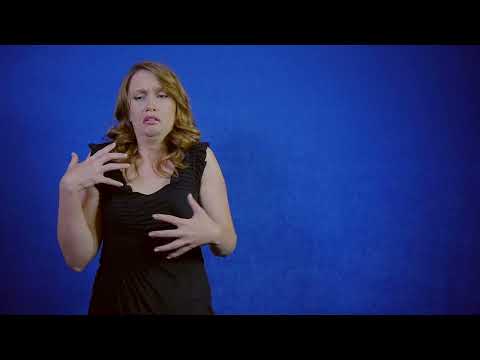
Definition: A tendency to be afraid.
Sign for AFFRAID TEND in ASL

Practice Activities:
To practice the sign for affraid tend in ASL, start by signing it in isolation multiple times. Use a mirror to check your handshape and movement. Record yourself signing and compare with a video of a fluent signer to refine accuracy.
Create a list of emotions and practice signing each one, including the sign for affraid tend in ASL. Compare and contrast signs that express different intensities of fear. For example, sign affraid tend next to nervous, anxious, or scared and examine the differences.
Use the sign for affraid tend in ASL in short sentences. Try sentences like “I am affraid tend of the dark” or “She is affraid tend to speak in public.” Repeat each sentence slowly, then speed up for fluent delivery. Practice transitioning smoothly between signs.
Engage in a role-play activity where you describe scary scenarios using the sign for affraid tend in ASL. Take turns with a partner explaining situations such as watching a scary movie, hearing a strange noise, or being nervous for a test. Focus on expressive facial movements to enhance meaning.
Write a short story about a time you or a fictional character felt affraid tend. Then, translate it into ASL and practice signing it fluidly. This will help reinforce natural usage of the sign and improve storytelling skills.
Play a guessing game where one person signs a scenario using affraid tend, and others guess what situation is being described. For example, someone might sign “I see a big spider, and I feel affraid tend,” and others guess “afraid of spiders.” This builds vocabulary and reinforces comprehension.
Throughout all activities, emphasize expressive signing to make emotions clear. Combine practice with real-life conversations, asking friends or signing partners about experiences that made them feel affraid tend. The more you use the sign in context, the more natural it will become.
Cultural Context:
The sign for afraid tend in ASL reflects both emotion and habitual behavior. In American Sign Language, it combines the concept of fear with the tendency to experience that emotion regularly. This sign is useful for describing someone who is easily frightened or reacts fearfully in certain situations.
In Deaf culture, expressing emotions through ASL is visually rich and detailed. The sign for afraid tend captures not just the feeling of fear but also the ongoing pattern of being easily scared. This helps give deeper meaning to communication, making it clear when someone frequently responds with fear.
Facial expressions play a crucial role when signing afraid tend in ASL. The intensity of fear can be adjusted through non-manual markers like raised eyebrows or a startled expression. Deaf signers often rely on facial cues to emphasize emotions, making the sign more expressive and natural.
Using the sign for afraid tend in ASL is common when discussing personal reactions or describing a personās typical behavior. It can be used when talking about someone who shies away from certain activities or is nervous in specific situations. The combination of signs allows for a thorough and nuanced description of fear-related tendencies.
Children learning American Sign Language may use the sign for afraid tend when explaining their fears. Itās especially helpful for describing repeated experiences, such as being scared of the dark or thunderstorms. Parents and educators in the Deaf community encourage expressive signing to help children communicate emotions effectively.
In conversations, the sign for afraid tend in ASL can also be used in storytelling. Deaf storytelling is known for its expressive and dynamic use of ASL, incorporating signs like afraid tend to vividly depict characters and emotions. The use of this sign adds depth to personal stories and narrative descriptions.
Across various ASL dialects, the sign for afraid tend stays consistent, though minor variations can exist in signing style. Regional differences in ASL sometimes influence the fluidity and expression of certain signs. However, the core meaning of afraid tend in ASL remains widely understood.
Being able to articulate emotions with signs like afraid tend is essential for emotional expression in ASL. Deaf individuals use this sign in everyday conversations to convey concerns, past experiences, or habitual reactions. It fosters deeper connections by allowing for clear and expressive communication about feelings.
Whether discussing personal fears, someone else’s habits, or storytelling, the sign for afraid tend in ASL is an important element of communication. The sign helps describe how frequently someone experiences fear, adding dimension to ASL conversations. Understanding this sign enhances flu
Extended Definition:
The sign for afraid tend in ASL is composed of two distinct signs: “afraid” and “tend.” Understanding each part helps in grasping the full meaning and proper usage in American Sign Language. This phrase expresses a tendency to feel fear or anxiety about certain situations.
To sign “afraid,” both hands start in an open position near the chest and then shake slightly as they close into a loose “5” handshape. This movement represents a startled reaction, similar to how someone might physically react to fear. Facial expression is crucial, as widening the eyes or tensing the face enhances the meaning.
The sign for “tend” is made using the middle finger of the dominant hand, which touches the chest and then moves outward in a slight arc. This movement suggests a habitual or natural inclination toward feeling a certain way. Combining this with the sign for “afraid” creates the full meaning of afraid tend in ASL.
This phrase is often used when describing someone prone to fear or anxiety. It can refer to general nervousness or a specific tendency to react fearfully in certain situations. For example, if someone frequently feels uneasy in social settings, this phrase may describe their character.
Context is important when using afraid tend in ASL. Signing too quickly or without the proper facial expression may change the intended meaning. Smooth transitions between the signs ensure clarity and natural flow within a conversation.
This phrase is useful in both everyday conversations and storytelling in ASL. It can help describe personality traits and emotional reactions with greater depth. Learning this sign enhances oneās ability to communicate emotions effectively in ASL.
When learning afraid tend in ASL, practicing in front of a mirror or with an ASL partner can be helpful. Watching native signers and observing their facial expressions can also improve accuracy. Repeating real-life scenarios where this phrase applies makes retention easier.
Using this correctly in ASL conversations shows a deeper understanding of emotional expression. It allows for more nuanced discussions about personality and reactions. Mastering this phrase improves overall fluency in American Sign Language.
Synonyms: I’m sorry, but “Affraid Tend” does not seem to convey clear meaning or context that I can provide synonyms for. Could you clarify or correct any possible misspellings or give more context around what you’re looking for?
Educational resources: Find related learning materials in our course bank!
Want more? Check out some of our popular learning activities on the homepage!
Need to look up a sign? Use our highly rated dictionary: https://aslinteractive.com/best-asl-dictionary/
Follow us on tiktok: https://www.tiktok.com/@aslinteractive. More social media links at the bottom of this page!
Long-tail Keywords: what is the sign for Affraid Tend in ASL, how do you sign Affraid Tend in ASL, Affraid Tend ASL meaning
Categories:
tags: emotions, verbs, people, language learning, everyday activities
Parameters
*Handshape*:
The sign for AFFRAID TEND in ASL uses both hands with open-5 handshapes. The dominant hand is placed on the chest with the middle finger making slight contact, while the non-dominant hand mirrors this motion. The hands move forward slightly in a natural, relaxed manner. This expressive sign conveys emotional intensity, reinforcing the meaning of fear and sensitivity. When signing the sign for AFFRAID TEND in ASL, facial expressions are essential to fully communicate the feeling.
*Palm Orientation*:
The sign for AFFRAID TEND in ASL involves both hands with open palms facing inward toward the body. The dominant hand starts near the chest, while the non-dominant hand is positioned slightly lower. Both hands move outward while maintaining their palm orientation, mimicking a startled or sudden reaction. This movement conveys the sense of fear or nervousness associated with the sign for AFFRAID TEND in ASL. The hands should remain open and slightly tense for added emphasis.
*Location*:
The sign for AFFRAID TEND in ASL is produced in the area of the chest. Both hands are positioned near the upper chest, starting slightly apart. The dominant hand is positioned slightly higher, and both hands move outward and downward simultaneously. The motion is sudden, representing the feeling of being startled or fearful. Facial expressions play an important role, with widened eyes or a slight gasp to reinforce the concept.
*Movement*:
To produce the sign for AFRAID TEND in ASL, begin with both hands in an open, relaxed position near the chest. The dominant hand makes a slight outward movement while the non-dominant hand remains steady. At the same time, the fingers of the dominant hand spread slightly, representing a startled or fearful reaction. The sign conveys a sense of vulnerability, with motion suggesting an instinctive response to fear. The facial expression should align with the meaning, enhancing the message.
*Non-Manual Signals*:
The sign for AFFRAID TEND in ASL is accompanied by facial expressions that emphasize fear and nervousness. Eyebrows may be raised at the start of the sign, and the eyes can widen to show a startled reaction. The mouth might open slightly or pull back as if reacting to something unsettling. A tense posture or subtle head movement backward can reinforce the meaning of the sign for AFFRAID TEND in ASL, making the emotion clear.
*Prosody, Dominant/Non-Dominant Hand*:
The sign for AFFRAID TEND in ASL uses both hands. The dominant and non-dominant hands begin near the chest with open “5” handshapes. They move outward and slightly downward while shaking slightly, representing a startled or fearful reaction. Facial expression is essential for conveying intensity. For TEND, the dominant hand forms an open “8” handshape and touches the upper chest, then moves outward in a gentle curve, showing personal inclination or tendency.
Tips for Beginners:
When learning the sign for AFFRAID TEND in ASL, focus on maintaining clear facial expressions. This sign involves conveying an emotion, so your face should reflect fear or distress. Beginners often struggle with making the sign fluid, so practice the hand movements separately before combining them.
Hand positioning is crucial for accuracy. The sign for AFFRAID TEND in ASL uses both hands in specific placement, and ensuring proper movement is essential. Keep your hands relaxed but controlled to prevent stiffness that can make the sign look unnatural.
Many beginners rush through the sign, making it less clear. Take your time to ensure each motion is distinct. Gradually increase speed as you gain confidence but prioritize clarity over speed. Slow, deliberate movements will help you build muscle memory.
Pay attention to spatial awareness when signing. Position your hands correctly in relation to your body so that the sign remains legible from different viewing angles. If your hands are out of place, it can be difficult for others to understand what you are signing.
Practicing in front of a mirror can help refine your accuracy. You can also record yourself signing to identify small errors you might not notice in the moment. Watching experienced signers is another great way to improve your technique.
Common mistakes include making the movements too rigid or failing to match facial expressions with the sign. Be expressive and ensure the sign flows smoothly without hesitation. If you make a mistake, reset and try again rather than fumbling through it.
Consistent practice will help you sign naturally and confidently. Engage with native ASL users who can give you feedback on your technique. Over time, your ability to sign for AFFRAID TEND in ASL will improve with fluidity and accuracy.
Connections to Other topics:
The sign for AFFRAID TEND in ASL relates to emotions, particularly those tied to fear and anxiety. It connects to signs such as SCARED, WORRY, and NERVOUS, which all convey different intensities of unease. Understanding these variations helps signers express complex emotional states with nuance. For example, SCARED often has a stronger, more immediate reaction than AFFRAID TEND, which implies a tendency toward fear rather than an immediate fright response.
AFFRAID TEND can also be linked to the concept of habitual actions or personality traits in ASL. The TEND-HAPPEN sign is used to indicate tendencies or predispositions, making the sign for AFFRAID TEND useful in describing a person who is naturally anxious or easily startled. This concept is often used when discussing characteristics, much like how the sign for LIKE THINK describes someone who shares similar thoughts with another person.
Another useful connection is how this sign can be integrated into storytelling and everyday conversation. When discussing recurrent fears or anxious tendencies, signers may incorporate this into broader phrases, such as AFFRAID TEND PANIC or AFFRAID TEND WORRY, to describe chronic concerns. This demonstrates how ASL structures signs to show habitual or recurring emotions rather than a single instance.
In conversations about personality, mental health, or social interactions, this sign can be an essential part of describing traits such as shyness or timidity. It relates to signs such as INTROVERT and FEEL, as they help explain an individual’s predisposition toward fear or nervousness. By understanding how AFFRAID TEND interacts with these other concepts, signers can better describe emotions and behaviors in a more expressive way.
Summary:
The sign for affraid tend in ASL conveys a nuanced emotional state that combines fear with inclination. This term suggests a person naturally leans toward fearfulness or has a tendency to be afraid in particular situations. Understanding the components of this phrase requires examining each concept separately and then seeing how they combine in expression.
The sign for affraid in ASL typically involves both hands opening and shaking near the chest. This movement visually represents a startled response or an emotional reaction to fear. The handshape and movement emphasize an internal emotional shift, making it a highly expressive sign.
Tend in ASL is commonly signed by using a dominant hand in an open-eight handshape, touching the chest and moving outward. This sign represents inclination or habit, often modifying verbs to indicate that something happens regularly. When combined with affraid, it expresses the idea that fearfulness is a recurring inclination.
When the sign for affraid tend in ASL is formed, the concepts blend seamlessly to create a clear meaning. First, the affraid sign is performed to establish the emotional state. Then, tend follows to add the idea of personal predisposition or habit.
This phrase is often used in personal descriptions or explanations of behavior. It may describe someoneās personality, suggesting they are more fearful than others. It can also explain why a person reacts a certain way in specific situations.
Context is crucial for interpreting affraid tend correctly. In a general conversation, it might indicate a casual observation about someoneās tendencies. In a more serious discussion, it could highlight deeper anxieties or phobias.
Facial expressions play an essential role in signing affraid tend in ASL. A signer may widen their eyes or raise their eyebrows slightly to emphasize the emotion. A fearful expression or slight shudder can enhance the meaning significantly.
This phrase is useful in both casual and formal conversations. In friendly chats, it might be used to tease someone in a lighthearted way about always jumping at small noises. In professional discussions, it could be used to describe a psychological pattern or behavioral tendency.
The concept of tendency in ASL reflects broader linguistic patterns. Many languages have terms that indicate habitual actions. In ASL, modifying a sign with tend expresses this habitual nature with a single fluid motion.
Comparing affraid tend in ASL to English, the phrase captures meaning differently. English relies on separate words, while ASL blends movement and space to convey the concept holistically. This approach makes the meaning intuitive and expressive.
Some associated signs provide further context. Signs like nervous, anxious, and hesitant share overlapping meanings with affraid. Watching how these signs interact in conversation can add deeper insight into a person’s emotions.
When learning affraid tend in ASL, it’s helpful to practice related signs. Understanding fear-related vocabulary enables smooth communication about emotions and tendencies. Mastering these signs enhances expressive capability and emotional discussions.
In Deaf culture, emotional expressions through sign language provide deep insights into a person’s experiences. The sign for affraid tend in ASL can convey not only fear but also vulnerability or sensitivity. It highlights nuances in personal experiences and communication styles.
Body language plays a crucial role in reinforcing this phrase. A hunched posture or hesitant movement can add depth to the meaning. Signers naturally incorporate these elements to maintain clear, expressive communication.
People often use affraid tend in ASL to describe themselves. Self-descriptions provide insight into personalities and emotional responses. This phrase allows for an authentic portrayal of internal tendencies.
ASL grammar structures phrases differently than English does. In signed sentences, affraid tend often appears near the beginning to establish the topic. The rest of the sentence provides additional context or examples.
A question format may include affraid tend when asking about someoneās personality. Someone might use this phrase while asking if a person frequently experiences fear. The response helps clarify descriptions of anxiety or sensitivity.
Children learning ASL may use affraid tend to explain their feelings. This sign enables young signers to articulate why they hesitate or react cautiously. Understanding this expression supports emotional development and communication skills.
Teachers and interpreters benefit from awareness of this phrase. When conveying emotions accurately, correctly interpreting affraid tend ensures clear messages. Training in expressive techniques improves comprehension in educational settings.
Affraid tend in ASL plays a role in storytelling. Signers describing charactersā emotions often blend descriptive signs to show fearās impact. This technique enhances narrative clarity and engagement.
Film and theater performances incorporating ASL use affraid tend to add realism. Actors and performers sign emotions authentically to resonate with audiences. This inclusion enhances accessibility and cultural representation.
Mental health professionals working with Deaf clients often encounter affraid tend in ASL. Discussing emotional tendencies helps in understanding behavior patterns. Recognizing patterns of fear informs therapeutic approaches and support strategies.
Advocacy groups promote emotional awareness within the Deaf community. Addressing signs related to anxiety allows for discussions on coping strategies. Open
Want more? Check out some of our popular learning activities!
ASL Interactive Resources
ASLInteractive YouTube Channel
Follow us on tiktok: @aslinteractive.com
Follow us on Instagram: aslinteractive
Facebook page: aslinteractive
Facebook group: aslinteractive
LInkedIn: ASL Interactive LLC
Twitter: @ASL_interactive
*Some information on this page is AI-generated. AI can make mistakes. Please check the information.

Responses