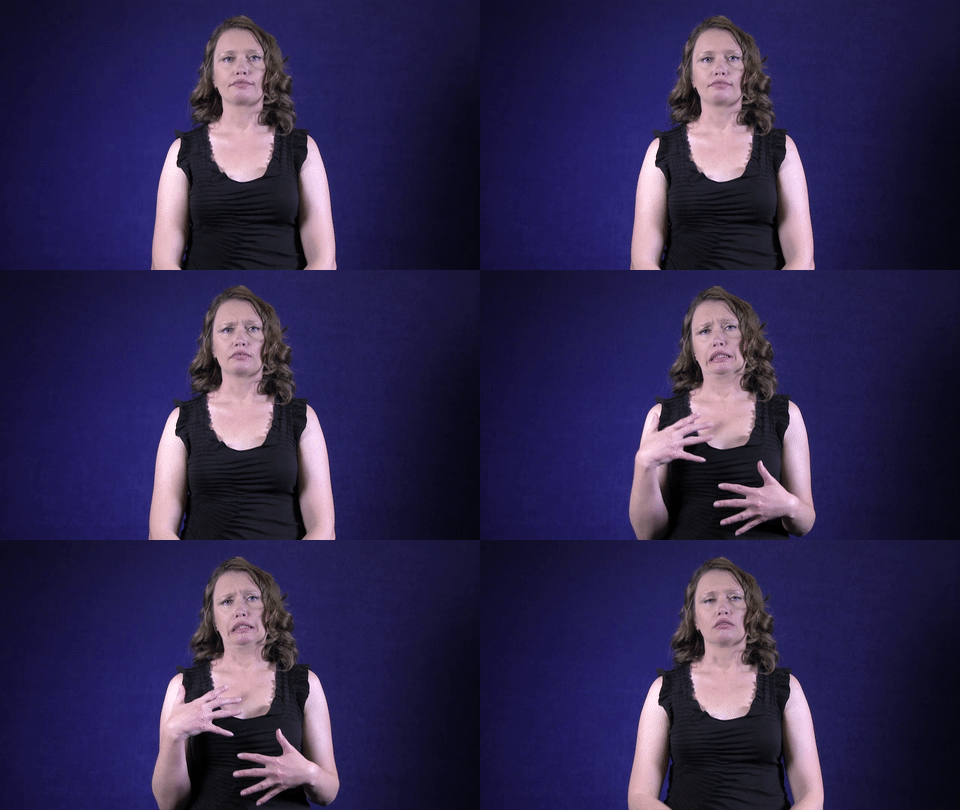
Definition: Feeling fear or anxiety.
Sign for AFRAID in ASL

Practice Activities:
Begin by practicing the sign for afraid in ASL slowly and repeatedly. Stand in front of a mirror to observe your handshape and movement. Try signing it with different facial expressions to convey varying levels of fear, from mild nervousness to intense fright.
Use the sign for afraid in ASL in short phrases. Try signing “I am afraid” or “You look afraid.” Then expand to full sentences like “The dog is afraid of loud noises.” Practice saying the sentence aloud in English while signing, then focus on signing without speaking to reinforce ASL sentence structure.
Create a list of common fears, such as spiders, heights, and the dark. Sign each fear using ASL and incorporate the sign for afraid in ASL into full thoughts like “She is afraid of snakes.” Challenge yourself by signing entire stories about fear, such as a moment when you felt scared.
Find a partner and play an emotion guessing game. One person signs an emotion without speaking, and the other guesses. When you sign afraid, exaggerate your facial expression for emphasis. Practice switching roles so both partners get comfortable expressing emotions clearly in ASL.
Watch a short scary scene from a movie and try to describe what happens using ASL. When characters show fear, incorporate the sign for afraid in ASL. If practicing with a partner, take turns re-enacting short moments from a suspenseful story using ASL to convey tension.
Incorporate the sign for afraid in ASL into a daily diary entry. Sign about when you felt nervous or scared that day, using ASL sentence structure. Signing about personal experiences will help reinforce memory and build fluency with emotional vocabulary.
Cultural Context:
In American Sign Language, the sign for afraid is an expressive gesture that captures the physical and emotional sensation of fear. ASL relies on facial expressions and body language to enhance meaning, and the sign for afraid often includes a startled or wide-eyed expression. This visual aspect makes ASL a deeply expressive language, emphasizing feelings along with signs.
The sign for afraid in ASL mimics the sudden reaction people have when startled. It involves both hands moving towards the center of the chest, as if reacting to a sudden scare. This movement helps convey the intensity of fear, making it a visually intuitive sign for both Deaf and hearing individuals learning ASL.
Facial expressions play a critical role in ASL, and the sign for afraid is no exception. A person signing afraid often raises their eyebrows or widens their eyes to match the intensity of the emotion. Without these expressions, the meaning of the sign may not be as clear, highlighting how ASL integrates both body language and hand signs to enhance communication.
The sign for afraid in ASL can be used in various contexts to express fear, nervousness, or anxiety. It can describe being jumpy after a sudden noise, a general sense of fear, or even mild apprehension in a situation. Because ASL users often adjust their facial expressions and movement speed, the intensity of the fear can be communicated effectively.
ASL is a visual language, so signs like the one for afraid rely heavily on body movement and expression. People who are new to ASL may find that practicing in front of a mirror helps improve the expressiveness of signs. The more a signer incorporates natural body language, the more fluid and understandable their signing will be.
Deaf culture embraces ASL not only as a tool for communication but also as a way to express emotions and personal experiences. The sign for afraid reflects this by visually showing how fear feels, making it a perfect example of how ASL embodies emotion. This makes ASL a deeply personal and meaningful language for those who use it daily.
ASL often uses space around the body to reflect different intensities of emotions. A small, hesitant movement of the sign for afraid might indicate minor nervousness, while a larger, exaggerated movement might indicate extreme terror. This flexibility allows ASL users to communicate not just words, but the depth of their emotions in a way that spoken languages often cannot.
The sign for afraid in ASL is one of many emotion-related signs that help convey feelings effectively
Extended Definition:
The sign for afraid in ASL expresses feelings of fear, anxiety, or nervousness. It is a common sign used in everyday conversations to communicate emotions related to being startled or scared. This sign can also be modified to indicate different levels of fear.
To sign afraid in ASL, both hands start open with fingers spread apart near the chest. The hands then move slightly inward while shaking, as if showing a sudden fright or shiver. The facial expression that accompanies this sign is essential for accurately conveying the intensity of fear.
Facial expressions play a crucial role in ASL and can change how the sign for afraid is understood. A mild look of concern may indicate slight nervousness, while wide eyes and raised eyebrows can intensify the meaning. Adding body movement, such as pulling back slightly, can also enhance the expression of fear.
The sign for afraid in ASL is often used when telling stories, especially those involving suspense or danger. It helps create vivid imagery when sharing personal experiences or discussing scary situations. Storytelling in ASL relies on expressive signs like this to make narratives engaging and clear.
This sign can be modified to indicate varying degrees of fear, from mild nervousness to extreme terror. For example, signing it with a smaller motion and a slight facial expression can suggest unease, while exaggerated movement can emphasize deep fear. ASL users often use context and exaggeration to communicate precise emotions.
Children learning ASL often pick up the sign for afraid early as they express new emotions. It helps them communicate feelings of uncertainty and fear, particularly in unfamiliar situations. Parents and educators can use this sign to teach emotional expression and help children describe their experiences.
In everyday conversations, the sign for afraid in ASL can be combined with other signs to express specific fears. For example, signing afraid along with “dark” can indicate a fear of the dark. This flexibility allows signers to personalize and clarify their emotions.
The sign for afraid is also used in ASL poetry and performances to convey deep emotions. Deaf storytellers and performers use expressive signing to create strong emotional connections with their audience. The combination of hand movements, facial expressions, and body language makes the message impactful.
Some regional variations of the sign for afraid in ASL may exist, though the general movement remains similar. ASL users may adapt certain signs slightly based on cultural or personal preference. Regardless of variation, the core concept remains universally understood within the deaf community.
Learning the sign for
Synonyms: scared, frightened, terrified, fearful, alarmed
Educational resources: Find related learning materials in our course bank!
Want more? Check out some of our popular learning activities on the homepage!
Need to look up a sign? Use our highly rated dictionary: https://aslinteractive.com/best-asl-dictionary/
Follow us on tiktok: https://www.tiktok.com/@aslinteractive. More social media links at the bottom of this page!
Long-tail Keywords: What is the ASL sign for afraid, how do you sign afraid in American Sign Language, afraid in ASL meaning and demonstration
Categories:
tags: emotions, feelings, language learning, describing emotions, reactions
Parameters
*Handshape*:
The sign for afraid in ASL uses both hands in an open “5” handshape. The fingers are spread apart, and the palms face inward toward the body. As the hands move toward the center of the chest, they change to a closed, slightly bent shape, as if reacting to sudden fear. The movement should appear quick and startled, reflecting the emotion. This expressive motion conveys the feeling behind the sign for afraid in ASL.
*Palm Orientation*:
The sign for AFRAID in ASL has both hands open with fingers spread apart. The palms face inward toward the chest, with one hand slightly higher than the other. As the hands move towards the center, they shake slightly to convey the feeling of fear or being startled. The movement mimics an involuntary reaction to sudden fright, reinforcing the meaning of the sign for AFRAID in ASL. The palms remain open throughout the motion.
*Location*:
The sign for afraid in ASL is located in front of the chest. Both hands begin in loose fists near the sides of the torso. As the motion progresses, the hands open up slightly and move toward each other in an abrupt, shaking motion. The location stays centered in front of the chest, reinforcing the idea of fear or being startled. Facial expression, such as widened eyes, can enhance the meaning.
*Movement*:
To sign for afraid in ASL, start with both hands open and fingers slightly curved. Position them near the sides of your chest, with palms facing inward. Quickly bring both hands toward the center of the chest while shaking slightly, as if startled or trembling. This movement represents the sudden feeling of fear or being startled. Facial expression is important—widen your eyes or raise your eyebrows to add emphasis.
*Non-Manual Signals*:
The sign for AFRAID in ASL includes non-manual signals that emphasize fear or sudden distress. The eyebrows are raised or furrowed, and the eyes may widen to reflect an anxious or startled expression . The mouth might open slightly or form a tense shape, reinforcing the emotion. The shoulders may lift slightly as if reacting to fear, enhancing the overall intensity of the sign.
*Prosody, Dominant/Non-Dominant Hand*:
The sign for AFRAID in ASL uses both hands. The dominant and non-dominant hands start in loose “5” handshapes near the chest. Both hands move inward and slightly downward while fingers spread apart, as if reacting to a sudden scare. The motion is quick and conveys a sense of being startled or frightened. Facial expression is important—wide eyes or a slight gasp can enhance the meaning of the sign.
Tips for Beginners:
The sign for AFRAID in ASL is all about expressing emotion with both your hands and facial expressions. To sign AFRAID, bring both open hands near your chest with palms facing in, then quickly pull them apart slightly while showing a startled or fearful face. The movement should feel natural, as if you were reacting to something that scared you.
When practicing the sign for AFRAID in ASL, make sure your hands move in a fluid and sudden motion to capture the element of fear. If the movement is too slow or stiff, it may change the meaning or make it unclear. A startled expression on your face helps reinforce the meaning and adds emphasis, making the emotion more visible.
A common mistake beginners make is failing to use facial expressions. Without raising your eyebrows or showing some level of distress on your face, the sign may not look convincing. ASL relies on facial grammar, so focus on making your emotions match the movement.
Hand positioning is also important. Keep your fingers spread apart slightly as you bring the hands near your chest, and ensure the movement is quick but not exaggerated. Avoid making the motion too rigid or too wide, as it might be misinterpreted.
Practice in front of a mirror or with a partner to refine the movement and facial expression. Recording yourself can also help identify any stiffness or missing emotional cues. The more natural and fluid your sign becomes, the more easily others will understand you.
The sign for AFRAID in ASL is perfect for storytelling, expressing emotions, or emphasizing fear in conversations. The more you immerse yourself in ASL, the more instinctive these expressive signs will become. Keep practicing, stay expressive, and have fun with your learning!
Connections to Other topics:
The sign for AFRAID in ASL connects closely with other emotions such as SCARED, NERVOUS, and WORRIED. These signs often share similar hand movements and facial expressions, reinforcing how emotions are conveyed not only through handshape but also through body language. The sudden, startled motion of the sign for AFRAID in ASL helps express a range of fear-based emotions, from mild anxiety to deep terror.
This sign is often combined with other signs to create compound or nuanced expressions. For example, combining the sign for AFRAID in ASL with the sign for DARK can express a fear of the dark, visually emphasizing the concept. Similarly, adding the sign for ALONE or DANGER can clarify what a person is afraid of, strengthening communication in deeper conversations.
The sign for AFRAID in ASL also plays a role in storytelling and dramatic expression. In ASL storytelling, signers may modify the speed and intensity of the sign to show increasing or sudden fear. This flexibility allows them to visually illustrate a shift in emotion, making it a useful sign for actors and performers in Deaf Theatre.
There are also connections between AFRAID and other physical responses to fear such as TREMBLE or HEART-POUND. These signs help depict how fear is experienced physically, creating a richer way to communicate emotions beyond just saying “I am afraid.” This emphasis on bodily expression is a key feature of ASL’s visual and spatial nature.
In conversations, classifiers and role shifting can enhance how the sign for AFRAID in ASL is used. A signer might show a character trembling, looking around anxiously, or jumping in fright by adjusting their posture and facial expressions. These elements help bring the emotion of fear to life, making ASL an expressive and dynamic language.
Summary:
The sign for AFRAID in ASL is highly expressive, capturing the emotional intensity associated with fear. The sign is made by bringing both hands up in front of the chest, fingers spread and slightly bent, then quickly moving them toward the center as if startled. This motion mimics the way a person might react when they are suddenly frightened, making it a visually intuitive representation of the emotion.
ASL is a visual language, and the sign for AFRAID in ASL perfectly conveys the involuntary reaction of fear. The sudden closing motion of the hands reflects a natural flinch or recoil, reinforcing its meaning. This sign is often accompanied by expressive facial features, such as raised eyebrows or widened eyes, to further indicate fear or shock.
Facial expressions play a crucial role in the interpretation of this sign. A subtle expression might indicate mild apprehension, while a more exaggerated movement and facial shift could signal terror. Since ASL relies heavily on non-manual markers, modifying facial expressions can dramatically refine the meaning.
In some contexts, the sign for AFRAID in ASL can be altered slightly to fit different nuances of fear. A smaller, more controlled motion can indicate hesitance or nervousness, while a dramatic, quick movement can show deep fear or panic. Mastering these modifications enhances fluency by allowing for more precise communication.
When signing AFRAID, the speed and intensity of the movement can shift based on the conversation. A slow, deliberate motion might show lingering fear, while a sharp, fast movement can indicate sudden fright. The flexibility of the sign allows for adaptability in various discussions about fear.
The ASL sign for AFRAID visually portrays the essence of fear, making it easily distinguishable from similar emotions like worry or anxiety. While worry may involve a more restrained or repetitive movement, AFRAID has a clear, single reaction. This differentiation allows signers to communicate emotions with great accuracy and nuance.
Culturally, fear and apprehension are common emotions that need to be frequently expressed. The sign for AFRAID in ASL is crucial in conversations about personal experiences, storytelling, and emergency situations. The ability to convey fear effectively in ASL is important in ensuring clear communication, particularly when discussing safety concerns.
In storytelling, AFRAID is often used to heighten dramatic tension. Whether recounting a ghost story or describing a shocking event, the sign’s expressive movement and associated facial expressions contribute to the overall emotional impact. Signers often pair AFRAID with body posture shifts to emphasize a character’s reaction.
The sign for AFRAID in ASL is commonly used alongside related signs such as SCARED, FEAR, WORRY, and NERVOUS. While these signs share a thematic connection, their precise hand movements and placements differ slightly. Comparing these signs highlights how ASL differentiates between overlapping emotions.
Some variations of the AFRAID sign exist depending on regional and community influences. While the general motion remains consistent, minor changes in hand positioning or intensity can be observed in different signing communities. These variations showcase the natural evolution of ASL based on cultural and contextual needs.
In discussions about mental health, the sign for AFRAID in ASL becomes particularly relevant. Many individuals use this sign to describe anxiety disorders, trauma responses, or phobias. Having an expressive and easily recognizable sign for emotions like fear supports meaningful dialogue about mental well-being.
The grammatical role of AFRAID within ASL syntax can change depending on how it’s structured in a sentence. It can function as an adjective describing a person’s state or be incorporated into broader expressions of emotion. ASL’s flexible sentence structure allows for dynamic ways to include AFRAID in conversations.
The intensity of the AFRAID sign can be grammatically modified when repeated or exaggerated. For instance, doubling the motion can indicate a prolonged or recurrent fear, similar to saying “very scared” in English. These grammatical variations add depth to ASL communication.
The role of classifiers can also affect how fear is depicted. While the sign for AFRAID in ASL is a standard gesture, signing fear in a descriptive way may involve body shifts, handshapes, or space use to show contextual fear. Classifiers allow signers to illustrate specific fearful scenes beyond just the basic sign.
In theatrical ASL performances, AFRAID is often emphasized through dramatic facial expressions and body language. Visual storytelling in ASL benefits from incorporating movement variations to portray fear convincingly. Professional performers practice refining these details to make their expressions more engaging and powerful.
Children learning ASL often acquire emotion-based signs early in their development. The sign for AFRAID in ASL is useful because it helps children communicate feelings of fear before mastering full sentences. Teaching emotional vocabulary promotes emotional expression and early language acquisition.
ASL learners often struggle with properly integrating non-manual signals with signs like AFRAID. Without the
Want more? Check out some of our popular learning activities!
ASL Interactive Resources
ASLInteractive YouTube Channel
Follow us on tiktok: @aslinteractive.com
Follow us on Instagram: aslinteractive
Facebook page: aslinteractive
Facebook group: aslinteractive
LInkedIn: ASL Interactive LLC
Twitter: @ASL_interactive
*Some information on this page is AI-generated. AI can make mistakes. Please check the information.


Responses