Sign for ALLOW in ASL | ✅ ASL Dictionary

Definition: To give permission for something.

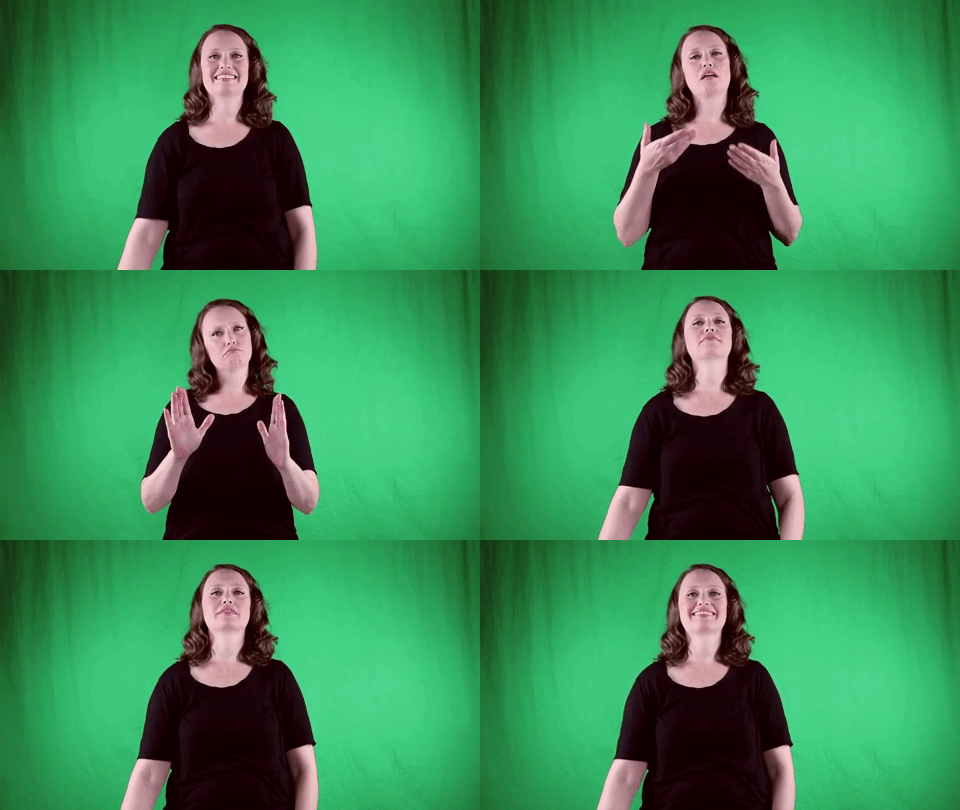
Sign for ALLOW in ASL 

YouTube player

Practice Activities:

Start by practicing the sign for allow in ASL in isolation. Repeat the movement slowly, ensuring that the motion is fluid and consistent. Try signing it in front of a mirror to check for accuracy, paying attention to hand placement and movement direction.

Practice using the sign for allow in ASL within simple phrases. Sign sentences like “My mom allows me to go out” or “The teacher allows phones in class.” Try forming your own sentences by thinking of situations where permission is given.

Engage in storytelling by describing a time when someone allowed or didn’t allow something. For example, share an experience about getting permission to stay out late or bringing a pet somewhere. Act out the story using facial expressions and role shifts to show who is allowing and who is receiving permission.

Work with a partner and role-play different permission-based scenarios. One person asks for permission using signs like “Can I go?” or “Can I eat?” while the other responds by signing allow or denying permission. Take turns playing each role to reinforce comprehension and expressive skills.

Increase your fluency by signing the word while speaking the equivalent in English. Alternate between signing slowly with exaggerated movement and speeding up while maintaining clarity. This will help reinforce muscle memory and allow for smoother transitions when using the sign in conversation.

Observe ASL conversations or videos online that use the sign for allow in ASL. Pay attention to how native signers incorporate it naturally within discussions. Try to mimic their pacing and incorporate similar sentence structures in your own signing.

Finally, challenge yourself by translating written sentences that include “allow” into ASL structure. Remove unnecessary words and focus on a fluid, natural way to communicate the concept directly using ASL grammar.

Cultural Context:

In American Sign Language, the sign for allow in ASL conveys permission, approval, or granting access. It is a common sign used in everyday conversations, from casual discussions to formal agreements. Understanding the cultural significance of this sign helps deepen communication skills in ASL.

Deaf culture places strong emphasis on visual communication, and the sign for allow in ASL is commonly used in educational, workplace, and social settings. It is often seen in discussions about rules, consent, or giving someone the freedom to act. Knowing how to sign allow in ASL correctly ensures clarity and prevents misunderstandings.

In Deaf communities, permission and autonomy are highly valued, making this sign important in expressing boundaries and agreements. Teachers use the sign for allow in ASL in classrooms to guide students, while parents use it at home to communicate expectations. The ability to express permission accurately helps ensure smooth and respectful interactions.

The sign for allow in ASL also appears in legal and advocacy discussions, emphasizing the importance of access and equal opportunity. Deaf individuals and their allies use this sign when discussing rights, accessibility, and inclusion. This makes it a significant term for those involved in social justice and advocacy efforts.

Using proper facial expressions when signing allow in ASL enhances meaning and ensures the message aligns with the context. A neutral or approving expression complements the sign, while a skeptical or questioning face may suggest hesitation. Mastering these nuances helps make communication in ASL more natural and effective.

Whether in formal or informal settings, the sign for allow in ASL is a valuable word in vocabulary development. It supports clearer conversations and strengthens connections within the Deaf and signing communities. Learning this essential sign contributes to respectful and effective communication.

Extended Definition:

The sign for allow in ASL is a useful verb that conveys permission, authorization, or the act of letting something happen. It is commonly used in conversations to indicate that someone has been granted consent to do something. This sign provides clarity in discussions about rules, regulations, and personal choices.

To sign allow in ASL, both hands are held palm-up, fingers together, and then moved forward slightly. The movement suggests granting permission or opening the way for something to occur. Facial expressions can add nuance to this sign, emphasizing the level of approval or reluctance.

This sign for allow in ASL can be used in different contexts depending on the situation. For example, it can show that a teacher permits students to work in groups or that a parent lets a child play outside. It is essential in workplace discussions, where permission is often required for specific tasks.

In social interactions, the sign for allow in ASL helps set boundaries and permissions. It can be used to confirm whether an action is acceptable, such as allowing guests to enter a space. This makes communication more efficient, especially in structured environments like schools, offices, and events.

The concept of permission is crucial in everyday life, and ASL provides a clear way to express it through this sign. It can also indicate whether rules have changed, such as when new policies allow for different behaviors. The sign adapts to a variety of situations, making it a practical addition to any ASL vocabulary.

When discussing rules and regulations, the sign for allow in ASL ensures clarity in enforcement and compliance. For instance, a supervisor may explain that company policies allow for flexible work hours. This helps streamline communication in professional and personal interactions.

Facial expressions and body language play a significant role in modifying the meaning of this ASL sign. A firm expression might suggest strict permission, while a relaxed face could imply leniency. These subtleties help convey tone and context without additional words.

Parents and caregivers frequently use the sign for allow in ASL when setting guidelines for children. It helps reinforce expectations in a visual and accessible manner. Children learning ASL can benefit from seeing this sign used consistently in everyday situations.

In legal and official matters, this sign reinforces discussions about rights and permissions. It can appear in conversations about laws that allow certain actions, such as voting or employment rights. This makes it valuable in advocacy and informational settings.

Learning the sign for allow in ASL enhances one’s ability to communicate

Synonyms: Let, Permit, Authorize, Approve, Grant

Educational resources: Find related learning materials in our course bank!

Want more? Check out some of our popular learning activities on the homepage!

Need to look up a sign? Use our highly rated dictionary: https://aslinteractive.com/best-asl-dictionary/

Follow us on tiktok: https://www.tiktok.com/@aslinteractive. More social media links at the bottom of this page!

Long-tail Keywords: what is the sign for allow in ASL, how do you sign allow in ASL, ASL sign for allow

Categories:

tags: Commands, Language Learning, Verbs, Everyday Activities, Basic Grammar

Parameters

*Handshape*:

The sign for ALLOW in ASL uses both hands in an open “B” handshape, with palms facing slightly upward. The hands start near the body and gently move outward, as if granting or giving permission. This movement conveys the meaning of allowing or permitting something to happen. The fluid motion emphasizes the idea of enabling or approving, making the sign for ALLOW in ASL visually intuitive and expressive.

*Palm Orientation*:

The palm orientation for the sign for ALLOW in ASL involves both hands in a flat “B” handshape, with palms facing slightly upward. The hands begin near the sides of the body and then move smoothly forward in a gesture that suggests giving permission or allowing something to happen. This movement emphasizes the concept of enabling or granting access, a central meaning of the sign for ALLOW in ASL.

*Location*:

The sign for ALLOW in ASL is made in the neutral space in front of the body, slightly above waist level. Both hands are open with palms facing up, starting near the torso. The hands move forward in an upward motion, as if presenting an opportunity or granting permission. This placement ensures clarity and visibility, making it easy to distinguish from similar signs in ASL.

*Movement*:

To produce the sign for allow in ASL, start with both hands in a flat “B” handshape, palms facing upwards. Position them in front of the body, slightly apart. Move both hands forward in a smooth, controlled motion, as if presenting or permitting something to go forward. The movement should be fluid, without abrupt stops. Facial expressions may vary depending on the context, reinforcing the meaning of the sign for allow in ASL.

*Non-Manual Signals*:

When using the sign for ALLOW in ASL, the facial expression should remain neutral or slightly affirmative, depending on context. A slight head nod conveys affirmation, while raised eyebrows can indicate a questioning tone. If emphasizing permission or encouragement, a gentle forward lean and an encouraging facial expression enhance meaning. Avoid furrowing the brows unless questioning or expressing skepticism. Proper non-manual signals help convey the intent behind the sign for ALLOW in ASL accurately.

*Prosody, Dominant/Non-Dominant Hand*:

The sign for ALLOW in ASL uses both hands in an open “B” handshape. The non-dominant hand remains steady, palm facing sideways, while the dominant hand moves forward in an upward, outward motion as if granting permission. This movement symbolizes bringing something into existence or granting access. Facial expression can emphasize the level of permission being given, with a firm or neutral expression reinforcing the meaning.

Tips for Beginners:

To master the sign for ALLOW in ASL, focus on fluidity and hand positioning. The movement should be smooth, with both hands slightly cupped and moving outward in a deliberate path. Keep your fingers relaxed but controlled to maintain accuracy and clarity in your signing.

One common mistake beginners make is being too stiff or rigid with their hand movements. The sign for ALLOW in ASL should have a natural, flowing gesture rather than appearing mechanical. Avoid jerky motions and practice transitioning smoothly between signs to improve fluency.

Pay attention to the direction of the movement, as it conveys important meaning. Moving your hands outward with an intentional release mimics the concept of giving or permitting. If your direction is off, the sign may become unclear or resemble other similar ASL signs.

Practice signing in front of a mirror to observe your hand shapes and ensure they match correct ASL form. You can also record yourself to compare with videos from native ASL signers. This helps catch any inconsistencies in your execution and boosts confidence when using the sign in conversations.

Context matters when using the sign for ALLOW in ASL. Be mindful of your facial expressions and body language, as these elements enhance meaning and make your message more natural. In ASL, non-manual markers play a crucial role in proper communication, so practice incorporating expressive components into your signing.

If you’re just starting out, practice in everyday situations where the concept of permission or allowance applies. For example, when letting someone borrow an item or allowing a friend to sit down, use the sign naturally. Daily use will reinforce muscle memory and improve your comfort with signing.

Connections to Other topics:

The sign for ALLOW in ASL connects closely with concepts of permission, access, and opportunity. It shares similarities with signs like PERMIT and LET, which convey the idea of granting approval. These phrases are often interchangeable depending on the context, making it important to consider intent when using the sign in conversations.

This sign also relates to compound signs that incorporate ideas of permission or prohibition. For instance, ALLOW combined with NOT or a negative facial expression can communicate disapproval or restriction. In contrast, modifying the movement or intensity of the sign can suggest various levels of permission, such as reluctantly allowing something or granting full access.

Understanding the sign for ALLOW in ASL also helps when discussing rules, legal permissions, and social expectations. Phrases like NOT ALLOWED or ALLOWED WITH CONDITIONS can be expressed clearly using ASL structures that emphasize negation, conditionals, and space to indicate constraints. These nuances are especially useful in conversations about contracts, agreements, or school and workplace guidelines.

In everyday communication, the sign for ALLOW in ASL can express parental permissions, job-related approvals, or personal boundaries. Parents may use this sign when discussing what behaviors are permitted for their children, while employees might use it to explain what policies allow them to take certain actions. This makes it a versatile sign that applies to many real-life situations.

This sign also ties into broader discussions of power and control, as giving or denying permission is fundamentally about authority. Learning how to modify facial expressions and sentence structure can add depth to conversations about rights and responsibilities. Mastering this sign enhances communication about societal norms, institutional policies, and personal choices, making it a valuable addition to anyone’s ASL vocabulary.

Summary:

The sign for ALLOW in ASL conveys the meaning of permission, granting access, or enabling someone to do something. It is generally produced with both hands held in a loose “B” handshape, palms facing upward, and moving forward in a smooth, controlled motion. The movement suggests an opening or offering gesture, symbolizing the idea of giving the go-ahead or allowing an action to proceed.

Context determines the precise interpretation of the sign for ALLOW in ASL, as it can be used for phrases like “You are allowed to go,” “I allow this,” or “They allow pets here.” Emphasis or modifications in facial expressions can further refine the meaning, making the sign more forceful, reluctant, or neutral depending on the situation. Some variations may involve slight directional shifts to indicate who is giving or receiving permission.

In ASL linguistics, the sign for ALLOW in ASL is classified as a verb that typically does not require additional movement modifications unless used in specific directional contexts. This means the subject and object may be implied within the general action of the sign rather than explicitly indicated through directional movement as in other ASL verbs. However, when the sign is accompanied by clear facial expressions or additional directional shifts, its meaning becomes more precise.

Cultural context plays an important role in the way the sign for ALLOW in ASL is understood. The concept of “allowing” is deeply tied to social structures, authority, and the idea of permission in various settings, from parenting to workplace environments. In Deaf culture, permission and accessibility are often discussed in relation to barriers, making this sign a crucial part of conversations around inclusion and rights.

ASL grammar does not rely on verb conjugations as spoken English does, so the sign for ALLOW in ASL remains consistent regardless of tense or subject. However, additional signs such as “PAST” or “FUTURE” can be used to indicate when something was or will be allowed. Contextual elements such as facial expressions and sentence structure signal whether the sign is used as a request, a statement, or a command.

There are related signs that may be used interchangeably or in similar contexts, such as PERMIT and LET. While PERMIT is often signed similarly, its connotation may feel more formal or official, whereas LET is more casual. Understanding these distinctions is important for ensuring proper communication and intent within ASL discourse.

Situational meaning influences how the sign for ALLOW in ASL is used, particularly in legal, educational, or social contexts. In legal settings, it may refer to an official allowance, such as “The law allows this action.” In family or personal contexts, it may refer to personal permissions, such as “My parents allow me to stay out late.” The sign adapts to these different meanings based on facial expressions and accompanying signs.

When signing questions related to permission, the sign for ALLOW in ASL is commonly combined with the sign for “CAN” or a raised eyebrow expression to indicate inquiry. For example, “Are you allowed to leave?” would involve a questioning facial expression paired with the sign for ALLOW. This flexibility makes the sign useful in interactive communication situations where permission is being negotiated or confirmed.

Facial expressions and body language are critical in modifying the intent behind the sign for ALLOW in ASL. A firm or exaggerated motion may indicate strong permission, while a hesitant or slowed movement may suggest reluctance. ASL users rely on these non-manual signals to clarify degrees of permission, similar to tone of voice in spoken language.

The historical development of permission-related signs in ASL reflects broader societal shifts regarding access and authority. As laws and cultural norms have evolved, so have the ways in which Deaf individuals discuss permission, rights, and autonomy. The sign for ALLOW in ASL remains an essential tool for discussing issues of accessibility, inclusion, and personal freedom.

The sign for ALLOW in ASL can also be adapted for poetic or artistic ASL performances. In storytelling, expressive variations might incorporate larger movements to emphasize granting access or withdrawing permission dramatically. This ability to modify the sign for artistic effect highlights the flexibility of ASL as a visual language rich in expression.

Children learning ASL may use the sign for ALLOW in ASL early in language development as they begin to understand permission. Parents and teachers use this sign frequently to establish boundaries and teach social expectations, making it a foundational concept in ASL acquisition. Reinforcing the meaning through consistent context helps young signers grasp the concept of permission.

The sign for ALLOW in ASL is particularly significant in educational environments where discussions about permissions and accommodations occur frequently. Deaf students and educators use this sign to communicate about access to resources, classroom policies, and special allowances. Its role in ensuring fairness and equity in academic spaces underscores its practical importance.

In discussions about accessibility, the sign for ALLOW in ASL is often used when

Want more? Check out some of our popular learning activities!

ASL Interactive Resources

ASLInteractive YouTube Channel

Follow us on tiktok: @aslinteractive.com

Follow us on Instagram: aslinteractive

Facebook page: aslinteractive

Facebook group: aslinteractive

LInkedIn: ASL Interactive LLC

Twitter: @ASL_interactive

*Some information on this page is AI-generated. AI can make mistakes. Please check the information.

sign for ALLOW in ASL

Responses