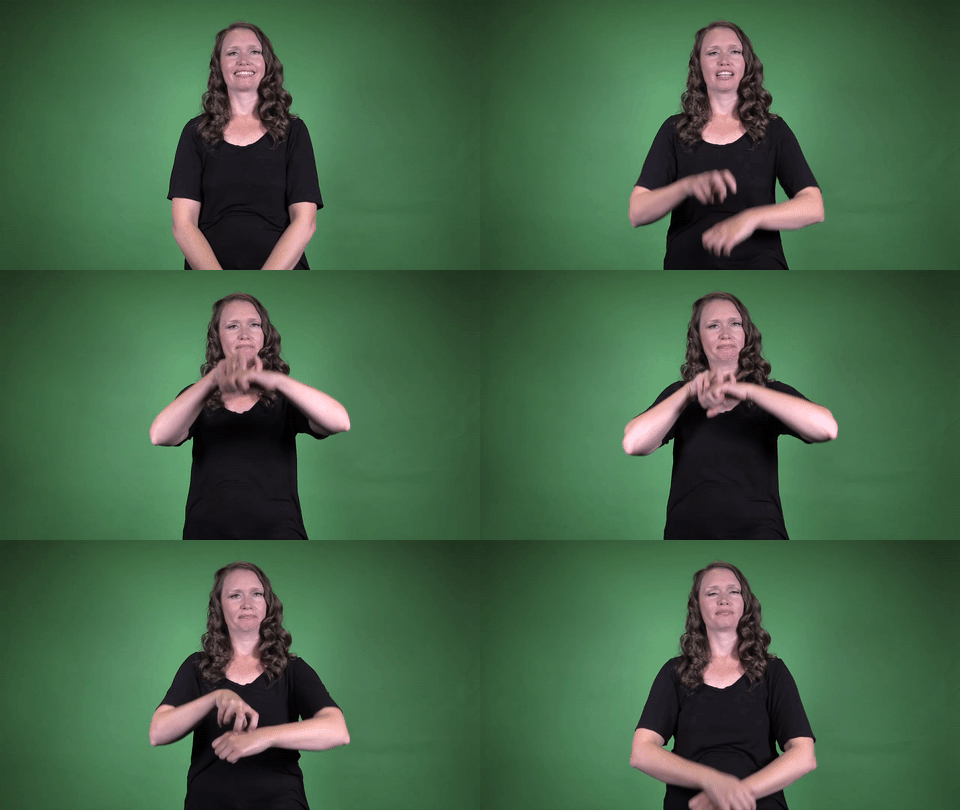
Definition: A park with various rides and attractions.
Sign for AMUSEMENT PARK in ASL

Practice Activities:
Practicing the sign for amusement park in ASL can be fun and engaging. Start by signing it in isolation several times, focusing on handshape, movement, and facial expressions. Use a mirror or record yourself to compare accuracy.
Integrate the sign for amusement park in ASL into simple sentences. Try signing “I love going to the amusement park” or “The amusement park has many rides.” Practice conveying excitement through facial expressions.
Engage a partner in a role-play where one person asks, “Do you want to go to the amusement park?” and the other responds with enthusiasm or hesitation. Switch roles to practice both asking and answering.
Use storytelling prompts to expand your fluency. Describe a day at an amusement park, mentioning roller coasters, food stands, and games. Include signs for emotions, describing how rides made you feel.
Watch videos of native signers discussing amusement parks to reinforce correct signing. Imitate their pace and expression to enhance natural communication. Try signing along while watching.
Create a game using the sign for amusement park in ASL. Write various amusement park-related words and act them out while incorporating this sign into sentences. This will help reinforce fluency and recall.
Practice signing in public settings where amusement parks are discussed. If possible, visit a real amusement park and sign about what you see. This real-world application strengthens retention and confidence.
Challenge yourself by incorporating classifiers to describe different parts of an amusement park. Use handshapes to represent a Ferris wheel, roller coaster, or ticket booths. This will enhance descriptive skills in ASL.
By using different methods such as role-play, sentence creation, and real-world practice, signing amusement park fluently will become second nature. Keep practicing regularly and immerse yourself in signing whenever possible.
Cultural Context:
An amusement park is a place filled with thrilling rides, fun games, and delicious treats. Families and friends gather to enjoy roller coasters, Ferris wheels, and water slides. The sign for amusement park in ASL helps Deaf and hard-of-hearing individuals discuss trips to these exciting destinations.
Amusement parks are popular across the United States, with major attractions like Disneyland, Six Flags, and Universal Studios. Many amusement parks now offer accessibility options, making the experience more inclusive for Deaf guests. Knowing the sign for amusement park in ASL allows for better communication when planning a visit.
For Deaf children, visiting an amusement park can be a magical experience. They can enjoy interactive shows, character meet-and-greets, and thrilling rides. Learning the sign for amusement park in ASL helps them express their excitement and plan fun outings with family and friends.
In Deaf culture, communication is key when navigating public spaces. Using the sign for amusement park in ASL ensures that Deaf visitors can share their experiences and ask for assistance when needed. Theme parks with ASL interpreters make the visit even more accessible for Deaf guests.
Many amusement parks now incorporate visual and sensory-friendly attractions. Fireworks, parades, and light shows provide a unique experience for Deaf visitors. Knowing the sign for amusement park in ASL is helpful when discussing these events and making plans for the day.
Amusement parks bring people together to celebrate special occasions like birthdays and holidays. Deaf individuals can fully participate in the excitement when they communicate using the sign for amusement park in ASL. This helps create lasting memories with family and friends.
As accessibility improves, more amusement parks are providing ASL interpretation for shows and performances. Some even offer video guides in sign language to ensure everyone enjoys the attractions. Learning the sign for amusement park in ASL makes visiting these places more comfortable and inclusive.
Traveling to an amusement park often requires planning and coordination. Using the sign for amusement park in ASL makes it easier to discuss transportation, ticket prices, and ride wait times. Clear communication helps ensure a smooth and enjoyable experience for everyone involved.
Food is a big part of the amusement park experience, from cotton candy to funnel cakes. Deaf visitors can use ASL to order food and ask about dietary options. Knowing the sign for amusement park in ASL enhances conversations about favorite treats and dining choices.
When visiting an amusement park, safety is a top priority. Deaf guests can ask for help, find lost
Extended Definition:
An amusement park is a fun-filled place designed for entertainment, featuring thrilling rides, games, and attractions for all ages. In American Sign Language, the sign for amusement park combines meaningful gestures to convey the excitement and joy of such places. Knowing how to sign amusement park in ASL can be helpful when planning outings, sharing experiences, or discussing favorite attractions.
The sign for amusement park in ASL typically involves using the sign for “fun” followed by the sign for “park.” The sign for fun uses two fingers in a “U” handshape, touching the nose and then tapping the other hand in the same shape. The sign for park can vary, but it often resembles the sign for an outdoor space or location.
Amusement parks include roller coasters, ferris wheels, water rides, and carnival games, making them exciting destinations. When signing amusement park in ASL, facial expressions play a big role in conveying excitement. Adding a smile or an enthusiastic expression enhances the meaning and helps communicate the thrill of visiting an amusement park.
Expressing amusement park in ASL is useful in conversations about weekend plans, family vacations, and favorite attractions. People who love theme parks, state fairs, or carnivals can use this sign to share their experiences. Whether talking about Disneyland, Six Flags, or a local fair, signing amusement park in ASL makes discussions more engaging.
In Deaf culture, amusement parks often offer accessibility options like visual alerts or interpreters for entertainment shows. Using the sign for amusement park in ASL can help Deaf visitors find information about accessible attractions. Practicing this sign ensures clear communication and enhances social interactions within the Deaf community.
Children especially enjoy places like amusement parks because of rides, treats, and games designed to entertain them. Teaching kids how to sign amusement park in ASL can increase their communication skills and make planning fun outings easier. Parents, teachers, and interpreters can use this sign to encourage discussions about amusement park visits.
Social media posts about fun trips, theme park adventures, and roller coaster thrills can include ASL vocabulary. Using amusement park in ASL when sharing sign language videos helps promote ASL education and accessibility. It also connects sign language users with others who share a love for amusement parks and entertainment.
Learning signs related to entertainment and travel, such as amusement park, helps expand ASL vocabulary. It allows both Deaf and hearing individuals to communicate effectively about fun activities. Practicing amusement park in ASL with friends or in
Synonyms: theme park, carnival park, funfair, attraction park, adventure park
Educational resources: Find related learning materials in our course bank!
Want more? Check out some of our popular learning activities on the homepage!
Need to look up a sign? Use our highly rated dictionary: https://aslinteractive.com/best-asl-dictionary/
Follow us on tiktok: https://www.tiktok.com/@aslinteractive. More social media links at the bottom of this page!
Long-tail Keywords: What is the sign for amusement park in ASL?, How do you sign amusement park in ASL?, Learn the ASL sign for amusement park
Categories:
tags: amusement park, activities, transportation, family, vacation
Parameters
*Handshape*:
The sign for amusement park in ASL uses a combination of handshapes to convey the concept. The sign for “amusement” is often represented with both hands forming a modified “10” handshape, brushing up the sides of the chest. For “park,” you may fingerspell the word or use a modified “P” handshape, tapping it onto the non-dominant palm. Together, these elements form the complete sign for amusement park in ASL, effectively communicating the idea.
*Palm Orientation*:
The palm orientation for the sign for amusement park in ASL varies depending on the components of the sign. For “amusement,” the dominant hand typically has the palm facing inward as it moves in a brushing motion near the chest. For “park,” the dominant hand often forms a classifier representing a vehicle moving into a stationary position, with the palm orientation adjusting based on direction. Together, these elements create the full meaning of the sign for amusement park in ASL.
*Location*:
The sign for amusement park in ASL is produced in the neutral space in front of the body. The dominant hand moves in a way that symbolizes fun or excitement, often using the sign for “fun” followed by a circular motion representing an area. The signing space is near the upper chest and extends outward slightly to depict the concept of an entertainment location. The movement helps convey the lively nature of an amusement park in ASL.
*Movement*:
To sign for amusement park in ASL, start by signing “amusement” using both open hands with palms facing inward, brushing the thumbs up the chest alternately. Then, for “park,” form a “P” handshape with the dominant hand and tap it on the open non-dominant palm twice. This sign combines elements to represent a place of entertainment, making it visually clear.
*Non-Manual Signals*:
Facial expressions play a crucial role in conveying excitement when using the sign for amusement park in ASL . The eyebrows may be slightly raised, and the mouth can form a small smile or an expression of enjoyment. Head movement, such as a slight tilt or nod, can add to the lively feel of the sign.
The sign for amusement park in ASL benefits from expressive body language, reinforcing feelings of joy and energy. A playful or enthusiastic facial expression can enhance the sign’s meaning, making it clear that the place being referred to is fun and lively. Slight shoulder movements can also add a sense of excitement.
*Prosody, Dominant/Non-Dominant Hand*:
The sign for AMUSEMENT PARK in ASL typically involves two distinct parts: “fun” and “park.” To sign “fun,” use your dominant hand in a “U” handshape and bring it from your nose downward to tap your non-dominant “U” handshape. For “park,” fingerspell P-A-R-K or use a classifier to indicate an area. Both hands are engaged in fluid motion, ensuring an expressive, clear representation of the concept.
Tips for Beginners:
When learning the sign for amusement park in ASL, focus on fluidity and accuracy. This sign typically combines the sign for “fun” with “park,” so practicing each component separately can help. Once comfortable, smoothly transition between the two signs to maintain natural rhythm and clarity.
Handshape and movement precision are essential for signing amusement park correctly. Ensure the dominant hand forms the correct shape for “fun,” moving from the nose outward, then smoothly integrate “park” by positioning your non-dominant hand as a flat base with the dominant hand “placing” something on it. Avoid choppy movements, which can make the sign look unnatural.
Exaggerating facial expressions can enhance clarity when using the sign for amusement park in ASL. Amusement parks are associated with excitement, so an animated expression can add meaning and improve communication. If signing in a conversation, ensure your emotions match the topic by smiling or showing enthusiasm.
One common mistake is confusing “park” with similar signs like “parking” or “forest.” To avoid this, emphasize the proper hand placement and movement. Beginners sometimes rush through the second part of the sign, leading to misunderstandings, so slowing down initially can help develop muscle memory.
Watching native signers or instructional videos can reinforce correct movements. Practicing in front of a mirror is also helpful for self-correction. If possible, ask a fluent ASL user for feedback to ensure accuracy and fluency. The more you incorporate the sign into real conversations, the more natural it will feel.
Finger spelling is an option in rare cases, but the established sign is preferred for fluid communication. If uncertain about the sign for amusement park in ASL, clarify by signing “fun” and spelling “P-A-R-K” until you master the full sign.
Connections to Other topics:
The sign for amusement park in ASL connects with signs related to entertainment, leisure, and activities associated with fun. The concept of amusement can relate to other words like fun, exciting, or joy, which use expressive facial features to emphasize emotion. The word park relates to open spaces, which can also connect with signs for playground, forest, or zoo, depending on location.
This sign also builds on the idea of places designed for entertainment, linking it with signs for carnival, fair, and theme park. Many amusement parks have rides, so signs like roller coaster or merry-go-round may appear in related discussions. Additionally, amusement parks often include food-related activities, which can bring in signs for snacks, cotton candy, or popcorn.
Compounded or derived phrases such as theme park or water park extend from the primary concept of amusement park, incorporating related signs like water or themed concepts such as Disney or rollercoaster. Theme parks often have specific attractions connected to characters or genres, so signs for characters like Mickey Mouse or superhero may naturally appear in conversation. Visiting amusement parks can also link to signs related to travel, such as ticket, admission, or waiting line.
Facial expressions and classifiers play an essential role in conveying the excitement and movement involved in discussing amusement parks. Classifiers representing different types of rides, crowds, or structures help depict the setting in storytelling. The sign for amusement park in ASL invites broader discussions about activities, experiences, and social events, making it a dynamic concept in conversational ASL.
Summary:
The sign for amusement park in ASL captures both the fun-filled nature of the location and its purpose as a recreational space. It often integrates elements from signs for “fun” or “ride,” emphasizing the thrilling rides and entertainment experiences found at an amusement park. Some variations incorporate signs that mimic the motion of roller coasters or carousels, visually representing the excitement inherent in a visit to the park.
ASL signs are deeply rooted in visualization and context, making the sign for amusement park in ASL an engaging representation of the concept. Instead of merely spelling out the words, the sign draws from gestures that express enjoyment and the physical motion of rides. This makes the concept accessible to Deaf individuals, allowing them to immediately connect the sign with personal experiences of amusement parks.
Linguistically, the sign for amusement park in ASL can be considered a compound sign since it relies on other existing ASL signs to convey its meaning. Some variations break it down into two distinct signs—one for “fun” and another for “park,” while others use classifiers to illustrate movement patterns. Depending on the context, classifiers such as CL:V or CL:B might be used to describe roller coasters, Ferris wheels, or other park attractions.
Beyond its linguistic structure, amusement parks occupy an important place in Deaf culture, as many are accessible to Deaf visitors. Some amusement parks offer interpreters for live performances, making the experience more inclusive. The concept of amusement parks as communal gathering places resonates within the Deaf community, where accessibility and inclusivity are central concerns.
Applying the sign for amusement park in ASL in a conversational context requires understanding the visual and cultural aspects of signing. A signer may modify the sign’s movement or expression to emphasize excitement, anticipation, or fun. Facial expressions in ASL play a critical role, so a signer might exaggerate enthusiasm when discussing an upcoming amusement park visit.
ASL classifiers allow for detailed visual descriptions of amusement parks, making them a valuable asset when discussing a park’s features. CL:V can mimic people moving on a ride, while CL:B can represent structures like a Ferris wheel or roller coasters. These classifiers supplement the core sign, enhancing ASL’s descriptive capacity.
In a broader linguistic sense, the sign for amusement park in ASL highlights how ASL conveys abstract and concrete ideas effectively. English words often rely on lengthy explanations to describe amusement park rides, but ASL can express the same concepts visually, making communication more efficient. This efficiency is a hallmark of ASL, where visual-spatial language provides immediate clarity.
The evolution of the sign for amusement park in ASL mirrors changes in amusement industry trends. As new rides and experiences emerge, ASL naturally adapts, incorporating new classifiers and sign variations. This organic development underscores ASL’s dynamism and adaptability, as the language reflects shifts in cultural experiences.
In educational settings, teaching the sign for amusement park in ASL introduces learners to how ASL represents physical environments. It also creates opportunities to discuss broader topics such as Deaf accessibility in public spaces. Educators often pair this sign with discussions on how Deaf individuals navigate amusement parks and engage with entertainment venues.
Deaf-friendly amusement parks and events illustrate how inclusivity enhances enjoyment for all visitors. Parks that provide interpreters for shows, visual alerts for ride safety, and accessible ride instructions are especially appreciated by the Deaf community. The sign for amusement park in ASL thus connects to advocacy efforts for greater accessibility in recreational venues.
Storytelling in ASL benefits greatly from the dynamic nature of signs like the sign for amusement park in ASL. A storyteller using ASL can vividly describe the ups and downs of roller coasters, the spinning motion of rides, and the joyful atmosphere of an amusement park. Through the use of classifiers, facial expressions, and motion, ASL brings experiences to life in a way that spoken language cannot replicate directly.
When discussing past experiences related to amusement parks in ASL, signers often modify the sign’s speed, intensity, or direction to indicate personal excitement or fear. These modifications add depth to conversations, allowing for greater emotional nuance. This flexibility in ASL highlights how expressive the language can be in storytelling and everyday interactions.
The amusement park experience also raises important considerations about how Deaf individuals engage with public spaces. From purchasing tickets to understanding safety instructions, accessibility influences the overall experience. The discussion about the sign for amusement park in ASL naturally extends into real-life advocacy work for improved accommodations.
Variations of the sign for amusement park in ASL exist among different regions, reflecting the diversity of ASL users. Some signers may incorporate local signs for specific amusement park names, while others may adjust handshapes based on community preferences. Recognizing these variations deepens one’s understanding of how ASL evolves within different Deaf communities.
Social media plays an interesting role in the spread of ASL terminology related to attractions like amusement parks. Deaf vloggers
Want more? Check out some of our popular learning activities!
ASL Interactive Resources
ASLInteractive YouTube Channel
Follow us on tiktok: @aslinteractive.com
Follow us on Instagram: aslinteractive
Facebook page: aslinteractive
Facebook group: aslinteractive
LInkedIn: ASL Interactive LLC
Twitter: @ASL_interactive
*Some information on this page is AI-generated. AI can make mistakes. Please check the information.


Responses