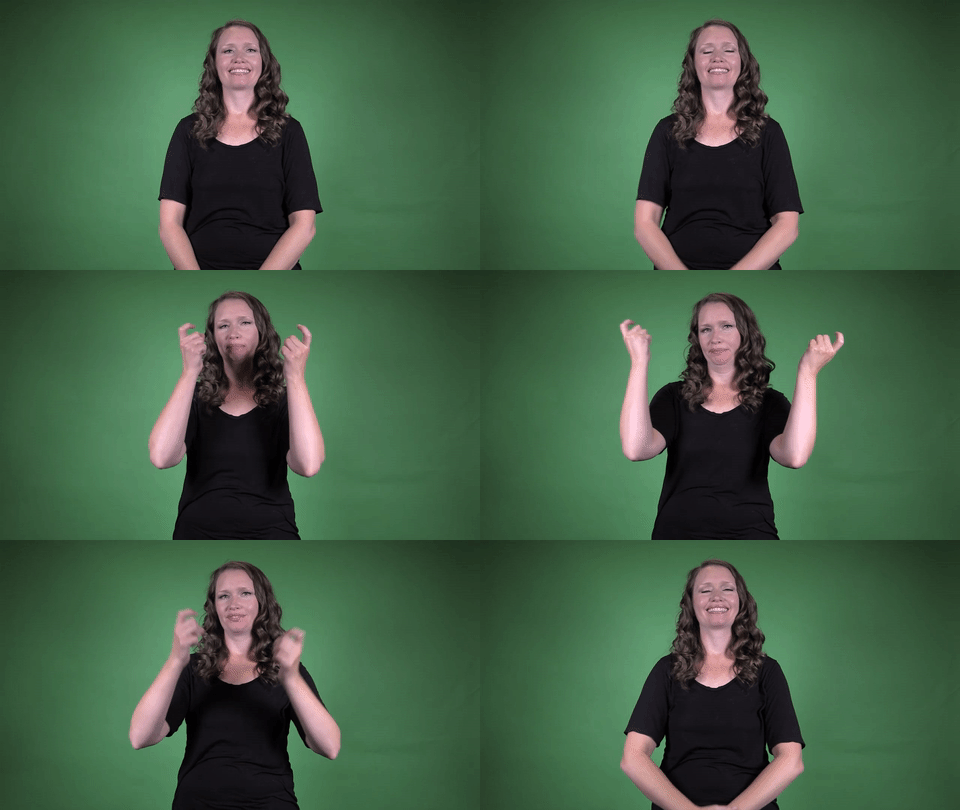
Definition: The celebration of a date marking an event.
Sign for ANNIVERSARY in ASL

Practice Activities:
Begin by practicing the sign for anniversary in ASL in isolation. Stand in front of a mirror and repeat the movement several times while focusing on hand position and motion. Try signing at different speeds to gain fluidity and confidence.
Use the sign for anniversary in ASL in simple sentences. For example, sign “My parents’ anniversary is next week” or “We celebrate our anniversary every year.” Record yourself and compare your sign accuracy with an ASL dictionary or learning resource.
Practice incorporating the sign for anniversary in ASL into a short story. Imagine you are telling a friend about a couple celebrating a big milestone. Include related signs such as year, celebrate, love, and gift to expand your vocabulary.
Pair up with a practice partner and take turns asking and answering questions about anniversaries. Ask, “When is your anniversary?” or “How long have you been married?” Respond using full ASL sentences to strengthen conversational skills.
Engage in a role-playing activity where one person pretends to plan an anniversary party while the other reacts and asks questions. Use expressions and body language to enhance communication and make the conversation more natural.
Watch ASL videos that discuss anniversaries and try to pick out the sign in context. Pause and replicate the movement every time you see it. This will help with recognition and recall when engaging in real-world conversations.
Create a short video greeting for a couple celebrating their anniversary. Sign a message like “Happy anniversary! Wishing you many more years together.” Share it with a friend for feedback or post it in a learning group for encouragement.
Cultural Context:
The sign for anniversary in ASL is a widely used expression in the Deaf community to celebrate milestones and special occasions. Whether marking a wedding anniversary, a work anniversary, or an important event, this sign brings people together in recognition of time passed and achievements made. It is an essential word in ASL vocabulary that helps express joy and appreciation.
In Deaf culture, celebrations often include visual elements like decorations, videos, and expressive ASL storytelling. The sign for anniversary in ASL is frequently used in storytelling and announcements at gatherings. Signing this word correctly adds to the overall richness of communication in the Deaf community.
Many families and friends use the sign for anniversary in ASL to acknowledge special dates and remember meaningful moments. It is important in social gatherings, whether in-person or through video chats. The Deaf community values clear, expressive communication, and this sign helps make celebrations more inclusive.
The sign for anniversary in ASL is also used in formal settings such as workplace celebrations and organizational milestones. Deaf employees and business owners often use this sign during events to recognize professional achievements. Signing anniversary correctly shows respect for both language and culture in these important moments.
Learning the sign for anniversary in ASL is a great way to connect with Deaf friends and colleagues. Whether attending a party, celebrating a relationship, or marking a milestone, this sign fosters connection and understanding. Using ASL to honor anniversaries strengthens relationships and promotes inclusivity.
The Deaf community embraces traditions that emphasize visual and spatial communication. The sign for anniversary in ASL is an example of how language adapts to express emotions and mark significant events. Incorporating ASL into celebrations highlights the cultural beauty of signed language.
From small personal milestones to major anniversaries, this ASL sign helps convey happiness and recognition. Families, organizations, and schools often use it when hosting events for Deaf and hard-of-hearing individuals. Its use helps make special moments feel even more meaningful.
The sign for anniversary in ASL plays a vital role in making celebrations more accessible. Visual languages like ASL ensure that everyone can participate fully in joyous occasions. Understanding and using this sign encourages inclusion and cultural awareness in different settings.
Embracing ASL vocabulary, including the sign for anniversary in ASL, shows commitment to effective communication. It allows both Deaf and hearing individuals to celebrate together without barriers. Using this sign appropriately enriches conversations and enhances meaningful interactions.
As ASL continues to gain recognition, learning key vocabulary like the sign for anniversary
Extended Definition:
The sign for anniversary in ASL is a beautiful and expressive way to mark a special date. It is commonly used to celebrate milestones such as wedding anniversaries, work anniversaries, or even the anniversary of an important event. This sign helps express the joy and significance of remembering a momentous occasion.
To sign anniversary in ASL, you typically use one hand in an arc movement, similar to how year is signed. This represents the passing of another year. The motion reinforces the idea of time and continuity, making this sign deeply symbolic.
Anniversaries hold a special place in many cultures, and ASL provides a visual way to acknowledge them. Whether it’s a couple celebrating their years together or a workplace honoring an employee, the sign for anniversary in ASL brings recognition to these significant moments. Signing anniversaries strengthens connections and makes celebrations more inclusive for the Deaf community.
People often use this sign in combination with other signs to provide more context. For example, signing wedding before anniversary clarifies that the occasion being celebrated is a wedding anniversary. This flexibility in ASL allows fluent communication when discussing different types of anniversaries.
Using the sign for anniversary in ASL can make greetings and celebrations more meaningful. Whether in personal interactions or formal speeches, signing anniversary along with a warm facial expression adds emotional depth. It’s a great way to include Deaf friends and family in moments of joy.
Learning to sign anniversary in ASL is useful for interpreters, teachers, and anyone interacting with the Deaf community. It shows respect and effort in making communication more accessible. Simple gestures like this help foster a more inclusive society.
Social media and video platforms have made it easier to share ASL signs with a broader audience. Signing anniversary in ASL on special occasions can help spread awareness of Deaf culture. It encourages more people to learn and appreciate the beauty of ASL.
Whether you’re attending an anniversary party, congratulating a friend, or marking a personal milestone, knowing how to sign anniversary in ASL is a valuable skill. It enhances communication and ensures everyone can take part in the celebration. Learning ASL signs like this one strengthens connections and deepens understanding.
Synonyms: celebration, commemoration, milestone, jubilee, observance
Educational resources: Find related learning materials in our course bank!
Want more? Check out some of our popular learning activities on the homepage!
Need to look up a sign? Use our highly rated dictionary: https://aslinteractive.com/best-asl-dictionary/
Follow us on tiktok: https://www.tiktok.com/@aslinteractive. More social media links at the bottom of this page!
Long-tail Keywords: what is the sign for anniversary in ASL, how do you sign anniversary in ASL, anniversary sign language translation
Categories:
tags: Anniversary, Occasions, Family, Relationships, Celebrations
Parameters
*Handshape*:
The sign for anniversary in ASL uses the “X” handshape on both hands. Both hands start near the shoulders with palms facing inward, then move in small, upward circular motions as if celebrating a yearly event. This movement mimics the idea of time passing in a repeating cycle. The sign for anniversary in ASL visually represents the notion of commemorating a special date with a recurring motion, much like the passage of years.
*Palm Orientation*:
The palm orientation for the sign for ANNIVERSARY in ASL typically involves both hands forming the number one handshape with palms facing outward. The dominant hand may make a small circular motion near the shoulder or chest. Sometimes, the dominant hand rotates slightly while maintaining an upward-facing palm orientation, symbolizing the passage of time. This movement represents the cyclical nature of an anniversary celebration in ASL. ✨
*Location*:
The sign for anniversary in ASL is produced near the shoulder area. The dominant hand starts in an upright “S” handshape and moves in a small circular motion near the shoulder. This location is important for clarity and distinguishes it from other similar signs. The movement near the shoulder helps convey the celebratory nature of an anniversary, reinforcing the concept visually. Proper sign placement ensures that it is easily recognizable within ASL conversations.
*Movement*:
To sign for anniversary in ASL, form both hands into the “A” handshape (a fist with the thumb resting on the side). Start near the shoulders with palms facing forward. Move the hands upward in a small circular motion, then back down to their original position. This motion mimics the movement used to sign “year,” symbolizing the passage of time. The sign for anniversary in ASL visually represents the idea of a yearly celebration.
*Non-Manual Signals*:
Facial expressions for the sign for ANNIVERSARY in ASL typically reflect warmth and positivity, often with a slight smile to show celebration. The eyebrows may be slightly raised to indicate excitement or recognition of the event. Head movement can include a small nod to reinforce the importance of the anniversary.
Context plays a role in non-manual signals, as a more emotional or sentimental tone may include softened eyes or even a nostalgic expression. If acknowledging a significant milestone, the signer’s shoulders may subtly lift in enthusiasm. These cues enhance the meaning of the sign for ANNIVERSARY in ASL, making it more expressive and engaging.
*Prosody, Dominant/Non-Dominant Hand*:
The sign for ANNIVERSARY in ASL uses the dominant hand in an “A” handshape. The hand moves in a small circular motion above the shoulder, mimicking the movement used in the sign for “YEAR.” This movement represents the passage of time. The non-dominant hand is not used in this sign. The sign for ANNIVERSARY in ASL is similar to the sign for “CELEBRATE,” sharing a joyful and commemorative motion.
Tips for Beginners:
When learning the sign for ANNIVERSARY in ASL, focus on the movement and handshape accuracy. The sign is similar to the motion for CELEBRATE but typically involves a controlled circular movement near the shoulders. Keeping your motions smooth and deliberate helps improve fluency.
A common mistake beginners make is performing the motion too quickly or with exaggerated movement. Instead, ensure your hands move naturally as if emphasizing a meaningful occasion. Consistency in hand placement is key, as positioning too high or too low can cause confusion with similar signs.
Finger dexterity and arm relaxation play an important role in making the sign for ANNIVERSARY in ASL look natural. Avoid stiff or overly tense motions, and practice keeping your hands relaxed to prevent an awkward or robotic motion. Using a mirror or recording yourself can help identify any needed adjustments.
Since this sign often comes up in conversations about relationships and milestones, practicing it in context will reinforce memory. Try signing it while talking about special dates, like work anniversaries or marriage celebrations, to solidify recall. Engaging in conversations with fluent signers will also help improve fluency and confidence.
If you’re struggling, break down the motion into steps and practice slowly before increasing speed. Watching native ASL signers can also improve your understanding of the sign’s fluidity. If needed, ask a Deaf signer or ASL instructor for feedback to refine your technique.
Lastly, be expressive when using the sign for ANNIVERSARY in ASL. Since anniversaries often carry emotions, incorporating facial expressions that match the sentiment—joy, pride, or nostalgia—will enhance the clarity of your communication. Facial expressions are a vital part of conveying meaning in ASL.
Connections to Other topics:
The sign for anniversary in ASL relates closely to other time-related signs such as birthday, celebration, and marriage. The motion often used in this sign is similar to how some people sign the passage of time, linking it conceptually to other milestone-related terms. Understanding the sign for anniversary in ASL can help reinforce signs connected to events that occur annually, like graduation or New Year’s.
This sign has similarities to the sign for birthday, since both celebrate specific yearly occurrences. Additionally, anniversary shares elements with the sign for celebrate, reinforcing the festive significance of the event. Many learners will find that recognizing patterns in movement between similar signs strengthens their overall grasp of ASL vocabulary.
The sign for anniversary in ASL is often related to signs that incorporate the concept of years, such as year, yearly, or every year. These frequency signs help clarify whether an event happens repeatedly or just once. Recognizing these distinctions can help learners sign more fluidly when discussing recurring events.
When used in context, this sign can be combined with relationship-related terms like wedding, couple, or love. For example, signing anniversary alongside wedding makes it clear that someone is celebrating a wedding anniversary. This connection to relationship milestones helps link it naturally to discussions about longevity and commitment.
Because anniversaries can mark different types of occasions, this sign might also be useful alongside work-related terms such as job or retirement. Many workplaces celebrate employment anniversaries as a way to recognize dedication and service. This expands its use beyond personal relationships into professional and community-based contexts.
By learning the sign for anniversary in ASL with its related concepts, signers can more easily express ideas related to time, celebration, and relationships. Recognizing these connections provides a richer understanding of how ASL conveys the passage of time in social and professional settings.
Summary:
The sign for anniversary in ASL is closely related to the sign for “celebrate.” This reflects the connection between anniversaries and celebrations in general. When using this sign, facial expressions convey the significance and emotions tied to the event.
Handshape and movement are essential in accurately forming the sign for anniversary in ASL. Typically, it involves both hands in a loose “X” or “1” handshape, moving in small circular motions near the head. This movement suggests a passage of time or a cycle, reinforcing the idea of a recurring yearly event.
Because anniversaries come in many forms, context is important when signing anniversary. It could refer to a wedding anniversary, company milestone, or personal achievement. Additional clarifying signs, such as “marriage” or “year,” can help specify the type of anniversary being discussed.
In everyday conversations, the sign for anniversary in ASL is often accompanied by facial expressions that reflect joy or nostalgia. For highly emotional events, an intensified motion or a joyful smile can enhance the meaning. The overall tone of the sign naturally shifts depending on whether it’s a happy or solemn anniversary.
Linguistically, the sign for anniversary in ASL connects to the broader category of time-related signs. Many recurring events, such as birthdays and holidays, share similar structural characteristics. These signs often emphasize repetition or cyclical motion to symbolize annual observances.
History plays an important role in how sign language evolves, and this is true for the sign for anniversary in ASL. The visual representation of time and celebration developed naturally within the Deaf community. As cultural values shifted, so did certain variations of the sign, ensuring it remained relevant to modern discussions.
ASL syntax allows flexibility when using the sign for anniversary. Depending on the sentence structure, it may appear at the beginning, middle, or end of a statement. Non-manual signals, such as raised eyebrows indicating a question, can accompany the sign to ask about someone’s anniversary.
One of the beautiful aspects of ASL is its ability to visually express emotion effectively. When signing anniversary, users naturally include head tilts, extended gestures, or even miming gestures of a specific celebration. This dynamic quality makes it easy to distinguish between a general anniversary and a deeply personal one.
In storytelling or poetry, the sign for anniversary in ASL can be expanded upon for dramatic effect. Skilled signers might incorporate additional motions to illustrate the significance of a historical or relationship milestone. Combined with signed narration, anniversary signs make storytelling both engaging and deeply expressive.
Because anniversaries are associated with various types of relationships, ASL users may modify the sign slightly to indicate different anniversaries. For example, using the sign for “love” or “marriage” beforehand helps specify a romantic anniversary. In contrast, pairing it with “job” can indicate a professional milestone.
Culturally, the concept of anniversaries carries significant importance. In Deaf culture, milestones such as the founding of Deaf schools or key historical events are often signed with anniversary. Using this sign in such contexts adds a layer of acknowledgement and appreciation for collective history.
In social settings, the sign for anniversary in ASL is often used in celebratory gatherings. Whether in-person or virtual, Deaf individuals commonly acknowledge anniversaries of friendships, marriages, or even the passing of important figures. This ensures that language remains a central feature of community connection.
Technology has influenced how signers use anniversary in ASL. With video calls and social media, signers can send visual messages celebrating anniversaries remotely. This digital evolution showcases the adaptability of ASL in modern communication.
The sign for anniversary in ASL also appears in formal and informal settings. In business and professional environments, Deaf presenters may sign anniversary to mark organizational milestones. This usage extends ASL beyond casual conversations and into structured presentations.
Comparing anniversary in ASL to similar signs in other sign languages highlights interesting linguistic differences. While some languages emphasize a similar circular motion, others incorporate number variations to specify the number of years. These comparisons showcase how sign languages evolve independently while maintaining shared themes.
Children learning ASL often encounter anniversary when discussing birthdays or school-related milestones. Teaching the sign at an early age helps reinforce concepts of time, celebration, and personal growth. It also strengthens understanding of how visual language connects to lived experiences.
Interpreters play a critical role in accurately conveying the meaning of anniversary in ASL. When translating from spoken language, interpreters consider tone, context, and cultural significance. This ensures that the intended message remains clear and relevant to Deaf audiences.
The evolution of sign language means that variations of anniversary in ASL exist. While certain regions or generations may favor slightly different motions, the foundational elements remain recognizable. Exposure to these variations enhances fluency and comprehension for all ASL users.
Because ASL is a living language, examining the sign for anniversary in ASL through a linguistic lens reveals valuable insights. The interplay between movement
Want more? Check out some of our popular learning activities!
ASL Interactive Resources
ASLInteractive YouTube Channel
Follow us on tiktok: @aslinteractive.com
Follow us on Instagram: aslinteractive
Facebook page: aslinteractive
Facebook group: aslinteractive
LInkedIn: ASL Interactive LLC
Twitter: @ASL_interactive
*Some information on this page is AI-generated. AI can make mistakes. Please check the information.


Responses