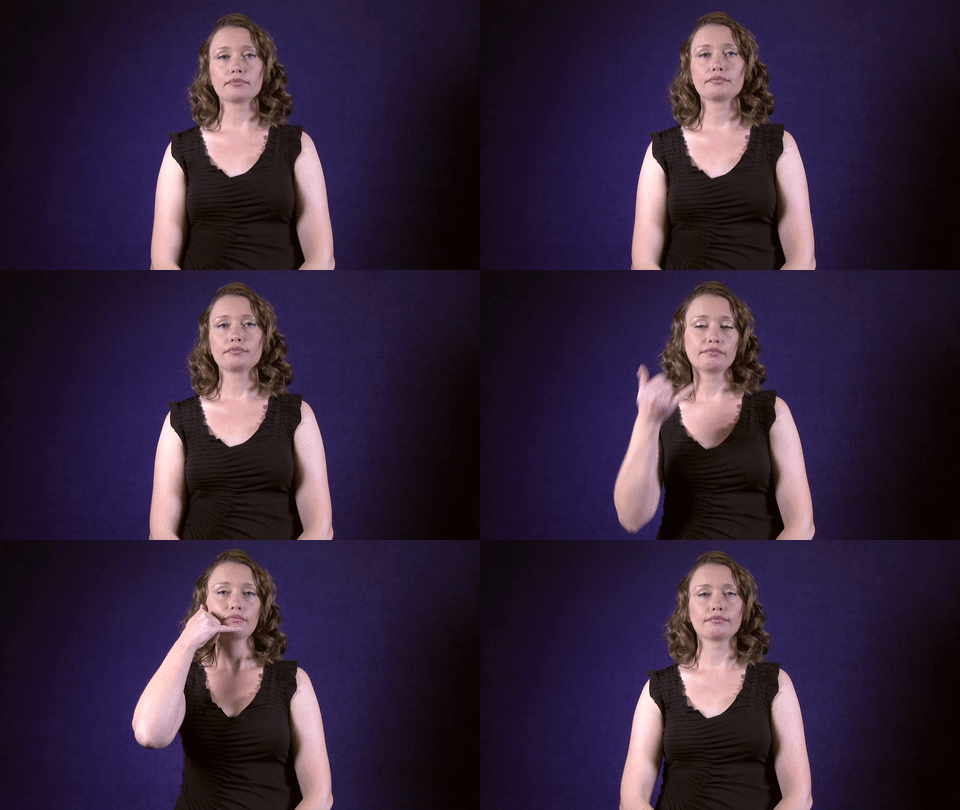
Definition: To respond to a phone call.
Sign for ANSWER PHONE in ASL

Practice Activities:
Practicing the sign for answer phone in ASL can help improve fluency and accuracy in conversation. Start by signing it in isolation multiple times, focusing on correct handshapes and movement. Use a mirror or record yourself to compare with a model signer.
Create short scenarios where you would use the sign for answer phone in ASL. For example, pretend someone is calling you, and you sign that you are going to answer. Repeat this with a partner, taking turns signing the phrase in different situations, such as at work or home.
Use the sign for answer phone in ASL in full sentences to build confidence. Try sentences like: “I will answer the phone later,” or “Can you answer the phone?” This helps learners incorporate the sign naturally into conversations.
For a challenge, try a role-playing activity where one person signs that the phone is ringing, and the other responds by signing that they are answering it. Expand the conversation by discussing who is calling or why someone might not be able to answer.
Storytelling prompts can reinforce understanding. Create a short story about missing an important call or answering a wrong number. Act it out, making sure to use the sign for answer phone in ASL appropriately. Practicing with different contexts will strengthen retention.
Engage in daily practice by signing whenever you answer a real phone call. This can help reinforce the connection between the sign and the action, making it second nature. Consistent repetition in real-world scenarios builds muscle memory and confidence.
Cultural Context:
In American Sign Language, the sign for answer phone in ASL reflects the functional nature of communication in the Deaf community. Many Deaf and Hard of Hearing individuals rely on technology such as videophones, TTYs, and captioned telephones to stay connected. The concept of answering a phone has evolved as technology has advanced.
Before smartphones and video calls, the TTY (teletypewriter) was commonly used for answering phone calls in ASL. Deaf individuals would type their responses, and a relay operator would voice them to the hearing caller. Today, video relay services (VRS) allow for direct communication, making the sign for answer phone in ASL more relevant in live, face-to-face interactions.
Cultural etiquette plays a key role in how Deaf people manage phone conversations. In a Deaf household, flashing lights or vibrations signal an incoming call instead of a ringtone. Answering a phone visually rather than audibly changes the dynamic of phone calls, and the sign for answer phone in ASL represents this unique communication style.
When answering a phone in a group setting, Deaf individuals often share information from the conversation afterward. Transparency and community involvement are valued, especially in family or close friend groups. This open flow of communication differs from the private nature of phone calls in hearing culture.
The importance of the sign for answer phone in ASL highlights the adaptation of Deaf culture to modern technology. While video calls make it easier for Deaf people to communicate naturally in ASL, text messaging and apps also provide alternatives. Accessibility remains at the core of these advancements, ensuring that Deaf individuals can answer the phone in a way that best meets their needs.
Technology has changed how people answer the phone, but Deaf culture continues to emphasize visual and accessible communication. Whether using VRS, text messaging, or video chats, the sign for answer phone in ASL is an essential part of daily interactions. The adaptability of communication methods reflects the resilience and resourcefulness of the Deaf community.
Extended Definition:
The sign for answer phone in ASL is a combination of signs that represent answering a call. This sign typically includes a movement that mimics picking up a phone and responding to the caller. The motion and handshape may vary slightly depending on the signer’s preference or regional differences in American Sign Language.
When signing answer phone in ASL, the dominant hand usually starts in a position near the mouth, resembling a phone. The hand then moves outward to indicate the concept of answering. Facial expressions can enhance the meaning, especially when showing urgency or a casual response.
ASL is a visual language that relies on hand movements, facial expressions, and body language. The sign for answer phone in ASL follows these principles by incorporating natural gestures that resemble answering a phone call. Some variations exist based on conversational context and signer’s style.
In everyday conversations, signers use this sign to indicate they are picking up an incoming call. It can also be used when describing past or future actions like stating, “I will answer the phone” or “I answered the phone earlier.” Context, along with sentence structure, helps clarify the full meaning.
For beginner ASL learners, practicing the sign for answer phone in ASL in front of a mirror can help ensure the correct handshape and movement. Watching fluent signers or ASL instructional videos can also provide a better understanding of its usage. Consistent practice leads to natural and fluid movements.
Regional variations may exist, just like in spoken languages. Some ASL users might modify the sign slightly based on personal signing habits or community preferences. However, the basic concept of the sign remains the same, ensuring clear communication among signers.
Deaf and hard-of-hearing individuals frequently use video relay services (VRS) to communicate over the phone. The sign for answer phone in ASL may be used when responding to a video call rather than a traditional phone call. Technology has influenced some signs, including those related to communication.
Learning common phrases that include answer phone in ASL can make conversations smoother. Phrases like “Can you answer the phone?” or “I didn’t answer the phone” are useful in daily signed communication. Expanding ASL vocabulary improves confidence and fluency.
ASL is an evolving language that adapts to modern communication needs. While traditional phone-related signs remain in use, new variations may emerge as technology advances. Signers can embrace these changes while maintaining clarity and understanding.
By mastering the sign
Synonyms: voicemail, call answering service, message recorder, answering machine, automated phone system
Educational resources: Find related learning materials in our course bank!
Want more? Check out some of our popular learning activities on the homepage!
Need to look up a sign? Use our highly rated dictionary: https://aslinteractive.com/best-asl-dictionary/
Follow us on tiktok: https://www.tiktok.com/@aslinteractive. More social media links at the bottom of this page!
Long-tail Keywords: what is the sign for answer phone in ASL, how do you sign answer phone in ASL, learn the ASL sign for answer phone
Categories:
tags: Phone, Communication, Verbs, Everyday activities, Commands
Parameters
*Handshape*:
The sign for ANSWER PHONE in ASL uses two handshapes. The dominant hand forms the “L” handshape , with the thumb and pinky extended while the other fingers remain curled inward. The non-dominant hand may also take the same shape or remain in a relaxed position. The dominant hand moves from near the ear outward, mimicking the motion of answering a phone call. This movement represents picking up and responding to a call in a natural way.
*Palm Orientation*:
For the sign for ANSWER PHONE in ASL, the dominant hand starts in an open handshape near the ear, mimicking holding a phone. The palm typically faces inward toward the side of the head before moving outward. As the hand moves away, the fingers slightly straighten, representing answering a call. The movement emphasizes the action of picking up and responding, reinforcing the meaning of the sign for ANSWER PHONE in ASL.
*Location*:
The sign for ANSWER PHONE in ASL is produced in front of the body, near the chest level. The dominant hand is positioned as if holding an imaginary phone near the ear , while the non-dominant hand remains still or in a neutral position. As the motion progresses, the dominant hand moves outward slightly, mimicking the action of responding to or answering a call. The placement ensures clear visibility of the sign for effective communication.
*Movement*:
To sign for answer phone in ASL, start with the dominant hand in an “L” shape near the side of the chin, similar to the sign for “telephone.” Bring the hand outward and downward in a fluid motion, as if answering a call. The movement should be smooth, mimicking the action of taking a phone call.
For emphasis, a slight nod of the head can be included to reinforce the meaning. Some variations may use both hands, with the non-dominant hand as a stationary reference. The sign for answer phone in ASL may vary by region, so it’s good to confirm with local users.
*Non-Manual Signals*:
When signing the sign for ANSWER PHONE in ASL, maintain a neutral or slightly focused facial expression. If asking a question while signing, raise your eyebrows slightly and tilt your head forward. If emphasizing urgency, widen your eyes and lean slightly forward. A relaxed mouth posture is typical unless conveying annoyance or excitement. Using appropriate non-manual markers ensures clarity and natural fluidity in the sign for ANSWER PHONE in ASL.
*Prosody, Dominant/Non-Dominant Hand*:
The sign for ANSWER PHONE in ASL uses both hands. The dominant hand forms the “L” handshape near the side of the face, as if holding a phone ☎️, while the non-dominant hand remains neutral or mirrors the dominant hand in a similar shape. The dominant hand moves slightly away from the face, representing the action of answering a call. This movement mimics picking up and responding to a phone call .
Tips for Beginners:
When learning the sign for ANSWER PHONE in ASL, focus on the movement and handshape. The sign typically involves mimicking the action of picking up a phone and answering it, so your dominant hand should shape as if grabbing or holding a handset. Keep the motion smooth and natural, as if you were actually lifting a phone to your ear.
One common mistake is making the movement too rigid or robotic. ASL is a fluid language, and the sign for ANSWER PHONE in ASL should reflect that natural motion. Another issue is placing the hand incorrectly, either too far from the ear or using the wrong handshape. Make sure your thumb and pinky mimic a traditional phone shape to ensure clarity.
Consistency in your signing will help native signers understand you better. If you are right-handed, always use your right hand for the motion; if left-handed, use your left hand. Keeping your facial expressions neutral or natural will also make your signing appear more confident. Adding an inquisitive or clarifying look can emphasize the context.
Practicing in front of a mirror is helpful to compare your sign with online video references. Watching native signers sign for ANSWER PHONE in ASL in real conversations will also refine your understanding. If you are in doubt, practice slowly and increase speed as you become more comfortable.
Since technology evolves, sometimes people use a more modern variation of the sign, such as mimicking tapping or sliding on a smartphone. Be mindful of your audience—older signers might use the traditional form while younger ones might modify it. Staying adaptable will help ensure clear communication with different ASL users.
Connections to Other topics:
The sign for ANSWER PHONE in ASL is closely related to the general concept of communication and interaction through technology. It builds on the individual signs for ANSWER and PHONE, reinforcing how ASL combines multiple concepts to express more complex ideas efficiently. This pattern appears in various signs where technology and human interaction intersect, such as TEXT, CALL, and VIDEO CHAT.
A strong connection exists between ANSWER PHONE and signs related to asking and responding, such as CALL-BACK, RESPOND, and REPLY. These signs share the theme of exchanging information and can be easily switched depending on the context. For instance, while ANSWER refers to picking up or responding to a phone call, RESPOND can apply to both verbal and text-based communication.
ASL often incorporates technological advancements into its signs, reflecting how communication methods evolve. The sign for ANSWER PHONE in ASL can vary depending on the phone type being referenced, whether a traditional landline or a modern smartphone. The evolution of ASL vocabulary in response to new devices parallels the way new signs develop for emerging technologies, such as FACETIME or VIDEO CALL.
Another key connection is how compound signs in ASL streamline daily expressions. The combination of ANSWER and PHONE is an example of how ASL creates efficient visual representations of everyday actions. Other compound forms exist in different contexts, such as EMAIL CHECK, PHONE CHAT, and MESSAGE SEND, all of which improve clarity in ASL communication.
The sign for ANSWER PHONE in ASL also relates to etiquette and timing in conversations. It can indicate a response to a call or serve as a transition in storytelling to explain an important interaction. The concept of timing is crucial in ASL grammar, especially when narrating past events involving the sequence of phone calls or messages.
Summary:
The sign for ANSWER PHONE in ASL is a compound sign made up of the individual signs for ANSWER and PHONE. It visually represents the concept of responding to a phone call, capturing both the idea of verbal response and the physical act of using a phone. Each part of the sign carries its own distinct meaning, and when combined, they illustrate the full idea effectively.
To sign ANSWER, the dominant hand typically starts in the handshape of a modified “1” hand and moves outward from the mouth, symbolizing the act of giving a response or replying to something. This movement mimics speech leaving the mouth, aligning with the broader meaning of verbal or signed communication. The directionality of the sign can sometimes change if indicating a specific recipient of the response.
PHONE is signed by mimicking the shape of a telephone handset, typically with the “Y” handshape, where the thumb touches the ear and the pinky extends outward near the chin. This sign connects to the cultural image of traditional telephones, though its use persists for modern contexts involving mobile devices. The motion associated with this sign remains generally the same even with evolving technology.
When signing ANSWER PHONE in ASL, the two signs are performed sequentially, first signing ANSWER, followed by PHONE. The combination of these two motions clearly conveys the idea of picking up and responding to a call. The sequence of movements maintains the natural grammar of ASL, which prioritizes the most essential concept first, followed by a clarifying or modifying detail.
This phrase follows standard ASL syntax, where broader concepts precede specifics. ANSWER comes first because the primary action is the response, followed by PHONE, which provides context for what is being answered. This structure aligns with ASL’s tendency to present information from the most general idea to the most detailed.
The sign for ANSWER PHONE in ASL is often used in everyday conversations to indicate an action rather than a noun form. It usually refers to someone actively picking up an incoming call as opposed to describing an object or tool. This functional use highlights how ASL verbs are often structured to show action.
Linguistically, this sign phrase demonstrates how ASL utilizes visual-spatial representation to depict real-world activities naturally and fluidly. The merging of two distinct signs into a sequential phrase mirrors how people think about answering a phone in steps—first receiving the call, then responding. This structure reflects ASL’s visual nature, where concept clarity is prioritized.
In practical communication, non-manual signals often accompany the sign for ANSWER PHONE in ASL to offer additional context. These can include facial expressions, slightly raised eyebrows for a yes/no question, or head tilting to indicate engagement in a phone conversation. Such added elements make the meaning even clearer without requiring more signs.
While this sign phrase is direct, some variations exist depending on regional usage and context. Some signers may shorten the motion slightly in casual conversation, omitting slight details when fluency allows for quicker recognition. Others may emphasize the PHONE sign more if needing clarity, especially if distinguishing between answering a call versus responding in another way.
The sign for ANSWER PHONE in ASL is essential for discussions about communication, technology, and social interaction. ASL users frequently use this phrase in daily exchanges, especially when talking about missed calls, making calls, or checking if someone has responded. This reflects how the deaf and hard-of-hearing community engage in conversations about modern communication methods just as frequently as spoken language users.
With the rise of text messaging, video calls, and other digital communication tools, the use of answering traditional phone calls has somewhat declined. However, the concept of answering a phone, whether through apps or relay services, still applies and is relevant in conversations. The phrase maintains its importance as it can refer generally to answering any form of live call.
Technology advancements have influenced how the deaf community interacts with phone-based communication. Many use video relay services (VRS), which involve sign language interpreters facilitating calls between ASL users and non-signers. While VRS calls do not require physically answering a handset, the concept of answering a call still applies and retains its relevance.
Culturally, phone use has had a unique impact on the deaf community. Traditional phones presented significant barriers before the advent of text communication and video relay services. The sign for ANSWER PHONE in ASL has become more inclusive over time, reflecting the shift from physical devices to broader communication methods.
The term PHONE in ASL often sparks discussion about evolving technology and the transition from older devices to modern tools. Younger generations may associate the PHONE sign less with physical handsets and more with mobile texting platforms. However, the classic sign for PHONE remains widely recognized regardless of technological changes.
Grammatically, the sign for ANSWER PHONE in ASL can be adapted based on the narrative or perspective. If discussing a past event, signers may use modified movements to show temporal shifts. Similarly, signers may use indexing, space usage
Want more? Check out some of our popular learning activities!
ASL Interactive Resources
ASLInteractive YouTube Channel
Follow us on tiktok: @aslinteractive.com
Follow us on Instagram: aslinteractive
Facebook page: aslinteractive
Facebook group: aslinteractive
LInkedIn: ASL Interactive LLC
Twitter: @ASL_interactive
*Some information on this page is AI-generated. AI can make mistakes. Please check the information.


Responses