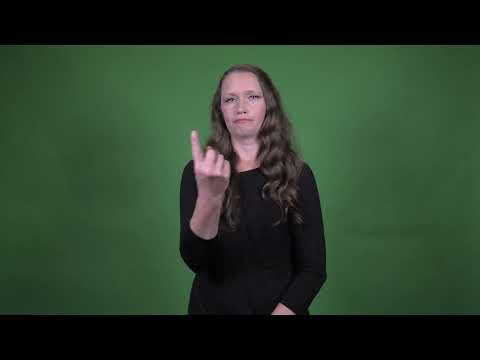
Definition: Moving closer to someone or something.
Sign for APPROACHING in ASL

Practice Activities:
To practice the sign for approaching in ASL, start with isolated repetitions. Sign it slowly and deliberately, focusing on the hand movement and spatial placement. Repeat it multiple times while looking in a mirror to ensure accuracy. Then, sign it with different speeds to build fluency.
Use the sign for approaching in ASL with directional variation. Try signing as if someone is approaching you, then reverse the direction as if you are approaching someone else. This helps improve spatial awareness and sign fluidity. Experiment with hand dominance to ensure consistency.
Practice by using the sign in simple sentences. Sign phrases like “The car is approaching,” “Winter is approaching,” or “I am approaching the building.” This will help reinforce word order and improve recall. Create your own sentences and sign them slowly, then increase your speed for natural flow.
For storytelling practice, describe a scene where someone or something is getting closer. Example: “A dog is approaching a child in the park.” Add details such as facial expressions to show emotions like fear or excitement. This builds expressive signing and enhances comprehension.
Engage in a partner activity where one person signs an event, and the other describes what is happening using the sign for approaching in ASL. For example, one person can act out a storm rolling in, and their partner signs a description. This improves real-world application and boosts conversational skills.
Watch ASL videos or stories that include the sign for approaching in ASL. Pause and repeat the sign to match the signer’s fluency. After watching, summarize what you saw using the target sign. This reinforces recognition and application in more complex contexts.
Cultural Context:
In American Sign Language, the sign for approaching in ASL is commonly used to indicate movement toward someone or something. This sign can describe physical movement, but it can also be used metaphorically to discuss ideas, events, or conversations that are coming closer. Understanding the proper context for this sign helps ensure clear communication in ASL.
Deaf culture places a strong emphasis on visual communication, and spatial awareness is crucial. When using the sign for approaching in ASL, signers often adjust speed and facial expressions to show urgency, hesitation, or expectation. These nuances add depth to the conversation and help convey the intended meaning more effectively.
In social interactions, the sign for approaching in ASL can indicate someone physically walking nearer or a more abstract concept like an upcoming deadline or an approaching conversation topic. This flexibility makes it a useful sign in everyday discussions. Whether discussing a person coming closer or an idea that is about to be addressed, signers rely on this motion to express these concepts naturally.
Deaf and hard-of-hearing individuals often use directional signs to clarify movement in conversations. The sign for approaching in ASL can be modified depending on the subject’s direction, helping to create a visual story of motion. This spatial adjustment is a key element of ASL grammar that enhances meaning without extra words.
In educational settings, teachers may use the sign for approaching in ASL to explain time-related concepts, such as an approaching exam or an upcoming event. This helps students visualize abstract ideas in a tangible way. Using ASL to convey movement-based concepts supports clearer and more accessible learning for visual learners.
Socially, the sign for approaching in ASL plays a role in group dynamics, showing when someone is coming into a space or joining a conversation. In Deaf culture, where direct and clear communication is valued, this sign helps signal physical movements without verbal interruptions. It ensures that individuals can smoothly integrate into discussions without confusion.
Signers also adapt the sign for approaching in ASL depending on emotional context. A slow and cautious motion can indicate hesitation, while a more direct movement may express confidence or excitement. Facial expressions further enhance these variations, allowing signers to express detailed emotions without additional words.
When discussing future events, the sign for approaching in ASL is useful in both personal and professional settings. Whether planning an approaching holiday, deadline, or meeting, this sign helps clarify timelines in a clear and visual manner. It eliminates ambiguity and ensures everyone understands the progression of time-related subjects.
In storytelling, ASL users
Extended Definition:
The sign for approaching in ASL is a useful concept to know when discussing movement, direction, or timing. This sign visually represents something coming closer, whether it is a person, an event, or a deadline. Understanding how to use this sign correctly can help improve fluency in conversations.
To sign approaching in ASL, both hands are used. One hand remains stationary while the other moves toward it, symbolizing the idea of coming closer. The movement expresses proximity, similar to how something moves toward a destination in real life.
This sign can be applied to both literal and figurative contexts. For example, it can describe a person physically coming nearer or a situation getting closer, like an approaching storm. The meaning depends on the sentence and how it is framed within the conversation.
Facial expressions and body language play a crucial role in conveying the intensity of approaching. If something is coming quickly, a signer may use a faster movement or a more intense expression. Slower movements can indicate something that is gradually nearing over time.
The sign for approaching in ASL is commonly used when discussing timelines or future plans. For instance, someone might sign this when talking about an approaching holiday or a deadline that is coming up soon. This makes it a versatile sign that can be useful for everyday conversations.
This sign is also important in directional language. When giving directions, it can be used to indicate that a location is approaching or that someone is nearing a specific place. It helps provide clarity when signing about movement and navigation.
In storytelling, this sign can create suspense or anticipation. When describing a scene where something or someone is advancing toward another, the sign enhances the visual impact. ASL storytelling relies heavily on spatial awareness, making this sign a valuable tool.
There are slight variations of the sign for approaching in ASL depending on context. Some signers modify movement speed or handshape based on the situation. Learning these nuances allows for more expressive and dynamic communication.
Practicing this sign in different sentences helps reinforce its meaning. It is helpful to sign about events that are approaching or describe people moving closer. This builds confidence in using it naturally in conversations.
Approaching is a fundamental concept in everyday language. Whether discussing time, movement, or direction, this sign provides clear and concise communication. Mastering it will enhance both receptive and expressive ASL skills.
Synonyms: nearing, coming, drawing near, impending, forthcoming
Educational resources: Find related learning materials in our course bank!
Want more? Check out some of our popular learning activities on the homepage!
Need to look up a sign? Use our highly rated dictionary: https://aslinteractive.com/best-asl-dictionary/
Follow us on tiktok: https://www.tiktok.com/@aslinteractive. More social media links at the bottom of this page!
Long-tail Keywords: what is the ASL sign for approaching, how to sign approaching in American Sign Language, what does approaching look like in ASL
Categories:
tags: approaching, verbs, everyday activities, transportation, actions
Parameters
*Handshape*:
the sign for approaching in asl uses two flat b-handshapes , with fingers extended and held straight. One hand is positioned slightly ahead of the other, and the hands move toward each other in a steady motion. This movement represents one object or person moving toward another. The sign for approaching in asl effectively illustrates the concept of getting closer spatially or figuratively, making it a clear and visual way to express the idea.
*Palm Orientation*:
The palm orientation for the sign for approaching in ASL involves both hands. The dominant hand is typically open with the palm facing sideways, while the non-dominant hand is also open with the palm facing sideways or slightly inward. As the movement occurs, both hands move toward each other in an approaching motion, indicating the concept of moving closer. The fingers remain extended and relaxed, emphasizing the natural motion of approach.
*Location*:
The sign for APPROACHING in ASL is produced in the neutral space in front of the signer’s torso. The hands move toward each other as the dominant hand approaches the stationary non-dominant hand. The location remains in front of the body, around chest level. This area provides clear visibility for the movement, ensuring the meaning is easily understood within the context of ASL communication.
*Movement*:
To produce the sign for approaching in ASL, form both hands into “B” handshapes with fingers extended and together. Position the dominant hand farther from the body and the non-dominant hand closer. Move the dominant hand toward the non-dominant hand in a smooth motion until they are close but do not touch. This motion represents movement toward a destination, effectively conveying the concept of approaching in ASL.
*Non-Manual Signals*:
When using the sign for APPROACHING in ASL, the eyebrows may be slightly furrowed to indicate focus or anticipation, especially if the approach is gradual or cautious. The eyes may be directed forward, possibly tracking an imaginary object getting closer. The mouth can be slightly open or pursed, depending on the speed or intensity of movement. A head tilt forward or a subtle lean enhances the directional emphasis, reinforcing the concept of nearing something.
*Prosody, Dominant/Non-Dominant Hand*:
The sign for APPROACHING in ASL uses both hands. The non-dominant hand stays in place, forming a flat “B” handshape with the palm oriented to the side. The dominant hand, also in a “B” handshape, moves toward the stationary non-dominant hand in a smooth, forward motion, stopping just before making contact. This movement visually represents the concept of nearing or approaching something.
Tips for Beginners:
When learning the sign for APPROACHING in ASL, focus on maintaining clear hand positioning. The dominant hand moves towards the non-dominant hand, symbolizing an object or person moving closer. Keep your hand movements smooth and deliberate to ensure correct meaning.
Hand orientation is crucial for accuracy. Your non-dominant hand should remain steady while your dominant hand moves forward. Avoid twisting or repositioning the hands in a way that confuses the movement and meaning. Consistency in motion leads to clearer communication.
Beginners often struggle with the speed of the movement. If done too fast, the sign may look like a different word. To improve clarity, start slow and gradually build up to a natural flow. Practicing in front of a mirror can help refine the motion.
Pay close attention to facial expressions. Since ASL is a visual language, your face adds context to the sign. A neutral expression works, but raising your eyebrows slightly or leaning forward can emphasize urgency or interest related to approaching.
Practicing in real-life conversations makes a big difference. Use the sign for APPROACHING in ASL during everyday interactions to strengthen muscle memory. Signing with others reinforces proper usage and builds confidence.
If you find yourself unsure, watch native signers for reference. Observing fluent ASL users will help solidify your understanding of hand placement and motion. Repetition is key to developing natural, fluid signing skills.
Keep your hands relaxed but controlled. Tension in your fingers can make the sign look rigid and unnatural. A smooth, confident motion improves both accuracy and readability. Consistency helps make your signing more comfortable over time.
Watching video resources supplements learning. Seeing the sign for APPROACHING in ASL performed from multiple angles will reinforce proper execution. Pay attention to both hand motion and overall body language to improve fluency.
Connections to Other topics:
The sign for APPROACHING in ASL connects closely to movement and spatial relationships, which are fundamental in ASL. Many directional verbs, such as “GO,” “COME,” and “MOVE,” share similar spatial principles, where hand orientation and movement provide context. This makes the sign for APPROACHING in ASL useful in describing people or objects moving toward a location, reinforcing the visual nature of the language.
This sign also relates to concepts of time and progression, as ASL expresses abstract ideas through spatial metaphors. Just as people can physically approach a place, discussions about approaching deadlines or events use similar structure. ASL often uses signs like “SOON” or “NEAR” in conjunction with APPROACHING to indicate something happening imminently.
A common variation involves modifying the speed or distance of the movement to indicate urgency or gradual progression. If a person is approaching quickly, the sign can be made with a faster motion; if slowly, the movement can be more drawn out. This flexibility allows nuanced descriptions, showing ASL’s efficiency in conveying detailed information visually.
The sign for APPROACHING in ASL can also pair with other directional verbs to create compound meanings. Combining it with signs like “MEET” can indicate an impending interaction, while pairing it with “DANGER” could mean an upcoming threat. This adaptability makes it valuable for both everyday conversations and more specific contexts, such as storytelling or warnings.
Spatial relations in ASL are essential for describing both physical and abstract movement. Understanding the sign for APPROACHING in ASL helps with other spatial concepts, including distance, directionality, and perspective. This reinforces a signer’s ability to construct clear visual narratives, supporting deeper engagement in ASL communication.
Summary:
The sign for approaching in ASL visually represents the movement of one object or person coming closer to another. The dominant hand, often shaped in a flat “B” hand or slightly curved formation, moves toward the stationary non-dominant hand, which stays in a similar shape. This movement symbolizes something moving closer in space or time.
Context plays a key role in how the sign for approaching in ASL should be used. When referring to physical closeness, the sign can be used to indicate someone walking toward a location or object. If talking about an event in time, the motion can be adapted to show a gradual arrival at a certain moment.
There are subtle variations in how fast or slow the motion is performed, which can change the meaning. A quicker approach suggests imminent occurrence, while a slower motion can indicate a longer period before arrival. In this way, ASL conveys both spatial and temporal concepts through movement.
Facial expressions add another layer of meaning when signing approaching in ASL. If the approach is unwanted or dangerous, the signer’s expression may reveal hesitation or concern. If something or someone is approaching with excitement, the signer’s facial expression and slight body lean can reflect anticipation.
This sign connects well with related signs like come, near, and arrive, each of which carries a different nuance. The sign for near involves a similar setup but emphasizes proximity rather than movement. Arrive, on the other hand, depicts the completion of the approach.
ASL grammar does not use verb tenses in the same way spoken English does, so modifying the sign’s movement shows these tense changes. Future events may involve a more exaggerated motion forward, while past movements may be slightly more abrupt to signify completion.
Classifiers can provide additional information when describing a larger or more detailed scene involving approaching in ASL. Handshapes can be modified to represent different objects approaching, like cars, animals, or groups of people. This allows ASL to express movement with precision.
Context is crucial for ensuring the signer’s intent is clear. If the conversation is about timing, the sign may reference an event approaching rather than a physical movement. In spatial discussions, it is often accompanied by pointing or other directional signs to show location.
Cultural significance plays a role in how ASL users interpret this sign. In Deaf spaces, visually conveying spatial awareness is essential for clear communication. The sign for approaching in ASL encapsulates this awareness by offering a direct visual representation of movement in space.
In storytelling, approaching in ASL can help build suspense by showing something gradually coming closer. The way the hands move can create tension or excitement, making it a valuable tool in signed narratives. Adjustments in pacing and facial expression make this an effective storytelling feature.
The sign also relates to broader linguistic themes in ASL, such as iconicity, where the movement visibly represents the concept it conveys. Unlike arbitrary signs, its motion mimics real-world movement, making it a strong example of ASL’s visual-spatial nature.
Applied linguistics recognizes how ASL representations of movement help shape cognitive understanding of space. For Deaf individuals, signs like approaching in ASL strengthen spatial reasoning by reinforcing concepts visually rather than auditorily.
Technology has influenced how approaching in ASL is used, especially in video calls where hand movement needs to remain visible within the screen frame. Signers often adjust their movement or framing to ensure clarity in digital spaces.
This sign can also have metaphorical meanings, such as approaching a solution or an idea rather than a physical object. The same motion can be applied to abstract concepts, broadening how ASL conveys thought processes.
Comparing approaching in ASL to signs in other signed languages shows variations in how movement is portrayed. While ASL users use a forward-moving hand shape, other sign languages may depict approaching differently based on cultural and linguistic influences.
Body language often accompanies the sign to reinforce its meaning. A slight forward lean or head tilt can emphasize the direction of the approach, enhancing understanding. This makes body involvement an integral part of many ASL signs.
When learning approaching in ASL, it helps to practice with real-world contexts, such as physical movement toward an object. By associating the sign with tangible experiences, learners can internalize its meaning more effectively.
Teaching this sign to new ASL learners provides a good introduction to how movement can represent both space and time. Explaining its conceptual flexibility helps students understand how ASL conveys dynamic ideas efficiently.
The use of approaching in ASL demonstrates how sign placement in space influences meaning. Adjusting the location of the moving hand can convey different types of approach, whether gradual, sudden, or directional.
This sign is an example of ASL’s capacity for non-linear expression. Unlike English, where words unfold sequentially, ASL allows multiple visual elements to convey meaning simultaneously. This makes approaching in ASL particularly expressive.
Using this sign in conversations about schedules
Want more? Check out some of our popular learning activities!
ASL Interactive Resources
ASLInteractive YouTube Channel
Follow us on tiktok: @aslinteractive.com
Follow us on Instagram: aslinteractive
Facebook page: aslinteractive
Facebook group: aslinteractive
LInkedIn: ASL Interactive LLC
Twitter: @ASL_interactive
*Some information on this page is AI-generated. AI can make mistakes. Please check the information.


Responses