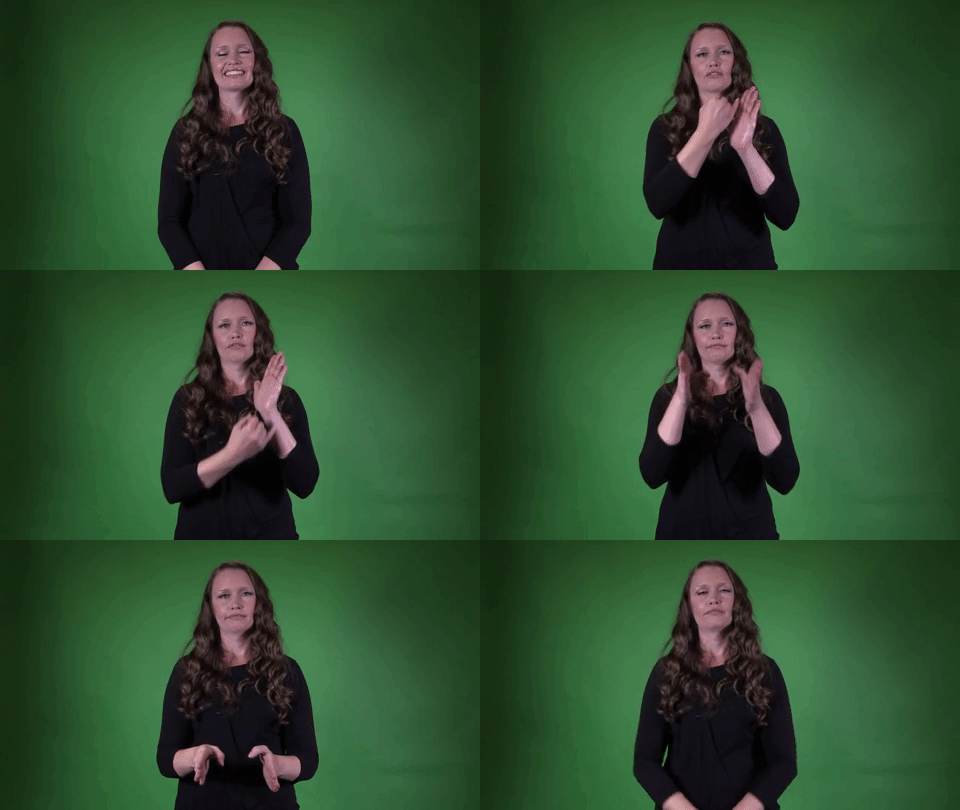
Definition: A person who creates art.
Sign for ARTIST in ASL

Practice Activities:
Practicing the sign for artist in ASL can be both fun and interactive. Start by signing it slowly in isolation while watching yourself in a mirror to check handshape and movement accuracy. Repeat the sign multiple times to build muscle memory, making sure to include the non-dominant supporting hand in the movement.
Next, incorporate the sign for artist in ASL into short phrases and sentences. Try signing “I am an artist,” “Are you an artist?” or “That artist is talented.” Practice signing these sentences in a smooth and natural way, maintaining proper facial expressions and signing fluency.
A great way to reinforce learning is by storytelling. Pretend you are introducing a famous artist and use the sign in context. For example, describe an artist’s work using other ASL signs like paint, draw, and create. This will help connect the sign for artist in ASL with relevant vocabulary, improving retention and comprehension.
Engage in a partner activity where one person acts out different types of artists, such as a painter, sculptor, or musician, and the other signs “artist” when appropriate. This makes practice more engaging and helps with identifying the sign in real-time conversations.
Another exercise is to watch videos of Deaf artists discussing their work and identify when they use the sign for artist in ASL. This exposure to real-life usage will improve recognition and signing accuracy.
To challenge yourself further, fingerspell famous artists’ names before signing artist in ASL. For example, fingerspell “Van Gogh” and then sign artist to reinforce connections between names and professions while expanding ASL skills. Regular practice and creative exercises will help make the sign more automatic and useful in everyday communication.
Cultural Context:
In American Sign Language, the sign for artist in ASL reflects creativity and expression. This sign combines elements of the word for “art” with the agent marker, showing the role of an individual who creates art. Understanding how to sign artist in ASL helps foster communication about the arts within the Deaf and signing communities.
Artists play an important role in Deaf culture, using visual storytelling to convey experiences and emotions. Many Deaf artists incorporate ASL and Deaf identity into their work, blending visual language with creative expression. Knowing the sign for artist in ASL allows for meaningful discussions about their contributions.
Deaf artists have historically used art to advocate for accessibility, culture, and language rights. Their work spans painting, filmmaking, sculpture, and digital media, often showcasing themes of Deaf empowerment. Signing artist in ASL can help celebrate these achievements and promote appreciation for Deaf creatives.
ASL is a visual language, making it perfect for discussing artistic expression. When describing different types of artists, the sign for artist in ASL can be modified with additional signs, such as painter, sculptor, or illustrator. This flexibility in ASL allows for a rich vocabulary that captures the diversity of artistic professions.
Art galleries, museums, and schools benefit from using ASL to discuss artists and their creations. The ability to sign artist in ASL allows for more inclusive conversations in educational and professional art spaces. Increasing accessibility in these settings helps bridge gaps between hearing and Deaf communities.
Teaching children the sign for artist in ASL encourages early language development while fostering creativity. Many Deaf and hard-of-hearing students are inspired by artists who use ASL and Deaf culture in their work. Learning to sign artist in ASL helps young learners explore self-expression in new ways.
Understanding the cultural importance of the sign for artist in ASL enhances both language skills and artistic appreciation. By using ASL to communicate about art, people can connect beyond spoken language barriers. Signing artist in ASL promotes diversity and inclusion within the creative world.
Extended Definition:
The sign for artist in ASL is a combination of the sign for “art” and the person marker. This creates a visual representation of someone who creates art. It reflects expressive movement that aligns with the concept of an artist.
To sign artist in ASL, start with the dominant hand making the sign for “art.” Then, complete the sign by adding the person marker, which is a downward movement of both hands in a parallel position. This movement represents a person who engages in artistic expression.
ASL often uses classifiers and descriptive signs to enhance meaning. The sign for artist in ASL can be modified to indicate different types of artists, such as painters or sculptors. This flexibility allows for more precise communication based on context.
Like many ASL signs, artist incorporates meaningful movement and handshape to clarify its meaning. The person marker is used in many occupation-related signs in ASL. This structure helps distinguish between general action and a person who performs that action.
ASL relies on visual imagery to represent concepts clearly. The sign for artist in ASL effectively conveys the idea of creativity and artistic work. This makes it intuitive and easy to learn for both beginners and fluent signers.
Facial expressions and body language can further enhance the meaning of artist in ASL. Adding expressive features can indicate enthusiasm or seriousness about artistic work. These non-manual markers contribute to the richness of ASL communication.
Regional variations might exist for the sign for artist in ASL. Some signers may use slightly different movements depending on their local Deaf community. However, the core structure of the sign remains widely recognized.
Understanding the sign for artist in ASL is valuable for anyone involved in creative fields. It allows for better communication between Deaf and hearing individuals in artistic spaces. Learning this sign can foster inclusivity and appreciation for diverse forms of expression.
Expanding ASL vocabulary to include words like artist enhances deeper conversations. It encourages engagement with the Deaf community and supports effective communication. Learning ASL signs for professions helps bridge gaps in accessibility.
By mastering the sign for artist in ASL, individuals can express ideas more clearly. Whether discussing a career or hobby, using this sign appropriately enhances conversations. It also strengthens connections within both the Deaf and hearing communities.
Synonyms: creator, maker, artisan, illustrator, painter
Educational resources: Find related learning materials in our course bank!
Want more? Check out some of our popular learning activities on the homepage!
Need to look up a sign? Use our highly rated dictionary: https://aslinteractive.com/best-asl-dictionary/
Follow us on tiktok: https://www.tiktok.com/@aslinteractive. More social media links at the bottom of this page!
Long-tail Keywords: What is the ASL sign for artist, How do you sign artist in American Sign Language, What is the hand sign for artist in ASL
Categories:
tags: Artist, Activities, Language Learning, Classroom Picture, People
Parameters
*Handshape*:
The sign for ARTIST in ASL uses the dominant hand in the same handshape as the sign for ART, typically an “I” or “Y” handshape, with the pinkie tracing a line on the non-dominant palm. After the motion, both hands shift into flat vertical hands to form the sign for PERSON, indicating the profession. This sign visually represents someone who creates art, reinforcing its meaning within ASL.
*Palm Orientation*:
The palm orientation for the sign for ARTIST in ASL begins with the dominant hand in the ART sign. The palm typically faces inward as the “I” handshape moves downward in a squiggly motion, resembling drawing. For the second part, the hands switch to a flat “B” handshape, facing each other with palms inward, forming a vertical downward motion similar to the sign for PERSON. This completes the sign for ARTIST in ASL with a fluid movement. ✋
*Location*:
The sign for ARTIST in ASL is made in front of the torso, aligning with the neutral signing space. It involves movement from the dominant hand while referencing the concept of drawing or painting. The location remains in front of the body, allowing clear visibility for the classifier sign that represents artistic expression. Maintaining proper hand positioning and consistent movement within this space ensures clarity when signing ARTIST in ASL.
*Movement*:
The sign for ARTIST in ASL begins with the dominant hand using the sign for ART. The dominant “I” hand moves in a wavy downward motion along the non-dominant open palm, mimicking the act of drawing. After this, both hands form flat “B” hands, and the dominant hand moves downward vertically from the non-dominant palm, representing the “person” classifier. This combination emphasizes the act of creating visual art and being an artist.
*Non-Manual Signals*:
When signing the sign for ARTIST in ASL, maintain a neutral or slightly focused facial expression to convey professionalism. Your eyebrows may be slightly raised if emphasizing the role of an artist in conversation. If discussing an artist with admiration, a slight smile can add meaningful nuance. Head movement can also emphasize the subject, such as a slight nod when affirming someone’s profession. Ensure your gaze follows the natural flow of signing for clarity and engagement.
*Prosody, Dominant/Non-Dominant Hand*:
The sign for ARTIST in ASL uses the dominant hand in the sign for ART, tracing a wavy line down the non-dominant palm, which is held vertical and steady. This represents an artist creating on a canvas. After completing the ART sign, both hands form flat palms facing each other and move downward, representing the concept of a person. The non-dominant hand remains stable while the dominant hand performs the movement, ensuring clarity in meaning.
Tips for Beginners:
When learning the sign for ARTIST in ASL, focus on clear and deliberate movements. This sign builds on the base sign for ART by using the dominant hand to trace a wavy line down the non-dominant palm, symbolizing a drawing or painting motion. After that, the non-dominant palm stays in place while the dominant hand moves into the PERSON-affix, where both hands move straight down parallel to each other.
Handshape and movement are essential for accuracy. Ensure that your dominant hand correctly forms an “I” handshape when tracing, and your fingers should not be too stiff or overly relaxed. The movement should be smooth and controlled to resemble the artistic motion of drawing, not rushed or sloppy. For the second part of the sign, move both hands down evenly to indicate the PERSON marker.
One common beginner mistake is flattening the dominant hand too much, which can make the sign look like WRITE or PAINT instead of ARTIST. Additionally, be sure to keep your non-dominant hand steady so it provides a stable surface for the tracing motion. If your movements are too erratic, it can be confusing to the viewer.
A great practice tip is to sign in front of a mirror or record yourself to check for smoothness and consistency. Watching videos of fluent signers can also help refine your movements. If possible, ask a Deaf signer to observe and provide feedback to ensure that you are making the sign accurately.
Since the sign for ARTIST in ASL builds on the base concept of ART, learning ART first can help reinforce understanding. Once comfortable with that motion, adding the PERSON-affix component will feel much more natural. Keep practicing, stay patient, and remember that fluency improves with time and repetition.
Connections to Other topics:
The sign for ARTIST in ASL is closely related to other career or profession-related signs, such as PAINTER, WRITER, and TEACHER. The sign for ARTIST in ASL is derived by incorporating the sign for ART, followed by the AGENT marker, which indicates a profession. This structure makes it easy to create other signs for occupations by combining an action or skill with the agent suffix, forming words like MUSICIAN or SCIENTIST.
The relationship between the sign for ARTIST in ASL and the sign for ART is important when discussing creative fields in sign language. Since ART uses a dominant hand to mimic drawing on the palm, this motion is an essential component of ARTIST, solidifying the connection between the act of art-making and the person engaging in it. Other signs follow this formula as well, such as TEACHER, which is a combination of TEACH and the AGENT marker.
This concept extends to similar modified signs, especially those denoting professions. For example, the sign for PAINTER includes the same movement as ART but slightly modifies it to reflect the specific artistic activity involved. This allows signers to use consistent visual elements for different fields. Understanding these structural patterns helps learners recognize how to form and interpret related signs efficiently.
Beyond career-related vocabulary, the sign for ARTIST in ASL also connects to creative expression in broader ways. Signs such as CREATE and DRAW share movements related to ARTIST, reinforcing a thematic link between creativity, craftsmanship, and artistry. This makes the sign particularly relevant in discussions about different forms of art, from drawing and painting to broader artistic fields like sculpture or illustration. Recognizing these connections aids learners in expanding their ASL vocabulary within artistic and professional contexts.
Summary:
The sign for ARTIST in ASL comes from the base sign for ART, incorporating an agentive marker to indicate a person who creates art. This sign begins with the dominant hand using the “i” handshape, moving in a squiggly or wavy motion downward, mimicking the act of sketching or painting on a surface. The movement typically reflects the concept of artistic creation, an essential characteristic of an artist’s work.
After completing the ART portion of the sign, the hands transition into the agentive marker, which consists of both hands forming vertical flat hands that move downward in parallel. This signifies a person associated with the root concept, as seen in many occupational signs in ASL. Combining ART with the agentive suffix creates the meaning of someone who practices or specializes in art—an artist.
The sign for ARTIST in ASL is conceptually accurate, as it visually represents the process of making art with one’s hands. This aligns closely with ASL’s use of iconicity, where the form of a sign reflects its meaning. While it can be understood by non-signers because of its visual clarity, it remains abstract enough to be distinctively ASL rather than pantomime.
Linguistically, this sign demonstrates ASL’s preference for compounding a descriptive action with a person-indicating suffix. The agentive marker is a grammatical feature that allows many profession-related signs to be created efficiently. This structure is comparable to how English adds the suffix “-ist” to words like “artist” or “pianist.”
When using the sign for ARTIST in ASL, context is important. If discussing different types of artists, additional signs may be used to specify, such as PAINTER, SCULPTOR, or PHOTOGRAPHER. If needed, a signer can clarify by fingerspelling ARTIST and then using a classifier or description to indicate a specific art form.
The cultural significance of this sign is profound within the Deaf community, where visual artistry plays a crucial role in storytelling and expression. Deaf artists contribute significantly to ASL poetry, storytelling, and the visual arts, emphasizing the importance of art as a part of Deaf identity and culture. Seeing the sign for ARTIST in ASL often evokes a connection to both professional and hobbyist creators within the community.
Socially, artistic expression is highly valued in Deaf spaces, where signed storytelling and visually expressive performances are essential to cultural preservation. The sign for ARTIST in ASL is often used to describe Deaf artists who create Deaf-centric themes in their artwork. Many Deaf artists use their work to communicate Deaf experiences, ensuring that ASL remains integral to their artistic identity.
Because ASL relies on visual and spatial elements, artistic expression naturally extends into sign language performances. Visual vernacular and ASL poetry often blur the lines between language and art, reinforcing the relevance of the sign for ARTIST in ASL. These art forms rely on movement, facial expression, and spatial awareness, much like traditional visual arts.
In terms of syntax, the sign for ARTIST in ASL can appear in various sentence structures depending on the emphasis needed. For example, one might sign WHO ARTIST? when inquiring about the identity of an artist, or ARTIST DEAF? if asking whether the artist is Deaf. Sentence structure can vary based on the topic-comment format frequently used in ASL.
The sign for ARTIST in ASL might be accompanied by adjectives or descriptive classifiers that specify an artist’s specialty. If discussing a painter, one might sign ARTIST and then describe the act of painting with a classifier. This flexibility allows ASL to differentiate artists without relying on additional fingerspelling.
The agentive marker used in this sign is a common feature in ASL and appears in many profession-based signs such as TEACHER, WRITER, and LAWYER. The downward motion of the agentive marker suggests a person performing a role, making the sign for ARTIST in ASL consistent with these grammatical patterns. This structure is deeply ingrained in ASL’s morphology.
When fingerspelling ARTIST, it is typically done to clarify the word in cases where the standard sign might be misunderstood or to refer to a specific proper name. Some artists prefer to fingerspell their title if they work in a niche area not widely recognized by a standard sign. However, the sign remains the default representation of the concept.
In educational settings, the sign for ARTIST in ASL is commonly used when discussing careers, hobbies, and arts programs. Teachers may use the sign in descriptions of famous artists in Deaf history, such as Chuck Baird, a renowned Deaf painter. The sign is also beneficial in discussions about creative expression and artistic disciplines.
The concept of an artist is broad, and within ASL, this can be reflected in how the sign is modified with additional classifiers or descriptions. A signer might adjust the movement or add contextual gestures to
Want more? Check out some of our popular learning activities!
ASL Interactive Resources
ASLInteractive YouTube Channel
Follow us on tiktok: @aslinteractive.com
Follow us on Instagram: aslinteractive
Facebook page: aslinteractive
Facebook group: aslinteractive
LInkedIn: ASL Interactive LLC
Twitter: @ASL_interactive
*Some information on this page is AI-generated. AI can make mistakes. Please check the information.


Responses