Sign for ASTRONAUT in ASL | 👩‍🚀 ASL Dictionary

Definition: A person who is trained to travel and work in space.

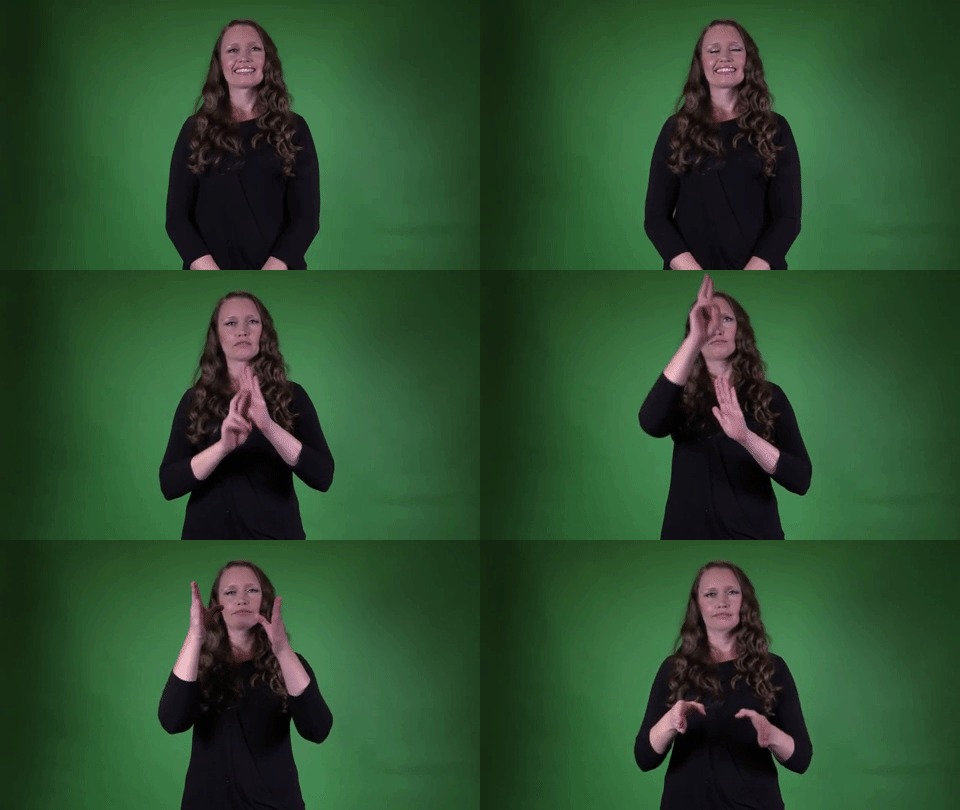
Sign for ASTRONAUT in ASL 

YouTube player

Practice Activities:

To practice the sign for astronaut in ASL, start by signing it slowly in isolation. Repeat it multiple times while looking in the mirror to check hand positioning and movement. Focus on keeping a consistent movement and clear handshape execution.

Try using the sign for astronaut in ASL in simple sentences. For example, sign “The astronaut goes to the moon” or “I want to be an astronaut.” This helps reinforce grammar and fluency. You can also practice fingerspelling “NASA” before signing astronaut to build fluency.

Create a mini-story using the sign for astronaut in ASL. Imagine an astronaut exploring outer space, discovering planets, or floating inside a spaceship. Tell the story while incorporating other space-related signs like moon, star, sun, and planet. This builds expressive skills and concept clarity.

Practice with a partner by asking and answering questions. One person can ask, “Who travels to space?” and the other can respond with “astronaut.” Take turns forming complete ASL sentences about astronauts or space missions. This strengthens conversational fluency.

Play a role-playing game where one person pretends to be an astronaut and the other asks questions like “What do you see?” or “How do you sleep in space?” Respond using ASL phrases while emphasizing proper use of the sign. Acting out space scenarios builds confidence and creativity.

Watch videos of astronauts or space launches and describe what is happening using ASL. Incorporate the sign for astronaut in ASL when explaining the actions. This helps reinforce vocabulary in real-world contexts.

For an advanced challenge, try signing a short news report discussing the role of astronauts. Use facial expressions and classifiers to describe space travel. Practicing this way encourages expressive signing and clarity in communication.

Cultural Context:

The sign for astronaut in ASL reflects the concept of space exploration and adventure. It visually represents the idea of an astronaut wearing a space suit, emphasizing the career and its connection to space travel. This sign is commonly used when discussing NASA, space missions, or even science fiction.

In American Sign Language, signs often carry cultural significance, and the sign for astronaut in ASL is no exception. The motion and structure of the sign reflect the defining characteristics of an astronaut, making it easy to recognize within a conversation. For Deaf individuals interested in space science, this sign is an essential addition to their ASL vocabulary.

Astronauts have fascinated people for decades, from the moon landing to modern space exploration. The sign for astronaut in ASL allows Deaf individuals to fully participate in discussions about space history, famous astronauts, and future space missions. By using ASL, the excitement of space travel becomes more accessible to the Deaf community.

With spaceflight becoming more common in recent years, the sign for astronaut in ASL is appearing more frequently in conversations. Topics related to NASA, SpaceX, and upcoming Mars missions often include this sign. As technology advances, discussions in ASL about space travel expand along with it.

Children learning ASL often enjoy talking about space and astronauts, making this sign an exciting one to learn. Science educators and interpreters frequently use the sign for astronaut in ASL during lessons or presentations about space. Using this sign helps make science more engaging and visually appealing for Deaf students.

Popular media, including movies and TV shows, often depict astronauts in thrilling scenarios. The sign for astronaut in ASL enables Deaf moviegoers and fans of science fiction to talk about their favorite characters and stories. Whether it’s discussing a real astronaut or a fictional one, this sign is an important part of ASL vocabulary.

The sign for astronaut in ASL is not only useful for discussing space and science but also for conversations about career aspirations. Deaf children and adults who dream of becoming astronauts can use this sign to express their aspirations. It serves as a bridge for conversations about STEM careers in the Deaf community.

Learning the sign for astronaut in ASL also encourages discussions about space travel history and advancements. Whether it’s the Apollo missions, the International Space Station, or upcoming lunar exploration, this sign allows Deaf individuals to engage with these topics. ASL provides a way for everyone to share in the wonder of space exploration.

Including this sign in everyday ASL vocabulary fosters accessibility

Extended Definition:

The sign for astronaut in ASL represents the idea of space travel and exploration. It captures the motion of a helmet and the launch of a rocket, making it visually meaningful. ASL often incorporates descriptive elements that reflect real-world concepts, and this sign is a perfect example.

When signing astronaut in ASL, the dominant hand forms a “C” shape over the head, representing a space helmet. Then, an upward motion mimics the launch of a rocket, emphasizing the connection between astronauts and their journey into space. These movements help depict the role of astronauts in space missions.

ASL is a highly visual language designed to convey meaning effectively. The sign for astronaut in ASL clearly represents the protective gear and movement associated with space travel. This makes the sign intuitive and easy to remember for those familiar with space-related concepts.

Astronauts have fascinated people for decades as they venture beyond Earth’s atmosphere. The sign for astronaut in ASL allows Deaf and hard-of-hearing individuals to discuss space exploration naturally. It reflects the same excitement and wonder that the spoken word conveys.

Learning this sign can be beneficial for students studying space science. It can also help educators and interpreters communicate astronomy-related topics clearly. The sign for astronaut in ASL is useful when discussing NASA, space missions, and famous astronauts.

Space exploration continues to be an important field of study and innovation. Knowing the sign for astronaut in ASL allows for better accessibility in discussions about space travel. It ensures that everyone, regardless of hearing ability, can engage in conversations about astronauts and their discoveries.

This sign is also helpful in storytelling and creative discussions. Science fiction enthusiasts can use the sign for astronaut in ASL when discussing space-related stories and movies. The sign enhances visual storytelling and makes conversations more engaging.

Using the sign for astronaut in ASL helps promote inclusivity in science and education. It ensures that discussions about space travel are accessible to Deaf and hard-of-hearing individuals. Learning and using ASL signs like this one supports equal access to knowledge.

Synonyms: spaceman, space traveler, cosmonaut, space explorer, spacefarer

Educational resources: Find related learning materials in our course bank!

Want more? Check out some of our popular learning activities on the homepage!

Need to look up a sign? Use our highly rated dictionary: https://aslinteractive.com/best-asl-dictionary/

Follow us on tiktok: https://www.tiktok.com/@aslinteractive. More social media links at the bottom of this page!

Long-tail Keywords: What is the ASL sign for astronaut, How to sign astronaut in American Sign Language, Learn the ASL sign for astronaut

Categories:

tags: Space, Occupations, Science, Exploration, Technology

Parameters

*Handshape*:

The sign for ASTRONAUT in ASL uses an “A” handshape for one hand, representing the helmet of a spacesuit. The dominant hand, in an open “B” or flat handshape, moves down the torso, symbolizing the suit. This visually represents the image of an astronaut in space. The handshapes and movements together create a clear depiction of space travel, enhancing the expressiveness of the sign.

*Palm Orientation*:

The palm orientation for the sign for astronaut in ASL varies depending on the handshape used. The dominant hand is typically in an “A” or “C” handshape, positioned near the head, while the non-dominant hand often forms a closed or open “B” shape at chest level. Palms generally face inward toward the body as the dominant hand moves upward, mimicking the motion of a helmet or a space launch.

*Location*:

The sign for ASTRONAUT in ASL is produced in the area near the chest and head. The dominant hand, shaped like an “A,” moves up the torso as if representing a space suit. Then, both hands move outward from the sides of the head, mimicking the shape of a helmet. This placement emphasizes the idea of a suited astronaut moving through space. The location of this sign helps visually convey the role and appearance of an astronaut.

*Movement*:

To make the sign for astronaut in ASL, start with your dominant hand in an “A” handshape near your forehead, representing a helmet. Move it downward in a vertical motion, mimicking a helmet being placed on the head. Then, with both hands in relaxed “B” handshapes, move them upward alongside your body, mimicking a space suit. This sign visually represents an astronaut putting on a helmet and suit, emphasizing their protective gear.

*Non-Manual Signals*:

When performing the sign for ASTRONAUT in ASL, your facial expression should convey a sense of admiration or wonder, as if describing something grand or important. Slightly raised eyebrows and an engaged gaze enhance clarity, especially if emphasizing the profession or space travel. If storytelling, widening the eyes can create excitement, while a slight head tilt can indicate curiosity. Keep your facial expressions aligned with the context of the conversation to add depth to the sign.

*Prosody, Dominant/Non-Dominant Hand*:

The sign for ASTRONAUT in ASL uses both hands. The dominant hand forms an “A” handshape and moves upward over the chest in a straight motion, representing the idea of a space helmet. The non-dominant hand stays still in an open “B” shape near the chest. This motion mimics the image of a person in a spacesuit. The sign for ASTRONAUT in ASL visually conveys the profession by illustrating a helmet and protective gear.

Tips for Beginners:

When learning the sign for ASTRONAUT in ASL, focus on handshape and movement precision to ensure clarity. The sign resembles the image of a person inside a spacesuit, so keeping your dominant hand in the correct shape and position will help convey the meaning accurately. Avoid rushing through the motion, as a choppy execution may confuse the sign with others.

Pay close attention to facial expressions and body language while signing. In ASL, adding slight emphasis with your face can convey the idea of outer space or excitement about astronauts. Beginners sometimes neglect this aspect, which can make the sign look less natural or engaging.

A common mistake when signing ASTRONAUT is improper placement of the dominant hand when creating the helmet shape. Make sure your dominant hand moves in an arc over your non-dominant hand, clearly outlining a helmet. If your hand moves too rigidly or too far from your head, the meaning can be lost or altered.

Practice in front of a mirror to check that the movements are smooth and correctly shaped. This will also help in aligning both hands properly so the astronaut’s helmet outline is visually clear. Watching fluent ASL signers use the sign for ASTRONAUT in ASL in conversation can also give insight into natural signing rhythms.

It helps to incorporate the sign into sentences to build confidence. Try combining it with other space-related signs to express ideas such as “I want to be an astronaut” or “The astronaut went to the moon.” Using the sign for ASTRONAUT in ASL in context will solidify your learning and make communication more fluid. Keep practicing and refining your technique for greater accuracy.

Connections to Other topics:

The sign for astronaut in ASL connects closely to other space-related vocabulary, such as moon, planet, and rocket. Each of these signs may involve classifiers that represent movement through space, making the sign for astronaut in ASL useful when discussing space travel narratives. It also relates to the sign for explore, which conveys the idea of venturing into unknown territory, much like astronauts do.

The sign for astronaut in ASL shares similarities with the sign for suit, as astronauts wear specialized outfits. This connection is useful when describing someone in different types of suits, such as divers or protective gear workers. Additionally, signs for science and technology frequently appear in discussions about space travel, since astronauts rely on advances in these fields to complete missions.

In ASL storytelling, space-related concepts often use role-shifting and classifiers to express movement and interaction in a three-dimensional space. When signing a story involving the sign for astronaut in ASL, signers can incorporate the sign for spaceship to show a character’s journey through space. Classifiers like CL:V (representing legs floating) or CL:1 (representing a spaceship traveling) create a visually rich description of an astronaut’s experience.

Compounds like space-travel or space-walk can incorporate elements from the sign for astronaut in ASL and related motions in space. Describing astronaut duties, such as repairing satellites, could bring in signs like fix and work, creating a detailed portrayal of daily life in zero gravity. These connections help learners better understand the ASL space lexicon and apply it fluidly when discussing science and exploration topics.

Summary:

The sign for astronaut in ASL beautifully represents the essence of space exploration. It mirrors the structure of an astronaut’s suit, emphasizing the connection between the body and the protective equipment used in space. This visual connection makes the sign intuitive while reinforcing its meaning.

To sign astronaut, start by forming the dominant hand into the shape of an “A”. Place the “A” hand over the chest in a way that mimics a space helmet or suit. Next, move the hand upward, mimicking the movement of someone launching.

The motion symbolizes an astronaut lifting into space, making it a highly iconic sign. There is often an additional movement that portrays the visor of the helmet, reinforcing the imagery. The combination of these elements creates a clear visual reference to astronauts.

Facial expression can add emphasis to the sign by conveying excitement or wonder. Sometimes, signers will also mouth the English equivalent of the word for added clarity. This is particularly helpful in environments where fingerspelling or context might not provide enough distinction.

The sign for astronaut in ASL is closely related to signs for space and rocket. The shared imagery helps create a mental connection between aviation, exploration, and the role of an astronaut. Understanding these signs as a group improves comprehension among signers.

In some contexts, an alternative method is to sign “space” followed by “person”. This method follows ASL’s common pattern for describing professions, much like teacher, doctor, or firefighter. However, the more common sign distinctly represents the astronaut’s suit itself.

The motion-based nature of ASL makes the sign for astronaut both descriptive and easy to recognize. Many ASL signs adopt this strategy, visually depicting the action or appearance associated with a concept. This makes it easier for learners to remember and use effectively.

Context influences whether the sign for astronaut in ASL needs additional visual descriptors. If discussing a specific astronaut, fingerspelling a name or providing contextual information enhances clarity. Signers may also modify the movement slightly depending on the conversational setting.

This sign bridges language and science, enabling deaf and hard-of-hearing individuals to engage in discussions about space exploration. The presence of such vocabulary in ASL highlights its adaptability to modern and scientific concepts. It also ensures that space-related careers are accessible to ASL users.

Astronauts represent exploration, discovery, and human ambition. The ASL sign captures that spirit through its dynamic movement. It provides an engaging way to discuss technological advancements and space travel within the Deaf community.

The visibility of space exploration in media increases the use of the sign for astronaut in ASL. Movies, scientific breakthroughs, and televised space missions make it a necessary part of conversations. Having an expressive and easy-to-learn sign encourages discussion within the community.

The linguistic structure of this sign follows ASL’s preference for iconic representation. Many science-related signs function similarly, borrowing from visually understandable forms. This is particularly useful for new learners who intuitively recognize patterns in ASL.

Astronaut as a profession comes with prestige and a sense of national pride. By having a sign that effectively conveys this role, the Deaf community participates openly in conversations about notable astronauts. It also promotes STEM fields among Deaf youth.

Awareness of the sign enhances educational access for Deaf students interested in astronomy or physics. Through ASL, complex topics in science can become more accessible. The presence of STEM-related vocabulary helps bridge the representation gap that sometimes occurs in specialized fields.

The sign for astronaut in ASL reflects the linguistic richness of the language. It demonstrates how ASL conveys modern, evolving concepts. The adaptability of ASL ensures that technological advancements remain part of fluent communication.

The motion of the sign mirrors the way language evolves to visually capture ideas. Unlike fingerspelling, which relies on individual letters, conceptual signs like this one provide immediate understanding. This is an essential feature of ASL’s efficiency.

When discussing space travel or astronauts, this sign fits naturally into larger conversations. It allows signers to describe missions, famous astronauts, or historical events. Combined with related signs like moon, Mars, and rocket, it creates a comprehensive vocabulary for space-related discussions.

The sign for astronaut also encourages creative storytelling in ASL. Many ASL narratives include elements of space as a metaphor for adventure and dreaming big. Having an expressive sign contributes to rich storytelling traditions within the Deaf community.

ASL storytelling often relies on expressive movements and classifiers, elements reflected in this sign. The visual aspect of ASL allows for expansion, such as indicating the weightlessness of space. These additions create immersive signing experiences.

The sign for astronaut in ASL serves both linguistic and social functions. It opens discussions on accessibility in STEM professions and raises awareness of contributions made by deaf individuals in science. By having a dedicated sign, more emphasis is placed on inclusion within space-related fields.

ASL evolves alongside cultural changes, incorporating new scientific terminology as needed. The sign for astronaut showcases ASL’s ability to adapt and remain relevant in modern discourse. This adaptability ensures ongoing engagement in emerging fields

Want more? Check out some of our popular learning activities!

ASL Interactive Resources

ASLInteractive YouTube Channel

Follow us on tiktok: @aslinteractive.com

Follow us on Instagram: aslinteractive

Facebook page: aslinteractive

Facebook group: aslinteractive

LInkedIn: ASL Interactive LLC

Twitter: @ASL_interactive

*Some information on this page is AI-generated. AI can make mistakes. Please check the information.

Sign for ASTRONAUT in ASL 

Responses