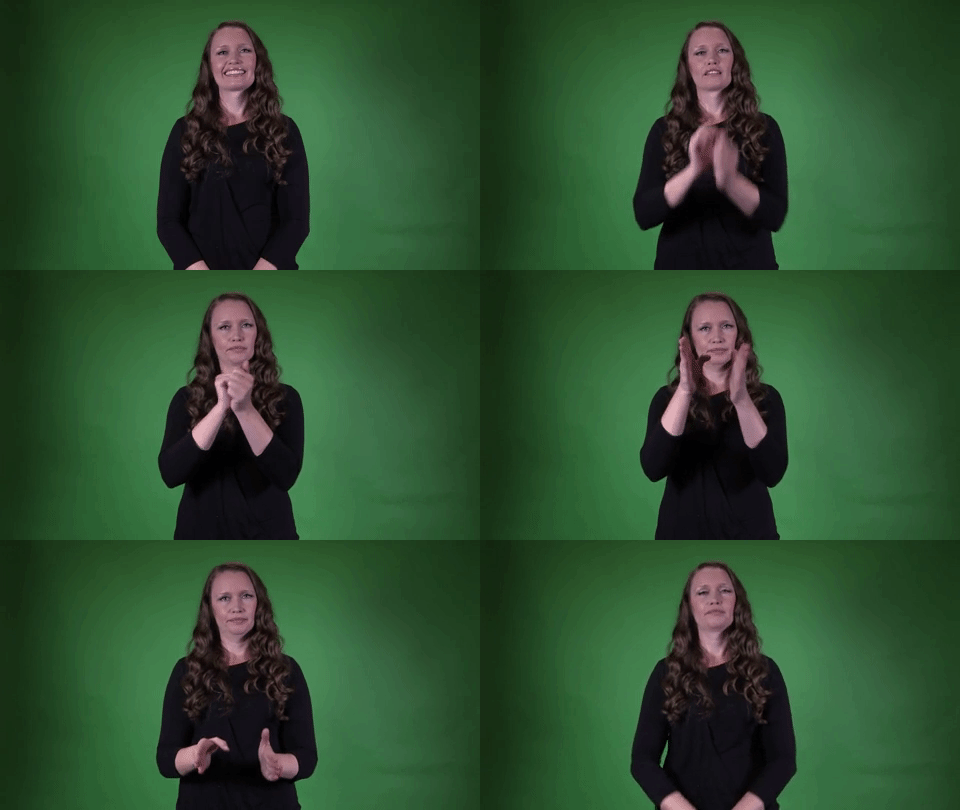
Definition: A person who is proficient in sports.
Sign for ATHLETE in ASL

Practice Activities:
Start by practicing the sign for athlete in ASL in isolation. Repeat it multiple times with both hands relaxed in the correct shape. Focus on making the movement fluid and consistent. Use a mirror or record yourself while signing to ensure proper hand positioning and motion.
Next, incorporate the sign for athlete in ASL into simple sentences. Practice phrases like “She is an athlete,” “I want to be an athlete,” or “Are you an athlete?” Sign each sentence slowly at first, then increase your speed as you gain confidence. Try signing them in both affirmative and question forms.
Engage in storytelling by describing different types of athletes. Talk about a football player, a swimmer, or a gymnast. Use additional sports-related signs like run, jump, win, or practice to enhance your sentence structure. You can also describe your favorite athlete and what sport they play.
For a partner activity, play a guessing game where one person signs the sport, and the other responds by signing “athlete” or describing the type of athlete. For example, if someone signs “soccer,” the other can sign “The soccer athlete is fast.” Take turns practicing different sentences.
Challenge yourself by watching sports-related videos without sound and translating what you see using ASL. Focus on including the sign for athlete in ASL appropriately in your descriptions. Try signing a short commentary about a game you recently watched.
Finally, connect with fluent ASL users and use the sign in conversation. Join an ASL study group and discuss sports, fitness, or famous athletes. The more you use the sign in context, the more natural it will feel. Keep practicing regularly to improve fluency and confidence.
Cultural Context:
The sign for athlete in ASL connects deeply with Deaf culture and the strong presence of sports in the Deaf community. Many Deaf athletes compete in both mainstream and Deaf-specific competitions, showcasing their talent and skills. The Deaflympics, an international event, highlights the dedication and perseverance of Deaf athletes.
Using the correct sign for athlete in ASL helps foster inclusion and respect within the Deaf community. Sports are a major part of Deaf culture, offering opportunities for connection and teamwork. Whether it’s basketball, track, or swimming, Deaf athletes continue to break barriers and inspire others.
The sign for athlete in ASL reflects motion and determination, mirroring the dedication of athletes. It’s essential for sports coaches, teachers, and interpreters to know and use this sign correctly. It ensures that Deaf athletes receive clear communication and equal opportunities in sports environments.
Many Deaf schools and programs emphasize athletics as a way for students to develop leadership and confidence. The sign for athlete in ASL is frequently used in these settings to discuss team participation and achievements. Learning this sign supports better communication with Deaf sports enthusiasts and athletes.
From local Deaf sporting events to global competitions, the importance of the sign for athlete in ASL is evident. Understanding and using this sign in conversations about sports enhances accessibility and inclusion. Supporting Deaf athletes means recognizing their achievements and ensuring they have the tools for success.
By learning the sign for athlete in ASL, hearing and Deaf individuals alike can celebrate sports together. It opens doors for interaction with Deaf athletes and recognition of their contributions to the world of athletics. Signing correctly builds bridges and strengthens communication within the sports community.
Extended Definition:
The sign for athlete in ASL is a widely used term in conversations about sports, competition, and physical fitness. It helps describe a person who actively participates in sports or other physical activities. Whether talking about professional athletes or casual sports enthusiasts, using the correct ASL sign ensures effective communication.
To sign for athlete in ASL, you use the sign for “competition” or “compete” and add the agent marker. This motion represents the idea of active participation in sports. The movement and shape of the sign visually illustrate the idea of an athlete in action.
ASL is a visual language, and many signs logically show the meaning behind the word. The sign for athlete in ASL follows a similar pattern, using familiar motions to represent sports and competition. This makes it easier to remember and use in everyday conversations.
People often use the sign for athlete in ASL when discussing sports teams, games, or individual performances. It is also useful in schools and sports training environments to talk about student-athletes. The sign helps create clear communication between coaches, players, and fans.
Anyone learning ASL, especially those involved in sports, benefits from mastering this sign. It allows for more natural conversations about fitness, training, and competitions. Using the correct ASL vocabulary helps create a more inclusive environment in both sports and social settings.
The sign for athlete in ASL connects to many other sports-related signs. Learning related terms such as “coach,” “team,” and “game” enhances overall fluency in talking about sports. Expanding ASL vocabulary makes discussions about athletics more engaging and expressive.
Whether watching a sports event or discussing an athlete’s achievements, using proper ASL signs makes communication smoother. The correct sign ensures that Deaf and hard-of-hearing individuals can fully participate in conversations about sports. Signing with accuracy strengthens inclusion in athletic communities.
Understanding the sign for athlete in ASL is useful for sports fans, athletes, and anyone in the Deaf community. It provides a clear way to describe people involved in physical activities. Learning this sign is an essential step in improving ASL proficiency related to sports.
Synonyms: athlete, sportsperson, competitor, player, sportsman
Educational resources: Find related learning materials in our course bank!
Want more? Check out some of our popular learning activities on the homepage!
Need to look up a sign? Use our highly rated dictionary: https://aslinteractive.com/best-asl-dictionary/
Follow us on tiktok: https://www.tiktok.com/@aslinteractive. More social media links at the bottom of this page!
Long-tail Keywords: What is the sign for athlete in ASL?, How do you sign athlete in ASL?, Athlete in ASL
Categories:
tags: sports, activities, people, language learning, events
Parameters
*Handshape*:
The sign for athlete in ASL uses an “A” handshape on both hands . The thumbs of both hands are up, while the fingers are curled into a fist. These handshapes move in a circular motion near the chest, mimicking the movement of a competitor. This motion conveys physical effort, emphasizing the meaning behind the sign for athlete in ASL. The sign is energetic, reflecting the dedication and strength of an athlete.
*Palm Orientation*:
The palm orientation for the sign for ATHLETE in ASL is generally inward, with both hands in the A-handshape. The knuckles face forward while the thumbs rest along the sides of the fists. As the sign is executed, the hands move slightly in an alternating motion near the chest, representing the physical movement of an athlete. Keeping the palm orientation correct helps maintain clarity and ensures accurate meaning in ASL.
*Location*:
The sign for ATHLETE in ASL is produced near the center of the chest. Both hands begin in the A-handshape, with thumbs extended forward. This location ensures the sign remains visually clear while also being closely associated with the body. Since many signs related to professions or roles are signed near the torso, this placement aligns with the meaning of the word. The focus is on the hands moving in a shaking or twisting motion, emphasizing action and physical effort.
*Movement*:
Hold both hands in the “A” handshape near the center of the chest. Move them forward and back alternately in a small circular motion, similar to the movement for “COMPETE” or “RACE.” The sign for athlete in ASL mimics the motion of two competitors running side by side. Keep the movement steady and firm to convey the idea of competition and athleticism.
*Non-Manual Signals*:
When using the sign for athlete in ASL, the eyebrows often remain in a neutral or slightly engaged position, depending on the context. If emphasizing competition, the lips may be slightly pursed or pressed together. Facial expressions like a slight head tilt or raised eyebrows can add emphasis, especially when discussing a specific athlete or event. The eyes should be naturally focused on the person being addressed, ensuring clear communication.
*Prosody, Dominant/Non-Dominant Hand*:
The sign for ATHLETE in ASL uses the dominant hand in the “A” handshape, with the thumb extended. The movement resembles a shaking gesture near the center of the chest, representing physical exertion. The non-dominant hand remains stationary or is absent. This motion mimics the effort and strength associated with sports. The sign for ATHLETE in ASL can also incorporate a personal-agent suffix by adding both hands in a “B” shape, moving downward to indicate a person.
Tips for Beginners:
When learning the sign for ATHLETE in ASL, focus on maintaining precise handshapes and fluid movement. This sign is related to the sign for “COMPETE” or “RACE,” so understanding those motions will help reinforce accuracy. Hand positioning and motion should be clear to ensure the concept is correctly conveyed.
A common mistake is not maintaining firm “A” handshapes throughout the motion. If the hands are too loose or not properly angled, the sign may be unclear. Be mindful of consistency with hand orientation and movement to avoid confusion.
Practice the sign for ATHLETE in ASL in front of a mirror or record yourself to check for accuracy. Watching fluent signers using this sign will also help refine your movements. Consistent repetition will improve muscle memory and confidence when signing.
Facial expression plays an important role in signing naturally. While signing ATHLETE, keep a neutral or slightly determined look, especially if emphasizing competition or athleticism. A weak or inconsistent expression may make the sign appear incomplete.
Engaging with the Deaf community is a great way to perfect the sign for ATHLETE in ASL. When interacting with native signers, ask for feedback on clarity and execution. Seeing the sign in real-world conversations will make it easier to remember and use effectively.
Hand dominance is essential when signing athletic-related terms. If you are right-handed, lead with your right hand; if you’re left-handed, with your left. Switching dominant hands in a sentence can cause confusion, so be consistent to ensure fluency.
If you’re a beginner, be patient with yourself. The sign for ATHLETE in ASL may take time to feel natural, but steady practice will help. Keep refining your movements to make them crisp and understandable.
Connections to Other topics:
The sign for ATHLETE in ASL is closely related to the sign for COMPETE and PLAYER. These connections make sense because an athlete participates in competitive activities, and PLAYER refers to someone engaged in a sport or game. The movement and handshape used in the sign for ATHLETE echo this relationship, reinforcing the concept of physical engagement and effort.
A common compound sign that builds on the sign for ATHLETE in ASL is ATHLETIC. This sign takes the base meaning and modifies it slightly to describe someone’s physical capability or characteristics. In conversations about sports, you might see signs like PROFESSIONAL ATHLETE, where the sign for PROFESSIONAL is added to indicate someone who plays at a professional level.
Sports terminology in ASL often builds upon foundational signs like ATHLETE by pairing them with different sport names. For example, BASKETBALL ATHLETE or FOOTBALL ATHLETE can be signed by combining the respective sport with the sign for ATHLETE. This pattern helps create clear and precise communication when discussing different types of athletes in various sports contexts.
The sign for ATHLETE in ASL also connects to broader discussions about inclusion and accessibility in sports. The Deaf community has a strong tradition of competitive athletics, including organizations such as the Deaflympics. Learning this sign is valuable for discussions about Deaf representation and achievements in sports, promoting awareness of Deaf athletes in mainstream and Deaf-centered competitions.
Using ATHLETE in storytelling or descriptions adds richness to ASL discussions. Whether describing a famous athlete, telling a story about a game, or discussing personal sports experiences, this sign serves as a foundation for many narratives. Its connection to movement, effort, and competition makes it an essential term in conversations about physical fitness and sportsmanship.
Summary:
The sign for ATHLETE in ASL is closely related to the sign for COMPETE or SPORTS. It uses the A handshape on both hands, with the thumbs tucked in and the fists slightly tilted forward. The hands move in alternating circular motions, representing the idea of physical engagement and competition.
This sign captures the essence of competition and athleticism, reflecting the dynamic nature of sports. It is rooted in the concept of two people actively engaging in a contest. The back-and-forth movement suggests an action-driven, goal-oriented experience, which aligns with the identity of an athlete.
The sign for ATHLETE in ASL is conceptually clear, emphasizing physical skill and determination. It can be used to describe individuals who engage in any type of physical activity professionally or recreationally. This makes the sign versatile, applicable in contexts involving sports, training, and competition.
Linguistically, this sign belongs to a category of ASL vocabulary that conveys action and movement. The handshape, repetition, and circular motion reinforce the continuous effort involved in athletics. ASL often uses iconic elements to reflect the meaning behind a sign, and this motion effectively symbolizes the energy of an athlete.
The cultural significance of the sign for ATHLETE in ASL extends beyond mere physical prowess. It represents dedication, endurance, and teamwork, which are key values in both Deaf and hearing sports communities. Deaf athletes have historically faced challenges but have also demonstrated resilience and excellence in competitive sports arenas.
Deaf sports organizations, such as the Deaflympics, have provided athletes in the Deaf community with recognition and opportunities. This highlights the importance of representation and accessibility in the broader world of athletics. The sign for ATHLETE in ASL, in this context, is a powerful representation of inclusion and achievement within the Deaf community.
The grammatical usage of the sign for ATHLETE in ASL depends on sentence structure and context. It can be used as a noun to directly indicate a person engaged in sports, as in “HE ATHLETE.” It can also be used descriptively, such as “MY FRIEND ATHLETE,” to clarify someone’s involvement in sports.
To modify this sign for specificity, classifiers and additional descriptors can be incorporated. For example, if referring to a runner, one might sign RUN alongside the sign for ATHLETE. This allows for more nuanced conversations that specify different types of athletes within ASL communication.
There are various related signs that share similar movements or handshapes, such as COMPETE, GAME, and WIN. Understanding these connections enhances fluency and provides insight into ASL’s visual and conceptual language. By learning these related signs, one can more effectively discuss topics about sports and athleticism in ASL.
ASL often conveys meaning through spatial representation, which is useful when discussing teams or individual accomplishments. The sign for ATHLETE in ASL may be modified with facial expressions and intensity to emphasize the skill level of an athlete. This ensures that the conversation remains both clear and expressive.
The sign is also useful in classroom settings, Deaf sports events, and discussions about fitness and physical training. It allows individuals to engage in conversations about physical ability, competitions, and personal achievements. Instructors and coaches in Deaf sports programs frequently use this sign while training and motivating athletes.
For beginners learning ASL, this sign is relatively easy to remember due to its visual representation of competition. Its connection to other common sports-related ASL signs makes it even more memorable. Recognizing the link between movement and meaning is key to effectively understanding and using this sign.
The sign for ATHLETE in ASL is often accompanied by non-manual markers to express different emotions or intensity. For example, raising the eyebrows may indicate excitement or curiosity, while a more serious facial expression can communicate a professional or competitive tone. These subtle variations add depth and clarity to conversations.
The growing visibility of Deaf athletes in professional and collegiate sports has increased awareness of ASL signs related to athletics. More teams and organizations are incorporating ASL to foster inclusivity and communication with Deaf athletes. This reinforces the importance of having a clear and widely recognized sign for ATHLETE in ASL.
Deaf athletes have played an essential role in shifting societal perceptions about accessibility in sports. Many have become advocates for equal opportunities in athletic programs and have influenced the development of inclusive policies. The sign for ATHLETE in ASL, therefore, carries meaning beyond its literal interpretation—it signifies perseverance and representation in sports.
The use of this sign is not limited to professional athletes; it can be applied to anyone who engages in physical sports. Whether discussing a school team player, a casual runner, or an elite competitor, this sign remains relevant. Its broad applicability allows for inclusive conversations across different levels of athletic participation.
ASL learners who frequently discuss sports or fitness should prioritize learning this sign, as it is often used in conversations about health and activity. The more exposure one has to ASL sports vocabulary, the easier it becomes to engage
Want more? Check out some of our popular learning activities!
ASL Interactive Resources
ASLInteractive YouTube Channel
Follow us on tiktok: @aslinteractive.com
Follow us on Instagram: aslinteractive
Facebook page: aslinteractive
Facebook group: aslinteractive
LInkedIn: ASL Interactive LLC
Twitter: @ASL_interactive
*Some information on this page is AI-generated. AI can make mistakes. Please check the information.


Responses