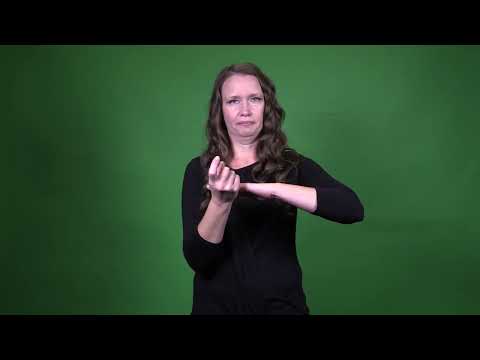
Sign for AUTOMATIC in ASL | 🚘 ASL Dictionary

Definition: Operating by itself.

Sign for AUTOMATIC in ASL

YouTube player

Practice Activities:

Begin your practice of the sign for automatic in ASL by signing it in front of a mirror several times. Focus on the handshape, motion, and facial expression. Muscle memory will help reinforce the fluid, smooth motion that reflects the concept of something operating on its own.

Practice the sign in isolation by creating a rhythm—sign it three times, pause, then repeat. Pair it with flashcards or videos that show machines, doors, or processes that operate automatically. Point to them and use the sign for automatic in ASL to describe or label what’s happening.

Use the sign in simple sentences like “The door is automatic,” “The system runs automatic,” or “My car has automatic transmission.” Record yourself and play it back to check if your sign is clear and appropriate in context. Try replacing “automatic” in English sentences and translating them fully into ASL using appropriate facial grammar.

Storytelling is a great way to develop fluency. Describe a day where everything around you works automatically—a coffee maker, lights, security system, and phone. Integrate the sign for automatic in ASL into your descriptions as much as possible. Create imaginary inventions that use automation and explain how they work using the sign naturally in your narrative.

With a partner, quiz each other. One person names an object like “door,” “car,” or “coffee machine,” and the other responds by signing “automatic” if applicable. If they get it right, switch roles. This helps reinforce the relationship between real-world items and the sign for automatic in ASL.

Finally, try creating comparison sentences like “The old door is manual, the new one is automatic.” This builds contrast and shows how the concept can be used flexibly. Practicing in these varied ways will help deepen your understanding and fluency.

Cultural Context:

The sign for AUTOMATIC in ASL reflects the Deaf community’s approach to expressing concepts that involve machinery, automation, or actions that happen on their own without direct human involvement. This concept ties closely to discussions in Deaf culture about accessibility, especially as technology becomes more prevalent in everyday life. Whether referring to automatic doors, automatic cars, or automatic systems, the ability to clearly convey this idea in ASL is essential for effective communication within the community.

In Deaf culture, clear and efficient signing is not just about language—it’s about equal access to information and independent living. Knowing the correct sign for AUTOMATIC in ASL helps Deaf individuals navigate environments filled with automated systems. It supports self-advocacy in situations where accessibility tools are either absent or malfunctioning, such as elevators, ticketing machines, or alarms.

The use of the sign for AUTOMATIC in ASL also frequently arises in educational and employment settings. For example, when discussing automatic features in software or machinery, ASL users depend on this sign to keep pace with hearing peers during discussions. It gives Deaf individuals the tools to be active participants in conversations about technology, advancements, and innovation.

Culturally, the sign for AUTOMATIC in ASL has gained more usage as society becomes increasingly reliant on smart devices and automated tools. From smart thermostats to self-driving cars, automation plays a critical role in modern life. As a result, learning how to sign AUTOMATIC in ASL supports full participation in both casual and professional conversations.

Parents teaching ASL to their Deaf children also incorporate signs like AUTOMATIC to prepare them for independent interaction in day-to-day environments. By learning the sign for AUTOMATIC in ASL early, children develop the vocabulary needed to explain or ask about features they encounter in public spaces. This empowers them to advocate for themselves in situations that involve automation technology.

ASL is visually expressive, and the sign for AUTOMATIC captures the concept smoothly through natural movement. This makes it a memorable part of daily signing, reinforcing the language’s flexibility in describing modern experiences. Signers can combine the sign for AUTOMATIC in ASL with other signs like door, car, or payment to make specific and meaningful phrases.

The increasing need to talk about smart home setups, app features, and digital services has pushed signs like AUTOMATIC to the forefront of ASL vocabulary expansion. Being able to sign AUTOMATIC correctly allows ASL users to stay connected and relevant in a fast-changing world. It ensures that both informal and technical discussions remain

Extended Definition:

The sign for automatic in ASL is often associated with the idea of something functioning without manual effort. In ASL, the movement and facial expression used to convey the concept of automatic play a critical role in clearly communicating intent. The sign typically involves the dominant hand rotating or moving against the non-dominant hand to show continuous or self-operating motion.

When learning the sign for automatic in ASL, it’s helpful to understand how context affects its usage. For example, in a conversation about machines, cars, or electronic devices, the sign shows that something operates on its own. This differentiates it from manual versions, which would use different signs or be clarified with additional detail.

The sign for automatic in ASL can vary slightly based on regional dialects or signer’s preference. However, the semantic core remains — the idea of something happening without active intervention. By putting emphasis on natural hand motion and rhythm, signers can make the meaning more precise and relatable.

In teaching environments or during demonstrations, instructors often compare the sign for automatic in ASL with other signs like machine, robot, or self-starting. These comparisons help new learners recognize how signs are conceptually linked. This deepens understanding and helps with retention.

Facial expressions are also crucial when signing automatic in ASL. A neutral expression can suggest a basic function, while a more animated one might show surprise, speed, or excitement about the automated action. This non-manual signal helps express tone and nuance, just like intonation in spoken language.

Some idiomatic uses of the sign for automatic in ASL also appear in everyday conversation. For instance, someone might use it to describe a habit they perform effortlessly, like waking up or responding to a text. Context determines whether the meaning is literal or metaphorical, making the language rich and expressive.

When creating video examples of the sign for automatic in ASL, clarity and natural motion are key. Videos should be shot from the signer’s front angle to help viewers see both hands clearly. This supports learners in mirroring the motion and practicing accurately.

The sign for automatic in ASL is frequently included in vocabulary lists for technical or mechanical discussions. Signers who work in fields like tech support, automotive repair, or home automation find this vocabulary especially useful. It enables more precise and efficient communication in professional settings.

Using the sign for automatic in ASL correctly can make interactions smoother, especially with complex topics. With repetition and exposure, it becomes part of a fluent signer’s natural vocabulary

Synonyms: automated, self-operating, self-running, mechanical, autonomous

Educational resources: Find related learning materials in our course bank!

Want more? Check out some of our popular learning activities on the homepage!

Need to look up a sign? Use our highly rated dictionary: https://aslinteractive.com/best-asl-dictionary/

Follow us on tiktok: https://www.tiktok.com/@aslinteractive. More social media links at the bottom of this page!

Long-tail Keywords: what is the sign for automatic in ASL, how do you sign automatic in ASL, ASL sign for automatic

Categories:

tags: automatic, technology, machines, actions, electronics

Parameters

*Handshape*:

The handshape for the sign for AUTOMATIC in ASL involves both hands. Each hand forms the letter “S” handshape, with fingers curled into the palm and thumbs tucked across the front.

To produce the sign for AUTOMATIC in ASL, the dominant “S” hand circles slightly above or around the stationary non-dominant “S” hand, symbolizing a continuous or automatic motion . This movement helps reinforce the concept of something happening on its own or functioning without manual intervention.

*Palm Orientation*:

For the sign for AUTOMATIC in ASL, both hands are typically in S-handshapes. The dominant hand’s palm faces inward or slightly downward, while the non-dominant hand faces to the side or inward depending on the signer’s positioning. The dominant hand circles or moves quickly against the back of the non-dominant hand, simulating an automatic motion.

Palm orientation plays a crucial role in the clarity of the sign for AUTOMATIC in ASL. Ensuring consistent inward or diagonal orientation helps distinguish it from similar mechanical or motion-based signs.

*Location*:

The sign for automatic in ASL is typically produced in the neutral space in front of the torso, slightly below the chest level. It does not require contact with the body and is executed mid-air, allowing both hands to move freely in this area.

This positioning keeps the sign for automatic in ASL clearly visible and easily recognized. The central location supports fluid movement and helps emphasize the mechanical or self-operating nature implied by the concept. 

*Movement*:

The sign for AUTOMATIC in ASL involves both hands in “S” handshapes. The dominant hand rests on top of the non-dominant hand near the wrist or forearm. Then, the dominant hand makes a small forward circular movement as if activating a mechanism.

This mechanical motion mimics the concept of an automatic trigger or function starting on its own. The sign for AUTOMATIC in ASL effectively conveys the idea of something happening without manual effort.

*Non-Manual Signals*:

When using the sign for automatic in ASL, the facial expression should remain neutral or slightly focused, indicating an action happening on its own without manual effort. Slight eyebrow lowering can be used to convey the concept of something operating independently or routinely.

The non-manual signals support the meaning of the sign for automatic in ASL by showing minimal emotional engagement, reflecting how the action is carried out passively or involuntarily. Maintain steady eye contact for clarity and emphasis.

*Prosody, Dominant/Non-Dominant Hand*:

The sign for AUTOMATIC in ASL uses both hands in a coordinated movement. The non-dominant hand remains stationary in an S-handshape, while the dominant hand, also in an S-handshape, rotates slightly on top of or beside the stationary hand in a small, repeated circular motion. This fluid motion represents a mechanism operating smoothly without manual input.

To produce the sign for AUTOMATIC in ASL accurately, ensure the dominant hand initiates the movement and maintains a controlled rhythm. The use of both hands synchronously is essential to convey the meaning clearly and naturally.

Tips for Beginners:

When learning the sign for AUTOMATIC in ASL, it helps to observe the hand movement closely and practice in front of a mirror. This sign typically involves a handshape and motion that mimics a mechanical or automatic action, often resembling gears turning or continuous motion. Precision in the movement is key to making your sign clear and correct.

A common mistake beginners make with the sign for AUTOMATIC in ASL is confusing it with similar signs like MACHINE or SELF-OPERATE. To avoid this, focus on the context in which you’re using the sign—remember that signs can look similar but carry different meanings depending on how they are used in conversation. Watching native signers and using video examples can be a big help in distinguishing these differences.

Keep your fingers relaxed but firm, especially if you’re using a circular motion or moving parts of both hands during the sign. Stiff fingers or exaggerated movements can make the sign look awkward or confusing. Practice smooth, controlled repetitions to internalize the gesture and make your signing appear natural .

Repetition and consistency are essential when learning the sign for AUTOMATIC in ASL. Revisit it regularly in your practice sessions and look for opportunities to use it in everyday conversation. Using flashcards, recording yourself, or working with a partner can help reinforce your memory.

Learning context-based usage is also helpful. The sign for AUTOMATIC in ASL might change slightly depending on whether you’re talking about a machine, a process, or a feature in a product. Find multiple example sentences and practice applying the sign in diverse contexts to gain full mastery. Don’t hesitate to ask a fluent signer or instructor for feedback to refine your technique and comprehension.

Connections to Other topics:

The sign for AUTOMATIC in ASL is deeply connected to technology and mechanical processes, making it especially relevant when discussing modern devices or systems. It shares similarities with signs related to robotics, machines, and self-operating mechanisms, as the concept of automation is central to many tools and systems in contemporary settings. This sign is also used when describing settings on household appliances, cars, and computers that perform functions without manual control.

In ASL, the sign for AUTOMATIC in ASL can be linked to compound signs like AUTOMATIC-DOOR or AUTOMATIC-CAR, where the main concept is modified to specify function or usage. These compound signs help provide clear, concise meanings without the need for excessive fingerspelling or explanation. For example, using AUTOMATIC in a sentence about transportation shifts the context to convenience and self-functioning vehicles, such as electric cars with autopilot features.

This sign also connects conceptually to verbs and actions such as CONTROL, FUNCTION, and PROGRAM. When discussing computer systems or manufacturing processes, the sign for AUTOMATIC in ASL can be used to show how operations are pre-set or managed through programmed responses. These connections make it a crucial part of vocabulary in educational settings related to STEM and industrial topics.

In conversations about behavior or patterns, the sign for AUTOMATIC in ASL may also be used figuratively. For instance, describing someone’s habit or reaction as automatic uses the sign to imply it is done without conscious thought—similar to how one might say something is second nature. This illustrates how the sign extends beyond the mechanical to describe cognitive or habitual responses.

The sign also pairs well with other descriptors like SYSTEM or SETTINGS when explaining procedures, particularly in instructional settings. Understanding how this versatile sign can merge with context-rich terms helps learners build more natural and expressive ASL communication .

Summary:

The sign for AUTOMATIC in ASL reflects efficiency, mechanical function, and self-operation. It typically conveys the idea of something happening on its own, without continuous human action, which aligns well with the concept of automation culturally and linguistically.

To produce the sign for AUTOMATIC in ASL, begin with both hands in a modified “S” handshape. The dominant hand moves slightly forward or in a small circular motion against the back of the non-dominant hand, sometimes resembling gears turning or mechanisms shifting into place.

This motion symbolizes a self-starting process, almost like setting something in motion and then letting it run on its own. The hands mimic mechanical parts interacting briefly, reflective of what automatic processes look like internally.

In Deaf culture, the sign for AUTOMATIC in ASL also relates to discussions around technology and independence. As more tools become automated, Deaf people engage conversations around accessible design and the evolving roles of human labor, often using this sign to express those dynamics.

Automated technology has both empowered and challenged the Deaf community. Voice-activated and speech-dependent automation can be barriers, but manual or visual automation aligns more fluently with Deaf-accessible environments.

Grammatically, the sign for AUTOMATIC in ASL can function as an adjective or adverb depending on sentence structure. It can modify verbs to show how something functions or describe a process or machine.

For example, in a sentence like “The door opens automatically,” the sign slides in just before the verb “open,” adding vital contextual meaning. Sign order and facial expressions help clarify timing and causality.

It’s also linked semantically to signs like MACHINE, ROBOT, MECHANIC, SYSTEM, and SELF or ON-ITS-OWN. The sign for AUTOMATIC in ASL intersects thematically with technology, process, and autonomy.

The handshape choice—the “S” formation—conveys strength, compression, and function. Linguistically, these features mirror how conceptual metaphors are physically embodied in ASL, emphasizing the visual-spatial modality of the language.

Applied linguistics benefits from examining the sign for AUTOMATIC in ASL within real discourse. It highlights how modern, abstract ideas are physically represented, bridging cognitive linguistics and semantic fields visually.

ASL often uses metaphor and metonymic representation. Here, the contact of the fists imitates gears, turning a complex idea into a concise visual message.

Regional and generational variations exist in how the sign is performed. Some variations use a more fluid or sharper gear motion depending on signing speed and context, indicating slight stylistic variations rather than full structural differences.

Though automation can evoke sterility, the sign for AUTOMATIC in ASL maintains organic movement. This reflects the sensitivity in ASL to maintain visual engagement, even for abstract or mechanical concepts.

In discourse, the sign comes up in conversations about automatic doors, automatic cars, or automatic systems. It’s useful in both technical discussions and everyday contexts—describing convenience, speed, or lack of human interaction.

Culturally, there’s an interesting duality with the sign for AUTOMATIC in ASL. While it implies progress and modern systems, it also surfaces in talks about outsourcing human agency.

That dual meaning occasionally influences tone in signed conversations—some use exaggerated gear motions for sarcastic or ironic mentions, especially when referencing bureaucracy or cold systems.

Facial expressions play a crucial grammatical role. A neutral or slightly raised brow could suggest neutrality, while a dismissive expression while signing AUTOMATIC might imply detachment or frustration with impersonal systems.

The role of technology in education is another context where this sign appears often. Automated subtitles, learning management systems, and AI tutors depend on this sign to communicate their functions.

Conversationally, signers will use the sign for AUTOMATIC in ASL to compare manual versus automatic systems, especially when discussing access barriers. For example, “Manual door—no, need automatic” succinctly argues for inclusive infrastructure.

In narratives, especially in ASL storytelling or performance, AUTOMATIC may symbolize societal depersonalization. It may be inserted to represent a lack of emotional connection or an overly processed way of life.

In poetic ASL or visual storytelling, the same mechanical handshape can symbolize more sophisticated concepts, such as habit, repetition, or loss of individuality. Signers may elongate the motion, add layers, or shift facial expressions for artistic framing.

Emerging signs related to AI and automation have some roots in the base sign for AUTOMATIC. As vocabulary expands in ASL, new compound signs build from existing semantic-rich base signs like this one.

The concept of something working independently in ASL aligns with the cultural value of Deaf autonomy. So the sign for AUTOMATIC in ASL also serves metaphorically to represent self-stewardship within the community.

From a semiotic perspective, the sign uses indexicality. The motion of one moving hand on another calls attention to the concept rather than the literal object, guiding meaning through embodied reference.

The sign

Want more? Check out some of our popular learning activities!

ASL Interactive Resources

ASLInteractive YouTube Channel

Follow us on tiktok: @aslinteractive.com

Follow us on Instagram: aslinteractive

Facebook page: aslinteractive

Facebook group: aslinteractive

LInkedIn: ASL Interactive LLC

Twitter: @ASL_interactive

*Some information on this page is AI-generated. AI can make mistakes. Please check the information.

Sign for AUTOMATIC in ASL

Responses