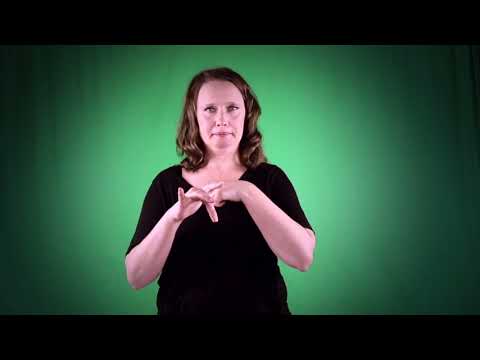
Sign for AVAILABLE in ASL | 📆 ASL Dictionary

Definition: Capable of being used or obtained.

Sign for AVAILABLE in ASL

YouTube player

Practice Activities:

To practice the sign for AVAILABLE in ASL, begin by isolating the motion. Stand in front of a mirror and form both hands in the open “5” shape with palms down. Brush the fingertips of your dominant hand over the back of the non-dominant in a circular motion, lightly and smoothly. Perform the sign slowly at first, then increase your speed while maintaining clarity.

Once comfortable with the general movement, try using the sign for AVAILABLE in ASL during simple phrases like “I am available today,” “She is available now,” or “Is this room available?” Sign these slowly and repeat multiple times, focusing on fluid transitions between words. You can also try modifying facial expressions to match questions versus statements, reinforcing your understanding of ASL grammar.

Pair up with a partner or use a video chat with another learner. Take turns asking and answering questions using the sign for AVAILABLE in ASL, such as scheduling a meeting or planning weekend activities. One partner can ask, “Are you available tomorrow afternoon?” and the other responds appropriately using signs.

Practice storytelling activities that put the sign for AVAILABLE in ASL in context. For example, create a short narrative about someone looking for a job and finding one that’s available. Add in other signs like WORK, INTERVIEW, and READY to expand vocabulary and fluency.

Flashcard drills can reinforce memory, especially when transitioning between similar signs like READY, OPEN, and ACCESSIBLE. Show an image or written description, and sign the correct ASL translation quickly.

Roleplay common scenarios like booking a hotel room, setting a doctor’s appointment, or asking someone if a seat is available. These daily contexts help internalize when and how to use the sign for AVAILABLE in ASL fluidly and expressively.

Cultural Context:

In American Sign Language (ASL), expressing the concept of availability goes beyond simply knowing the sign for AVAILABLE in ASL. Cultural context plays a key role in understanding how and when to use this sign appropriately. Like many signs in ASL, meaning can shift depending on body language, facial expressions, and the situational use of the sign.

The sign for AVAILABLE in ASL is used in both casual and formal conversations. It’s often used to let others know that a person, time, or item is accessible or not in use. For example, if someone asks if you’re free to meet, you can use the sign for AVAILABLE in ASL to say that you’re open.

Culturally, showing availability in the Deaf community isn’t just a scheduling matter—it can also show social openness or willingness to engage. When someone uses the sign for AVAILABLE in ASL, they are often communicating more than just a time slot. It may suggest they are mentally present and fully willing to participate in the interaction.

In Deaf culture, eye contact and expression are essential when signing. So when you’re using the sign for AVAILABLE in ASL, it’s important to pair it with the appropriate facial affect. Looking disinterested or distracted while signing this word might give off unintended signals.

Context also plays a huge role in how this sign is understood. If you’re referring to someone being single, for example, the sign for AVAILABLE in ASL can take on a more personal or romantic tone. On the other hand, using it about groceries or tools just means that they’re on hand or not being used.

The Deaf community places high value on clarity and directness. Saying you are available carries an expectation that you’re truly present. So, when you use the sign for AVAILABLE in ASL, be sure your non-manual signals match your intent. If there’s the slightest mismatch, it could lead to misunderstanding.

Variations of this sign might exist depending on the region or community. Different ASL users may have slight changes in the way they express AVAILABLE based on where they learned sign language. However, the meaning remains largely the same, and mutual understanding usually prevails with the aid of facial cues and context.

This sign is also useful in professional and academic settings. If you’re scheduling an interpreter, asking about room reservation times, or checking someone’s calendar, the sign for AVAILABLE in ASL is a must-have in your vocabulary. ️

Learning how to use the sign for AVAILABLE in AS

Extended Definition:

The sign for available in ASL is an essential vocabulary word, especially in everyday conversations involving schedules, time, and resources. Whether you’re making plans or discussing accessibility, using the correct sign ensures your meaning is clear in American Sign Language.

To produce the sign for available in ASL, both hands are typically used. With open hands facing downward, you brush the fingertips of one hand over the palm of the other in a gentle outward motion. Facial expression and context play a big role in how the sign is understood, adding details like eagerness or neutrality to your message.

In conversation, knowing the sign for available in ASL helps avoid confusion when arranging meetings or offering items. For example, if someone asks if you’re free, responding with the proper sign quickly communicates your status. This is especially helpful in workplace settings or when discussing calendar availability.

When talking about physical availability, such as whether a room or seat is vacant, the same sign can be used. In this case, the sign might be paired with pointing or directional gestures to emphasize location. ASL grammar depends on visual details like spatial referencing to fully convey meaning.

The word available in English can cover different contexts like emotional readiness, product access, or personal freedom. The sign for available in ASL stays the same for many of these uses, but the context helps define the correct interpretation. You might also modify the expression or use additional signs to clarify the kind of availability being discussed.

If you’re asking someone when they are available, combining the sign with time signs like “when,” “what day,” or “what time” provides a full question. ASL syntax often puts the time reference before other elements, so the full phrase might look different from English but is still clear and efficient. Asking about availability becomes second nature with enough practice.

Some learners confuse the sign for available in ASL with similar signs like free or accessible. While they may share features, they are distinct in meaning and use. Understanding these differences helps make your signing more precise and appropriate for different situations.

This sign is commonly used in job interviews, service settings, and academic environments. Making a clear sign for available shows your familiarity with conversational ASL and shows respect for the language’s unique structure. It’s a small but important part of effective ASL communication.

Adding the sign for available in ASL to your vocabulary supports clearer planning with Deaf friends, coworkers, or clients. It helps you navigate both social and professional situations confidently. Mastering frequently used signs like this one

Synonyms: accessible, obtainable, ready, at hand, on hand

Educational resources: Find related learning materials in our course bank!

Want more? Check out some of our popular learning activities on the homepage!

Need to look up a sign? Use our highly rated dictionary: https://aslinteractive.com/best-asl-dictionary/

Follow us on tiktok: https://www.tiktok.com/@aslinteractive. More social media links at the bottom of this page!

Long-tail Keywords: what is the sign for available in asl, how do you sign available in asl, available in american sign language

Categories:

tags: Available, Commands, Everyday activities, Employment status, Language Learning

Parameters

*Handshape*:

The handshape used in the sign for AVAILABLE in ASL involves both hands in an open “B” handshape , with fingers extended and together, palms facing downward. The hands move in small, alternating circles near the chest, indicating accessibility or readiness.

This movement, paired with the specific handshape, gives the sign for AVAILABLE in ASL its clear and direct meaning. The open “B” handshape visually implies the idea of something being present and ready.

*Palm Orientation*:

The palm orientation for the sign for AVAILABLE in ASL involves both hands in a relaxed “5” handshape, with palms facing upward and away from the body. The fingers are spread slightly apart and the hands move in a small circular motion near the chest.

To clearly convey the sign for AVAILABLE in ASL, it’s essential that the palms stay up throughout the motion, showing openness or readiness. This orientation plays a key role in expressing the concept visually .

*Location*:

The sign for AVAILABLE in ASL is typically produced in the neutral space just in front of the torso, around chest level. Both hands are used near the center of the body, allowing for clear visibility and natural movement.

Maintaining this central location ensures the sign for AVAILABLE in ASL is easily understood, especially in conversational settings. The positioning gives the sign a direct and neutral tone, ideal for everyday communication.

*Movement*:

To perform the sign for AVAILABLE in ASL, begin with both hands in open “5” handshapes facing down near the chest. Move both hands outward and slightly down in a smooth, circular motion, ending with palms facing slightly upward. The motion should feel fluid and confident, indicating something is free or accessible.

This movement clearly expresses the concept behind the sign for AVAILABLE in ASL, which suggests something is ready for use or on hand. It combines spatial awareness with a visual representation of availability. ✨

*Non-Manual Signals*:

The non-manual signals for the sign for AVAILABLE in ASL include a neutral or slightly positive facial expression to reflect openness or readiness. The head may tilt slightly forward, and the eyes are typically directed toward the person receiving the message, showing engagement.

Eyebrows remain relaxed to match the neutral tone of the word. The overall expression reinforces the concept of something being ready or accessible, which supports the clarity of the sign for AVAILABLE in ASL .

*Prosody, Dominant/Non-Dominant Hand*:

The sign for AVAILABLE in ASL uses both hands in an open 5-handshape, palms facing downward. The dominant hand is slightly above the non-dominant hand, and both hands make small circular movements away from the body, as if showing that something is free or accessible.

The sign for AVAILABLE in ASL often uses a relaxed motion and neutral facial expression, signaling ease or readiness. The movement and handshape emphasize availability without tension.

Tips for Beginners:

When learning the sign for AVAILABLE in ASL, it’s important to develop smooth and controlled hand movements. This sign requires both open hands in a “5” shape with palms facing down, brushing lightly over the tops of one another near the wrist area. Keep your movements subtle rather than overly wide or exaggerated, as this helps make your signing more natural.

Beginners often make the mistake of holding too much tension in their hands or fingers. Relax your hands enough so the motion looks fluid, and be sure not to lock your wrists. Practicing in front of a mirror can help you become more aware of your body mechanics. Consistent daily repetition builds muscle memory and confidence over time.

Facial expressions are essential when signing expressively, even for neutral concepts like the sign for AVAILABLE in ASL. Your face can demonstrate openness or readiness, reinforcing the meaning of the sign. Avoid keeping your expression too blank, as this can muffle the clarity of your intention.

Make sure your hand positioning is at a natural chest height—too low or too high may cause the sign to be misread or missed entirely. A common mistake is making the motion too quickly or without contact between your hands, which can lead to misunderstandings. Having someone review your signing or recording yourself can highlight areas to fine-tune.

In real-life conversations, context matters. The sign for AVAILABLE in ASL may come up when discussing schedules, object availability, or someone’s status. Understanding and practicing its use in context-rich sentences is a great way to solidify your skills. Exposure through ASL videos or Deaf community interaction can also accelerate learning and cement your use of the sign more naturally.

sign for AVAILABLE in ASL, ASL sign for availability, how to sign available in American Sign Language, learn sign for available ASL, ASL vocabulary word available

Connections to Other topics:

The sign for AVAILABLE in ASL connects closely to concepts like READY, FREE, and OPEN, as these signs often appear in similar contexts where something is accessible or not occupied. Understanding the differences and nuances among such signs helps learners better express specific states of availability, such as emotional availability, schedule availability, or resource access.

In conversation, the sign for AVAILABLE in ASL is often paired with time-related signs like NOW, LATER, or WEEK, allowing users to specify when something becomes available. For example, AVAILABLE combined with NEXT WEEK can indicate future availability of a person or resource. It is also commonly seen when discussing appointments, work shifts, or object usage like rooms or equipment.

This sign is also connected to negotiation or interaction contexts where someone may need to express that they are free to engage—whether for a meeting, a date, or assistance. For instance, combining AVAILABLE with HELP can indicate the willingness or readiness to provide support. Such combinations are useful in both personal and professional exchanges within Deaf culture.

The sign for AVAILABLE in ASL also relates to emotional and mental states when discussing openness to experiences or ideas. It can align with signs like WILLING or OPEN-MINDED, especially in social or therapeutic dialogues. This makes it versatile for interpreting subtler conversations about engagement or readiness.

In workplace and academic environments, the sign plays a key role in discussing schedules, such as teacher availability, service hours, or project timelines. When understood well, the sign for AVAILABLE in ASL becomes part of richer, more nuanced expressions such as NOT AVAILABLE, STILL AVAILABLE, or AVAILABLE TIME. These compound ideas expand communication and help signers engage more fluently and naturally.

Knowing how to modify or pair AVAILABLE with directional or temporal signs empowers users to communicate precisely and effectively in everyday situations. This adaptability makes the sign functionally essential in real-world ASL interactions.

Summary:

The sign for AVAILABLE in ASL involves both hands in the open five-handshape, palms facing downward, gently brushing past each other. The dominant hand moves slightly forward as they pass, as if indicating something that is free or up for use. This gentle gesture conveys the idea of something being at hand or ready to be utilized.

In usage, the sign for AVAILABLE in ASL carries over the same sense of accessibility as its English counterpart. It often refers to people, places, or things being ready, open, or not in use. This can range from available appointments to available time or even someone being emotionally available.

Grammatically, the sign for AVAILABLE in ASL operates as either an adjective or sometimes a descriptive predicate. In sentence construction, it often appears at the end of a clause, especially in informal, conversational ASL. For example, someone may sign WORK FINISH, NOW AVAILABLE, to express newfound availability.

AVAILABLE ties into a cultural value within the Deaf community regarding honest and clear communication. Indicating when someone is or is not available reflects basic social courtesy and effective scheduling. This ties into broader themes about time and presence within Deaf culture, where visual access and scheduling norms differ from the hearing world.

Conceptually, the sign for AVAILABLE in ASL connects to signs like FREE, OPEN, and READY. While similar, these signs each carry subtle differences in meaning and connotation. FREE might focus more on cost or freedom, while AVAILABLE emphasizes readiness and the lack of conflict in usage.

The sign also connects with the sign for NOT BUSY or NOT OCCUPIED, as part of a semantic field that anchors around time, freedom, and accessibility. AVAILABLE contrasts directly with BUSY or TAKEN, creating a linguistic opposition that defines its range of meaning more precisely. These oppositional signs deepen understanding by showing how ASL language frames availability.

In the realm of applied linguistics, AVAILABLE showcases how ASL expresses abstract concepts through concrete motion. While English uses a Latin-based word to encase meaning, ASL uses physical space and directional movement to represent accessibility. This spatial epicenter of ASL highlights its embodied and visual-spatial modality.

Linguistically, the handshape and motion of the sign use iconicity—the visual resemblance between sign and concept. The brushing of hands mimics the idea of clearing a spot, as if something previously occupied is now freed. This visual metaphor makes the sign intuitive once understood.

The sign for AVAILABLE in ASL also connects with broader themes of interdependence and time management in the Deaf community. Sharing when one is or is not available strengthens community cohesion, enabling group planning and mutual respect. In both professional and everyday settings, availability is deeply tied to reliability and transparency.

The sign can also be modified for intensity with facial expressions and speed. A more relaxed motion may imply casual availability, while a firm, quick motion with widened eyes may stress urgency or enthusiasm about being available. These non-manual markers enrich the meaning beyond the sign’s core.

Context plays a key role in shaping the nuance of the sign for AVAILABLE in ASL. For example, in a medical context, signing a doctor is AVAILABLE can imply immediate readiness for care. In a dating scenario, signing someone is AVAILABLE may highlight a different kind of openness or status.

Because ASL often relies heavily on context, the sign for AVAILABLE also shifts in sentence flow. Gesture sequence and sign order matter. For example, in interpreting availability for a job interview vs. availability of a room, the signs surrounding the word help clarify its meaning.

There’s also cultural weight in the use of the sign to convey emotional availability. In Deaf spaces, transparency is a cultural norm, and expressing openness in terms of emotional or physical presence is respected. Saying one is AVAILABLE implies responsibility—not just time, but full attention.

As with many signs in ASL, regional variation can exist in how AVAILABLE is signed. In some Deaf communities, the brushing motion may be more forward or combined with a slight shoulder scoop. It’s always essential to observe local usage or ask when unsure to avoid miscommunication.

Children learning ASL acquire this sign early as part of basic descriptors. It often pairs with signs like BUSY, READY, GO, and WAIT in toddler conversations involving scheduling with caregivers. By school age, users have usually mastered the expressive capacities layered into AVAILABLE.

The sign for AVAILABLE in ASL is frequently used in job interviews, healthcare appointments, and social gatherings. Its practical utility makes it a staple of adult ASL vocabulary. Knowing how to express when you’re available or ask if someone is available enhances everyday communication.

The sign also plays a role in community organizing and interpreting. Interpreters often need to relay information about event schedules, client readiness, or personnel availability. A fluent understanding of the sign ensures clear and efficient interpretation in real time.

In developing ASL curriculum, the sign for AVAILABLE is classified within social exchange and situational vocabulary. It’s often introduced with functional phrases like ARE YOU AVAILABLE, or WHEN?

Want more? Check out some of our popular learning activities!

ASL Interactive Resources

ASLInteractive YouTube Channel

Follow us on tiktok: @aslinteractive.com

Follow us on Instagram: aslinteractive

Facebook page: aslinteractive

Facebook group: aslinteractive

LInkedIn: ASL Interactive LLC

Twitter: @ASL_interactive

*Some information on this page is AI-generated. AI can make mistakes. Please check the information.

Sign for AVAILABLE in ASL

Responses