Sign for BACHELOR OF ARTS in ASL | 🎓 ASL Dictionary

Definition: An undergraduate academic degree awarded for a course.

Sign for BACHELOR OF ARTS in ASL

YouTube player

Practice Activities:

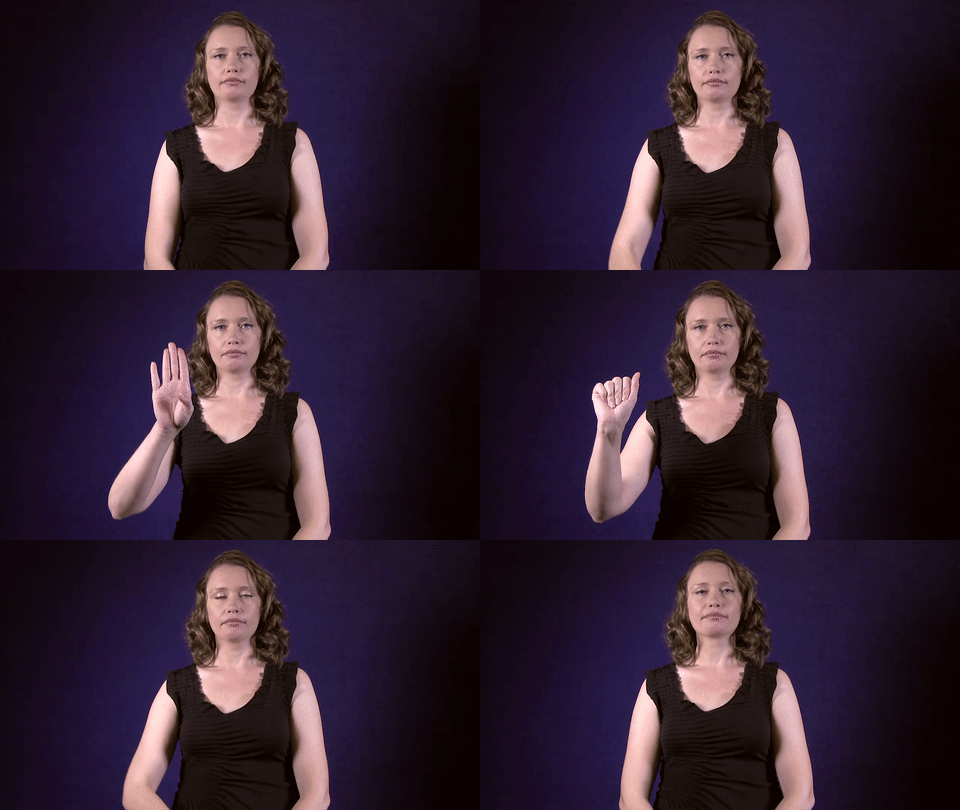
To begin practicing the sign for BACHELOR OF ARTS in ASL, start by fingerspelling B-A and then follow that with the general sign for DEGREE or DIPLOMA. Practice fingerspelling B-A smoothly and clearly, paying attention to your handshape transitions and speed. Record yourself and compare it to fluent signers, focusing on clarity and rhythm.

Try using the sign for BACHELOR OF ARTS in ASL in isolation, then in short phrases. For example, sign “I have a BACHELOR OF ARTS” and later add context like “I graduate, BACHELOR OF ARTS, ENGLISH.” Repeating this helps reinforce the flow and hand movements involved when combining fingerspelling with topical information.

Use flashcards with different degree types and practice choosing and signing only the BACHELOR OF ARTS option. Play a sorting game with a peer where one person fingerspells or signs various degrees, and the other has to find and sign the correct one. This will help with recognition and response time.

Practice sentences like “My sister has a BACHELOR OF ARTS in Psychology” or “He is studying for his BACHELOR OF ARTS.” Then make up different versions using your own context to personalize the experience. Use a journal-style approach and sign short stories or summaries about your academic history or goals while incorporating the sign.

As a challenge, do a mock graduation ceremony with a partner, practicing phrases like “Congratulations! You now have a BACHELOR OF ARTS.” This encourages contextual understanding.

Another fun idea is to role-play interviews where the question is “What degree do you have?” Respond with the sign for BACHELOR OF ARTS in ASL, followed by the field of study. This builds confidence using the sign naturally.

Cultural Context:

In American Sign Language (ASL), understanding the cultural context of a term like sign for bachelor of arts in ASL is essential for fluency and clear communication. Unlike English, ASL is a visual and spatial language that often reflects the values, practices, and educational systems of Deaf culture. When using the sign for bachelor of arts in ASL, it’s important to consider how education is viewed and discussed within the Deaf community.

The sign for bachelor of arts in ASL is linked closely to the concept of higher education and academic achievement. Many Deaf individuals take great pride in reaching higher education milestones due to the historic and ongoing challenges they face in education systems that often lack full accessibility. Using the proper sign for bachelor of arts in ASL reflects not only linguistic accuracy but also shows cultural respect for those achievements.

In Deaf culture, education is a powerful tool for advocacy and community leadership. When someone uses the sign for bachelor of arts in ASL, they’re not just referencing a degree — they’re also acknowledging a person’s dedication and the barriers they likely overcame. This is a common topic in Deaf storytelling, where personal accomplishments in education are celebrated within the community.

The sign for bachelor of arts in ASL also appears often in discussions around Deaf education, especially at Deaf universities such as Gallaudet. Students and graduates use the sign with pride, identifying their specific field of study while embracing their cultural and linguistic identity. This sign can be part of introductions and resume explanations in ASL conversations.

It’s also worth noting how the sign for bachelor of arts in ASL might adapt in different regional uses or in more casual versus academic settings. Variations might exist, but the base meaning stays consistent across most of the ASL-using community. These nuances show the richness of ASL and how it reflects the lived experiences of the Deaf and signing communities.

Understanding the sign for bachelor of arts in ASL bridges the gap between language and cultural perspective. Whether in a classroom, at a job interview, or during an introduction, this phrase allows a signer to represent an important life achievement accurately and respectfully. It’s more than just vocabulary; it’s a recognition of identity and effort within a specific cultural frame. ❤️

Incorporating the proper sign for bachelor of arts in ASL into your signing not only improves your fluency but also helps you connect with the cultural meaning behind the words. It shows an awareness of how Deaf individuals value education and how it plays a

Extended Definition:

The sign for Bachelor of Arts in ASL combines signs representing “bachelor,” “arts,” and often a general indication of a degree or education. To express the concept clearly, ASL users typically sign “bachelor,” then “arts,” followed by the sign for “degree” or “graduation.” The sign for Bachelor of Arts in ASL may vary slightly depending on regional usage or the signer’s preference, but the meaning remains consistent.

In academic or educational settings, it’s important to be familiar with the sign for Bachelor of Arts in ASL because it is used often when discussing degrees, resumes, or future education plans. When a Deaf individual shares their credentials or educational background, knowing how to sign Bachelor of Arts in ASL lets them express their achievements clearly. This phrase can also be helpful in interpreting or translating college-related material in educational videos, conferences, or presentations.

The word “bachelor” is commonly fingerspelled B-A, or the full B-A-C-H-E-L-O-R can be used for clarity, depending on context. In many cases, fingerspelling is followed by an abbreviated or initialized sign for “arts.” The sign for “arts” may use the letter A with a circular motion in front of the non-dominant hand, symbolizing creativity and academia. The entire sign for Bachelor of Arts in ASL flows logically and is easily understood by native signers familiar with educational terminology.

Some users add the context of a diploma by using the sign for “degree,” in which the fingertips of both hands touch, then pull away. This indicates the conferment of an academic title. ASL is a visual and conceptual language, so the sign for Bachelor of Arts in ASL focuses on expressing the idea of a liberal arts degree rather than translating every English word literally.

It’s also important to notice how facial expressions in ASL accompany signs to clarify intent. When signing Bachelor of Arts in ASL, users may show pride or assertive body language, indicating accomplishment. This combination of hand movement, facial expression, and body posture makes the communication culturally rich.

In some contexts, users may abbreviate the phrase by signing only the initials B-A, paired with a degree-related sign. This shorthand is effective among fluent signers and in fast conversations. However, when clarity is necessary, spelling out Bachelor of Arts in ASL ensures accurate communication, especially with audiences unfamiliar with abbreviations.

Teachers, interpreters, and students often need to understand how to

Synonyms: undergraduate degree in arts, BA degree, arts bachelor’s, liberal arts degree, humanities bachelor’s

Educational resources: Find related learning materials in our course bank!

Want more? Check out some of our popular learning activities on the homepage!

Need to look up a sign? Use our highly rated dictionary: https://aslinteractive.com/best-asl-dictionary/

Follow us on tiktok: https://www.tiktok.com/@aslinteractive. More social media links at the bottom of this page!

Long-tail Keywords: what is the sign for bachelor of arts in ASL, how do you sign bachelor of arts in american sign language, bachelor of arts ASL sign

Categories:

tags: Colleges/Universities/Schools, College Degrees, Post Secondary Education, Graduation, Life Milestones

Parameters

*Handshape*:

The Sign for BACHELOR OF ARTS in ASL uses the handshape associated with fingerspelling. Both hands take on the manual alphabet positions for the letters B, A, and potentially others, depending on the variation. Each letter is formed with precise handshapes: the B handshape has fingers extended together with the thumb tucked across the palm, and the A handshape is a closed fist with the thumb resting on the side.

When signing the phrase, the Sign for BACHELOR OF ARTS in ASL typically relies on fingerspelling the initials B and A, or the entire phrase, depending on context. Clear formation of each handshape is essential to convey the full meaning accurately ✋ .

*Palm Orientation*:

For the sign for BACHELOR OF ARTS in ASL, palm orientation varies depending on whether you choose to fully fingerspell the phrase or use initialized signs for the academic degree. When fingerspelling, the palm is generally oriented outward, facing the viewer, as the dominant hand spells B-A and then either finishes with R-T-S or fully spells out A-R-T-S.

When using the initialized sign for bachelor, the palm of the “B” hand often faces sideways (non-dominant side). For “arts,” formed with an “A” or as an initialized version of art, the palm typically faces inward, brushing or moving over the open non-dominant hand. Always ensure clarity in the palm orientation when producing the sign for BACHELOR OF ARTS in ASL .

*Location*:

The location for the sign for BACHELOR OF ARTS in ASL typically begins in the mid-chest to upper-chest area. When spelling out the abbreviation or full phrase, the hands move fluidly within the signing space in front of the torso.

For the fingerspelled portion of the sign for BACHELOR OF ARTS in ASL, the dominant hand stays within chest height, slightly away from the body to maintain visibility. Each letter is produced clearly to ensure the term is understood in academic or degree-related contexts.

*Movement*:

To produce the sign for BACHELOR OF ARTS in ASL, begin by fingerspelling B-A. The dominant hand uses the regular fingerspelling method, forming the letter “B” followed by “A”, moving slightly outward from the chest for clarity.

After completing the fingerspelling, some signers also include the sign for DEGREE by forming both hands into “F” shapes and touching the tips together, then pulling them apart in a slight arc. The Sign for BACHELOR OF ARTS in ASL may vary depending on context and formality, but fingerspelling remains the most widely accepted method .

*Non-Manual Signals*:

When performing the sign for BACHELOR OF ARTS in ASL, maintain a neutral facial expression with slight attention or focus in the eyes to indicate the seriousness of an academic degree. Slight brow furrowing may occur to emphasize the specific field of study. Head posture should remain upright with direct eye contact toward the conversation partner to show clarity and confidence. Use of subtle lip movements is natural when fingerspelling B-A and occasionally A-R-T-S.

*Prosody, Dominant/Non-Dominant Hand*:

The sign for BACHELOR OF ARTS in ASL uses one hand to fingerspell B-A and then the other hand joins to complete the phrase. Both hands are active during the production, typically with the dominant hand leading the fingerspelling. The sign is clear and commonly used in academic contexts.

In the sign for BACHELOR OF ARTS in ASL, fingerspelling is central. The dominant hand usually spells B-A smoothly while the non-dominant hand remains relaxed or supports by mirroring posture.

Tips for Beginners:

When learning the sign for BACHELOR OF ARTS in ASL, beginners need to understand that it typically involves a combination of fingerspelling and initialized signs. It’s common to fingerspell the abbreviation “B.A.” or the full terms depending on context and audience. Make sure your fingerspelling is clear and paced comfortably—not too fast nor too choppy. Accuracy matters more than speed, especially for educational or academic settings. ‍

Be mindful of your hand positioning when fingerspelling B.A.; both letters should be distinct and fluid within comfortable hand movement. Often, signers will include the sign for “DEGREE” after fingerspelling to provide further clarity, especially when the context is unclear. Practice signing DEGREE clearly, with a flat O handshape bouncing off the non-dominant hand in a subtle upward movement.

With the sign for BACHELOR OF ARTS in ASL, awareness of facial expressions can enhance clarity. Use a neutral or mildly proud expression to show formality or pride in the degree. Over-exaggerating may confuse the meaning or distract from the accuracy of the signs. Keep your movements tight and professional.

One of the most common pitfalls is mumbling through the fingerspelling or confusing “B.A.” with other abbreviations. Drill on commonly used academic acronyms so you’re more comfortable producing them smoothly. Flashcards or mirror practice can be pretty helpful here.

Don’t forget to contextualize the sign appropriately. For example, if you’re explaining your college background in a job interview in ASL, make sure to clearly state your area of study after signing the BACHELOR OF ARTS. Clarity is key in formal communications, and your audience will appreciate precision. Repetition builds confidence, so repeat the sign for BACHELOR OF ARTS in ASL until it feels smooth and natural.

Connections to Other topics:

The sign for BACHELOR OF ARTS in ASL connects closely with both educational and degree-related vocabulary in American Sign Language. It often incorporates the sign for BACHELOR, which may involve a combination of the sign for COLLEGE and a classifier or initialized sign that reflects academic rank. ART or ARTS is typically signed as a creative field, and when combined, it becomes a compound sign that reflects the full degree title.

This sign can be connected to other degree signs, such as MASTER OF ARTS, DOCTORATE, or BACHELOR OF SCIENCE. These degree-related phrases often share the sign for the type of degree—BACHELOR, MASTER, or DOCTOR—and then are modified by the specific field of study. For example, BACHELOR OF SCIENCE might use the same BACHELOR structure and follow it with the fingerspelled abbreviation “S-C-I” or the sign for SCIENCE.

Additionally, the sign for BACHELOR OF ARTS in ASL helps learners recognize broader educational topics in ASL like MAJOR, MINOR, COURSE, and GRADUATE. In dialogues about education, degrees, and personal achievements, using compound phrases like this becomes essential for clear communication.

Professionally, the sign for BACHELOR OF ARTS in ASL appears in job interviews, college campus discussions, or academic award contexts. Students preparing to enter higher education or graduates discussing their qualifications frequently use this sign. It may also be paired with FIELD OF STUDY terms, like ENGLISH, HISTORY, or PSYCHOLOGY, depending on the major.

The compound nature of the sign for BACHELOR OF ARTS in ASL gives insight into how multiple signs can combine to form more complex academic terminology. This aids fluency and comprehension for those discussing formal education in ASL settings. Understanding it supports deeper connections in conversations about credentials and lifelong learning.

Summary:

The sign for BACHELOR OF ARTS in ASL is typically conveyed using a combination of signs that include the fingerspelling of B-A and the sign for DEGREE. This structure closely mirrors how degrees are translated in ASL, often relying partially on lexicalized fingerspelling and commonly understood academic context within the Deaf community.

To express the academic degree clearly, the signer begins by fingerspelling B-A for “Bachelor of Arts,” followed by the sign for DEGREE, which is made by touching the fingertips of a dominant flat-O handshape to the nondominant flat-O, usually just once. The flow and placement of the sign can give additional clues about the educational level being referenced.

In Deaf culture, educational attainment is highly valued, and indicating a degree such as a Bachelor of Arts is a source of pride and identity. Therefore, the sign for BACHELOR OF ARTS in ASL is not only functional but carries social and emotional weight during conversations about personal achievements.

The fingerspelled component B-A is brief, but it anchors the meaning. In educational or professional environments, it’s often paired with other context-setting signs like MAJOR, MINOR, or the specific field of study. This ensures mutual understanding, especially if the field isn’t clear by using just B-A.

ASL users sometimes expand the concept by including the sign for UNIVERSITY before fingerspelling B-A. This places the bachelor’s degree in an academic framework, emphasizing that it was obtained from an institution of higher learning.

From a grammatical standpoint, ASL structures this phrase differently than English. Rather than saying, “I earned a Bachelor of Arts,” the sentence may appear as “COLLEGE I GO, DEGREE B-A I GET,” respecting the topic-comment structure typical in ASL.

Linguistically, the fingerpselled elements in the sign for BACHELOR OF ARTS in ASL serve as lexical placeholders. Since not all degree names have unique signs, fingerspelling is a trusted method for conveying specific letter-based terms. It reflects how ASL adapts and integrates with evolving English academic standards.

Applied linguistics emphasizes that fingerspelling skills are tied to English literacy. A signer using the sign for BACHELOR OF ARTS in ASL demonstrates fluency in bridging both languages and adapting to bilingual contexts where higher education and terminology are discussed.

There’s a broader cultural layer to this sign as well. Being able to sign your degree proudly is empowering. It communicates past challenges, effort, and professional readiness. For many Deaf individuals, especially those who faced academic barriers, using this sign is deeply personal.

Signers might adjust the sign depending on the recipient’s familiarity. To a fluent audience, a simple B-A + DEGREE might suffice. For those unfamiliar, elaboration using COLLEGE, MAJOR, or FIELD OF STUDY gives richer meaning and educational context.

The sign for BACHELOR OF ARTS in ASL illustrates how ASL often incorporates English acronyms into everyday signing. This close relationship with English is strategic and practical, allowing for precision in domains like academia where signs may not exist for specific terminology.

Though B-A is fingerspelled, meaning must still be clarified via context. For example, BA could also mean British Airways in other contexts. Thus, situating the phrase within an educational discourse is key to reducing ambiguity.

The intensity and speed of the fingerspelling can also reflect the signer’s comfort or familiarity with the term. More fluent signers may fingerspell B-A rapidly, followed by a confident DEGREE sign. Learners might take more time to ensure clarity.

From a sociolinguistic perspective, the use of fingerspelled academic terms like BACHELOR OF ARTS in ASL reflects power and identity. Educational credentials often function as linguistic capital, especially in professional Deaf spaces.

In regional variations across ASL communities, the fingerspelling of B-A may be streamlined into a lexicalized sign with slight palm orientation changes or shortening of transitions. However, most users still rely on a clear, deliberate spelling for degrees.

Situational adjustments also occur. In academic settings, the sign for BACHELOR OF ARTS in ASL might be followed by a specific department sign like ENGLISH or HISTORY, whereas in casual conversation, simply signing DEGREE B-A may be enough.

Use of this sign in narrative storytelling emphasizes milestones. A Deaf graduate might explain their life story with signs like STRUGGLE, STUDY, PASS, then reward the journey by saying: DEGREE B-A FINISH. Emotion and movement amplify the meaning.

In group settings, the sign is sometimes used when introducing oneself at conferences or interviews. Saying “MY DEGREE B-A, MAJOR ENGLISH” communicates both qualification and area of expertise succinctly and clearly.

The use of fingerspelling in the sign for BACHELOR OF ARTS in ASL underscores the dynamic interplay between English literacy and ASL fluency.

Want more? Check out some of our popular learning activities!

ASL Interactive Resources

ASLInteractive YouTube Channel

Follow us on tiktok: @aslinteractive.com

Follow us on Instagram: aslinteractive

Facebook page: aslinteractive

Facebook group: aslinteractive

LInkedIn: ASL Interactive LLC

Twitter: @ASL_interactive

*Some information on this page is AI-generated. AI can make mistakes. Please check the information.

Sign for BACHELOR OF ARTS in ASL

Responses