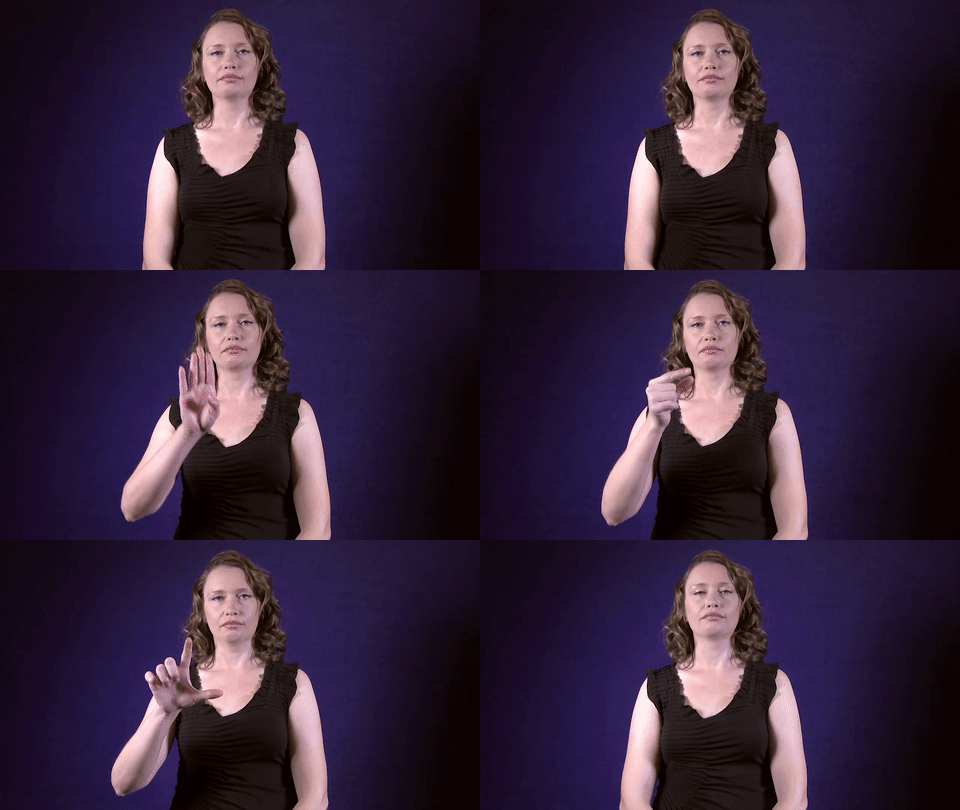
Definition: A dense bread roll in the shape of a ring.
Sign for BAGEL in ASL

Practice Activities:
To begin practicing the sign for BAGEL in ASL, start by signing it in isolation several times in front of a mirror. This lets you watch handshape and movement to ensure you’re forming the sign accurately. Record yourself signing and compare it with video resources for self-correction.
Next, practice incorporating the sign into simple phrases like “I eat bagel,” “Bagel with cream cheese,” or “Bagel or toast?” Use facial expressions and natural pauses to make your signing more fluid and conversational. Try creating a short food-related sentence and add the sign for BAGEL in ASL to develop fluency with transitioning between signs.
Think about storytelling scenarios involving bagels. Talk about your morning routine and include details like choosing a bagel, preparing it, and enjoying it with coffee. Use signs like MORNING, COFFEE, and EAT along with the sign for BAGEL in ASL to build context.
Interactive games with a signing partner can also be helpful. Play a food guessing game where one person signs a breakfast food and the other guesses; be sure to include the sign for BAGEL in ASL. You can modify this activity by including flavors or accompaniments like “bagel with jelly” or “bagel sandwich.”
Create a short video blog about your favorite breakfast or bakery treats. Sign your story while including other food signs, emphasizing your clear use of the sign for BAGEL in ASL. Share it with peers or your instructor for feedback on accuracy and expression.
Finish with receptive practice by watching others sign food items and identifying when the sign for BAGEL in ASL appears. This strengthens your recognition skills and reinforces the sign through observation and repetition.
Cultural Context:
In Deaf culture, food signs carry more weight than just vocabulary—they often represent shared experiences and cultural understanding. The sign for BAGEL in ASL connects directly to everyday conversations, especially around common American foods that are often part of social gatherings, breakfasts, or trips to a local bakery.
The sign for BAGEL in ASL isn’t just about identifying a food item. It also reflects the importance of being able to interact and participate fully in everyday situations, like ordering at a café or preparing breakfast with family. Many Deaf individuals value clear and specific food signs because these words support independence and seamless communication.
ASL uses visual concepts to show shape and function. A bagel has a distinctive round shape with a hole in the middle, and the sign for BAGEL in ASL mirrors that visually iconic form. This shows how ASL often draws from natural characteristics of objects, making it easier to learn and more meaningful culturally.
In Deaf households or Deaf spaces, food is central to connection. Sharing meals and recipes often brings communities together, and having accurate and expressive vocabulary is essential. The sign for BAGEL in ASL helps make those interactions rich and inclusive, ensuring everyone is part of the conversation.
Teaching children about common foods like bagels using ASL can also support language development. The sign for BAGEL in ASL introduces learners to how abstract shapes turn into concrete ideas in visual language. It links language to daily life, making learning more engaging for Deaf children and hearing allies alike.
In schools with Deaf programs or settings where ASL is the primary form of communication, knowing familiar food signs builds stronger vocabulary. It also helps children and adults converse naturally during snack time or lunch. The sign for BAGEL in ASL becomes more than just a word—it’s a tool for engaging in meaningful routines.
Deaf people ordering food in environments where ASL is understood benefit from precise signs like the sign for BAGEL in ASL. It eliminates confusion and promotes clear exchanges in service-based interactions. This leads to greater autonomy and confidence in daily living.
Non-signers who interact with the Deaf community also benefit from learning everyday signs. When baristas, teachers, and family members use signs like the sign for BAGEL in ASL, it shows respect for the language and bridges communication. These small efforts can make daily encounters smoother and more inclusive.
Food vocabulary can be especially fun to introduce during cultural cooking nights, school lesson plans, or family ASL lessons at home. Including the sign for BAGEL in AS
Extended Definition:
The sign for bagel in ASL is a useful addition to your vocabulary, especially when discussing food preferences, ordering at a café, or teaching food-related signs. In American Sign Language, clear and consistent signing helps ensure effective communication, and knowing this sign can be helpful in both everyday situations and educational settings.
To sign bagel in ASL, handshapes and movements typically reflect the round shape of the item itself. The motion may resemble forming a small circle or ring with the fingers, symbolizing the distinct round form of a bagel. While regional variations of signs can exist, it’s essential to use facial expressions and context to reinforce the meaning when signing bagel during a conversation.
In learning the sign for bagel in ASL, context plays a major role. Since there isn’t always a universally agreed-upon sign for every food item, showing the size or shape of a bagel through classifiers or descriptive signing can also be effective. Some signers combine classifiers with established food signs to clarify what kind of bread product they are referring to, especially when using meal-related signs.
Signing food items like bagel can be particularly useful in a variety of settings, such as classrooms, cooking lessons, restaurants, or social events where food is the topic of conversation. The sign for bagel in ASL helps make communication smoother for Deaf or hard of hearing individuals interacting in these kinds of situations. Whether ordering breakfast or talking about favorite foods, this sign adds clarity and accessibility.
ASL learners benefit from practicing the sign for bagel alongside related vocabulary such as bread, cream cheese, and breakfast. Signing in context helps build fluency and supports better retention of food-related signs. Visual storytelling through series of signs can help describe preparing a bagel, spreading toppings, or eating it, making the communication more engaging and detailed.
Because ASL is a visual language, signs like bagel highlight how linguistic elements are tied to imagery. Many everyday food signs incorporate shapes or features of the item being signed. When learning the sign for bagel in ASL, observe how the roundness and size of a typical bagel might influence the way people choose to show it in sign.
Some may also choose to fingerspell the word B-A-G-E-L, especially if they are unsure of a specific sign or if the brand or flavor of the bagel matters in the conversation. Fingerspelling is common in ASL when it comes to names of food products, especially if there isn’t a standardized sign.
Synonyms: bagel, dough ring, bread roll, boiled bread, yeast ring
Educational resources: Find related learning materials in our course bank!
Want more? Check out some of our popular learning activities on the homepage!
Need to look up a sign? Use our highly rated dictionary: https://aslinteractive.com/best-asl-dictionary/
Follow us on tiktok: https://www.tiktok.com/@aslinteractive. More social media links at the bottom of this page!
Long-tail Keywords: what is the sign for bagel in ASL, how do you sign bagel in American Sign Language, ASL sign for bagel
Categories:
tags: Food, Breakfast, Baked Goods, Snacks, Language Learning
Parameters
*Handshape*:
The handshape used in the sign for BAGEL in ASL typically involves both hands forming the F handshape . The index fingers and thumbs come together to create small circular shapes, mimicking the size and look of a bagel.
To show the sign for BAGEL in ASL, the hands may move slightly apart or circle subtly to represent the round form of a bagel. This visual gesture emphasizes the distinctive hole in the center of a bagel.
*Palm Orientation*:
For the sign for BAGEL in ASL, the dominant hand is typically in an “O” handshape. The palm orientation usually faces inward, toward the non-dominant hand, which is also in an “O” shape, mimicking the shape of a bagel.
This palm orientation helps emphasize the round, circular concept in the sign for BAGEL in ASL . The inward-facing motion enhances the visual representation of the item being signed.
*Location*:
The sign for BAGEL in ASL is produced in the neutral space directly in front of the chest, slightly below shoulder level. Both hands are positioned forward and centered, ensuring clear visibility for the signer and viewer. This central signing space is ideal for representing the round shape created during the sign for BAGEL in ASL.
The location remains consistent throughout the motion to maintain clarity. Since the sign mimics the round shape of a bagel, keeping it at chest level helps emphasize this visual representation.
*Movement*:
The sign for BAGEL in ASL begins with both hands in modified “O” handshapes, mimicking the shape of a bagel. The hands start a few inches apart in front of the mouth area.
They then come together in a small circular motion, as if outlining the round shape of a bagel. The movement helps visually represent the unique shape of a bagel, making the sign for BAGEL in ASL easy to remember .
*Non-Manual Signals*:
When demonstrating the sign for BAGEL in ASL, the facial expression remains neutral to slightly inquisitive, as if focusing on the shape and texture of the object. The eyebrows may be slightly raised, especially if the sign is used in a question or explanation.
A subtle pursing of the lips can emphasize the size or uniqueness of the bagel. Overall, the non-manual signals for the sign for BAGEL in ASL help visually support the concept by directing attention to the circular nature of the item .
*Prosody, Dominant/Non-Dominant Hand*:
The sign for BAGEL in ASL uses the dominant hand in a modified “F” handshape, mimicking the round shape of a bagel. The thumb and index finger of the dominant hand form a circle, while the hand moves slightly forward and inward near the mouth area as if referencing the size and shape of a bagel.
The non-dominant hand is not typically used in the sign for BAGEL in ASL, keeping the focus on the motion and shape of the dominant hand. Facial expression can emphasize the specific type or size when necessary.
Tips for Beginners:
When learning the sign for BAGEL in ASL, it’s important to focus on the handshape and motion that mimics the shape and size of a bagel. Typically, the sign incorporates an index finger and thumb in a circular movement to represent the hole in the bagel. Try practicing in front of a mirror to observe your hand positioning and ensure that your movement is smooth and clear.
One thing beginners often overlook when using the sign for BAGEL in ASL is context. This sign might not be universally known or recognized across all regions, so be ready to fingerspell the word if necessary. If you’re signing to someone not familiar with that variation, fingerspelling BAGEL can help clarify your meaning.
To enhance your clarity, keep your movements deliberate but not stiff. Overexaggerated motions can confuse your viewer, while underpronounced signs might go unnoticed. Watch native signers and ASL videos online to see how the sign for BAGEL in ASL is used naturally in conversation. Mimicking their rhythm and facial expressions can greatly improve your fluency.
Facial expression and body language are vital in ASL. Even with simple food items like a bagel, your facial cues can help convey tone or even preference—whether you like bagels or not, for instance. Make sure to engage your whole face in your signing practice.
Drill the sign regularly and try incorporating it into everyday usage. The more you include the sign for BAGEL in ASL in your vocabulary practice, the more naturally it will come to you. Flashcards, mock conversations, or signing during meals can be fun ways to reinforce your learning.
Consider asking a fluent signer or teacher for feedback. Incorrect hand orientation or inconsistent motion are common early mistakes, but they’re easy to fix with guidance. Don’t hesitate to revisit basic finger dexterity drills to build control.
Connections to Other topics:
The sign for BAGEL in ASL is visually iconic and connects to signs related to food, shapes, and textures. Because a bagel has a distinctive round shape with a hole in the center, the sign often resembles this characteristic, linking it to shape-based descriptors like ROUND or CIRCLE. This makes it easier for learners to remember when associating it with similar round foods like DONUT or RING.
Exploring the sign for BAGEL in ASL can also support understanding of more complex food vocabulary. It often appears in context with signs like CREAM-CHEESE, TOAST, or BREAKFAST, allowing learners to build compound phrases such as “I eat a bagel with cream cheese for breakfast.” This promotes fluency by showing how individual signs work together in everyday conversation.
The sign for BAGEL in ASL is an example of how classifiers can help describe texture or action. For instance, you might use a CL:1 handshape to mime slicing a bagel or spreading cream cheese, blending descriptive gestures with actual vocabulary signs. This helps connect ASL classifiers to concrete objects in the real world, enhancing comprehension and expression.
Learning the sign for BAGEL in ASL can also tie into regional or cultural signs connected to food. For example, combining it with signs like COFFEE, NYC, or DELI can help learners discuss cultural contexts where bagels are popular, supporting both vocabulary expansion and cultural competency. This is especially helpful in storytelling or sharing routines.
Phonologically, the handshape and motion for BAGEL can aid learners in identifying other signs that involve circular motion or small, contained objects. This fosters recognition of repeating sign features and builds connections across vocabulary, making the sign for BAGEL in ASL a useful reference point for both new and advanced signers.
Summary:
The sign for BAGEL in ASL typically mimics the shape of a bagel using a small circular motion with the fingers. The dominant hand, formed in the F-handshape, draws a round shape in the air, symbolizing the round nature of a bagel. The motion is small and focused, emphasizing the size and texture.
Some variations may use an O-handshape, again showing a circle but more emphasis on the round opening. This visual iconography directly connects the sign to the physical attributes of a bagel. Since bagels are known for their distinctive hole in the center, the sign reflects this aspect intuitively.
The sign for BAGEL in ASL is a clear example of iconicity in sign language. Iconicity refers to when a sign resembles the meaning or physical shape of the referent. Because a bagel is a specific object with a repetitive cultural design, this iconic representation helps with clarity and recognition.
ASL users often rely on these iconic references to communicate ideas quickly and efficiently, especially when dealing with food items. The use of shape in the sign for BAGEL in ASL makes it an efficient and visually intuitive representation. This adds to its pedagogical usefulness when teaching food-related signs to new learners.
Culturally, bagels are often associated with Jewish-American communities but have grown to symbolize broader brunch and breakfast culture in the United States. Therefore, the sign appears not only in casual food conversations but also across different sociocultural discussions. The widespread presence of bagels gives the sign broader applicability in narrative or storytelling contexts.
From a linguistic perspective, the sign for BAGEL in ASL demonstrates the principle of visual-motor mapping. The signer uses handspace near the center of the torso to draw attention to the handshape and motion. The symmetrical shape provides visual clarity, which is essential in signed discourse.
This sign doesn’t typically require mouth morphemes to support the concept unless the signer is emphasizing flavor or context. In that case, mouth markers or facial expressions can accompany the sign for emphasis. For example, puffed cheeks might indicate a large or extra-fluffy bagel.
Grammatically, the sign for BAGEL in ASL functions as a noun and fits neatly within ASL’s topic-comment sentence structure. A signer might start a sentence with BAGEL as the subject and follow it with an opinion, like GOOD or EAT FINISH. These structures allow for dynamic food-related storytelling.
The sign also appears frequently in food narratives or discussions involving dietary habits. When signing about meals, food preferences, or dietary restrictions, the sign for BAGEL in ASL integrates fluidly. It may also accompany classifiers or descriptive signs to talk about toppings or sandwich styles.
You might see the sign used in a sequence with other breakfast foods like CREAM CHEESE or COFFEE. This demonstrates ASL’s compound and contextual richness, where several signs in proximity build detailed meaning. The clear shape used in the sign makes its memory retention strong for both learners and native signers.
Pedagogically, signs like BAGEL help illustrate how lexicon develops around day-to-day experiences. Teachers often use food signs during early instruction since they are relatable and visually compelling. The sign for BAGEL in ASL is usually introduced in beginner or intermediate lexicon, depending on instructional theme.
Applied linguistics often highlights the role of visual cognition in language acquisition. Because the sign for BAGEL appeals directly to sight and memory through a circular shape, it aligns with these learning theories. Learners can connect the shape of the hand with the real-world object more easily than with more abstract signs.
Another insight is how tactile feedback supports language recall. Signers feeling the motion of drawing the circle reinforce their understanding. This physical dimension of communication gives ASL a multisensory edge, as seen in the execution of the sign for BAGEL in ASL.
In Deaf culture, the representation of everyday items connects signers to shared experiences. Meeting someone at a cafe or sharing a meal often includes the mention of bagels. The sign for BAGEL is useful in social bonding, cultural traditions, and casual dialogue settings.
Like many food signs in ASL, BAGEL benefits from regional and generational variation. Some older signers may fingerspell BAGEL or use a slightly different motion. These variations reflect the dynamic, living nature of ASL, where signs evolve based on community use and influence.
Context also influences how the sign is used. For instance, in culinary instruction or food service settings, the sign for BAGEL might appear more frequently. In those contexts, classifiers and descriptors add to the sign, like showing thickness or toppings.
Another interesting layer is the impact of multilingualism in the Deaf community. Influences from Signed English, SEE, or regional dialects might produce alternate signs or interpretations. However, the most visually iconic version remains highly recognizable across communities.
As Deaf professionals work in fields like hospitality and culinary arts, the importance of accurate food representation increases. The
Want more? Check out some of our popular learning activities!
ASL Interactive Resources
ASLInteractive YouTube Channel
Follow us on tiktok: @aslinteractive.com
Follow us on Instagram: aslinteractive
Facebook page: aslinteractive
Facebook group: aslinteractive
LInkedIn: ASL Interactive LLC
Twitter: @ASL_interactive
*Some information on this page is AI-generated. AI can make mistakes. Please check the information.


Responses