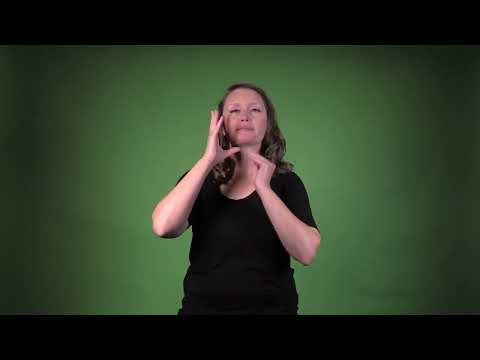
Sign for BE-EXPERIENCED in ASL | 👩‍💼 ASL Dictionary

Definition: To have extensive experience (two hands).

Sign for BE-EXPERIENCED in ASL 

YouTube player

Practice Activities:

To practice the sign for BE-EXPERIENCED in ASL, begin by isolating the motion and handshape. Use a mirror to check for symmetrical and coordinated two-handed movement. Repeat the sign slowly and then increase speed while maintaining accuracy.

Practice with facial expressions that convey confidence or understanding. Pair the sign with a variety of subjects, such as “teacher,” “chef,” or “nurse,” to form short sentences like “She experienced,” or “They are experienced.” Signing in front of a mirror can help reinforce correct positioning and flow.

Use flashcards with job titles or activities and respond by forming a sentence with the sign for BE-EXPERIENCED in ASL. For example, pick a card that says “mechanic” and sign “That person experienced mechanic.” This allows you to build fluency while reinforcing context.

Work with a partner and share short personal stories about past accomplishments or jobs. Include the sign for BE-EXPERIENCED in ASL when describing skills developed over time. Take turns interpreting and offering feedback to ensure the sign is clear and integrated smoothly.

Create fictional characters and introduce them using the sign. You might say, “My friend is an experienced traveler,” and follow up with more information. This activity reinforces sentence building and role-play practice.

Film yourself signing a short paragraph about someone who has years of training or work. Watch the video for handshape alignment, clarity, and expression. Pay attention to how often and naturally the sign for BE-EXPERIENCED in ASL fits into your narrative.

In group practice, describe various professions and have others guess based on your signs. Encourage them to respond with follow-up comments using the same keyword phrase. This interactive drill strengthens both receptive and expressive skills.

Cultural Context:

In American Sign Language, understanding the cultural nuances behind the sign for BE-EXPERIENCED in ASL provides deeper insight into both the language and the community. This sign reflects a concept that goes beyond just having experience—it conveys a sense of embodied knowledge that comes from living through something. The BE-EXPERIENCED in ASL sign uses both hands to show a physical connection to the experience being described, offering visual emphasis that aligns with the value ASL places on expression and clarity.

The sign for BE-EXPERIENCED in ASL is often used in social narratives or storytelling, situations where sharing personal journeys is important. In Deaf culture, storytelling is a rich tradition, and being able to communicate experience effectively helps build community bonds . Using the BE-EXPERIENCED in ASL sign allows people to connect over shared experiences or help others learn from theirs.

This sign is also important in educational and professional settings. When someone signs BE-EXPERIENCED in ASL, they’re indicating that the person has acquired knowledge through active participation rather than just theoretical learning. In Deaf schools or Deaf-centric workplaces, experience is highly respected, and this sign is a quick way to affirm someone’s skills or history.

The physical use of both hands in the sign for BE-EXPERIENCED in ASL holds cultural meaning. ASL often uses two-handed signs to emphasize intensity or plurality, and in this context, it shows depth. The use of both hands supports the idea that the person didn’t just briefly encounter something—they lived it fully.

In conversations, the BE-EXPERIENCED in ASL sign can carry emotional weight, especially when sharing stories of challenges or accomplishments . This makes the sign not only a linguistic tool but also a cultural one that honors resilience. Deaf culture places high value on mutual understanding and empathy, and this sign helps foster those values.

When used in group discussions or informal chats, the BE-EXPERIENCED in ASL sign is a concise way to acknowledge life lessons. Whether it’s about parenting, learning new technology, or surviving difficult times, this sign makes the abstract concept of “life experience” concrete and shared. Cultural respect for lived knowledge makes this sign particularly important in day-to-day interactions.

Extended Definition:

The sign for BE-EXPERIENCED in ASL is a two-handed sign that visually conveys the concept of gaining experience or having gone through something in life. This sign uses both hands to reinforce the meaning of personal growth, learned knowledge, or seasoned ability.

To perform the sign for BE-EXPERIENCED in ASL, both hands are typically involved in a movement that suggests acquiring or collecting experiences over time. It may include tapping or using the tips of the fingers in a flowing motion, symbolizing multiple experiences building up. The motion and facial expression help communicate the idea of having lived through certain situations or having a background in something.

This sign is often used when talking about someone’s qualifications, personal history, or the length of time someone has done a job or engaged in a certain activity. It’s common in conversations about careers, activities, parenting, education, health, and even travel. The sign makes it easy to summarize past involvement in something without listing every single detail.

The context in which the sign for BE-EXPERIENCED in ASL is used can change its nuance slightly. When paired with signs like WORK, JOB, or SCHOOL, it often refers to professional or academic experience. When used in social or emotional contexts, it can reflect personal growth, wisdom, or maturity.

Using both hands in the sign further emphasizes the intensity and depth of experience. The double-handed sign shows that the person didn’t just dabble in something—they were involved deeply enough to gain true understanding. This adds weight and authenticity to any ASL conversation.

Facial expressions play a key role in how this sign is perceived. A confident expression can reflect pride in one’s experience. A humble or grateful look might be used when sharing emotional or transformative life experiences along with the sign for BE-EXPERIENCED.

In group discussions, especially in educational or mentoring settings, this sign helps validate someone’s background. It’s a versatile and respectful way to acknowledge what someone brings to the table. It often leads into storytelling or sharing life lessons.

Culturally, experience is valued in the Deaf community, just like in any other community. The sign for BE-EXPERIENCED in ASL is not only functional but also shows respect for the time and effort someone has invested in learning or doing something. It can also be used in self-description, giving pride to

Synonyms: skilled, seasoned, proficient, knowledgeable, practiced

Educational resources: Find related learning materials in our course bank!

Want more? Check out some of our popular learning activities on the homepage!

Need to look up a sign? Use our highly rated dictionary: https://aslinteractive.com/best-asl-dictionary/

Follow us on tiktok: https://www.tiktok.com/@aslinteractive. More social media links at the bottom of this page!

Long-tail Keywords: what is the sign for be-experienced in ASL, how do you sign be-experienced in American Sign Language, ASL sign for be-experienced

Categories:

tags: language learning, activities, employment status, life milestones, verbs

Parameters

*Handshape*:

The handshape in the Sign for BE-EXPERIENCED in ASL involves both hands using a bent five or clawed handshape. The fingers are gently curved as if grasping something, with the palms facing each other or toward the body depending on the signer’s preference.

In the Sign for BE-EXPERIENCED in ASL, the clawed hands emphasize the idea of engaging deeply or having gone through something. This handshape helps convey a sense of depth and familiarity, reinforcing the meaning of being experienced.

*Palm Orientation*:

For the sign for BE-EXPERIENCED in ASL, both palms typically face inward toward the body. The dominant and non-dominant hands often mirror each other, starting in a relaxed open-hand position then moving in a way that suggests depth or interaction with the self.

The inward palm orientation helps convey the internal or personal nature of the concept. In the sign for BE-EXPERIENCED in ASL, this orientation emphasizes the idea of internalization or gaining something through personal involvement.

*Location*:

The sign for BE-EXPERIENCED in ASL is produced in the area near the upper chest and shoulder region, just below the neck. Each hand moves near the upper part of the body, making it a mid-level sign that maintains a neutral and comfortable signing space close to the torso.

When performing the sign for BE-EXPERIENCED in ASL, both hands remain in front of the signer’s body, centered around the collarbone area. The location ensures visibility and clarity while allowing natural hand movement within the typical signing space. ✋

*Movement*:

The sign for BE-EXPERIENCED in ASL involves both hands in a slightly open curved “5” handshape, palms facing inward. Both hands start near the upper chest area and move slightly forward and downward simultaneously in a smooth and deliberate motion.

The movement in the sign for BE-EXPERIENCED in ASL suggests the accumulated feeling or depth of knowledge gained over time. Facial expression often communicates a sense of reflection or awareness, adding emotional nuance to the movement.

*Non-Manual Signals*:

Non-manual signals for the sign for BE-EXPERIENCED in ASL typically include a confident facial expression, with slightly narrowed eyes and raised eyebrows to indicate understanding or familiarity. A slight head nod or tilted head can add emphasis, suggesting that the subject has gone through something meaningful.

The sign for BE-EXPERIENCED in ASL may also be accompanied by a subtle smile or a serious face, depending on the context. These facial cues help show the depth or emotional weight of the experience being referenced.

*Prosody, Dominant/Non-Dominant Hand*:

The sign for BE-EXPERIENCED in ASL uses both hands actively. Both the dominant and non-dominant hands take a bent-5 handshape, starting near the upper chest area with fingertips touching the body and then moving outward slightly.

This motion emphasizes something internal becoming known or felt. In the sign for BE-EXPERIENCED in ASL, both hands move in unison and reflect the experience being drawn from inside. The facial expression often complements the sign, indicating depth or reflection.

Tips for Beginners:

When learning the sign for BE-EXPERIENCED in ASL, it’s important to first understand the overall concept associated with the sign. This sign indicates someone who has acquired knowledge or skills through practice or involvement. Make sure to watch several demos of the sign being used in natural conversations to develop a sense of its placement and flow.

The sign uses both hands, so coordination is key. Many beginners struggle with symmetrical 2-handed signs; your dominant and non-dominant hands should mirror each other in motion and shape. Smooth, synchronized movement gives the sign clarity and fluidity. Practicing in front of a mirror can help refine handshape alignment and motion timing.

Focus on your facial expression when using the sign for BE-EXPERIENCED in ASL. Since ASL is a visual language, your face conveys tone and additional meaning. A calm, slightly reflective expression can add depth to the sign and better communicate the sense of wisdom or background knowledge.

Avoid stiff or robotic movements. This is a concept-based sign, not a literal one, so trying to overthink each movement can make it look forced. Instead, practice the movement until it flows naturally. Think of it like performing a gesture rather than spelling something out.

A common mistake beginners make with the sign for BE-EXPERIENCED in ASL is misplacing the hands—either too far from the body or not using the correct orientation. Hands are usually placed mid-chest and move in a deliberate but smooth manner. Watch videos from native signers and compare your motion side-by-side if needed.

Finally, repetition and exposure are critical. Use the sign routinely in context—describe yourself as “experienced” in something while signing, or talk about someone else’s expertise. Building muscle memory is easier when it’s tied to everyday use.

Connections to Other topics:

The sign for BE-EXPERIENCED in ASL connects closely to concepts like memory, knowledge, and skill. Because it focuses on prior encounters and growth, it often appears in narratives about personal development, work readiness, or educational background. This sign can reflect one’s familiarity with specific ideas or environments, tying it to advanced vocabulary in academic or professional contexts.

The two-handed movement involved in the sign for BE-EXPERIENCED enhances its relation to tactile or sensory memory, similar to how the sign for FEEL or REMEMBER can reference internal thought processes. These shared non-manual markers and structure further link it to other abstract concepts such as WISDOM, MATURITY, or HISTORY. The use of both hands emphasizes a holistic grasp or absorbed experience, as opposed to passive knowledge.

This sign can be used as a base in compound expressions like WORK-EXPERIENCE or LIFE-EXPERIENCE. When placed in a sentence with PERSON or TRAINED, it emphasizes the quality or scope of one’s background, as in EXPERIENCED-PERSON. It can also combine with signs like JOB or LEARN to denote accumulated expertise through work or study. For example, you might sign HAVE BE-EXPERIENCED JOB MANY to express broad career exposure.

In conversations about culture, the sign for BE-EXPERIENCED in ASL can be used to indicate understanding drawn from immersion, such as in phrases like BE-EXPERIENCED DEAF-CULTURE. It relates well with personal storytelling, where a signer describes how life events shaped their viewpoint or skills. This makes it ideal for both casual sharing and formal recounting of qualifications or milestones.

Effective use of the sign for BE-EXPERIENCED in ASL helps learners express nuanced distinctions between having knowledge and having lived through something. It complements more static signs like KNOW and LEARN, because it vividly conveys the depth and breadth of understanding, especially when tied to real-life practice or emotional growth.

Summary:

The sign for BE-EXPERIENCED in ASL involves both hands, showing a strong bilateral movement that matches the depth of the concept it represents. This sign typically conveys an individual’s accumulation of knowledge through real-life participation or practice in specific contexts.

To produce the sign for BE-EXPERIENCED in ASL, both hands use a modified “claw” handshape. The hands are brought near the upper chest and then move slightly outward and down as if pulling knowledge from the chest area.

This motion metaphorically represents extracting learned insight or drawing from one’s internal database of lived occurrences. The chest area, often associated with internal characteristics, supports the notion of felt experience rather than just theoretical knowing.

The use of two hands (2H) emphasizes depth and thoroughness. Using both hands rather than one matches the intensity and fullness of the experience, expressing that it is complete and embodied.

This sign is often used in advanced ASL presentations, academic discussions, and storytelling, tying a person not only to what they know but how they’ve learned it. It can distinguish someone who has gone through challenges or participated first-hand from someone who merely observed or studied.

The sign for BE-EXPERIENCED in ASL carries cultural connotations that connect closely with Deaf culture’s appreciation of real-world immersion and hands-on learning. The Deaf community often prioritizes experiential paths to knowledge over passive observation or detached learning models.

In the grammar of ASL, the sign for BE-EXPERIENCED in ASL often functions as an adjective. When used descriptively, it commonly pairs with nouns such as “worker,” “parent,” “speaker,” or “leader,” to affirm their depth of understanding and active participation in those roles.

Sometimes, it stands alone as a predicate in a sentence structured as “they/expert-person BE-EXPERIENCED,” giving context with facial expression, space, and modified movement to describe the nature of the experience. The sign is flexible and can take on nuanced meanings based on non-manual markers.

Non-manual signals such as raised eyebrows, tilted heads, or affirming nods frequently accompany the sign to add affective detail. These features highlight respect for the amount and quality of experience someone may have in a given field or life context.

The sign for BE-EXPERIENCED in ASL also reflects the ASL principle of iconicity, where form mirrors meaning. The grasping handshape pulling outward echoes the idea of inward knowledge being externalized or acknowledged.

In terms of time, this sign is frequently associated with the present perfect or past tense, used to describe what someone has gone through or accumulated over time. It draws connections to memory, reflection, and self-definition through events.

Linguistically, the sign for BE-EXPERIENCED in ASL shares kinesthetic and visual qualities with other signs like KNOW, UNDERSTAND, and GAIN. Yet, it stands out for its specificity in indicating lived-through relevance and embodied wisdom.

From an applied linguistics perspective, this sign offers a fascinating comparison between conceptual metaphors in ASL and other spoken languages. The idea of “holding” or “possessing” experience translates physically in ASL, whereas in English, these are often abstract verbs.

The componential analysis of the sign reveals elements of transfer and self-reference. It involves a movement from the self (chest area) outward, suggesting possession of an internal resource that is being articulated or made visible.

Signers using BE-EXPERIENCED often lean in slightly, a subtle gesture reinforcing relational participation and presence. This aligns with shared cultural and dialogic values in the Deaf community where signing isn’t only communication but connection.

In broader Deaf culture, valuing those who are experienced correlates with respect for elders, mentors, and community leaders. The sign for BE-EXPERIENCED in ASL reinforces this hierarchy of competency developed through doing rather than merely knowing.

This sign holds great importance in narratives shared within circles of lived Deaf experiences, especially in testimonies or retellings of advocacy, education, and social growth. It marks those who have contributed and learned from the journey.

In academic or professional contexts, describing someone as BE-EXPERIENCED is more than labeling credentials. This sign conveys credibility earned from real participation, not just institutional validation.

With its use of symmetry and downward movement, the BE-EXPERIENCED sign also has visual aesthetics. There is a kind of visual metaphor here—abstracting the internal process of gaining experience into a visible chronicle of that gain.

In storytelling, this sign is often used in tandem with facial expressions that show age, reflection, or even humility. The interplay between movement and expression builds an image of a person shaped by time and involvement.

Want more? Check out some of our popular learning activities!

ASL Interactive Resources

ASLInteractive YouTube Channel

Follow us on tiktok: @aslinteractive.com

Follow us on Instagram: aslinteractive

Facebook page: aslinteractive

Facebook group: aslinteractive

LInkedIn: ASL Interactive LLC

Twitter: @ASL_interactive

*Some information on this page is AI-generated. AI can make mistakes. Please check the information.

Sign for BE-EXPERIENCED in ASL 

Responses