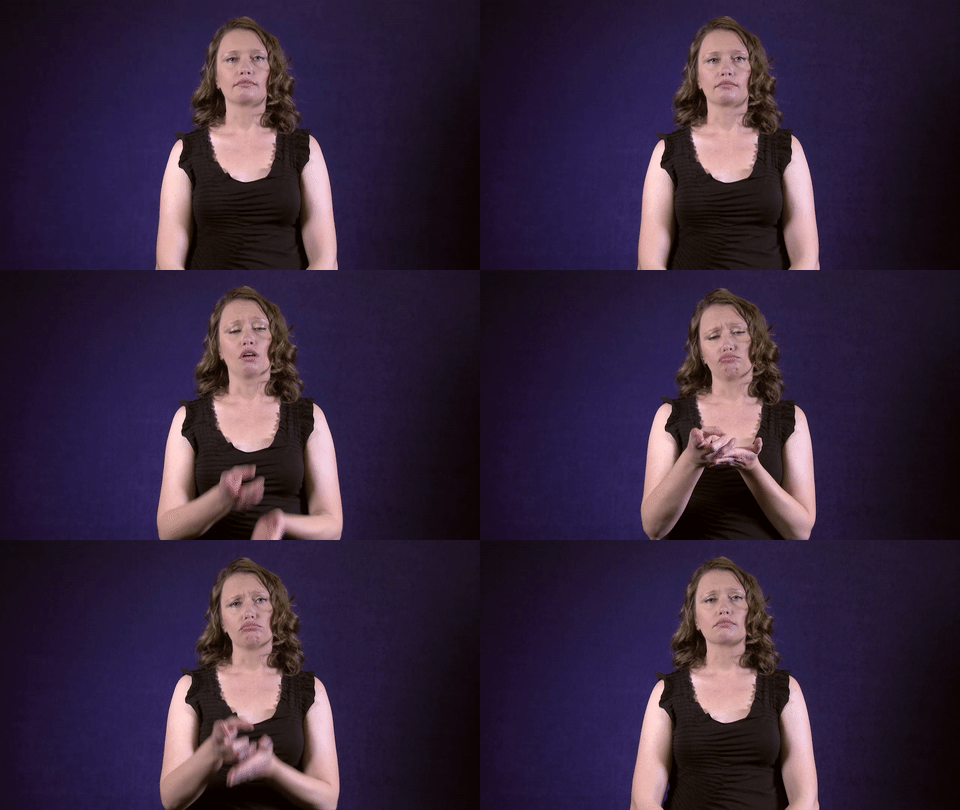
Sign for BE-HONEST in ASL | 😇 ASL Dictionary

Definition: To be truthful.

Sign for BE-HONEST in ASL

YouTube player

Practice Activities:

Start by practicing the sign for BE-HONEST in ASL in isolation. Stand in front of a mirror and repeat the sign multiple times, focusing on correct handshape, movement, and facial expression. Honesty carries an emotional tone, so make sure your facial expressions match the meaning, conveying sincerity.

Next, practice using the sign for BE-HONEST in ASL in simple sentences. For example, you can sign “YOU BE-HONEST ALWAYS?” or “I BE-HONEST WITH FRIEND.” Vary the subject and context while keeping the structure simple to gain fluency. Repetition with different sentence types helps develop confidence in everyday conversations.

Engage in storytelling activities where the theme centers around honesty. Try creating a short story about a situation where someone chooses to be honest even when it’s hard. Include signs such as LIE, TRUTH, FRIEND, FAMILY, and SCHOOL. Recount the story using as much expressive signing as possible.

Work with a partner to set up role-playing interactions. One partner can tell a short story, and the other asks questions using the sign for BE-HONEST in ASL. For instance, one could pretend to be a student explaining to a teacher why homework wasn’t finished, and the teacher asks, “BE-HONEST, WHY NOT FINISH?”

Use flashcards that include different values such as HONESTY, RESPECT, and KINDNESS. When you draw the card BE-HONEST, sign it and give a personal example of a time you or someone you know showed honesty. This reinforces not just the sign but its real-life application.

Incorporate video practice by recording yourself using the sign for BE-HONEST in ASL during storytelling or question/answer activities. Watch the footage to evaluate your accuracy in hand movement and facial grammar. Use this review process as a self-assessment tool to improve clarity and expression.

Cultural Context:

In American Sign Language, the sign for BE-HONEST in ASL carries deep cultural value beyond just its literal meaning. Honesty is not only a personal trait but also a foundational part of communication in Deaf culture. Using the correct sign shows respect for transparency and clarity, which are highly valued in ASL conversations.

The sign for BE-HONEST in ASL is a common way to express being truthful, sincere, or direct. In many Deaf communities, being open and clear is encouraged more than beating around the bush. This directness supports the efficient visual language ASL is known for and helps build trust between signers.

When someone uses the sign for BE-HONEST in ASL, they might be emphasizing the importance of telling the truth in a situation. It’s also often used to ask someone to speak plainly without sugarcoating. Among friends, family, and peers in the Deaf community, this sign is a polite way of inviting honesty and vulnerability in conversation.

Deaf culture values signs that show character traits, especially those like honesty, trust, and integrity. The sign for BE-HONEST in ASL can sometimes be used to describe a person’s nature or to make a statement about how someone should act. A signer might say someone is always honest or remind someone to stay honest with this sign in casual or serious interactions.

The visual nature of ASL makes it possible to show emotions along with the sign for BE-HONEST in ASL. A serious face or soft expression might accompany it, depending on the tone. This makes the sign more powerful, giving depth to the message without needing extra words.

In classrooms, interpreters often use the sign for BE-HONEST in ASL when translating stories, ethics discussions, or real-life scenarios. Children and students are taught the value of honesty through repeated exposure to the sign and its proper context. As they grow in language and experience, they learn when and how to use the sign with accuracy and cultural awareness.

On social media or in storytelling, Deaf influencers and creators include the sign for BE-HONEST in ASL to emphasize themes of truth and integrity. It has a place in vlogs, discussions, signed poetry, and life advice videos. When viewers see the sign used in these contexts, it reinforces its importance as a cultural norm within the Deaf community.

Sign language is deeply tied to cultural values, and the sign for BE-HONEST in ASL is a clear example. It reflects a shared

Extended Definition:

The sign for be-honest in ASL is a commonly used phrase in everyday conversations. It conveys sincerity, truthfulness, and the importance of speaking truthfully in both casual and serious interactions. This sign is a valuable part of learning American Sign Language because it reflects a key aspect of communication — honesty.

To sign be-honest in ASL, you typically use a flat dominant hand that moves straight down the top surface of the nondominant flat hand. This movement represents a clear and truthful path, symbolizing openness and honesty. Facial expression also plays a crucial role; a serious or sincere look helps reinforce the meaning of the sign.

Context influences how the sign for be-honest in ASL is used. It may appear in sentences where someone is admitting the truth, encouraging others to be sincere, or emphasizing the value of integrity. In social settings, this sign helps maintain trust between people, whether among friends, family, or colleagues.

Children are often taught the sign for be-honest in ASL early in their language development. It’s a powerful way to communicate values as well as language. Parents, educators, and interpreters frequently use it to reinforce moral lessons during daily interactions and storytelling.

The sign for be-honest in ASL can be paired with other signs to form more complex ideas. For example, someone may combine it with signs for feelings or confession to more clearly express emotional honesty. This pairing helps the signer add nuance and emotion to their message.

ASL uses space, motion, and facial cues to convey meaning beyond simple words. When making the sign for be-honest, it’s important not just to get the hand movement right, but also to include the proper facial expression and tone. This ensures the intended meaning is understood clearly by the person watching.

Cultural understanding is also critical when using the sign for be-honest in ASL. Within the Deaf community, values like transparency and trust are deeply respected. Using this sign appropriately demonstrates cultural awareness and a commitment to clear, respectful communication.

The sign for be-honest in ASL appears frequently in educational materials and sign language videos. Because it reflects an important concept, many ASL learners encounter it during their early studies. It serves as a reminder that language is not only about grammar and vocabulary, but about connecting with others authentically.

In digital communication, such as video calls or social media, the sign for be-honest in ASL can also be used to

Synonyms: be straightforward, be truthful, be sincere, tell the truth, speak honestly

Educational resources: Find related learning materials in our course bank!

Want more? Check out some of our popular learning activities on the homepage!

Need to look up a sign? Use our highly rated dictionary: https://aslinteractive.com/best-asl-dictionary/

Follow us on tiktok: https://www.tiktok.com/@aslinteractive. More social media links at the bottom of this page!

Long-tail Keywords: what is the sign for be honest in asl, how do you sign be honest in asl, learn how to sign be honest in asl

Categories:

tags: Honesty, Commands, Language Learning, Verbs, Everyday Activities

Parameters

*Handshape*:

The dominant hand in the sign for BE-HONEST in ASL uses a flat handshape, palm facing downward. The fingers are extended and held together as the hand glides smoothly over the top of the non-dominant hand, which is also flat and facing upward.

This open B-hand shape represents a layer of straightforwardness or openness as part of the sign. The handshape is crucial in conveying the meaning behind the sign for BE-HONEST in ASL .

*Palm Orientation*:

For the sign for BE-HONEST in ASL, the dominant hand is held flat with the palm facing downward. The fingertips of this hand brush across the open, upward-facing palm of the non-dominant hand, moving from base to tips. This palm orientation creates a clear visual metaphor for honesty or truth moving forward. The palm positions are essential to accurately convey the meaning in the sign for BE-HONEST in ASL.

*Location*:

The sign for BE-HONEST in ASL is typically produced in the neutral space in front of the body, with the dominant hand beginning near the forehead or upper face area. The hand then moves downward in a straight line, passing across the non-dominant open palm, which is held horizontally at chest level.

This location emphasizes the face and chest, symbolizing sincerity and truthfulness. Performing the sign in this centralized zone helps convey the direct meaning of the sign for BE-HONEST in ASL, making it visually clear and accessible to the viewer.

*Movement*:

To perform the sign for BE-HONEST in ASL, start with your dominant hand in the “H” handshape. Place the fingertips of the “H” hand at your non-dominant, flat hand, which is held palm-up in front of your chest.

Move the “H” hand in a smooth, straight motion outward across the palm. This fluid movement represents truth traveling straight or being laid out. The sign for BE-HONEST in ASL emphasizes sincerity and straightforwardness with this direct motion.

*Non-Manual Signals*:

Non-manual signals for the sign for BE-HONEST in ASL typically include a sincere and open facial expression. The signer often raises their eyebrows slightly, maintains soft eye contact, and reflects a sense of genuineness or transparency .

During the sign for BE-HONEST in ASL, the overall demeanor should support the concept of truth and integrity. Avoid exaggerated or dramatic expressions; instead, aim for a calm and trustworthy appearance to reinforce the message.

*Prosody, Dominant/Non-Dominant Hand*:

The sign for BE-HONEST in ASL uses the dominant hand in an “H” handshape. This hand moves forward and downward across the palm of the non-dominant hand, which is held horizontally in front of the chest, palm facing up. The movement is smooth, as if showing sincerity flowing from the heart.

Both hands work together to convey the concept clearly, but the dominant hand leads the motion. The sign for BE-HONEST in ASL emphasizes clarity and integrity, making eye contact and facial expression important for full prosody.

Tips for Beginners:

When learning the sign for BE-HONEST in ASL, it’s important to focus on handshape and direction. This sign uses the dominant hand in the “H” handshape, which moves from the fingers of the non-dominant flat hand (palm up) forward and off the hand in a smooth motion. Be sure your hand remains in the correct “H” shape and your movement stays clear and confident.

A common mistake beginners make with the sign for BE-HONEST in ASL is not aligning the “H” hand correctly on the non-dominant hand. If your hand is too far off-center or the movement is too abrupt, it can change the meaning or confuse the viewer. Practicing in front of a mirror helps ensure your placement is accurate and your sign is readable.

Consistency is key when using the sign for BE-HONEST in ASL. Make sure the hand movement is fluid and doesn’t pause or stutter halfway. Think of the “H” hand gliding across a surface—it should feel natural and continuous with a slight outward flick at the end.

Another helpful tip is to pair facial expressions with the sign. Honesty often comes with a serious or sincere expression, so matching your facial expression helps reinforce the meaning behind the sign. Don’t underestimate the power of non-manual markers in ASL; they enhance clarity and emotion.

Try practicing the sign in everyday conversation, especially when discussing topics about trust, truth, or integrity. The more you integrate the sign for BE-HONEST in ASL into your regular vocabulary, the more natural it will become. Practice slowly at first, then build speed as your comfort grows . With patience and repetition, this sign will become second nature while improving your overall fluency in ASL.

Connections to Other topics:

The sign for BE-HONEST in ASL is closely connected to signs that reflect personal values and ethical behavior. It is similar in movement to the sign for TRUE, which also uses a dominant hand moving straight forward from the mouth area, symbolizing honesty coming from the lips. This visual metaphor ties the sign strongly to themes of truthfulness, directness, and sincerity in communication.

In expressive ASL storytelling or personal narratives, the sign for BE-HONEST in ASL often pairs with signs like TRUST, RESPECT, and INTEGRITY. These combinations help to emphasize a person’s moral character or the trustworthy nature of a situation. For example, someone might sign a compound phrase like TRUST + BE-HONEST to reinforce the reliability of an individual or group.

This sign also shares conceptual space with NEGATIVE traits as its opposite, such as the signs for LIE or DECEIVE. Contrasting these signs in conversation helps clarify intent and highlight moral judgments in a nuanced way. These opposites are often used to depict ethical dilemmas or character flaws when describing events or behavior in ASL narratives.

The sign for BE-HONEST in ASL frequently appears in educational and religious contexts where values are taught or discussed. It is ideal for situations that require an emphasis on moral teachings, such as lessons about truthfulness or confessions. It’s also useful in counseling or therapeutic settings, encouraging openness and self-revelation.

In poetic ASL or Deaf theater, BE-HONEST can be layered with facial expressions and rhythm to deepen emotional impact. When used repeatedly or in contrast with LIE or FAKE, it can convey inner conflict or a character’s growth. Understanding the sign for BE-HONEST in ASL therefore enriches a signer’s expressive toolbox, enabling more sophisticated dialogue about ethics and personal truth .

Summary:

The sign for BE-HONEST in ASL reflects a deep cultural and linguistic value placed on truthfulness within the Deaf community. Performed by using a flat, dominant H-handshape that glides forward over the index finger of the non-dominant hand, the motion evokes the metaphor of truth as something transparent and undisguised. This gesture is both literal and symbolic, conveying the idea that honesty crosses the surface without obstruction.

In ASL, many concepts are visually iconic, and BE-HONEST is no exception. The visual metaphor of something passing over a flat, stable surface aligns with the idea of sincerity and straightforwardness. This physical representation captures the essence of integrity, which is a central tenet in interpersonal and community relationships.

The sign for BE-HONEST in ASL shares a semantic field with other integrity-related concepts like TRUE, REAL, and TRUST. While similar in connotation, each sign is nuanced and situational. For instance, TRUE and BE-HONEST may sometimes be used interchangeably in general conversation but differ in rhetorical tone or context.

Grammatically, BE-HONEST functions as a verb but can also serve adjectivally depending on syntax. ASL follows a topic-comment structure, so the placement of BE-HONEST in a sentence impacts its meaning. For example, emphasizing the sign early in a sentence frames the topic as centered around ethical conduct or moral behavior.

Honesty is highly regarded in Deaf culture, not only as a moral principle but also as a communication necessity. The visual-gestural nature of ASL values directness and clarity, meaning signs like BE-HONEST mirror a cultural preference for unambiguous interactions. Within both casual conversations and serious discussions, this sign maintains a place of respect.

The concept and usage of BE-HONEST carry an embedded cultural value, as the Deaf community often upholds transparency and forthrightness in discourse. In environments such as Deaf education or Deaf-led organizations, the sign is often used to promote ethical leadership and accountability. The repetition of BE-HONEST in these settings reinforces its foundational role.

From a linguistic standpoint, the sign for BE-HONEST in ASL is classified as an iconic sign, wherein the form of the sign resembles its meaning, creating a cognitive link that facilitates comprehension. Iconicity in ASL helps learners, especially those new to the language, to more intuitively grasp abstract values like honesty. This overlap between form and meaning enriches learning and retention.

Applied linguistics highlights that signs like BE-HONEST serve pragmatic as well as semantic functions. It is not only what is being said but how and when it is said that carries meaning. The sign can be adjusted in size, speed, or facial expression to convey urgency, earnestness, or disapproval, offering multiple levels of interpretation.

The sign connects to related ethical and emotional signs, such as SINCERE, OPEN-HEARTED, and CONFESS. Each variation of sign usage maps out a different part of the emotional landscape. BE-HONEST underscores a foundational principle, while signs like CONFESS tend to build upon it in more complex emotional narratives.

Language acquisition strategies for BE-HONEST can vary depending on the learner’s fluency. Native ASL users may acquire the sign organically in early social contexts involving trust and correction. In contrast, second-language learners often encounter it in structured lessons dealing with moral or ethical vocabulary.

Interpreters use the sign for BE-HONEST with nuance and cultural congruency. In legal or religious settings where honesty serves as a key concept, precision and emphasis are critical. Facilitating translations that retain the sign’s intent and social weight requires a deep understanding of both source and target cultures.

The emotional tone of the sign can be enhanced using non-manual signals such as raised brows, slight head nods, or serious facial expressions. These non-manual cues complement the manual sign, indicating whether someone is being direct, requesting truth, or revealing something important. Emotion and intent are inseparable in signs like BE-HONEST.

Variations in regional diction may alter aspects of the sign slightly. Some Deaf communities may perform the motion at a different angle or include additional facial cues, showcasing dialectal variety within ASL. Regardless of variation, the conceptual core of the sign remains consistent across regions.

Children in Deaf communities are often socialized into using the sign for BE-HONEST from a young age. Through exposure in familial and educational spaces, it becomes a lexicalized tool in expressing accountability. It is often one of the first values emphasized during language acquisition and moral teaching.

The sign features in narrative storytelling, where characters might learn lessons about integrity. In ASL storytelling traditions, BE-HONEST helps develop the moral arc of a plot. Its inclusion underscores themes of growth, honesty, and transformation.

Cognitive linguistics suggests that signs like BE-HONEST activate schema for moral introspection and alignment. When people use this sign

Want more? Check out some of our popular learning activities!

ASL Interactive Resources

ASLInteractive YouTube Channel

Follow us on tiktok: @aslinteractive.com

Follow us on Instagram: aslinteractive

Facebook page: aslinteractive

Facebook group: aslinteractive

LInkedIn: ASL Interactive LLC

Twitter: @ASL_interactive

*Some information on this page is AI-generated. AI can make mistakes. Please check the information.

Sign for BE-HONEST in ASL

Responses