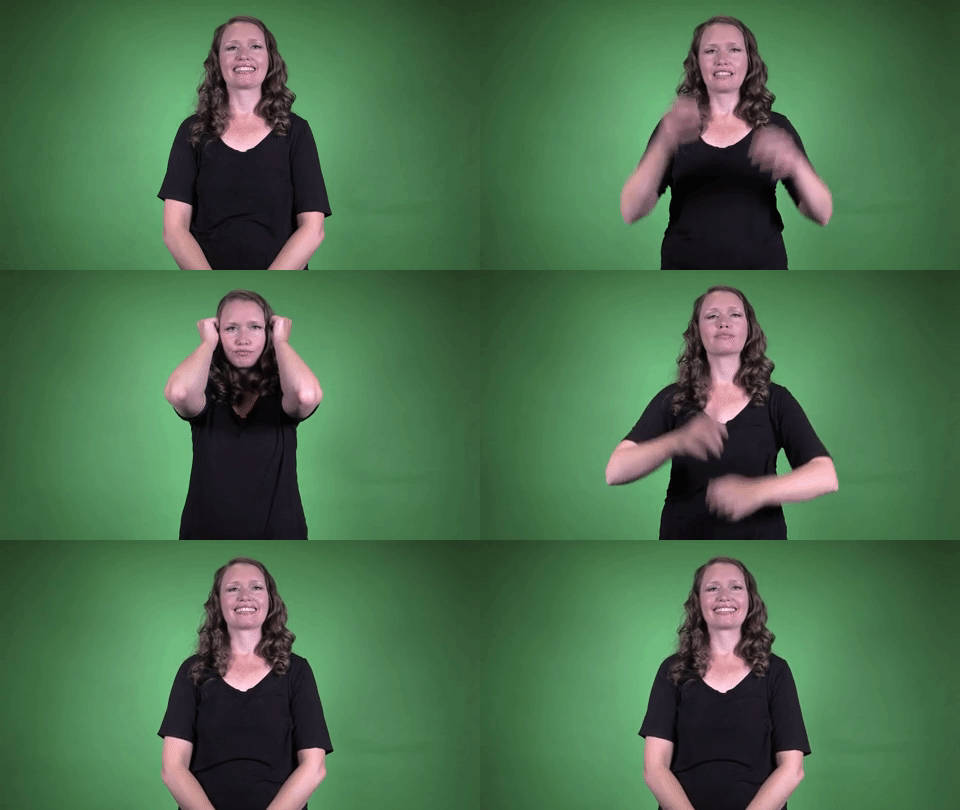
Sign for BEANIE in ASL | 👲 ASL Dictionary

Definition: A snug-fitting cap.

Sign for BEANIE in ASL

YouTube player

Practice Activities:

Start by practicing the sign for BEANIE in ASL in front of a mirror. Focus on the handshape, location on the head, and movement. Repeat the sign multiple times to build muscle memory and confidence with the motion.

Next, use the sign in simple descriptive sentences. Examples include: I wear a BEANIE in winter. My BEANIE is red. The BEANIE keeps my head warm. Signing short phrases like these helps build fluency and reinforces vocabulary in different contexts.

Try storytelling using the sign for BEANIE in ASL. Create a brief story about a cold day, including details about putting on a coat, scarf, gloves, and BEANIE. You might say: I went outside. It was snowing. I grabbed my BEANIE and put it on. Including multiple signs helps you integrate BEANIE into broader context.

A good partner activity is taking turns describing outfits. One person describes what they’re wearing using signs, and the other guesses or pictures it. You could sign: Today, I wear a BEANIE, T-shirt, and boots. Then switch roles. This keeps practice fun and communicative.

Use flashcards with pictures of different headwear. When you see the BEANIE image, sign BEANIE quickly and accurately. Advanced learners can compare the sign for BEANIE in ASL with signs for HAT, HOOD, and HELMET, discussing what makes each sign distinct.

Finally, challenge yourself to watch videos or vlogs where someone uses the sign for BEANIE in ASL. Pause and mimic their sign, then replay to check accuracy. Imitating fluent signers sharpens comprehension and expression. Add your own filmed responses to practice expressive skills and track improvement over time ️.

Cultural Context:

The sign for BEANIE in ASL represents more than just a translation of a word—it’s connected to fashion, seasons, and identity in the Deaf community. Beanies are popular headwear when the weather turns colder, and knowing the correct ASL sign for BEANIE ensures smooth communication when discussing winter clothing or making fashion choices. This sign helps Deaf individuals express personal style or discuss clothing trends just like anyone else.

In many Deaf social spaces, clothing and accessories become central to conversations, storytelling, and even jokes. When explaining how someone looked at a party or describing a favorite winter outfit, the sign for BEANIE in ASL offers clarity and cultural inclusion. It’s part of everyday social dialogue, especially in colder climates where beanies are common.

Deaf culture places strong value on visibility and clear communication. Having accurate and expressive signs for garments like beanies adds richness to these interactions. The sign for BEANIE in ASL not only helps describe an object but can also convey mood, context, and style when used dynamically in a sentence.

In American Sign Language, signs tied to clothing are often iconic—they resemble the first-hand experience of wearing or using the item. The sign for BEANIE in ASL is no different, capturing the concept visually, making the communication flow naturally. For Deaf and Hard of Hearing children learning language and visual metaphors, this reinforces comprehension and memory of the term.

In addition to everyday conversations, the sign for BEANIE in ASL often appears in interpreted events or media settings. Whether describing a character’s appearance during a stage production or giving directions in a classroom, accurate clothing signs like this one ensure that interpretations remain complete and inclusive. It enriches both storytelling and instruction.

ASL dictionaries like this one provide essential support for learners, educators, and interpreters who need reliable resources. The sign for BEANIE in ASL is regularly looked up by new signers who may be learning how to describe winter gear or discuss what to pack for a trip. With clothing being such a universal topic, this sign is useful at all age levels.

ASL is a living language where cultural movements and fashion trends can affect how signs evolve or are adapted. The sign for BEANIE in ASL maintains both linguistic accuracy and social relevance. It reflects how Deaf individuals talk about their lives and their environment, from school grounds to professional video calls.

Including signs like BEANIE shows the depth and flexibility of ASL when talking about the modern world

Extended Definition:

The sign for beanie in ASL is a practical and easy sign associated with this popular and cozy type of hat. A beanie is typically a snug-fitting, brimless cap made of soft material like wool or cotton, often worn in cold weather. In American Sign Language, many clothing items, including hats like a beanie, use gestures that suggest the placement or shape of the item on the body.

To form the sign for beanie in ASL, start by mimicking the motion of placing a small hat on your head. This gesture visually represents putting on a tight hat, like a beanie, and is understood in the Deaf community regardless of the beanie’s color, style, or brand. The movement is simple and closely tied to the object’s purpose and shape, making it a clear and intuitive sign.

This ASL sign can be used for conversations about winter fashion, colder weather, or describing someone’s outfit. It might also come up in contexts where you’re packing for a trip, going skiing, or just getting cozy. Signing about clothing in ASL often helps paint a vivid image since many of the signs are highly visual or iconic.

The sign for beanie in ASL can vary slightly by region or individual, as with many signs in American Sign Language. Local variations might include extra descriptive signs or combinations depending on the context. Some people even point out the texture or how the beanie fits by adding facial expressions or extra gestures to reinforce the meaning.

You might also combine the sign for beanie with other signs to describe a complete outfit or style. For instance, you could sign beanie, jacket, and boots to express your winter outfit. The flexibility of ASL allows for creative expression when talking about clothing or accessories.

Using the sign for beanie in ASL is helpful in educational environments, especially when teaching vocabulary related to fashion or weather. Visual learners benefit from seeing how items are represented clearly with hand movements. Teachers and interpreters alike often incorporate signs like this in thematic lessons about seasons or activities.

When searching for the sign for beanie in ASL, videos and GIFs can be helpful tools to understand the motion and facial expression involved. Seeing the sign in context enhances learning, especially when trying to pick up new vocabulary. Always remember that practicing the sign in different scenarios helps solidify your memory.

Including the sign for beanie in ASL in your daily conversation boosts your signing fluency and helps you connect with other ASL users. Whether using it at

Synonyms: cap, hat, knit cap, winter hat, skullcap

Educational resources: Find related learning materials in our course bank!

Want more? Check out some of our popular learning activities on the homepage!

Need to look up a sign? Use our highly rated dictionary: https://aslinteractive.com/best-asl-dictionary/

Follow us on tiktok: https://www.tiktok.com/@aslinteractive. More social media links at the bottom of this page!

Long-tail Keywords: what is the sign for beanie in ASL, how do you sign beanie in ASL, ASL sign for beanie

Categories:

tags: Clothing, Accessories, Winter Wear, Fashion, Language Learning

Parameters

*Handshape*:

The handshape for the sign for BEANIE in ASL typically uses both hands in a loose curved 5-handshape, resembling how a beanie would fit around the head. The fingertips start at the forehead and trace around the top sides of the head, mimicking the edge or band of a beanie.

This gesture visually outlines where a beanie sits, enhancing clarity. In the sign for BEANIE in ASL, the handshape helps show the general fit and shape of the hat .

*Palm Orientation*:

The palm orientation for the sign for BEANIE in ASL involves both hands in a curved 5-handshape. Palms face inward toward the top of the head, mimicking the shape of a snug-fitting cap or beanie.

As the hands move around the crown of the head in a slight circular motion, the palms stay angled toward the scalp. This motion helps convey the tight, rounded fit commonly associated with a beanie . The palm orientation stays consistent to clearly express the concept in the sign for BEANIE in ASL.

*Location*:

The sign for BEANIE in ASL is typically produced at the top of the head, indicating where a beanie hat would sit. Both hands may be used to trace a circular or curved shape that mimics the outline of a beanie resting over the scalp.

This location helps visually communicate the concept through placement and movement. Using the top of the head is essential to clearly convey the sign for BEANIE in ASL and differentiate it from other headwear signs.

*Movement*:

To perform the sign for BEANIE in ASL, begin by using both hands to mimic placing a beanie over your head. Start with your open hands near the sides of your head, palms facing inward, and fingertips just above the ears.

Then, gently curve your hands downward and slightly forward as if shaping an invisible beanie cap onto your scalp. This visual gesture helps clearly convey the meaning of the sign for BEANIE in ASL . Repeat the movement slightly if needed for clarity.

*Non-Manual Signals*:

When demonstrating the sign for beanie in ASL, your facial expression should remain neutral to mildly descriptive, depending on the context. Show slight interest or engagement by maintaining soft eye contact and relaxed eyebrows.

Because the sign for beanie in ASL often involves mimicking the shape or placement of the hat, a light head tilt or subtle nod can add clarity. Keep your mouth neutral—not overly expressive—to avoid distracting from the hand movement.

*Prosody, Dominant/Non-Dominant Hand*:

The sign for BEANIE in ASL typically uses both hands. The dominant hand is slightly curved and mimics pulling down a snug cap over the head while the non-dominant hand may assist or remain still. The movement is downward along the scalp, reflecting the shape and tight fit of a beanie. This sign may include a facial expression showing a snug fit.

When demonstrating the sign for BEANIE in ASL, ensure the dominant hand traces the curve of the head as if placing a soft, close-fitting hat. The non-dominant hand may support the gesture or stay neutral depending on the regional variation.

Tips for Beginners:

When learning the sign for BEANIE in ASL, it’s essential to focus on placement and clarity. This sign mimics the shape and positioning of a beanie hat, so make sure your motion reflects pulling an imaginary beanie over your head from both sides. Use both hands near the top of your head, moving toward your ears in a downward motion. Visual accuracy is key for effective communication.

Keep your movements clear and distinct but not overly exaggerated. A common beginner mistake is moving too quickly or misplacing hand placement, making the sign less recognizable. Practicing in front of a mirror can help align your hands correctly and ensure your beanie motion is smooth and centered.

One helpful technique is to observe native signers or watch slowed-down ASL videos demonstrating the sign for BEANIE in ASL. Repetition is crucial—try signing it multiple times while saying the word out loud to build hand-to-word association. Consistency helps your brain and muscle memory work together.

Make sure your facial expression is neutral or appropriate for the context. While beanie itself doesn’t necessarily convey strong emotion, your expression can support the conversation setting, whether you’re describing clothing or telling a story. Don’t forget that facial grammar plays a key role in ASL.

Another practical tip is to learn the signs for related clothing items like HAT or SCARF. Understanding how to categorize and relate signs helps improve fluency. If someone doesn’t recognize your sign at first, be ready to fingerspell the word slowly and clearly to support understanding.

Regular practice and feedback from fluent signers or instructors will help you master the sign for BEANIE in ASL. The more you incorporate it into daily conversation, the more fluent and natural your signing will become. Keep at it and stay patient with your progress!

Connections to Other topics:

The sign for BEANIE in ASL connects closely with other signs related to clothing and accessories. It helps illustrate the category of headwear, where learners can see visual similarities between signs like HAT, HELMET, and CAP. These signs often share a location on or near the head and rely on handshape and motion to mimic wearing an item.

Understanding the sign for BEANIE in ASL can help reinforce spatial awareness and iconic representation in sign formation. For example, the curved motion over the head can resemble placing a small, soft hat, contrasting with the more firm placement seen in the sign for HELMET. The concept of headgear in ASL extends to weather-based vocabulary like COLD or SNOW, where clothing signs like BEANIE are often included in conversation descriptions.

This sign is useful when teaching descriptive classifiers and adjectives in ASL. Signing BEANIE alongside signs like COLOR, STYLE, or SEASON allows for more complete storytelling or outfit descriptions. A signer might describe a red beanie worn in WINTER, combining classifiers and sequential modifiers, which is foundational in more advanced ASL usage.

The sign for BEANIE in ASL also relates to regional variations and fingerspelled items. While some areas use a distinct gesture, others default to fingerspelling (FS) BEANIE. This encourages learners to stay flexible with sign language dialects and usage in different Deaf communities. The presence or absence of an established sign often relates to cultural relevance or frequency of the concept within the community.

In narrative contexts, the sign for BEANIE in ASL may appear in children’s stories, fashion conversations, or sports games, particularly where uniforms or team accessories are discussed. This broadens the learner’s vocabulary context and links signs through themes like identity, warmth, or personal expression.

Summary:

The sign for BEANIE in ASL is generally expressed through a combination of classifier use and descriptive gestures, as there is no universally established lexical sign that represents “beanie” directly. In many cases, signers use either a descriptive sign to indicate a type of hat or rely on fingerspelling the word. Cultural factors, regional variations, and signer preference can all impact how the sign for beanie is rendered.

One common approach begins by signing HAT using a patting motion on the top of the head with the dominant hand, then following this with descriptive classifiers to indicate the style. To represent a beanie, a signer may curve both hands around the head, mimicking the tight shape of the knit cap. Paired with body language and facial expressions, this accurately conveys the casual, close-fitting style associated with beanies.

Sometimes, fingerspelling B-E-A-N-I-E might be the most straightforward method, especially when depicting a specific brand or style that the viewer may not initially recognize. This is particularly effective in expressive or narrative signing, where signer clarity and specific identification matter. Fingerspelling allows for accuracy without confusion and situates the term properly for both hearing and Deaf audiences.

The sign for BEANIE in ASL reflects broader themes in the language regarding object categorization and descriptive elaboration. Because ASL often uses classifiers and iconicity, depicting the object’s size, shape, and placement becomes more central to meaning than simply presenting a programmed sign. A beanie, being a distinctive form of hat, requires contextual clarity to specify it from other headwear like caps or helmets.

Where beanies are culturally connected to streetwear, fashion, and even temperature-related utility, the depiction in ASL adjusts depending on whether the beanie is being discussed as a fashion item or functional gear. The sign might integrate contextual signs like COLD or WINTER to anchor the meaning in environmental cues or style references used in Deaf culture. Using signs like WARM or HEAD along with descriptive motion helps create a robust, comprehensible concept.

In grammatical usage, ASL syntax allows for the sign for BEANIE in ASL to follow the standard subject-object-verb structure, or be flexibly placed depending on discourse flow. A sentence might read as “I WEAR BEANIE WINTER” or “WINTER BEANIE I ALWAYS WEAR,” emphasizing specific linguistic priorities like time or habit. This reflects ASL’s rich spatial grammar and ability to express emphasis and duration through sign placement and repetition.

The classifier system is especially helpful when elaborating on different types of beanies. For example, beanies with pom-poms might include a flick at the top of the sign to indicate the fluff detail. Slouch-style beanies might be accompanied by a backward hand motion showing excess fabric drooping behind the head. These small augmentations give specificity to a versatile clothing item.

Lexically, the word “beanie” in English encompasses a range of knit caps and skullcaps. Since ASL prefers concreteness and visuality, signers must ensure their audience can visually access and interpret the detail. This puts more weight on elaborative signing and spatial referencing, so communication remains sharp even in the absence of an exact equivalent sign.

The sign for BEANIE in ASL opens a broader discussion on how Deaf culture adapts to fashion terminology. Many fashion-related terms are not codified in standard ASL and are created organically through community use, fingerspelling, or descriptive signing. This is particularly important for style-conscious or younger signers who want to talk about different types of garments, including accessories like beanies.

Given the emergence of inclusive fashion content on platforms like TikTok and Instagram, the sign for BEANIE in ASL may become more standardized over time. As more Deaf influencers and content creators describe their outfits, the community may converge on a consistent visual sign for beanie. For now, communicative flexibility and clarity take precedence, and fingerspelling remains a reliable tool.

Applied linguistics suggests that the visualization process in ASL strengthens memory retention for items like hats or beanies. Using space and classifiers helps signers reinforce comprehension and recall by grounding language in observable form. This also facilitates language learning for both native signers and second-language learners engaging with everyday vocabulary.

Educational perspectives also look at the sign for BEANIE in ASL when designing curriculum for teaching clothes and accessories. Teachers reinforce classifier use and modify signs based on student familiarity with knit hats. Visual aids and realia, such as showing or wearing a beanie during lessons, enhance the tactile and visual linkage required in ASL instruction.

Semantic categories play a role, especially in discourse where types of hats are categorized by shape, size, or material. In narratives or fashion discussions, the distinction between a beanie and a baseball cap is made not through rigid semantics but by visual distinguishing signs. This reliance on form-based logic is a strength of ASL in covering vocabulary across domains

Want more? Check out some of our popular learning activities!

ASL Interactive Resources

ASLInteractive YouTube Channel

Follow us on tiktok: @aslinteractive.com

Follow us on Instagram: aslinteractive

Facebook page: aslinteractive

Facebook group: aslinteractive

LInkedIn: ASL Interactive LLC

Twitter: @ASL_interactive

*Some information on this page is AI-generated. AI can make mistakes. Please check the information.

Sign for BEANIE in ASL

Responses