Sign for BEAR in ASL | đŸ» ASL Dictionary

Definition: A large mammal with thick fur.

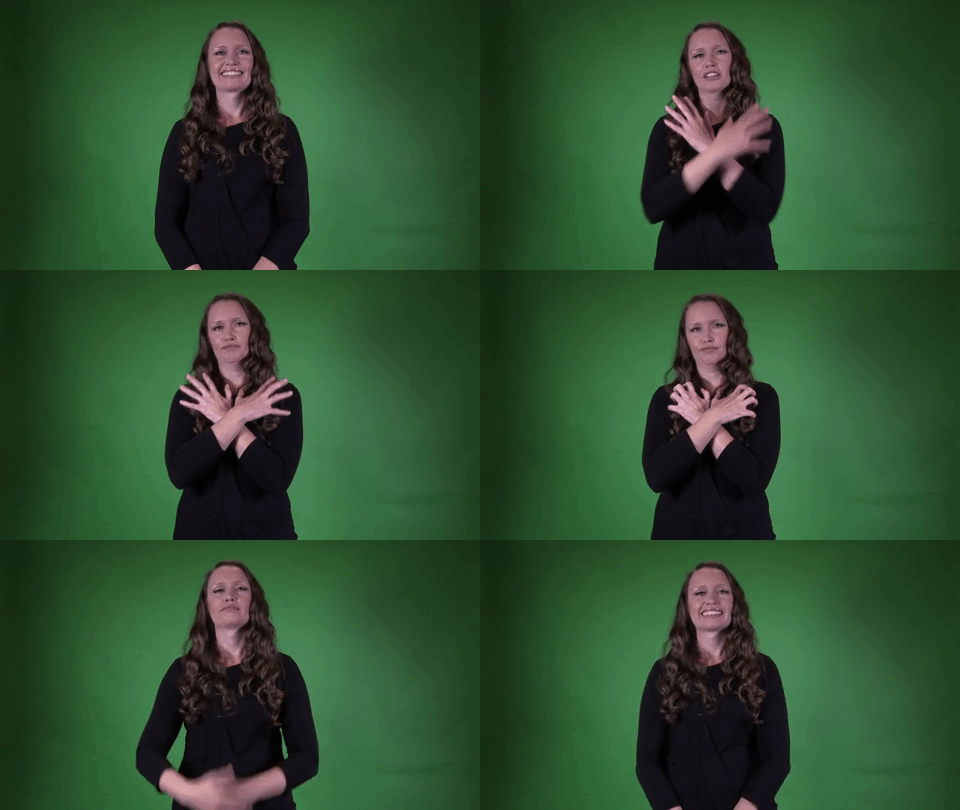
Sign for BEAR in ASL

YouTube player

Practice Activities:

To effectively practice the sign for BEAR in ASL, begin by isolating the sign in front of a mirror. Focus on the correct placement of your hands crossing over your chest with clawed fingers, then make a gentle scratching motion to mimic the gesture. Repeat this movement slowly at first, then increase your speed as you gain confidence.

Once you’re comfortable with the motion, try fingerspelling animal names and then signing bear in contrast. This will help with clarity and ensure you do not confuse the animal signs. Practice common animals like dog, cat, and bear to build fluency and recognition.

Move into short sentence practice like “I see a bear,” “Bears sleep in winter,” or “The bear is big.” Sign these repeatedly while varying facial expressions to show mood or information like fear, awe, or curiosity. Practice using question forms such as “Where is the bear?” to work on sentence structure and grammar in ASL.

Use storytelling to bring the sign for bear in ASL into context. Create a short scene such as walking through the woods and spotting a bear by a river. Sign key details, describe the setting, and incorporate the bear sign each time it appears in the story.

Pair up with a partner and do animal guessing games. One person acts out the animal, including the sign for bear in ASL, and the other guesses what animal it is. Add variations by describing size, color, or environment in ASL to deepen vocabulary and narrative skills.

Review a picture book or video about wild animals and practice identifying and signing each creature, focusing on using the sign for bear correctly each time it appears. Use emojis to label parts of your practice stories or sentences to make practice fun and memorable.

Cultural Context:

In American Sign Language, wildlife and animals often carry cultural meaning beyond just naming the creature. The sign for BEAR in ASL is not only a visual representation of the animal but also connects to cultural themes like strength, power, and survival. Bears appear in many stories and folklore throughout Deaf culture, especially when retelling adventures or explaining traits associated with animals.

The sign for BEAR in ASL involves crossing the arms over the chest and mimicking a scratching motion, much like how a bear might scratch its body. This gesture is easy to remember and includes iconic elements that closely relate to the way bears behave. It’s also one of the more visually expressive signs in the animal category, making it fun and interactive for both Deaf and hearing learners.

In Deaf storytelling, especially with visual vernacular, animals like the bear are used to show larger-than-life characters or to reflect human personality traits. The sign for BEAR in ASL can appear in stories where the bear might symbolize protection, nature, or self-reliance. It’s common to see the bear included in educational settings to help young signers learn about animal signs and their associated behaviors.

Family-centered lessons in ASL often use animals to introduce vocabulary in a meaningful way. The sign for BEAR in ASL might be used when reading signed versions of children’s books like “Brown Bear, Brown Bear” or during nature-themed lessons. Because of the bear’s strong presence in both real and fictional spaces, this sign is one of the more memorable ones taught early in language development.

The bear is often present in discussions around the natural world, especially in ASL science and biology lessons. The active, physical quality of the sign for BEAR in ASL helps students remember the animal’s characteristics and understand its significance in the ecosystem. It’s a popular sign during outdoor events, nature field trips, or in any interaction where visual learning is emphasized.

In Deaf culture, integrating animal signs like the sign for BEAR in ASL into narratives strengthens community connections. When someone uses the sign in casual storytelling, it adds depth and emotion that taps into shared understanding across signers. Bears might also be used symbolically to talk about human traits like resilience or hibernation, showing how deeply language can reflect culture.

When learning the sign for BEAR in ASL, it’s important to understand not only how to perform the sign but also the emotion behind it. Because ASL is a visual language rich with expression, matching the bear’s

Extended Definition:

The sign for bear in ASL is a fun and expressive sign that mimics the claws of a bear. It’s made by crossing both arms over your chest and then scratching down your shoulders with your hands curled into claws. This motion resembles a bear’s action and helps visually convey the meaning of the word.

In American Sign Language, animal signs like the sign for bear in ASL are typically iconic, meaning they resemble the animal’s features or behavior. This makes them easier to learn and remember, especially for children or visual learners. The bear sign is a great example because it uses movement to illustrate what a bear might do.

The sign for bear in ASL is commonly taught in early language development settings. Children learning ASL as their first language often acquire animal signs early on because animals are engaging and familiar. Teachers and parents often incorporate the bear sign into songs, games, and storytime activities.

Understanding how to do the sign for bear in ASL correctly is essential for clear communication. Facial expressions can enhance your signing and help give the word more character. While doing the clawing motion, you can also scrunch your nose slightly to add a playful expression, similar to how a bear’s snarl might look.

In some contexts, the sign for bear in ASL can also be used metaphorically. For example, someone might use it to refer to the animal or to describe someone strong or grumpy like a bear. Like many signs in ASL, context plays a major role in determining the exact meaning.

For those learning ASL online or in a class, seeing a video of the sign for bear in action is especially helpful. Movement is a critical part of ASL, and watching the direction, speed, and positioning of the sign helps you mirror it more accurately. Many educational videos show the bear sign from different angles to support learners at all stages.

It’s also helpful to understand where this sign fits within the broader category of animal signs in ASL. Alongside the sign for bear in ASL, signs like lion, tiger, and dog also use physical gestures that represent their unique traits. These categories of signs help learners identify patterns in how ASL conveys meaning visually.

Whether you’re using the sign for bear in ASL in a classroom, at home, or in a conversation, it’s a fun and expressive way to explore language. The visual nature of ASL brings words like bear to life, making communication rich and engaging. Over time, using signs like this builds flu

Synonyms: endure, tolerate, support, withstand, carry

Educational resources: Find related learning materials in our course bank!

Want more? Check out some of our popular learning activities on the homepage!

Need to look up a sign? Use our highly rated dictionary: https://aslinteractive.com/best-asl-dictionary/

Follow us on tiktok: https://www.tiktok.com/@aslinteractive. More social media links at the bottom of this page!

Long-tail Keywords: what is the sign for bear in ASL, how do you sign bear in ASL, ASL sign for bear

Categories:

tags: Animals, Zoo animals, Pets, Wildlife, Nature

Parameters

*Handshape*:

The handshape used in the sign for BEAR in ASL involves using both hands in a clawed “5” handshape. The fingers are slightly bent, mimicking claws.

For the sign for BEAR in ASL , the hands cross over the chest, with fingertips touching the opposite shoulder. A gentle scratching motion is then made to represent the bear’s furry chest, maintaining the same clawed handshape throughout the sign.

*Palm Orientation*:

For the sign for BEAR in ASL, the palm orientation is inward, facing the body. Both hands form claw-like shapes and cross over the chest, simulating the way a bear might scratch or hug itself.

The sign for BEAR in ASL uses a natural inward orientation to reflect the animal’s motion, with the backs of the hands exposed outward. This inward wrist positioning is key for maintaining the visual meaning of the sign.

*Location*:

The sign for BEAR in ASL is located at the upper chest area, typically across the shoulders. Both arms cross over the chest with hands in claw shapes, mimicking the motion of a bear scratching.

This location adds to the visual representation of the animal, making the sign for BEAR in ASL both iconic and easy to recognize. The chest-level placement helps convey the broad and powerful nature associated with a bear.

*Movement*:

To create the sign for BEAR in ASL, cross your arms over your chest with both hands in a claw shape. Your right hand should rest on your left shoulder and your left hand on your right shoulder.

Once in position, use your fingers to mimic a scratching motion by dragging your fingertips slightly down and inward across your chest. This movement reflects how a bear might scratch itself and helps convey the meaning behind the sign for BEAR in ASL.

*Non-Manual Signals*:

The non-manual signals for the sign for BEAR in ASL typically include a slight scrunching of the nose and a playful or gentle grimace, resembling a bear’s expression. Eyebrows may lower slightly, and the head might tilt or lean in to emphasize the gesture . These facial movements help convey the essence of the sign for BEAR in ASL and enhance clarity. Using expressive non-manual markers ensures the sign is both visually rich and easily understood.

*Prosody, Dominant/Non-Dominant Hand*:

The sign for BEAR in ASL uses both hands in a clawed 5-handshape. Cross your arms over the chest, with the dominant hand on top, and lightly scratch or squeeze the opposite shoulders, mimicking a bear’s movement. Facial expression can add emphasis to the sign.

When demonstrating the sign for BEAR in ASL, the dominant and non-dominant hands perform the same movement simultaneously. Make sure to keep the posture natural and fluid while maintaining the clawed handshape to clearly represent the concept of a bear .

Tips for Beginners:

When learning the sign for BEAR in ASL, it’s crucial to focus on facial expressions and body posture. This sign mimics the motion of a bear’s claws scratching the chest, so use both hands in a claw shape and cross your arms over your chest. Move your hands in a light scratching motion across your upper chest area. This helps depict the nature of a bear and gives the sign visual clarity.

A common beginner mistake is making the scratching motion too aggressive or using the tips of the fingers rather than the whole hand in a claw shape. Keep your fingers curved, but relaxed, and be sure your fingertips softly sweep across your chest without excessive force. This keeps the sign looking clean and natural. Practicing in front of a mirror can help you adjust your handshape and motion more effectively.

Timing and rhythm matter—don’t rush the motion. The sign for BEAR in ASL should be smooth and coordinated, not stiff or jerky. Performing the movement too stiffly might confuse it with other animal signs like CAT or TIGER. Repetition while watching native signers on video can help build fluency and confidence.

Another helpful trick is to think about the concept of the animal while signing. Imagine a bear scratching itself to help reinforce the meaning behind the motion. That visualization can anchor the movement in your memory and also remind you what differentiates this sign from similar-looking ones.

Consistency in handshape and motion is key. As you continue learning, try to use the sign in context—like during a story about animals—to strengthen your connection to it. Practicing the sign for BEAR in ASL in conversation with peers or instructors will help you gain natural fluency and accurate signing over time.

sign for BEAR in ASL, how to sign BEAR in American Sign Language, ASL sign for BEAR, learn the sign for BEAR in ASL, BEAR in ASL sign language, American Sign Language BEAR sign, ASL animal signs, animal signs in ASL, signing BEAR in ASL, how do you sign BEAR in ASL

Connections to Other topics:

The sign for BEAR in ASL connects to a broad range of related animal vocabulary, especially those involving mammals. It uses a motion that mimics scratching across the chest with claw-like hands, which links visually to how some other animal signs mimic physical traits. This connection helps learners understand patterns in animal signs, such as the use of body placement or handshape to represent fur, shape, or behavior.

This sign also ties in well when forming compound signs with descriptors to refer to specific types of bears, like polar bear or teddy bear. For example, polar bear might combine the sign for BEAR with a gesture representing cold or the frozen North, while teddy bear may include a classifier for a toy or soft object ☁. These build on the base sign and give learners a way to describe more specific items without needing entirely new vocabulary.

The sign for BEAR also features in children’s stories and learning contexts, making it valuable for ASL storytelling. It often appears in phrases or signed songs such as “bear hunt” or “the bear went over the mountain,” where rhythm and repetition help solidify vocabulary. Understanding this sign opens up access to cultural expressions and storytelling traditions within the Deaf community .

In descriptive contexts, the sign for BEAR can also be used metaphorically to describe people with bear-like traits—such as calling someone a “grizzly” or “teddy” in play or affection—drawing on the sign’s visual associations. This supports the use of classifiers and descriptive facial expressions, tying into broader ASL grammar features. Additionally, comparing the sign for BEAR with other mammal signs like lion, tiger, or dog reveals how classifiers and handshapes systematically convey meaning, improving sign recognition and production.

Summary:

The sign for BEAR in ASL captures the essence of a bear’s physicality and behavior. This sign is made by crossing your arms over your chest, as if hugging yourself, then scratching your upper chest or shoulders with your fingers bent like bear claws.

This movement mimics the imagery of a bear’s clawing or a furry body, providing a rich visual component. The iconicity of the gesture makes it intuitive for users, even those new to American Sign Language.

The sign for BEAR in ASL is part of a broader category of animal-related vocabulary in the language. This iconographic element is common in ASL, where many animal signs borrow from a creature’s distinct characteristics or movements.

This sign is used both in everyday conversation and in educational contexts, especially with children learning about animals. It helps visually represent nature and wildlife topics in a linguistically accessible way.

While the sign typically refers to the animal, it can be used metaphorically. For example, in storytelling or figurative speech, it may suggest strength, danger, or protectiveness, mirroring attributes associated with bears in various cultures.

The sign for BEAR in ASL can also connect deeply with cultural symbolism. Bears are often viewed as powerful figures in Native American traditions and mythologies, and that understanding adds richness when the sign is used in cultural narratives.

The grammatical usage of the sign for BEAR in ASL follows standard ASL subject-object-verb structure when used in storytelling or factual communication. You might sign “BEAR live FOREST” to mean “A bear lives in the forest,” for instance.

Facial expressions are important when signing BEAR, especially in differentiating between a cute teddy bear and a fearsome wild bear. Facial grammar in ASL helps contextualize whether the subject is threatening or friendly.

In more playful settings, the sign for BEAR in ASL is often exaggerated, with wider claw motions and dramatic facial expressions to entertain children. This expressive capability makes ASL particularly engaging during early learning environments like storytime.

In signs for other animal names, similar strategies are used. For instance, the sign for LION uses a clawing motion through the hair, while DEER uses placement of open hands near the forehead to signal antlers. These connections show how ASL relies on visual metaphor.

Applied linguistics has long admired the way ASL embeds visualization into language learning. The sign for BEAR in ASL is a prime example of embodiment—the way gestures model physical experience to represent meaning.

This embodiment principle supports language acquisition for deaf and hard-of-hearing children, allowing a more intuitive grasp on lexis. The physical performance of the sign becomes a memory cue, making recall easier compared to more abstract words.

The sign also has broader utility in cross-linguistic comparisons. Other signed languages, such as British Sign Language (BSL) and Langue des Signes Québécoise (LSQ), may use slightly different but similarly iconic gestures.

Interestingly, because ASL is a visual language, signed equivalents of spoken idioms sometimes do not exist. However, the sign for BEAR in ASL can be used metaphorically or playfully, as long as context and facial grammar help clarify the meaning.

In performance art, particularly in deaf storytelling and poetry, the sign for BEAR in ASL can take on enhanced dramatic value. Skilled signers might hold the sign longer, use more pronounced scratching, or integrate it into rhythmic body movement.

In baby sign language, which uses simplified ASL signs to communicate with infants before they can speak, the sign for BEAR is often one of the first ten animals taught. Its engaging, hug-like form invites easy modeling and imitation.

Technology platforms that support ASL learning commonly feature the sign, often animated or video-based, allowing viewers to mimic body posture and motion more accurately. These digital tools contribute to the evolution of sign visibility and accessibility.

The iconic structure of the sign helps hearing people learn and remember signs too. When educators teach the sign for BEAR in ASL within inclusive classrooms, students benefit from the physical and visual experience of language.

From a phonological standpoint, the sign uses specific handshapes—namely bent fingers that resemble claws. These handshapes activate a tactile and kinesthetic alignment between form and function, echoing themes of tactile sign learning.

The placement of the arms crossed over the body reflects not only physical mimicry but also spatial syntax. ASL relies heavily on space, so the way arms are oriented contributes to the semantic weight of the sign.

The sign does not require mouth morphemes, but some signers may mouth the word “bear” silently to reinforce meaning. This blending of oral and manual elements can support lipreading and contextual grounding for mixed-ability audiences.

As with many signs in ASL, regional and generational variation can occur. Some communities may use slightly different chest locations or hand speeds when signing bear, reflecting local dialects in the signing community.

De

Want more? Check out some of our popular learning activities!

ASL Interactive Resources

ASLInteractive YouTube Channel

Follow us on tiktok: @aslinteractive.com

Follow us on Instagram: aslinteractive

Facebook page: aslinteractive

Facebook group: aslinteractive

LInkedIn: ASL Interactive LLC

Twitter: @ASL_interactive

*Some information on this page is AI-generated. AI can make mistakes. Please check the information.

Sign for BEAR in ASL

Responses