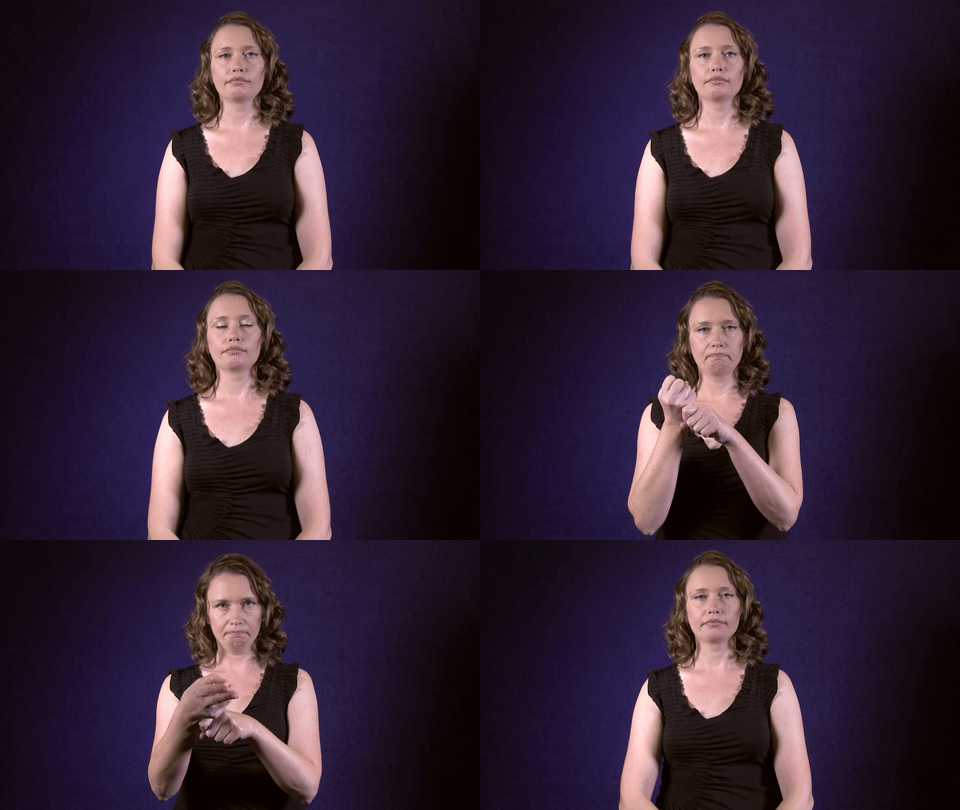
Definition: To strike repeatedly.
Sign for BEAT in ASL

Practice Activities:
To begin practicing the sign for BEAT in ASL, learners can warm up by repeating the sign in front of a mirror. Focus on clarity of movement and facial expressions that match rhythm or intensity, depending on the context. Consider signing it in slow, medium, and fast tempos to simulate timing in music or competition.
Next, create flashcards with verbs or actions often paired with beat, such as drum, heart, clock, and win. Practice creating short phrases like “beat the drum,” “my heart beats,” or “I beat you.” This will help learners understand how the sign for BEAT in ASL varies with different meanings.
Engage in sentence-building exercises. Write and sign full sentences like “The music beat was loud,” “He beat the opponent,” and “Her heart beat fast.” Try adding time indicators or emotions to enhance fluency and expression. Remember to apply appropriate non-manual signals, such as raised eyebrows for yes/no questions or head nods for affirmations.
Storytelling activities are very helpful. Create a short narrative about a sports event or a concert where beating is central to the story. Include characters, settings, and actions that incorporate the sign for BEAT in ASL multiple times. This reinforces the sign’s use in context and challenges learners to be expressive and coherent.
For a partner activity, practice acting out scenarios like drumming together, racing in a game, or reacting during a loud music scene. Have one person narrate while the other signs, then switch roles. This builds expressive and receptive skills.
Use music with a clear rhythm as a background tool. Try signing along to the beat, focusing on timing and flow. This practice connects the physical rhythm with the semantic meaning of the sign for BEAT in ASL in a fun, engaging way.
Cultural Context:
In American Sign Language (ASL), signs carry more than just meaning—they reflect cultural values, historical contexts, and community experiences. The sign for BEAT in ASL is no exception. It’s important to understand this sign not only linguistically but also within the broader Deaf culture where it’s used in unique and expressive ways.
The sign for BEAT in ASL can depend heavily on the context. In Deaf culture, BEAT can refer to triumphing in a game, winning an argument, or competing in sports. Understanding how and when to use the sign for BEAT in ASL appropriately shows cultural respect and fluency.
Deaf culture often emphasizes storytelling, and the sign for BEAT in ASL appears in narratives that include competition or personal success. In a story or casual conversation, signing BEAT with the correct facial expression and body language conveys emotion and cultural depth, reinforcing the visual richness of ASL.
Deaf performers in slam poetry, theater, and music incorporate the sign for BEAT in ASL not only to describe rhythm but also to capture the energy of the performance. It becomes a powerful tool to express timing, precision, and emotion. This shows the artistic side of the sign and highlights how deeply it’s woven into creative expressions.
When describing sports or games, the sign for BEAT in ASL is used to discuss winning or outperforming others. This fits into the community’s strong connection to team spirit, visual excellence, and expressive victory. Whether someone is talking about a relay race or a game of cards, the way they sign BEAT shows their excitement and engagement.
The sign for BEAT in ASL can also show intensity in conversations. For example, it can describe how someone emotionally beat a difficult situation or overcame a tough challenge. This use in deeper discussions adds layers of meaning and reflects the community’s appreciation for resilience and storytelling.
Because ASL relies on non-manual signals, using the sign for BEAT in ASL requires more than hand movements. The face, eyes, and body create harmony in expressing this concept. Mastering these features helps connect signers more closely with the Deaf community and ensures that messages are accurately received.
Music is another area where the sign for BEAT in ASL thrives. In Deaf culture, music is not only heard but felt. The sign can describe the pulse of a drum or the rhythm of a dance, making it essential for visual music experiences. This connects Deaf identity with shared cultural moments built on rhythm and motion
Extended Definition:
The sign for BEAT in ASL can vary depending on the context in which it’s used. BEAT can refer to physically hitting something, winning a competition, or even describing a heartbeat or rhythm in music. Each of these meanings can influence how the concept is expressed in American Sign Language.
When using BEAT in the sense of winning a game or overcoming an opponent, the sign typically incorporates directional movement and dynamic facial expressions. Competitions, sports, and games often call for expressive and energetic signing. In this case, the sign for BEAT in ASL includes action-driven motions that show victory or domination over an opponent.
In music settings, when referring to the rhythm or count, BEAT is conveyed in a much different manner. The sign aligns with a visual representation of the tempo, often pulsating in pattern with the index fingers or palms to match a heartbeat or musical rhythm. This version of the sign for BEAT in ASL is more fluid and repetitive, made to mimic the consistent timing found in sound.
If BEAT is referring to physically hitting something, like beating a drum or pounding on a surface, then the sign changes to reflect that physical action. The hands may mimic the motion of striking or hitting in a rhythmic or aggressive manner. Again, body language and facial expressions really matter in helping clarify this version of the sign.
Context is key when signing BEAT in ASL, as the same English word can carry multiple meanings. ASL is a rich, visual language that relies heavily on non-manual markers like facial expressions and body posture to convey the correct interpretation. Using the wrong facial cues or hand movements might confuse your message, especially with multifunctional words like BEAT.
Understanding the sign for BEAT in ASL also includes knowing its variations in different regions or signing communities. Regional dialects in ASL might show slight changes in handshape or motion. While most ASL users will recognize the common variations, local differences can sometimes bring unique flair to how BEAT is expressed.
Learning the appropriate context for the sign for BEAT in ASL helps improve communication and fluency. Whether talking about winning a race, feeling your pulse, or keeping time with a song, the movement and intention behind your sign should clearly reflect the meaning you’re aiming for. This ensures that Deaf or hard-of-hearing individuals receiving the sign understand your intended message accurately.
For beginning signers, it’s important to watch reliable video sources or consult native ASL users to see the difference in
Synonyms: strike, pulse, rhythm, throb, tempo
Educational resources: Find related learning materials in our course bank!
Want more? Check out some of our popular learning activities on the homepage!
Need to look up a sign? Use our highly rated dictionary: https://aslinteractive.com/best-asl-dictionary/
Follow us on tiktok: https://www.tiktok.com/@aslinteractive. More social media links at the bottom of this page!
Long-tail Keywords: what is the sign for beat in ASL, how do you sign beat in ASL, ASL sign for beat
Categories:
tags: commands, actions, verbs, everyday activities, sports
Parameters
*Handshape*:
The handshape for the sign for BEAT in ASL typically involves using the dominant hand in an “S” handshape, resembling a fist. The non-dominant hand is often flat, palm facing inward or slightly upward, acting as a surface that the dominant fist strikes or imitates striking.
This motion mimics the action of beating or hitting something rhythmically. The sign for BEAT in ASL conveys the physical action as well as related concepts like rhythm or pounding, using clear, deliberate movements and iconic handshapes.
*Palm Orientation*:
For the sign for BEAT in ASL, the palm orientation typically faces inward toward the body for the non-dominant hand, which may be held flat and stationary. The dominant hand, shaped like a fist or in an “S” shape, taps or strikes the palm or back of the non-dominant hand a couple of times. This motion mimics a hitting or beating action.
In variations of the sign for BEAT in ASL, the palm of the dominant hand might face downward or at a slight angle depending on context. This change in palm orientation still effectively conveys the rhythmic or pounding movement associated with the concept of “beat” .
*Location*:
The sign for BEAT in ASL is typically produced in the neutral space in front of the upper chest or mid-torso. This allows for visibility and clarity, especially when representing rhythmic or drumming motions common in context with the word “beat.”
When using a classifier or mimicking hitting or pulsing actions, the location may shift slightly according to the subject involved. The sign for BEAT in ASL often reflects a rhythmic pattern, so the hands stay in a central, comfortable position to show repeated motion.
*Movement*:
The sign for BEAT in ASL uses a dominant S handshape to mimic a striking motion. Start with the dominant hand in an S shape near the non-dominant flat hand, palm facing inward.
Firmly move the dominant hand downward as if pounding or hitting once or twice against the palm or back of the non-dominant hand. This mimics the action of beating, such as a drum or in defeat. The sign for BEAT in ASL may vary slightly with context, such as music or competition.
*Non-Manual Signals*:
When demonstrating the sign for BEAT in ASL, the facial expression should show intensity and impact, using furrowed brows and slightly clenched jaw to convey force or rhythm depending on context. The eyes should focus intently forward or track the movement of the hands to emphasize the physicality or repetitive nature of the beat.
If the sign for BEAT in ASL is used in a musical context, slight head nods in rhythm with the sign may accompany the expression to reflect the pulse or tempo. This non-manual cue helps reinforce the musical interpretation through visual rhythm .
*Prosody, Dominant/Non-Dominant Hand*:
The sign for BEAT in ASL typically uses the dominant hand in a closed fist, mimicking a light striking motion onto the non-dominant palm, representing rhythm or hitting. The dominant hand acts as the action hand, while the non-dominant hand serves as the base or support, depending on context.
When conveying tempo or rhythm, movement is steady and rhythmic, reinforcing the meaning of the sign for BEAT in ASL. The hands move in coordination to depict either a literal or metaphorical beat.
Tips for Beginners:
When learning the sign for BEAT in ASL, it’s important to recognize that context matters. The sign can change depending on whether you’re talking about beating a drum, winning a game, or defeating someone. Make sure you understand the meaning you want to convey before signing, and don’t hesitate to fingerspell if you’re unsure of which sign variation fits the situation.
Pay close attention to handshape and movement. For example, if you’re using the version that mimics beating or pounding rhythmically, be mindful that repetition and speed can change the tone of your message. Beginners often rush the movement or exaggerate it too much, which can make the sign unclear or even change its meaning. Go slow at first until the motion feels natural and consistent.
Facial expressions also play a key role in the clarity of the sign for BEAT in ASL. For example, expressing anger or excitement with your face can reinforce whether you mean to beat someone in a contest versus physically hitting something. Don’t forget that ASL is a rich visual language, so your face should match the tone of what you’re signing.
Practice in context by describing different scenarios like “We beat the other team” versus “The drums beat loudly.” This will help solidify your understanding of the correct version. Watch fluent signers via online videos or apps specifically covering the sign for BEAT in ASL to compare your form and expression.
Finally, repetition and feedback are keys to improvement. Use a mirror or record yourself to watch how your sign looks from another perspective . Joining a practice group or asking for feedback from a Deaf signer will help ensure that you’re learning the most accurate and culturally respectful way to use the sign for BEAT in ASL.
Connections to Other topics:
The sign for BEAT in ASL connects to various physical and metaphorical contexts, making it a versatile sign in conversation. It is often associated with rhythm, percussion, and musical movement, aligning it closely with signs like MUSIC, DRUM, or DANCE. Learners studying performance arts or discussing musical concepts will frequently encounter the sign for BEAT in ASL, highlighting the importance of fluid movement and tempo when conveying rhythm accurately.
In emotional or figurative usage, the sign for BEAT in ASL can extend to expressions like HEARTBEAT or BEAT-UP, demonstrating how ASL captures both literal and symbolic meanings through compound signs. For example, HEARTBEAT may incorporate the sign for BEAT with the location or movement associated with the chest or heart. BEAT-UP, on the other hand, may involve more intense or aggressive motions to suggest physical conflict or defeat, integrating facial grammar and body movement to underline the context.
Another connection appears in idiomatic expressions, where the sign for BEAT in ASL can support phrases like “beat the odds” or “beat the clock,” each requiring contextual adjustment and possibly blending additional concept signs like WIN or TIME. These abstract uses help learners expand beyond concrete meanings and employ ASL’s visual-spatial language to interpret mood and emphasis.
The sign also connects with signs involving competitive settings, such as GAME, WIN, or LOSE, where BEAT often describes overcoming an opponent or challenge. Discourse involving sports, contests, or personal achievement may frequently utilize this sign to show dominance or success. Understanding these meanings adds depth to interpreting narratives or engaging in advanced conversation.
In storytelling and dramatic interpretations, the sign for BEAT in ASL can contribute to pacing and tension, especially in poetic ASL or theatrical performances. In these settings, BEAT doesn’t just signify sound or action but also timing and emotional resonance, a powerful connection between language and performance .
Summary:
The sign for BEAT in ASL can vary slightly depending on its intended meaning. In general usage, like in the context of music or rhythm, the sign tends to emphasize repetition and a consistent pulse. The dominant hand often mimics the act of tapping or pulsing, resembling the movement of a drumstick striking a drum.
When conveying the idea of hitting or defeating someone or something, the sign changes. Often, this version shows a hitting motion using the dominant hand striking the back of the non-dominant hand. This variation expresses the physical or metaphorical action of overcoming or defeating, as in sports or competition.
The musical version of the sign for BEAT in ASL captures the essential count or tempo of music . It taps into Deaf cultural experiences with music and rhythm through vibration and visual timing. Even when sound is not heard, rhythm is felt, internalized, and visually expressed.
For Deaf performers, dancers, and visual artists, the beat of music takes on a tactile and spatial form. The sign for BEAT in ASL acknowledges this sensory adaptation. Through strobe lights, vibrations on the floor, and coordinated movements, the music’s beat becomes accessible.
Sometimes, the concept of a beat ties into temporal sequencing. In conversation or sign storytelling, beat gestures act like punctuation, organizing timing and emotion. These rhythmic cues are not only musical but also linguistic, customizing pauses and emphasis.
The sign for BEAT in ASL also extends metaphorically. To say someone “beat the odds” or “beat the clock,” the sign adapts in tone or is supported with conceptual classifiers. Classifier handshapes and directionality help establish a figurative meaning in storytelling or explanation.
From a linguistic perspective, this sign employs elements of repeated movement and space usage. The repeated motion echoes the regular pattern of what a beat represents. Timing and rhythm in ASL narration often relies on these repeated gestures to keep pace engaging and clear.
Applied linguistics in ASL studies has shown how rhythmic movement supports language acquisition. Particularly for Deaf children, beat structures in signed narratives reinforce memory and sequencing. The sign for BEAT in ASL embodies this kind of structured, rhythmic delivery.
Grammatically, the sign is typically either a verb or noun, depending on its usage. When showing someone “beat” an opponent, it’s a verb action targeting someone else. If used to refer to “a beat” in music, it functions more as a noun.
There are related signs that help frame the context of the primary concept. For example, signs like RHYTHM, TEMPO, and MUSIC if using BEAT musically, or FIGHT, WIN, and DEFEAT for competitive themes. Selecting the right sign ensures clarity and fluency within conversation.
Deaf community storytelling often relies on visualizing metaphors, so signs like BEAT must be anchored in shared experience. A sign that resembles beating a drum connects more clearly if the audience is familiar with musical environments or cultural performance. Visual language supports this cohesion.
In dramatic ASL interpretations, maintaining the BEAT becomes part of the performance grammar. Rhythmic consistency underlines visual songs or signed songs (S-S), where movements follow steady pulsations. The viewer ‘feels’ the beat through observation just as much as through nodding or timed movement.
The sign also participates in prosodic patterning. Just like spoken languages use intonation, ASL uses body shifts, up-nods, and rhythmic hand movements to convey emphasis. The sign for BEAT in ASL can play a key role in this visual prosody.
Culturally, the beat has resonance beyond entertainment. For example, drumming is a vital part of Deaf culture expression during Deaf rallies, awareness campaigns, and social events. The rhythmic statement of presence, unity, and identity makes the sign for BEAT in ASL carry symbolic weight.
Looking at the morphology of the sign, repeated taps or hits illustrate duration and regularity. The non-dominant hand may remain stationary, acting as the ‘surface’ or ‘target’ to structure the motion. Palm orientation, repetition, and location in signing space all adjust meaning nuance.
International sign systems also tap into similar iconography for BEAT, showing a shared gesture vocabulary across Deaf cultures. Global expressions of rhythm show up similarly in coordinated marches or drumming during protests, using beat patterns as collective action.
The sign for BEAT in ASL aligns with educational themes, too. Signed rhythm clapping and tapping exercises are common in early development classrooms. They help learners identify timing, motor control, and the structure of signed and unsignified sequences.
When BEAT appears in ASL poetry or songs, its rhythmic importance cannot be overstated. Signers use the beat both structurally and thematically, reflecting cadence within visual rhyme. Poems signed in ASL often contain visual and spatial ‘beats’ that mimic the verse of spoken poetry.
In interpreting, capturing the beat requires adaptation
Want more? Check out some of our popular learning activities!
ASL Interactive Resources
ASLInteractive YouTube Channel
Follow us on tiktok: @aslinteractive.com
Follow us on Instagram: aslinteractive
Facebook page: aslinteractive
Facebook group: aslinteractive
LInkedIn: ASL Interactive LLC
Twitter: @ASL_interactive
*Some information on this page is AI-generated. AI can make mistakes. Please check the information.


Responses