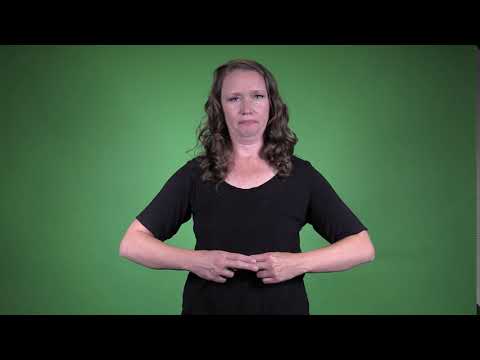
Definition: A band worn around the waist.
Sign for BELT in ASL

Practice Activities:
To practice the sign for BELT in ASL, start by using a mirror to rehearse the movement slowly and clearly. Repeat the sign multiple times, focusing on handshape, placement, and fluid motion along the waist to mimic putting on a belt. Video yourself signing and compare the motion to video models for self-assessment.
Next, try using the sign for BELT in ASL within basic sentences such as “I wear a belt,” “My belt is brown,” or “Where is the belt?” Practice signing these simple sentences both expressively and receptively by having a partner sign back to you or by watching sample videos and identifying the sign in context.
Create flashcards with clothing vocabulary. Include the sign for BELT in ASL along with signs like SHIRT, PANTS, SOCKS, and SHOES. Shuffle the cards and sign each item you draw. To deepen understanding, try grouping the vocabulary into categories such as “things I wear to work” or “items I pack for vacation,” and explain your choices in ASL.
For storytelling, describe a character getting dressed for school. Include details like putting on a shirt, pants, and using the sign for BELT in ASL as part of the sequence. This helps learners place the sign naturally within real-life narratives.
Engage in role-play with a partner where one person is a store clerk and the other a customer shopping for clothing. Ask for or show a belt in context, practicing phrases like “Do you have a belt?” or “I like this belt better.” Practicing this way reinforces vocabulary retention and increases confidence in spontaneous conversation.
Lastly, watch videos where people discuss clothing and try to spot the sign for BELT in ASL. This receptive activity enhances your ability to understand natural signing and strengthens your overall signing comprehension.
Cultural Context:
The sign for belt in ASL is more than just a vocabulary word—it’s part of a broader understanding of clothing, personal care, and self-expression in the Deaf community. In American Sign Language, clothing signs are often among the first learned as they connect directly to daily routines and identity.
When teaching or learning the sign for belt in ASL, it’s helpful to consider how belts are used in various contexts. Whether as a fashion statement or a functional item, a belt plays different roles, and the ASL sign reflects that simple utility. The gesture replicates the motion of securing a belt around the waist, making the sign both intuitive and easy to remember.
Understanding clothing-related signs like the sign for belt in ASL deepens cultural knowledge and communication within the Deaf community. Teaching these signs helps children and adults alike to describe their appearance, get dressed independently, and talk about attire during social events. It gives learners the tools to express preferences and needs while also showing respect for social norms around clothing.
In the Deaf culture, visual aspects of communication are especially significant. Therefore, discussing clothes, including accessories like belts, forms part of daily interaction. Using the correct sign for belt in ASL ensures clear communication, whether you’re describing an outfit or engaging in a fashion-related conversation.
Language development in ASL often includes topics that connect to practical living. The sign for belt in ASL fits perfectly into lessons about dressing, grooming, and describing one’s style. When instructors emphasize signs related to common clothing items, learners gain immediate, applicable vocabulary that helps in real-life situations.
Within Deaf education, teaching vocabulary like the sign for belt in ASL helps promote independence. For example, children learning how to dress themselves at school or adults preparing for a job interview benefit from knowing specific clothing terms in ASL. The ability to refer to a belt, shirt, pants, or shoes gives greater confidence and autonomy.
Fashion and utility both intersect when people use accessories like belts. The sign for belt in ASL supports this cultural practice by giving Deaf individuals the language to talk about their looks. From casual events to formal gatherings, having signs for all elements of dress, including accessories, adds richness to conversations.
Gesture-based communication relies heavily on relevance and visual clarity. The sign for belt in ASL symbolizes the way the Deaf community turns daily routines into expressive language. Vocabulary is deeply connected to culture, and signs like belt help learners connect linguistic meaning to real-world experience.
In storytelling, performances, or classroom activities, the sign
Extended Definition:
The sign for BELT in ASL is used when referring to the item of clothing that wraps around the waist to hold up pants or add style to an outfit. This sign is helpful in conversations about clothing, fashion, getting dressed, or shopping. It’s commonly taught in beginner and intermediate ASL classes as part of the wardrobe vocabulary.
To produce the sign for BELT in ASL, both hands form the letter H handshape and mimic the action of fastening a belt around your waist. The motion starts at the front of your body and moves around toward the sides, representing how a belt is worn. This visually represents the function of a belt and makes the sign easy to remember.
The context in which the sign for BELT in ASL is used can change slightly depending on whether you’re talking about wearing a belt, buying one, or describing its color or style. For instance, if you’re discussing getting dressed, you might combine signs like PANTS, SHIRT, and BELT together. Adding facial expressions and body language enhances your meaning and helps clarify details.
Children learning ASL often pick up clothing signs quickly because they relate to everyday routines. The sign for BELT in ASL is a great way to help kids develop language about self-care and dressing. It’s also useful in educational settings where students are labeling clothing items or acting out daily activities.
People in the fashion industry or retail environments may also use the sign for BELT in ASL to communicate with Deaf customers or coworkers. Being able to use ASL vocabulary such as BELT in a professional setting promotes inclusion and accessibility. When employees and customers share vocabulary like this, interactions become smoother and more respectful.
In storytelling and visual descriptions, the sign for BELT in ASL can help portray a character’s appearance or how they are dressed for a specific event. Adding signs for color, material, or even if the belt is tight or loose adds vivid details that enhance the message. Describing accessories in this way helps the listener build a clear mental image.
When practicing the sign for BELT in ASL, make sure your handshape is accurate and that you complete the movement across your waist. Practice in front of a mirror or with a partner to confirm your placement and fluidity. Like all ASL signs, consistency and clarity are important for being understood correctly.
The sign for BELT in ASL is just one part of the broader topic of clothing signs, including items like HAT, JACKET, SOCKS, and SHO
Synonyms: Sash, Band, Strap, Girdle, Cinch
Educational resources: Find related learning materials in our course bank!
Want more? Check out some of our popular learning activities on the homepage!
Need to look up a sign? Use our highly rated dictionary: https://aslinteractive.com/best-asl-dictionary/
Follow us on tiktok: https://www.tiktok.com/@aslinteractive. More social media links at the bottom of this page!
Long-tail Keywords: what is the sign for belt in ASL, how do you sign belt in ASL, ASL sign for belt
Categories:
tags: Clothing, Accessories, Fashion, Everyday items, Language Learning
Parameters
*Handshape*:
The handshape for the sign for BELT in ASL uses both hands in an “H” handshape, with index and middle fingers extended and together, while the other fingers are tucked down. The sign involves both hands moving from each hip toward the front center of the waist, mimicking the placement of a belt.
This movement and handshape help convey the action of securing a belt around the waist. The sign for BELT in ASL visually reinforces the idea of wearing or fastening a belt across the body.
*Palm Orientation*:
The palm orientation for the sign for BELT in ASL typically involves both hands in an open or modified “H” handshape, with palms facing each other. The hands move from the sides of the waist toward the front, mimicking the position and fastening of a belt.
In the sign for BELT in ASL, the movement across the waist emphasizes how a belt functions. Palm orientation remains neutral, facing inward, throughout the motion.
*Location*:
The sign for BELT in ASL is typically produced at the waist level, where a belt would naturally sit on the body. Both hands, shaped like the letter H or 1 handshapes depending on regional variation, move from the sides of the waist toward the center front, mimicking the action of outlining or fastening a belt.
This sign remains centralized around the lower torso, reinforcing the concept of a belt’s physical location. The consistent placement near the waist helps clearly convey the concept when using the sign for BELT in ASL .
*Movement*:
Both hands form modified H-handshapes (index and middle fingers extended and together, rest tucked in), held near your hips or waist. Move the hands simultaneously from the back of your waist around to the front, as if tracing the path of a belt being fastened. The movement is smooth and curved forward.
The sign for belt in ASL mimics the physical action of putting on a belt. This makes the sign iconic and easy to remember for visual learners.
*Non-Manual Signals*:
The non-manual signals for the sign for BELT in ASL usually include a neutral facial expression, as the concept is straightforward and does not require emotional emphasis. Slight eyebrow furrowing may occur to show focus on the spatial location of the belt.
Your gaze generally follows the hand movement as it traces the path of a belt across the waist. Keeping your mouth relaxed ensures that the sign for BELT in ASL remains clear and visually centered on the torso.
*Prosody, Dominant/Non-Dominant Hand*:
The sign for BELT in ASL uses both hands in H-handshapes. Start with the hands near the waistline on either side and move them toward the center of the body, mimicking the motion of fastening a belt. The dominant and non-dominant hands move simultaneously and symmetrically.
The sign for BELT in ASL visually represents putting on a belt, emphasizing the location at the waist. Use smooth, deliberate motion to match the natural action. This sign aligns with clothing-related vocabulary in American Sign Language. ♂️
Tips for Beginners:
When learning the sign for BELT in ASL, pay close attention to the placement and motion of your hands. This sign typically involves mimicking the action of fastening a belt around your waist. Both hands start near the hips or waist and come together in front, as though you are closing or buckling a belt. Make sure your movements are deliberate and clear to ensure comprehension.
One of the biggest challenges for beginners learning the sign for BELT in ASL is making the shape and motion smooth without rushing. It’s important not to hurry the sign—take your time to show the arc your hands make around the waist. Consistency in movement and accurate hand placement will prevent your sign from being mistaken for something else.
To improve fluency, practice the sign in front of a mirror. This helps you check symmetry and see whether your hand motions are clear. It’s also helpful to watch native signers or videos to compare your version with a fluent model. Use both visual and kinesthetic feedback to refine your execution.
Since the sign for BELT in ASL includes a motion that reflects a real-life action, think about how you actually put on a belt. That mental picture can guide your hand movements and make the sign feel more intuitive. Adding this kind of gesture-based learning helps with memory and keeps the motion natural.
Don’t forget facial expressions, even for nouns like ‘belt’. A neutral, appropriate facial expression helps set the right tone, ensuring your sign fits smoothly into a sentence or narrative. As with many ASL signs, clarity depends not only on your hands but also on how you present the entire sign visually.
Most importantly, keep practicing the sign for BELT in ASL in everyday contexts—like when talking about clothing or getting ready. Repetition in context helps solidify the sign and deepen your understanding.
Connections to Other topics:
The sign for BELT in ASL connects easily with a wider category of clothing and body-related vocabulary. It’s commonly taught alongside other signs like PANTS, SHIRT, DRESS, and SHOES, making it essential for describing outfits or selecting clothing during conversations. Because the sign mimics the action of strapping or fastening—a meaningful classifier—it also connects conceptually to other utility accessories like BACKPACK or BRA.
Classifiers offer another connection point, especially since the sign for BELT incorporates a directional hand movement tracing the waist. This movement-based classifier leads to ease in learning similar signs requiring location-based context on the body, such as SKIRT or JACKET. It supports a student’s spatial awareness in ASL, which is a core aspect of successful communication in the language.
In descriptive or compound signs, the sign for BELT in ASL can be combined with colors or materials to create phrases like BLACK BELT or LEATHER BELT. While these are not compound signs in structure, they demonstrate how classifiers and modifiers are paired fluently in ASL to create rich expressions. For example, when describing a martial arts rank, the color can be fingerspelled (BLACK) followed by the sign for BELT to clarify meaning.
This sign can also be linked with action signs such as TIGHTEN, PUT-ON, or FASTEN to describe dressing or getting ready. In storytelling or everyday narratives, it supports expressive sequencing when talking about routines or fashion choices. The sign for BELT in ASL, when taught in context with these other concepts, helps deepen a learner’s understanding of interconnected vocabulary.
Additionally, the sign can be used figuratively or metaphorically in some settings. For example, signing BELT in stories or jokes where “tightening the belt” is a visual metaphor for saving money adds cultural context and language creativity . In this way, ASL learners expand beyond basic communication and into expressive storytelling.
Summary:
The sign for BELT in ASL is a compound sign that uses both handshape and directional motion to visually convey the idea of securing or fastening around the waist. To express it clearly, both hands form the “H” handshape and move from each side of the waist toward the center. This motion mimics the act of buckling or positioning a belt across someone’s middle section.
This sign is iconic in nature, as it matches the functional aspect of how a belt works. ASL signs that visually resemble their meanings, like this one, are called iconic signs and are easily understood even by new learners. The placement of the sign near the midsection is an important aspect and reinforces the concept that it’s worn on the body.
Culturally, the sign for BELT in ASL may not initially seem significant, but clothing-related vocabulary helps users describe personal appearance, which is often relevant in narratives and social contexts. Describing what someone is wearing, including accessories such as a belt, creates a full picture in visual storytelling. These descriptors can be crucial in both casual and forensic settings.
Grammatically, the sign for BELT in ASL functions as a noun. It can be used within adjective-noun constructions if describing, for example, a “brown belt” or “leather belt.” ASL grammar allows for modified adjectives using classifiers and non-manual markers, adding depth and specificity to the sign when necessary.
This sign can also be modified to become part of a depiction in classifier constructions. For example, if someone signs about a person tugging on or loosening their belt, they may incorporate the directional elements and space around the waist to show dynamic movement or interaction with the item. These classifier usages expand the expressive power of the sign.
In learning environments, instructing students on the sign for BELT in ASL offers a chance to explore ASL’s use of directionality and location. It introduces learners to basic spatial mapping, visual logic, and how ASL uses the space in front of the signer’s body to ground meaning. Language acquisition is enhanced when signs are presented contextually and within categories like clothing.
Vocabulary related to the sign for BELT in ASL includes CLOTHES, PANTS, DRESS, and BUTTON. These signs create thematic word groups and are often taught together to help reinforce concepts. Teaching in thematic clusters enables learners to build functional communication patterns instead of isolated vocabulary.
From a linguistic perspective, the sign for BELT in ASL showcases how morphology in sign language often relies on iconic design. Unlike spoken languages, which frequently use arbitrary sounds, ASL signs often mirror the item’s function or interaction. The sign for BELT is an excellent example of this dynamic at work.
This sign also highlights the reliance of ASL on spatial features and bodily reference points. The waist is a consistent physical landmark, and its use in the sign ensures clarity and visual coherence. The consistency of location is a key linguistic feature in signed languages—one that supports grammar and understanding.
The sign for BELT in ASL can be paired with descriptive elements to increase specificity. For example, one might fingerspell “LEATHER” then follow with the sign for BELT. In formal discourse or aesthetic discussions, this pattern helps differentiate styles and materials.
In storytelling or personal narratives, the inclusion of the sign for BELT in ASL plays a role in world-building. A character who wears a belt can be portrayed more vividly by using this sign, especially when paired with facial expressions and body classifiers. Signers often imbue even minor details with emotional shading via non-manual signals.
ASL users might blend the sign for BELT in ASL with classifier structures to depict actions. For instance, loosening, tightening, or even snapping a belt during an event can be enacted with directional movement and role-shifting. These dynamic renditions add color and energy to signed stories.
In ASL discourse, the sign for BELT in ASL rarely appears standalone. It’s often part of broader relational sign chains that involve clothing, self-care, or daily routines. Regular references help develop fluency in everyday contexts, particularly in domestic or fashion-related conversations.
Interestingly, there can be slight regional variations in how the sign for BELT in ASL is performed. Some communities emphasize the fastening motion more, while others shorten the gesture. These variations are natural in language communities and reflect localized norms.
From an applied linguistics standpoint, the sign for BELT in ASL presents a case study in cognitive imagery in language formation. It shows how gestures relating to universal experiences—like dressing—become codified into linguistic symbols. Studies on sign formation often highlight such visually anchored vocabulary.
In deaf education settings, teaching the sign for BELT in ASL allows instructors to blend language with life skills. Clothing signs often accompany lessons about hygiene, dressing skills, and independence for young Deaf children. In this way
Want more? Check out some of our popular learning activities!
ASL Interactive Resources
ASLInteractive YouTube Channel
Follow us on tiktok: @aslinteractive.com
Follow us on Instagram: aslinteractive
Facebook page: aslinteractive
Facebook group: aslinteractive
LInkedIn: ASL Interactive LLC
Twitter: @ASL_interactive
*Some information on this page is AI-generated. AI can make mistakes. Please check the information.


Responses