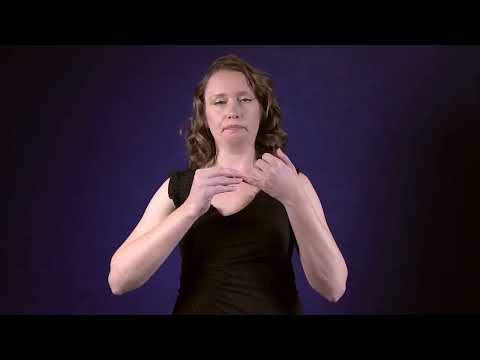
Definition: Small, juicy fruits.
Sign for BERRIES in ASL

Practice Activities:
To practice the sign for BERRIES in ASL in isolation, start by repeating the sign multiple times while looking in the mirror. Focus on the movement, handshape, and location to ensure accurate production. This helps develop muscle memory and boosts confidence using the sign on its own.
Next, try using flashcards with different berry names like strawberry, blueberry, raspberry, and blackberry. Fingerspell the name and then follow up with the sign for BERRIES in ASL to reinforce the connection. You can also mix in other fruit signs to strengthen your food vocabulary set and context usage.
Use the sign in sentences to practice real-world application. Try examples like: I like to eat berries for breakfast, She picked berries at the farm, or They made a pie with fresh berries. Sign the sentences slowly at first, then increase your speed as you become more comfortable and fluent.
Create a short ASL story describing a summer day picking berries in the forest. Include details about the types of berries, who you were with, and what you did with them after picking. Alternatively, tell a fun story about animals gathering berries for winter to build creative storytelling skills.
For partner activities, play a sign-and-guess game. One person signs a sentence or scenario that involves berries, and the other has to guess and sign back the details. Or, work in pairs where one person signs a descriptive scene involving berries, and the other draws it visually or explains the scene in ASL.
Finally, reinforce your understanding with a mini shopping role-play where one person is a customer asking for berries at a fruit stand. Practicing the sign for BERRIES in ASL in various scenarios helps solidify meaning and encourages fluid communication in both casual and structured settings.
Cultural Context:
In American Sign Language, the sign for berries in ASL holds more than just a simple representation of fruit. It connects with cultural practices, traditions, and everyday experiences in the Deaf community. Signing food-related words like the sign for berries in ASL is a frequent and relatable part of conversation, especially during discussions around meals, grocery shopping, or gardening.
The Deaf community often incorporates food signs like the sign for berries in ASL when expressing seasonal traditions or favorite family recipes. Berries like strawberries, blueberries, raspberries, and blackberries are common in many North American diets, making this sign practical and widely used. Whether someone is talking about berry picking in the summer or favorite berry desserts, knowing this sign is essential.
In Deaf culture, visual storytelling plays an important role. Conversations often involve vivid details, so when someone uses the sign for berries in ASL, they may also describe the color, size, or taste of the berries. These visual cues enhance understanding and help create a richer narrative, making dialogue more engaging and expressive.
The sign for berries in ASL also appears frequently in educational settings, especially in lessons involving food, health, or colors. Deaf educators use signs like this to support vocabulary building with younger signers. This practice helps children learn the names of fruits and connect them to healthy food choices while engaging with sign language in a meaningful context.
At Deaf community events or cultural celebrations where food is shared, the sign for berries in ASL is likely to come up. Whether discussing the ingredients in a traditional berry pie or pointing out items at a buffet, food signs are used to communicate clearly and inclusively. Signing about berries not only serves a practical purpose but also embraces a shared experience through language.
Social media creators and vloggers in the Deaf community also make frequent use of everyday signs like the sign for berries in ASL. When making recipe videos or describing seasonal activities, including the right signs helps make content more accessible and relevant. This kind of content reinforces visibility and appreciation for ASL across platforms.
The natural world also plays a role in signing berries. When hiking, gardening, or exploring nature, many members of the Deaf community use the sign for berries in ASL to identify edible plants or share observations. This highlights the importance of ASL in conversations that go beyond just indoor or academic settings.
In family life, especially in Deaf or signing households, the sign for berries in ASL is used during shopping trips, cooking time, or even storytime with children.
Extended Definition:
The sign for berries in ASL is a visual representation of the small, round fruit commonly found in nature. This sign uses movements that mimic picking or holding a small fruit, helping convey the shape and size of berries. It’s a popular sign among kids and adults when talking about fruits, snacks, or gardening.
In American Sign Language, signs often use shape, motion, and facial expressions to match a concept. With the sign for berries in ASL, the motion reflects the idea of something tiny and edible, much like blueberries, raspberries, or strawberries. This makes the sign both intuitive and descriptive for ASL users.
This sign can be combined with other signs to describe specific types of berries, such as strawberry, blueberry, or blackberry. Adding the sign for each specific fruit after using the general sign for berries in ASL helps provide clarity and detail. It works well in everyday conversations, especially when teaching children, discussing recipes, or shopping for fruit.
The handshape and location of the sign create a clear image. Usually, a non-dominant hand makes a fist to represent the berry, while the dominant hand uses a pinching motion over the top, showing the action of picking or pointing to a small round object. This helps visually link the sign to the physical characteristics of berries.
Because ASL is a visual and spatial language, signs like this are not always direct translations from English. Instead, they capture the essence of the object. The sign for berries in ASL captures the form and function of berries, using familiar hand motions that feel natural in conversation.
Youâll often see this sign in educational settings, especially in early childhood ASL curriculum. It helps children connect language with healthy food choices, garden activities, and storytelling. Teachers, interpreters, and parents use the sign for berries in ASL when discussing snacks or meals that include these fruits.
In nature discussions or during cooking activities, signing about berries can lead to deeper engagement. Since many types of berries are seasonal, this sign also appears in lessons about seasons and harvesting. This makes the sign for berries in ASL incredibly versatile.
The visual quality of ASL adds an experiential layer to this sign. When someone uses the sign while holding a real berry, the meaning becomes even clearer. This supports hands-on learning and makes the concept easier to remember, especially for visual learners.
Whether you’re signing about wild berries during a hike or explaining a smoothie recipe, this ASL sign fits into many contexts. The sign for berries
Synonyms: Berries, fruits, edible seeds, small fruit, berry-like
Educational resources: Find related learning materials in our course bank!
Want more? Check out some of our popular learning activities on the homepage!
Need to look up a sign? Use our highly rated dictionary: https://aslinteractive.com/best-asl-dictionary/
Follow us on tiktok: https://www.tiktok.com/@aslinteractive. More social media links at the bottom of this page!
Long-tail Keywords: what is the sign for berries in ASL, how do you sign berries in ASL, ASL sign for berries
Categories:
tags: Fruits, Food, Nature, Healthy Eating, Language Learning
Parameters
*Handshape*:
The handshape for the sign for BERRIES in ASL uses the non-dominant hand in a closed “S” handshape, held steady to represent a base or surface. The dominant hand forms an “F” handshape, with the thumb and index finger touching, mimicking a picking motion.
To create the sign for BERRIES in ASL, the dominant hand taps or twists gently on the back of the non-dominant hand with the “F” handshape. This movement represents the act of picking small berries off a plant .
*Palm Orientation*:
For the sign for BERRIES in ASL, the dominant hand is typically in a modified F-handshape, where the index finger and thumb come together to mimic picking a small item. The palm orientation is generally facing downward or slightly at an angle toward the non-dominant hand.
The non-dominant hand is in a flat or S-handshape, with its palm up, representing the base or cluster of berries. Throughout the motion, the dominant hand touches the non-dominant hand in a small, circular dabbing gesture. This reinforces the natural action conveyed by the sign for BERRIES in ASL .
*Location*:
The sign for BERRIES in ASL is produced in the neutral space in front of the upper torso, typically centered near the chest. It may shift slightly depending on the signerâs comfort, but generally stays within the midline area.
In the sign for BERRIES in ASL, the dominant hand moves toward the non-dominant hand as part of the production. The location helps to emphasize the small, detailed nature of the concept.
*Movement*:
To form the sign for BERRIES in ASL, begin by making an F-handshape with your dominant hand. Lightly touch the fingertips of the F-handshape to the back of the non-dominant hand, which remains in a relaxed flat handshape. Move the dominant hand in small circular movements while keeping contact with the back of the non-dominant hand, simulating the idea of picking small fruit like berries.
The motion should be gentle and repetitive to convey the concept clearly. The sign for BERRIES in ASL uses space and movement to express the small size and multiple nature of berries .
*Non-Manual Signals*:
When using the sign for BERRIES in ASL, the facial expression should be slightly neutral to pleasant, indicating the idea of something small and possibly sweet. Eyebrows remain in a natural position, and mouth movements may subtly mimic a relaxed or positive tone to match the concept of berries. Gentle head movement or a slight tilt can show interest or emphasis on the object.
To support clarity while signing the sign for BERRIES in ASL, maintain steady eye contact with the person you’re communicating with. This helps reinforce engagement and ensures the visual cues are easily understood. Avoid exaggerated or unrelated facial movements that might distract from the signâs meaning.
*Prosody, Dominant/Non-Dominant Hand*:
The sign for BERRIES in ASL uses the dominant hand in the F-handshape. The tips of the thumb and index finger of the dominant hand gently pinch or twist near the tip of the index finger on the non-dominant hand, which remains upright in a 1-handshape. This mimics picking berries from a plant . The sign for BERRIES in ASL emphasizes a small, repeated motion to show multiple berries being picked.
Tips for Beginners:
When learning the sign for BERRIES in ASL, itâs important to pay attention to the small, precise finger movement involved. The sign typically uses the dominant handâs thumb and index finger to mimic a picking motion on the back of the non-dominant hand. Think of gently picking individual berries from a stem. Keep the handshape delicate and avoid overly large or dramatic movements.
A common beginner mistake with the sign for BERRIES in ASL is applying too much pressure or moving too quickly. This can cause confusion with other signs related to food or manual activities. Being gentle and steady helps convey the concept clearly. Practice in front of a mirror can help refine your technique and make sure your movements arenât too strong or fast.
Another helpful tip is to maintain consistent hand orientation. Your non-dominant hand should remain stable while your dominant hand performs the small plucking motion. Keep your body relaxed and your elbow down to avoid stiffness, which can cause the sign to appear forced or unnatural. Fluidity and confidence improve both clarity and expression in ASL.
Repetition with intention is useful when mastering the sign for BERRIES in ASL. Try using the sign in contextâlike during a food discussion or at the grocery store when referencing berries. Real-life integration helps reinforce your memory and comfort level. Watch native or experienced signers and mimic their finesse; videos and signing practice groups can provide great visual support.
Finally, donât forget facial expressions. While the sign for BERRIES in ASL is mostly manual, a slight head tilt or pleasant expression can help convey the idea of enjoying or discussing the fruit. ASL is a visual language, and your expression supports the clarity of your message.
Connections to Other topics:
The sign for BERRIES in ASL often involves a twisting or picking motion on the back of the non-dominant hand, resembling the action of picking small fruit. This sign connects to broader ASL categories like food, nature, and botany, linking it with other signs like FRUIT, VEGETABLE, and PLANT . Understanding how signs like these are grouped helps learners grasp how vocabulary around related themes is developed and used in ASL.
Since the sign for BERRIES in ASL represents a type of fruit, it’s useful to explore how it fits with compound signs such as STRAWBERRIES, BLUEBERRIES, and RASPBERRIES. In some contexts, these might involve a combination of the sign for BERRIES and a color or descriptive classifier, or simply be fingerspelled, depending on regional usage or community understanding. This allows for flexibility and cultural variation within signing communities.
In storytelling or educational contexts, the sign for BERRIES in ASL can be combined with actions like EAT, PICK, or GATHER to create meaningful narratives. For example, âPICK BERRIESâ could be used to talk about an outdoor activity, while âEAT BERRIESâ might be part of a recipe or food description â . This compositional flexibility helps learners use the sign in real-world interaction.
The sign for BERRIES in ASL also encourages exploration of classifiers, which are often used to describe quantities or types. Classifier handshapes can mimic clusters or handfuls of berries, adding dimensionality to communication. Linking this sign to size, texture, or flavor helps enrich conversations about food or gardening .
Overall, the sign for BERRIES in ASL offers learners a way to dive into related pathways in the language, including foods, descriptive classifiers, natural environments, and narrative storytelling. This supports a deeper and more contextual understanding of ASL vocabulary.
Summary:
The sign for BERRIES in ASL is visually descriptive and iconic. It represents the clusters or shape of small fruits like strawberries, raspberries, or blueberries. It often uses a dominant hand to imitate the shape or picking motion off the nondominant hand.
This sign generally starts with the nondominant hand in a flat “S” or “O” shape, acting as the base or plant. The dominant hand uses a twisting index finger to show the twisting nature of picking berries off the stem. The motion also hints at the small, circular form of most berries.
Some signers may make this sign more specific by slightly altering the movement, depending on the type of berry being referenced. That variation can show dialectal influences or local associations with certain fruits. While one version is dominant among ASL users, regional versions do exist.
The sign for BERRIES in ASL connects to the broader lexical family of fruit signs. Related vocabulary includes signs like FRUIT, STRAWBERRIES, RASPBERRIES, and BLUEBERRIES. Because these words stem from a similar semantic field, their signs often involve the same dominant hand motion of pulling or twisting.
Understanding the sign for BERRIES in ASL also requires some cultural context. Many Deaf storytelling traditions include references to nature and food. Berries, as seasonal and culturally rich foods, appear often in signed narratives and stories related to gardening, harvesting, and cooking.
Culturally, the use of this sign can evoke the idea of natural living, outdoor settings, or rural traditions. Within Deaf communities, food-based signs often serve as not just labels, but invitations into storytelling and family tradition. The sign thus carries expressive as well as literal value.
Grammatically, the sign for BERRIES in ASL functions similarly to other count nouns. It can be pluralized through repetition or context, rather than using additional morphemes. Facial expressions and broader sentence structure help clarify whether a large or small amount of berries is being referenced.
The plural nature of the word berries is expressed inherently in the movement of the sign. Repeating the motion to indicate multiple berries or using spatial referencing is common. This shows how ASL grammar uses space and repetition for clarity and precision.
The role of classifiers is notable when using the sign for BERRIES in ASL. A signer might use a classifier handshape to show a bowl of berries spilling or someone placing them in a basket. These rich visual techniques add layers of meaning to the basic lexical item.
In applied linguistics, the sign for BERRIES in ASL showcases the principle of iconicityâa central element in sign languages. The twisting or picking motion resembles the real-world action of harvesting small fruit. This iconicity supports easier memorization and intuitive learning of the sign.
Moreover, the sign reflects ASLâs use of space and movement as grammatical tools. Changing the direction or position of the sign can convey different meanings or relationships. This is an elegant example of spatial grammar in action and invites linguistic analysis of verb directionality and noun incorporation.
Phonologically, the sign involves handshape, palm orientation, location on the nondominant hand, and movement trajectory. Each component contributes to sign clarity and meaning. Subtle variations in these parameters may occur across regions, age groups, or personal style.
Semantically, the sign for BERRIES in ASL denotes a general category of small fruits, but context narrows interpretation. For example, accompanying facial expressions or classifier constructions may suggest a particular type of berry without explicitly signing its name. This flexible semantic feature enhances visual storytelling.
In narratives, the sign can be embedded within broader descriptions, such as someone foraging in a forest or preparing a berry pie. These contexts lend emotional richness and realism to the sign. In turn, that supports narrative cohesion in both personal and artistic storytelling.
For Deaf children learning vocabulary, the sign for BERRIES in ASL becomes a gateway to understanding food categories and nature-related signs. Early education often includes sensory experiences like touching real berries, then associating them with signs. This hands-on learning supports ASL acquisition and cognitive development.
From a sociolinguistic viewpoint, the sign also reflects interactional norms within the Deaf community. Sharing food, growing fruit, and discussing meals are behaviorally rooted and respected practices. Using the correct and culturally rich sign supports social belonging and reinforces community values.
Media representations of Deaf culture may show the sign in contexts like cooking shows, ASL interpretation of cooking videos, or childrenâs educational programming. These appearances normalize the signâs usage and reinforce its correct production. For ASL learners, this exposure is vital for fluency.
Exploring the sign for BERRIES in ASL also opens up topics of lexical blending and sign compounding. When signers incorporate this sign into larger descriptive or compound signs, it reveals ASLâs morpho-syntactic flexibility. For example, modifying the motion for dried berries or berry juice
Want more? Check out some of our popular learning activities!
ASL Interactive Resources
ASLInteractive YouTube Channel
Follow us on tiktok: @aslinteractive.com
Follow us on Instagram: aslinteractive
Facebook page: aslinteractive
Facebook group: aslinteractive
LInkedIn: ASL Interactive LLC
Twitter: @ASL_interactive
*Some information on this page is AI-generated. AI can make mistakes. Please check the information.

Responses