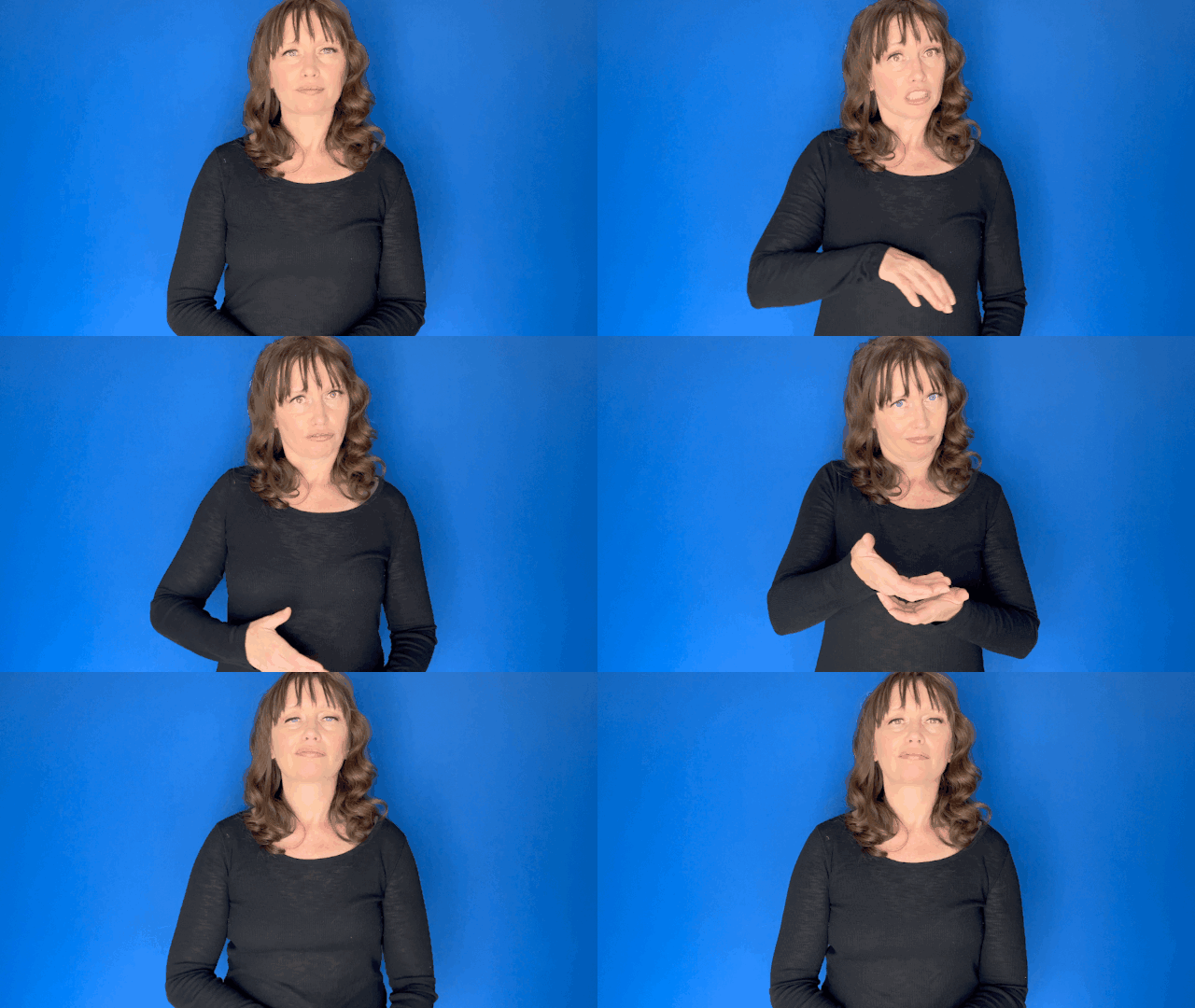
Definition: The delivery of a baby via cesarean section.
Sign for BIRTH 6 C SECTIN BABY DELIVER in ASL

Practice Activities:
Start by practicing the sign for BIRTH 6 C SECTIN BABY DELIVER in ASL in front of a mirror. Focus on handshape, palm orientation, movement, and facial expression. Repeat the sign slowly and then at conversational speed to build muscle memory and fluency.
Move on to fingerspelling the phrase “C-section” clearly and smoothly, as it is a part of the sign for BIRTH 6 C SECTIN BABY DELIVER in ASL. Practice transitioning from the signs for BIRTH and BABY to fingerspelling C-section and then signing DELIVER. These combinations help when talking about childbirth and medical contexts in daily conversations.
Create short practice sentences such as “My friend had a C-section last week” or “The nurse helped deliver the baby.” Use the sign for BIRTH 6 C SECTIN BABY DELIVER in ASL in each sentence as naturally as possible. Sign these to a partner or record yourself, watching for accuracy in flow and expression.
Try a storytelling prompt where you explain how a baby is born using different methods, including natural birth and C-section. Include transition signs such as THEN, NEXT, and FINISH to support your narration. This will solidify your use of the sign for BIRTH 6 C SECTIN BABY DELIVER in ASL in context over multiple sentences.
Practice with a partner by role-playing a doctor and a patient discussing childbirth options. Switch roles for both perspectives and try to introduce related vocabulary like HOSPITAL, PAIN, RECOVER, and HEALTHY. This helps reinforce medical vocabulary that often accompanies the sign for BIRTH 6 C SECTIN BABY DELIVER in ASL.
Review Deaf community vlogs or signed birth stories to see how native signers use this sign. Try shadowing their sign usage to gain a feel for rhythm and natural expression.
Cultural Context:
In the Deaf community, using ASL to describe medical and life events is crucial for clear and respectful communication. The sign for BIRTH 6 C SECTIN BABY DELIVER in ASL reflects this need for accuracy and cultural sensitivity. Talking about birth, c-section, and delivery in ASL involves more than just translating words—it includes understanding the emotional and physical experiences behind them.
The sign for BIRTH 6 C SECTIN BABY DELIVER in ASL can vary slightly depending on regional differences and individual preferences. This phrase is often used in hospitals, clinics, and with interpreters to explain how a baby was born. Making sure the signs are used accurately ensures that Deaf individuals receive proper care and emotional support during a significant time in their lives.
In ASL, the use of classifiers and facial expressions adds important meaning to the phrase sign for BIRTH 6 C SECTIN BABY DELIVER in ASL. This means interpreters and Deaf individuals can visually and emotionally express the difference between a natural birth and a c-section. The term 6 in this context may indicate a medical reference or represent a particular version of the sign, depending on usage.
American Sign Language is a visual language, and the sign for BIRTH 6 C SECTIN BABY DELIVER in ASL is deeply rooted in showing steps of action. From labor signs to the depiction of a surgical procedure like a c-section, ASL users can break down complex medical ideas into understandable visuals. This supports better communication during prenatal classes, medical appointments, and childbirth education for Deaf families.
Understanding how to use the correct sign for BIRTH 6 C SECTIN BABY DELIVER in ASL also plays a role in storytelling and life sharing within the Deaf community. Sharing your baby’s birth story in ASL becomes more meaningful when you use culturally relevant and accepted signs. These signs help foster emotional connections and shared experience, especially in Deaf parent groups or birth support circles.
In an interpreting setting, knowing the exact sign for BIRTH 6 C SECTIN BABY DELIVER in ASL avoids confusion during emergency or delivery situations. Medical staff who are trained in ASL or work with interpreters must be familiar with these specific signs so they can make sure the patient’s choices and feelings are respected. This makes communication during childbirth more personal and less stressful.
Cultural respect also extends to respecting bodily autonomy and informed consent through proper ASL interpretation. Using the right sign for BIRTH
Extended Definition:
The sign for BIRTH 6 C SECTIN BABY DELIVER in ASL involves a combination of concepts to communicate different aspects of childbirth. In American Sign Language, the basic sign for birth shows the movement of a hand representing the baby coming out of a curved hand, which represents the mother’s body. This foundational sign is often used when talking about giving birth or having a baby.
To indicate delivery through a Cesarean section, or C-section, the sign is slightly different. Instead of showing a natural delivery motion, you might use signs that indicate surgery or medical procedure. The sign for surgery, combined with the sign for birth or baby, helps communicate the idea of a baby being born via C-section.
Context plays a key role in how you use the sign for BIRTH 6 C SECTIN BABY DELIVER in ASL. Depending on the emphasis—whether you’re discussing the act of birth, the baby itself, or how the baby was delivered—the signs will be adjusted to fit the meaning. For example, when talking about a C-section delivery specifically, signs for “cut” or “doctor” might accompany the birth signs to clarify the method.
The sign for “baby” is typically shown by mimicking the motion of cradling a baby in your arms, gently rocking side to side. This sign is universal across many conversations involving infants. When combined with other signs, like “deliver” or “born,” it helps make the sentence more specific and understandable.
“Deliver” in ASL can be shown by indicating the act of something being taken or brought forth. When used in the context of BIRTH 6 C SECTIN BABY DELIVER in ASL, it supports the sign for birth and gives the full picture of what is happening. Fluent signers will often combine these individual elements into a smooth sequence that reflects the meaning in a culturally and grammatically appropriate way.
Some people may describe this sequence differently depending on region or personal signing habits. In some areas, signers might use more fingerspelling, especially for medical terms like “C-section.” In other regions, local variations or initialized signs may change how the message is communicated.
For learners, practicing the full phrase of BIRTH 6 C SECTIN BABY DELIVER in ASL with a native signer or watching video examples helps build fluency. Understanding how each component works helps ensure clarity and respect for the language. ASL is rich in nuance, and medical
Synonyms: birth via C-section, cesarean section birth, surgical delivery, C-section delivery, cesarean baby delivery
Educational resources: Find related learning materials in our course bank!
Want more? Check out some of our popular learning activities on the homepage!
Need to look up a sign? Use our highly rated dictionary: https://aslinteractive.com/best-asl-dictionary/
Follow us on tiktok: https://www.tiktok.com/@aslinteractive. More social media links at the bottom of this page!
Long-tail Keywords: what is the sign for birth c section baby delivery in asl, how do you sign birth c section baby delivery in asl, asl sign for birth c section
Categories:
tags: birth in ASL, c-section delivery in ASL, baby delivery signs in ASL, childbirth vocabulary ASL, ASL signs for childbirth and c-section
Parameters
*Handshape*:
The handshape for the Sign for BIRTH 6 C SECTIN BABY DELIVER in ASL typically uses a flat hand (dominant hand open and fingers together) to represent the newborn’s movement. The non-dominant hand forms a flat base, palm up, symbolizing the body or lower abdomen.
In the Sign for BIRTH 6 C SECTIN BABY DELIVER in ASL, the dominant hand slides or moves under the base hand to show the passage of the baby. This motion often mimics the concept of delivery and is adapted in context for C-section or natural birth.
*Palm Orientation*:
For the sign for BIRTH 6 C SECTIN BABY DELIVER in ASL, the palm orientation can vary slightly depending on the variation being used. Generally, the palm of the dominant hand faces upward or slightly toward the signer, indicating the birth or delivery movement.
In many versions, especially for “deliver,” the hands face downward or outward as if showing a baby being passed or lifted. This helps convey the meaning behind the sign for BIRTH 6 C SECTIN BABY DELIVER in ASL clearly and naturally.
*Location*:
The sign for BIRTH 6 C SECTIN BABY DELIVER in ASL is typically performed at the lower abdominal area, representing the location of childbirth or a cesarean procedure. The hands often move outward from the belly area to show the action of a baby being delivered, reflecting the medical and physical context of a C-section.
This location choice directly mirrors the real-world delivery process, helping to convey the meaning of the sign for BIRTH 6 C SECTIN BABY DELIVER in ASL more accurately. The sign’s placement reinforces the concept of a baby emerging from the lower body or taken out surgically.
*Movement*:
To produce the sign for BIRTH 6 C SECTIN BABY DELIVER in ASL, begin with your dominant hand in a flat handshape, palm up, while your non-dominant hand represents the mother’s body with a curved handshape. Move the dominant hand under and past the non-dominant hand, simulating the baby being born. For the c-section element, add a slicing motion across the lower belly using a bent V or modified curved hand, indicating surgery.
Finish by showing the baby being pulled or lifted out, emphasizing medical delivery. This sign for BIRTH 6 C SECTIN BABY DELIVER in ASL combines natural birth and surgical motion to accurately express the concept. ✂️
*Non-Manual Signals*:
When performing the Sign for BIRTH 6 C SECTIN BABY DELIVER in ASL, maintain a calm and neutral facial expression to reflect the natural and medical context of delivery. Slight eyebrow furrowing may be used to indicate focus or seriousness, especially when referring to cesarean procedures.
Mouth movements should match the pace of the sign, with slight emphasis if clarifying between natural birth and C-section. Keep your body relaxed and slightly forward to show engagement while signing the Sign for BIRTH 6 C SECTIN BABY DELIVER in ASL.
*Prosody, Dominant/Non-Dominant Hand*:
The sign for BIRTH 6 C SECTIN BABY DELIVER in ASL typically uses the dominant hand to represent the motion and direction of delivery. The dominant hand, often in a flat or curved shape, moves under the non-dominant hand, symbolizing a baby being born or delivered.
For the C-section variation, both hands may be used to mimic a horizontal cut across the belly, followed by the delivery sign. The sign for BIRTH 6 C SECTIN BABY DELIVER in ASL effectively differentiates between a natural and surgical birth.
Tips for Beginners:
When learning the sign for BIRTH 6 C SECTIN BABY DELIVER in ASL, start by becoming confident in the basic sign for BIRTH and BABY. These foundational signs help build your communication surrounding pregnancy and childbirth. For BIRTH, one common method simulates the motion of being born, using the dominant hand to push through the non-dominant hand, palms down and flat—practice this smooth downward motion to ensure natural movement.
For C-SECTIN, remember it will be fingerspelled. To fingerspell clearly, keep your hand at shoulder level, palm facing slightly forward, and make clean, distinct movements between the letters. Practice the transition between each part of the keyword phrase slowly to build muscle memory without rushing. Many beginners hesitate or drop their hands too low while fingerspelling, which makes the sign harder to understand.
BABY uses a gesture imitating cradling a baby and rocking slightly—it’s an intuitive sign but can look awkward if over-exaggerated. Keep the movement gentle and realistic. When combining BABY with DELIVER or birth-related signs like C-SECTIN, focus on maintaining smooth transitions so your signing appears fluid and conveys the timeline of events.
Facial expressions add important context in ASL, especially when discussing medical topics like the sign for BIRTH 6 C SECTIN BABY DELIVER in ASL. If the delivery was urgent or the context emotional, reflect that using appropriate expressions. That emotional layer helps native signers quickly grasp the tone of your message.
To get comfortable, watch signing videos by native ASL users and record yourself to compare. Repetition is key, especially with the full phrase sign for BIRTH 6 C SECTIN BABY DELIVER in ASL. Incorporate these into skits or practice scenarios to reinforce fluency and build confidence in real-life conversations.
Connections to Other topics:
The sign for BIRTH 6 C SECTIN BABY DELIVER in ASL connects to a range of related signs associated with medical procedures, childbirth, and family. It builds on the foundational sign for BIRTH, often represented by showing something emerging or being born. This concept leads directly into LABOR and PREGNANT—two signs that also involve gestural movements from the abdominal area outward, showing the progressive phases leading up to delivery.
The inclusion of C SECTIN as part of the phrase ties the sign to more specialized medical vocabulary. Since C SECTIN is typically fingerspelled (as “C-S-E-C-T-I-O-N”), it expands learners’ understanding of integrating fingerspelling with conceptual signs like BABY and DELIVER. The sign for BABY, mimed by cradling arms, is a foundational part of the Sign for BIRTH 6 C SECTIN BABY DELIVER in ASL and also links to FAMILY, MOTHER, FATHER, and NEWBORN, creating a semantic network around childbirth and parenting.
DELIVER in this context also invites comparison to its meaning in non-birth situations, like DELIVER (a package), helping learners identify context-based variations. In medical settings, DELIVER connects well to signs for HOSPITAL, DOCTOR, and SURGERY, of which C SECTIN is a type, deepening the connection to health-related ASL terminology.
This sign phrase also introduces learners to compound ideas in ASL. Rather than signing the entire phrase in English sequence, signers may condense ideas with classifiers or ordering. For instance, combining PREGNANCY, DOCTOR, and BABY with a gesture indicating surgical removal leads to a logical construction of the Sign for BIRTH 6 C SECTIN BABY DELIVER in ASL. Understanding these incorporations strengthens fluidity and cultural accuracy in ASL storytelling and dialogues about childbirth.
Summary:
The Sign for BIRTH 6 C SECTIN BABY DELIVER in ASL brings together nuanced components of childbirth vocabulary. Each segment of the term represents a rich layer of medical, familial, and cultural context that is visually rendered through handshapes, movements, and placements in American Sign Language. ASL, being an expressive language adapted for both daily use and technical subjects, has unique ways to express delivery types like cesarean section.
For the sign BIRTH, a common ASL representation involves the dominant hand, in a flat “B” or curved “5”, coming out from under the non-dominant hand, reflecting the emergence of a baby. This movement visually implies a baby passing out from the mother’s body. It usually has a downward motion, simulating birth into the world.
C SECTION is fingerspelled in ASL, since it is an abbreviation for Cesarean Section. Each letter in “C”, “S”, “E”, “C”, “T”, “I”, “O”, “N” is formed sequentially and clearly. Because this is a medical term not commonly lexicalized with its own ASL symbol, clear finger articulation ensures accuracy.
To link the ideas, some signers may combine the standard sign for BIRTH followed by fingerspelling C SECTION. This strategy clarifies that the method of birth was surgical. The order of these elements is vital in maintaining the time-sequenced logic of ASL grammar.
The sign DELIVER shares roots with BIRTH but in nuanced variations. When used alone, DELIVER can involve both hands pushing outward from body with minor movements akin to presenting or passing. When used in the context of childbirth, it aligns tightly with BIRTH, giving focus to the action of exiting.
When talking about BABY in ASL, the universal gesture typically incorporates cradling arms, simulating how one holds a newborn. This sign naturally appears in discussions involving BIRTH or DELIVER. The softness of this sign counterbalances the clinical sharpness of fingerspelling C SECTION.
Medical topics in ASL present a space where standard signs blend with fingerspelling to ensure both cultural and technical accuracy. The Sign for BIRTH 6 C SECTIN BABY DELIVER in ASL is a prime example. Because Cesarean sections are complex medical situations, many Deaf parents or ASL users may incorporate doctor or hospital signs to provide more context.
The medical setting influences how the sign is delivered. When narrating birth stories, the signer might include facial expressions that reflect triumph, pain, or anxiety to add emotional depth. In ASL, affective expressions are an essential part of conveying accurate narratives, especially in childbirth experiences.
Signers often add locative information, such as gesturing to the abdomen when talking about C SECTION, to clarify location and method. This use of spatial morphosyntax helps ASL users differentiate between vaginal birth and cesarean. It enhances conceptual accuracy in storytelling.
The grammatical structure of the Sign for BIRTH 6 C SECTIN BABY DELIVER in ASL follows a visual subject-object-verb order. So in telling a story, one might sign BABY FIRST and then express the method of delivery. This reorganization helps prioritize what the speaker wants to emphasize.
In broader linguistic discussions, the use of fingerspelling for C SECTION highlights how ASL accommodates terms that lack direct signs. This method ensures that emerging medical terminology is readily accessible without requiring a new sign for each concept. Over time, some of these may become lexicalized if used frequently.
ASL’s adaptation to contexts like childbirth shows its flexibility as a living language. The Sign for BIRTH 6 C SECTIN BABY DELIVER in ASL exemplifies this interaction. It incorporates bodily gestures, spatial movements, and lexical insertions that convey both emotion and precision.
Deaf communities often share birth stories, especially surrounding C SECTIONS, in visually dynamic ways. This supports the importance of storytelling for community bonding. In ASL, retelling such stories ensures generational memory and awareness of medical autonomy.
Culturally, representing a Cesarean birth in ASL opens discussions of bodily ownership and consent. It reflects the Deaf community’s engagement in health conversations. Sign choices reflect personal experiences and collective narratives surrounding parental journey and identity.
Parenting resources in ASL incorporate signs like these to educate new Deaf parents. The Sign for BIRTH 6 C SECTIN BABY DELIVER in ASL is foundational in baby-ready vocabulary. Birth educators fluent in ASL lean heavily on consistent, accessible sign usage to build trust in medical dialogue.
Applied linguistics looks at how such compound expressions evolve over time in specific communities. As more Deaf families experience C SECTIONS, they help solidify norms for storytelling and sign-clustering, contributing to language growth. This aligns with language contact theory and community adaptation.
Instructors highlight that expressing childbirth in ASL also includes signed descriptors like PA
Want more? Check out some of our popular learning activities!
ASL Interactive Resources
ASLInteractive YouTube Channel
Follow us on tiktok: @aslinteractive.com
Follow us on Instagram: aslinteractive
Facebook page: aslinteractive
Facebook group: aslinteractive
LInkedIn: ASL Interactive LLC
Twitter: @ASL_interactive
*Some information on this page is AI-generated. AI can make mistakes. Please check the information.


Responses