Definition: A celebration of the anniversary of one’s birth (third instance).
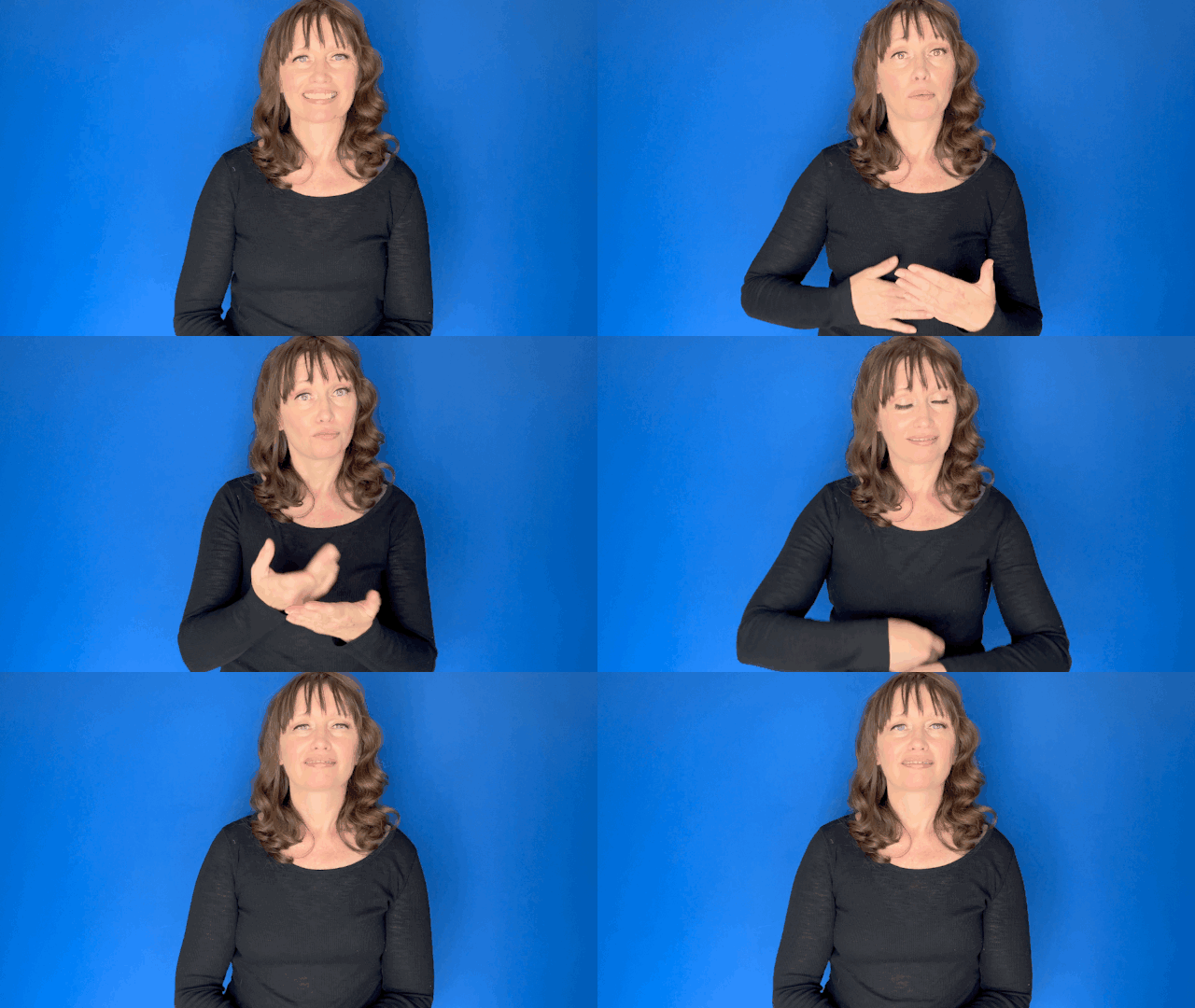
Sign for BIRTHDAY 3 in ASL

Practice Activities:
Start by practicing the sign for BIRTHDAY 3 in ASL in front of a mirror to ensure correct handshape and movement. Repeat the sign slowly, then gradually increase your speed while maintaining clarity. Use a smartphone to record yourself, then compare your signing to a video model to check for accuracy.
To build fluency, try fingerspelling common dates and follow them by signing the word. For example, fingerspell “June 12” and then use the sign for BIRTHDAY 3 in ASL. This connects contextual information with the sign, which helps boost memory and retention. Try using different dates important to you or your family.
Use flashcards with various family members or friends on one side and their birthday on the other. Display the card, say the person’s name, fingerspell their birth date, and then sign for BIRTHDAY 3 in ASL. This adds a memory component and can make the practice more personalized.
Create short example sentences such as “MY SISTER BIRTHDAY JUNE 5”, “I CELEBRATE BIRTHDAY WITH CAKE”, or “DAD BIRTHDAY NEXT WEEK”. Practice signing these slowly and clearly, focusing on facial expressions and smooth transitions between signs.
Engage in partner activities by asking a learning buddy or tutor to play a birthday guessing game. One person signs a birth month and the other tries to guess who’s birthday it is, then confirms with the full sign for BIRTHDAY 3 in ASL. Swap roles to test comprehension in both directions.
Wrap up practice by creating a short story about your most recent or favorite birthday. Include signs for age, party, cake, gifts, and of course, the sign for BIRTHDAY 3 in ASL. This storytelling practice develops expressive skills and encourages vocabulary expansion in a meaningful way.
Cultural Context:
In American Sign Language, the sign for BIRTHDAY 3 in ASL reflects both language structure and cultural significance. Birthdays are widely celebrated across cultures, and in Deaf culture, they’re no exception. However, the way Deaf individuals celebrate often includes unique cultural traditions centered around visual language and community gathering.
The sign for BIRTHDAY 3 in ASL may be influenced by number incorporation, a common linguistic feature in ASL. When using numbers in ASL, the form of certain signs changes depending on the number involved. The number 3 can be integrated into the sign to represent the age or position in a sequence of birthday celebrations.
Understanding the cultural weight of birthdays in the Deaf community helps deepen the meaning of the sign for BIRTHDAY 3 in ASL. Social gatherings like birthday parties are important spaces for Deaf children and adults to connect with other signers. These events often happen in homes, schools, or community centers where sign language is the primary communication mode.
The visual-spatial nature of ASL extends into how milestones such as birthdays are expressed. For example, a child turning three—represented by the sign for BIRTHDAY 3 in ASL—might be celebrated with signs, visual decorations, and storytelling in sign language. These moments create strong language-rich experiences that help Deaf children develop self-awareness and cultural identity.
In signed conversations, clarity and expression matter. When signing BIRTHDAY 3 in ASL, facial expressions and context cues help indicate whether you’re referring to a third birthday, a third person’s birthday, or the third time celebrating. These subtleties carry meaning that spoken English might not capture easily.
For new signers or interpreters, recognizing the format of the sign for BIRTHDAY 3 in ASL and its appropriate context is essential. Signing a number-based word incorrectly could change the meaning or make the sign unclear. That’s why learning the visual structure of number-based signs in ASL is so important.
The visual grammar in ASL allows users to be efficient and expressive at the same time. In the case of the sign for BIRTHDAY 3 in ASL, that expressiveness can reflect joy and enthusiasm specifically tailored to the age or person being celebrated. It also reflects the importance of acknowledging milestones visually and meaningfully.
Whether used in a family celebration or a classroom activity, the sign for BIRTHDAY 3 in ASL is more than just a gesture. It connects to identity, community recognition, and cultural
Extended Definition:
The sign for birthday 3 in ASL is a variation used primarily in specific regional dialects or among certain signers, and it may slightly differ in handshape or movement from the more standard birthday sign in American Sign Language. Understanding these variations is essential for effective communication within the Deaf community, especially when interacting with signers from different backgrounds or regions. This version might include a three-handshape or involve more fluent and expressive gestures depending on the context.
When learning the sign for birthday 3 in ASL, it’s important to remember that facial expressions play a large role in adding meaning. Just like spoken language uses tone and inflection, ASL relies on expressive facial cues to enhance the meaning and emotion behind a sign. Using this variation of the sign correctly shows respect for the language’s diversity and adaptability.
The sign for birthday 3 in ASL could be integrated with numbers or age-related conversations. For instance, if you’re discussing someone’s third birthday or counting birthdays, this specific sign would be appropriate. Incorporating numerals into ASL signs shows how dynamic and flexible the language can be.
This sign is also useful when teaching birthday vocabulary to children or beginner ASL students. Using the sign for birthday 3 in ASL can help reinforce learning numbers through the lens of special occasions and celebrations. Beginners often find it easier to learn when combining familiar cultural events with ASL instruction.
You might see the sign used in birthday parties, meetings, or storytelling settings within the Deaf community. It helps to observe how fluent signers incorporate signs like this into real-life interactions. Watching live signing can deepen your understanding of when and how to use this particular variation.
The context of using the sign for birthday 3 in ASL also matters. In one-on-one conversations, the sign might appear more casual, while in formal contexts, it could be more deliberate and clear. This flexibility again reflects the rich nature of ASL and how body language, location, and audience affect signing.
Just like spoken languages have slang, accents, and dialects, ASL also evolves through use. The sign for birthday 3 in ASL could be preferred in certain Deaf schools, communities, or signing families. Recognizing these differences helps bridge communication and reduces misunderstandings.
Learning the correct handshape, palm orientation, and movement for this sign is crucial. Watching videos from trusted ASL educators or dictionaries can reinforce proper technique. Practice with others can also build fluency and boost confidence when using the sign in conversation
Synonyms: birthday, anniversary, date of birth, natal day, birthdate
Educational resources: Find related learning materials in our course bank!
Want more? Check out some of our popular learning activities on the homepage!
Need to look up a sign? Use our highly rated dictionary: https://aslinteractive.com/best-asl-dictionary/
Follow us on tiktok: https://www.tiktok.com/@aslinteractive. More social media links at the bottom of this page!
Long-tail Keywords: what is the sign for birthday in ASL, how do you sign birthday in ASL, learn how to sign birthday in ASL
Categories:
tags: Birthday, Occasions, Celebration, Party, Life milestones
Parameters
*Handshape*:
The handshape for the Sign for BIRTHDAY 3 in ASL involves using the middle finger to touch specific points on the body. Begin with a flat hand where the middle finger is slightly extended compared to the rest. The dominant hand moves to touch the middle finger to the chin, then to the chest in a smooth motion.
In the Sign for BIRTHDAY 3 in ASL, the modified “five” handshape is key, with the middle finger used as the contact point. This gesture represents both a personal connection and a timeline, which conveys the idea of a birthday clearly.
*Palm Orientation*:
The palm orientation for the sign for BIRTHDAY 3 in ASL typically starts with the dominant hand in a flat shape, palm facing in toward the chest. As the sign begins, the middle finger touches the chin and then transitions to touch the chest, maintaining a slightly curved position.
Throughout the sign for BIRTHDAY 3 in ASL, the palm orientation usually remains inward or may adjust slightly depending on regional variations. This directional palm usage helps clearly express the concept of celebration and personal connection .
*Location*:
The sign for BIRTHDAY 3 in ASL is located near the chest and chin area. One hand typically starts by touching the middle finger to the chin, then moves down to the chest, close to the heart. This placement keeps the sign within the signer’s general torso area.
This position helps maintain clear facial expressions and visibility, which are essential components of the sign for BIRTHDAY 3 in ASL. The use of both the chin and chest area adds a personal and celebratory feel to the sign .
*Movement*:
The sign for BIRTHDAY 3 in ASL involves using the middle finger of your dominant hand. Touch the middle finger to your chin, then move it down to touch the center of your chest. This single fluid movement emphasizes the idea of a personal celebration or date.
The motion is smooth and deliberate, maintaining contact at both points. The sign for BIRTHDAY 3 in ASL may vary slightly depending on regional usage, but the combination of facial expression and body contact remains consistent .
*Non-Manual Signals*:
When using the sign for BIRTHDAY 3 in ASL, the facial expression should show a pleasant, joyful emotion, as if you’re celebrating or referring to a happy occasion. A gentle smile is appropriate, and eye contact helps reinforce a positive, friendly tone. Raised eyebrows might be used if the sign appears in a question.
Matching your expression with the sign for BIRTHDAY 3 in ASL enhances the meaning and emotion, especially when talking about someone’s special day . The overall demeanor should remain light-hearted and warm.
*Prosody, Dominant/Non-Dominant Hand*:
The sign for BIRTHDAY 3 in ASL uses the dominant hand, formed in a flat open-5 shape. Start by touching the middle finger to the chin, then move it down to touch the chest in a smooth arc. The non-dominant hand is not used during this motion.
When expressing the sign for BIRTHDAY 3 in ASL, the dominant hand performs all the movement, maintaining a clear and fluid path. Facial expression and eye contact add emphasis to this celebratory sign .
Tips for Beginners:
When learning the sign for BIRTHDAY 3 in ASL, it’s important to focus on hand shape precision and facial expression for cultural clarity. For this version of the sign, the dominant middle finger touches the chin first and then the chest—often referred to as the “middle-chin-middle-chest” variation. Keep your fingers separated naturally, not too stiff or spread apart, for a fluid and accurate look.
Beginners often overlook the directional movement and pressure of the hand. Keep the motion smooth and deliberate, ensuring both contact points—the chin and the chest—are clearly targeted. Skipping or randomly touching other parts of the face or torso can create confusion or make the sign unclear.
Repetitive practice is key when mastering the sign for BIRTHDAY 3 in ASL. Practicing in front of a mirror is highly effective to build muscle memory and monitor facial structure and hand position. Pairing the sign with a joyful facial expression , especially when signing it in celebratory contexts, helps convey the correct tone socially and linguistically.
A common misstep is overextending the middle finger or making the movement too fast. Speeding up before you’re confident can lead to sloppy signing. It’s better to focus on clarity first, then gradually increase your signing fluency. Also, don’t forget to keep the palm orientation consistent—generally facing inward throughout the motion.
Contextual usage will also help reinforce fluency with the sign for BIRTHDAY 3 in ASL. Using it in simple sentences such as “Your birthday when?” or “Today is my birthday!” is helpful for grasping the rhythm and syntax of ASL. Watching native signers use this variation in real time improves pattern recognition and reinforces its correct application.
Be patient with yourself—ASL is a visual language, and each sign, including the sign for BIRTHDAY 3 in ASL, requires practice and immersion over time.
Connections to Other topics:
The sign for BIRTHDAY 3 in ASL connects closely with signs that indicate celebrations, time, and personal milestones. It is frequently used alongside signs like GIFT, PARTY, or CAKE to describe birthday-related events, so it supports broader vocabulary relevant to special occasions. Understanding this sign also helps learners build fluency in expressing time-based or annual events in ASL.
This version of the sign for birthday may incorporate elements seen in signs like FAVORITE or TASTE, which both involve movement from the chin or chest area to the hand. That relationship highlights how classifiers and handshape movement provide meaning beyond individual signs. Recognizing these patterns helps in understanding how the sign for BIRTHDAY 3 in ASL integrates bodily references for clarity and context.
In compound phrases, the sign can be paired with YEAR, CELEBRATE, or OLD to construct expressions like “happy 30th birthday” or “birthday celebration.” These combinations demonstrate how ASL builds ideas spatially and temporally, allowing the sign for BIRTHDAY 3 in ASL to be a core component in complex phrases. By learning this sign, students also reinforce temporal sequencing and age-related vocabulary in ASL.
This sign may also relate to signs indicating family and social connections, such as MOM, DAD, FRIEND, and INVITE, all of which may appear when describing a birthday event. The social nature of a birthday provides multiple opportunities to explore interactional signs, reinforcing narrative skills in ASL. Cultural exchanges like giving or receiving gifts further expand the sign’s contextual use.
For younger learners or educational settings, instructional use of the sign for BIRTHDAY 3 in ASL often occurs in calendar activities or personal storytelling. It supports overall conversational fluency, promotes topic transitions (like from today’s date to events), and helps learners use sequencing phrases such as NEXT or LAST when discussing previous or upcoming birthdays.
Summary:
The sign for BIRTHDAY 3 in ASL is a variant form used in specific regions or by certain individuals based on community preference and teaching lineage. This version may involve a different handshape, location, or movement from the more common signs for birthday. Understanding its use offers insight into how signs evolve and adapt across different sign language communities.
To produce the sign for BIRTHDAY 3 in ASL, one approach may involve touching the middle finger of the dominant hand to the chin then to the chest, incorporating both touchpoints that symbolize birth and celebration. This handshape is usually a modified “5” requiring precision and body referencing. The variation of movement highlights the personalized or localized nature of this version.
Like other sign versions, the sign for BIRTHDAY 3 in ASL reflects regional variation, which is common in ASL due to its face-to-face transmission and lack of a single regulatory authority. Language evolves through community consensus, and birthday signs are excellent examples of this fluidity. Some users prefer this third variation because it may feel more “natural” or culturally resonant.
From a grammatical standpoint, BIRTHDAY functions as a noun in ASL and typically appears in a subject–verb–object or topic–comment structure. The sign for BIRTHDAY 3 in ASL is most often paired with possessive pronouns like YOUR, MY, HIS/HER, or THEIR. For example, one might say “YOUR BIRTHDAY, WHEN?” or “MY BIRTHDAY, DECEMBER.”
ASL grammar allows optional facial expressions to enhance meaning, especially in celebratory contexts. When signing the sign for BIRTHDAY 3 in ASL, a happy, festive facial expression adds emotional depth. Non-manual signals such as raised eyebrows often accompany questions related to birthdays as well.
Traditionally, birthday signs are linked with cultural identity, milestones, and community involvement. The sign for BIRTHDAY 3 in ASL is used at celebrations, storytelling events, and even Deaf history discussions. Holding a birthday celebration in Deaf culture often involves storytelling using rich, expressive signs like this one to reflect values of inclusion and visual communication.
There are related signs that frequently accompany the sign for BIRTHDAY 3 in ASL. These include CELEBRATE, GIFT, CAKE, PARTY, and AGE. The simultaneous use of these signs helps flesh out broader narratives while associating the sign for BIRTHDAY 3 in ASL with other key social concepts.
The sign for BIRTHDAY 3 in ASL can also differ by age groups. Younger signers might favor newer or simpler variants learned in educational settings. Older signers might use more traditional forms passed down through family or the Deaf community.
ASL linguistics categorizes signs based on parameters like handshape, palm orientation, location, movement, and non-manual signals. The sign for BIRTHDAY 3 in ASL deviates slightly in movement and location compared to its sister forms, offering a deeper study into lexical variation. These variations underscore how lexical borrowing and innovation occur in natural sign languages.
Applied linguistics might analyze this sign in educational settings. Teachers may choose different forms of the birthday sign based on their location or student familiarity. The sign for BIRTHDAY 3 in ASL may be incorporated into curriculum in areas where it is common, emphasizing functional vocabulary and cultural literacy.
The frequency and type of sign variant learned may also reflect on exposure to native signers. Someone learning ASL in a formal setting might only encounter one or two birthday signs, while a member of the Deaf community may recognize all three. The sign for BIRTHDAY 3 in ASL becomes a form of linguistic identity marking in those interactions.
The sign for BIRTHDAY 3 in ASL helps foster social bonds through shared cultural and linguistic routines. Celebrations offer an opportunity for intergenerational linguistic transmission. The use of this particular version can signal group membership, regional affiliation, or familial influence.
Sociolinguistically, the sign for BIRTHDAY 3 in ASL is a useful case study in the complexities of sign variation. It reveals how even common concepts like “birthday” are adapted, reformulated, and localized within the visual-gestural modality. Signers may feel strong preferences for one variant over another depending on their linguistic background.
This particular variant can occasionally cause misunderstandings if interlocutors are unfamiliar with it. Thus, metalinguistic awareness and code-switching are helpful tools in managing variation. Expert signers often clarify or enrich their signs with context or additional signs to ensure comprehension across dialects.
The tactile version of the sign for BIRTHDAY 3 in ASL, used by DeafBlind individuals, may bear subtle modifications to match touch-based modalities. In this context, location and contact points become even more important. The birthday concept still carries joy and significance, but the execution may prioritize clarity and accessibility.
With the rise of social media
Want more? Check out some of our popular learning activities!
ASL Interactive Resources
ASLInteractive YouTube Channel
Follow us on tiktok: @aslinteractive.com
Follow us on Instagram: aslinteractive
Facebook page: aslinteractive
Facebook group: aslinteractive
LInkedIn: ASL Interactive LLC
Twitter: @ASL_interactive
*Some information on this page is AI-generated. AI can make mistakes. Please check the information.
Responses