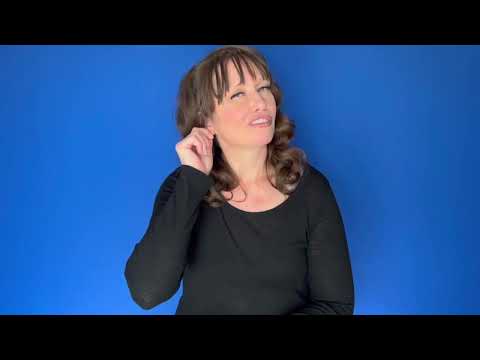
Definition: A celebration of the anniversary of one’s birth.
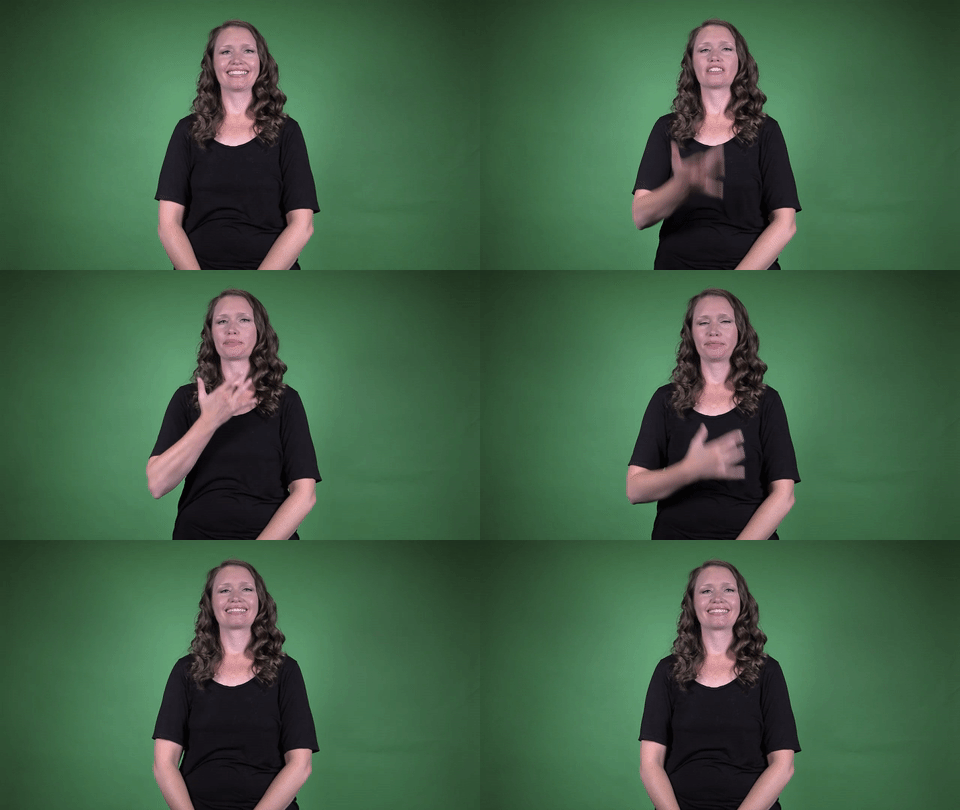
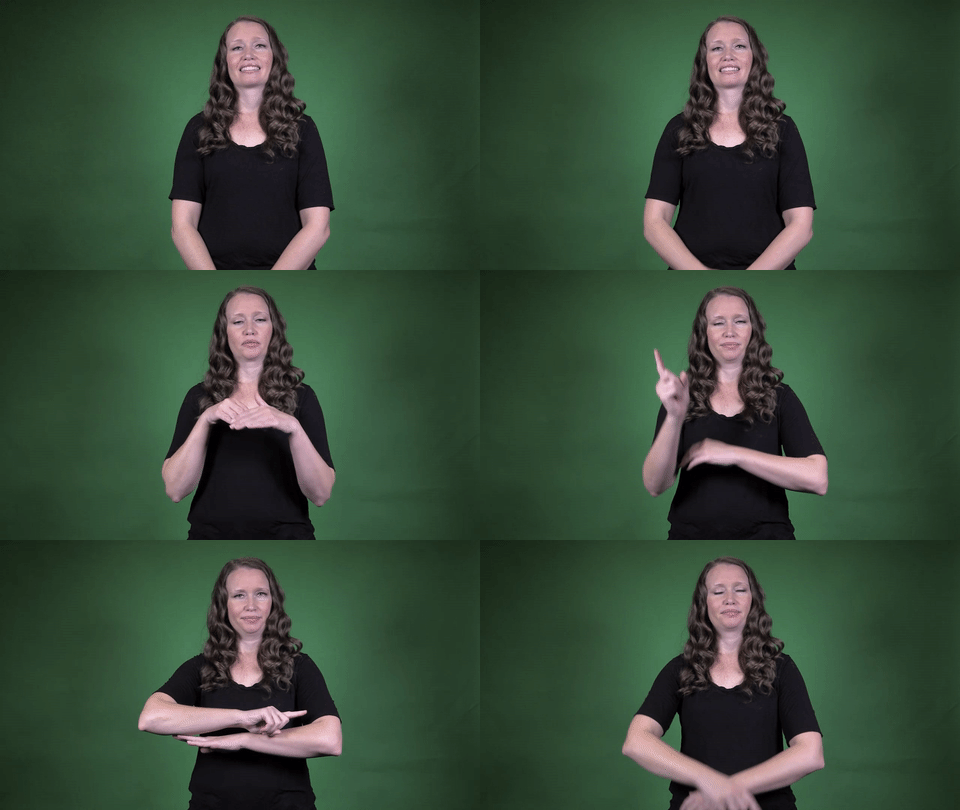
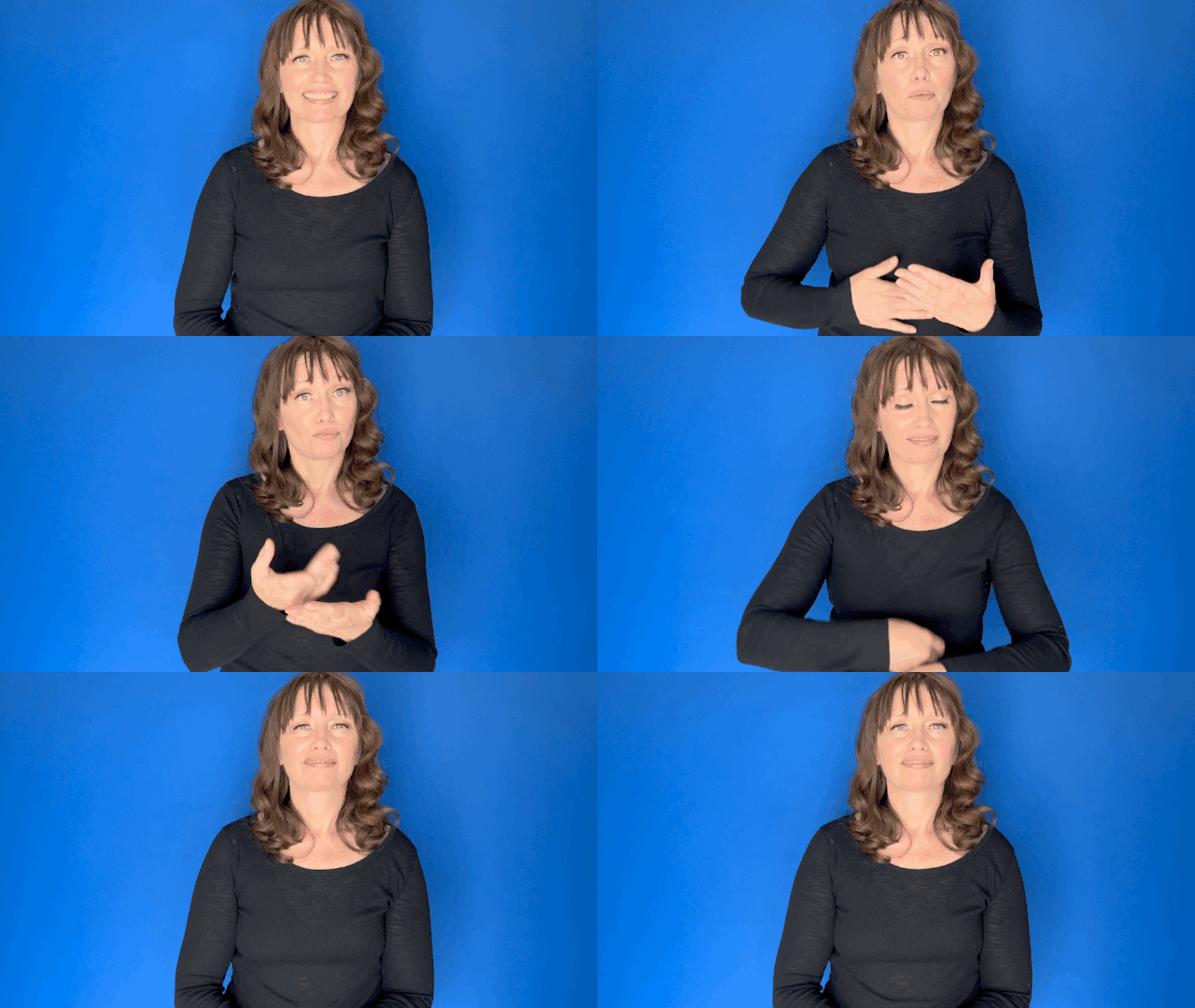
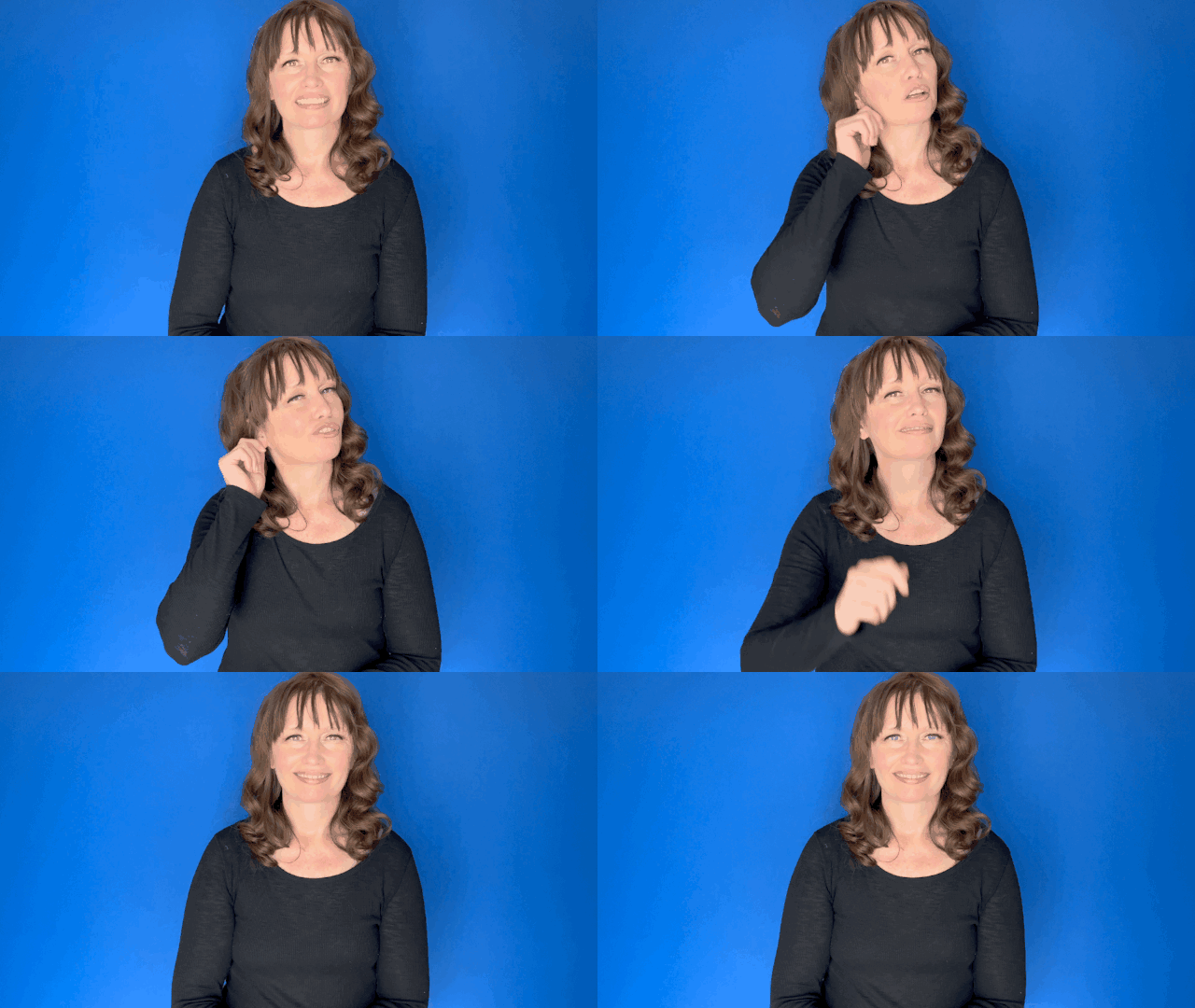
Sign for BIRTHDAY in ASL

Practice Activities:
To practice the sign for BIRTHDAY in ASL, start by practicing the sign in isolation in front of a mirror. Focus on accurate hand placement and movement, making sure your facial expression shows the celebratory nature of the word. Repeat it multiple times until the motion feels natural.
Next, incorporate the sign into common phrases. Try signing short sentences like “My birthday” or “Her birthday is today” while practicing your pacing and transitions. Record yourself to catch errors and improve fluency. Use flashcards with different people’s names to sign “____’s birthday is this month” for added variety.
Create storytelling prompts that include events around a birthday. Think of a party, blowing out candles, or getting a gift. Practice signing, “Yesterday was my brother’s birthday” or “I got cake and balloons.” These kinds of narratives will strengthen your receptive and expressive skills with natural context.
Work with a partner for interactive activities. Ask and answer questions like “When is your birthday?” or “What do you do on your birthday?” Make up a scenario where you plan a surprise party and include vocabulary like decorations, friends, presents, or celebration. Take turns describing birthdays in complete sentences using the sign for BIRTHDAY in ASL multiple times to build comfort and quick recall.
Make use of online videos to watch how native signers use the sign in casual and formal conversation. Imitate their flow and rhythm. You could even watch birthday-related stories in ASL and identify how the sign is used in different contexts. Recreate those stories in your own words.
Finally, challenge yourself with a daily journal entry in ASL and include at least one sentence focusing on birthdays. This will not only reinforce the sign for BIRTHDAY in ASL but help with expressive fluency and confidence in signing.
Cultural Context:
In American Sign Language (ASL), the sign for birthday carries both linguistic and cultural meaning. It’s more than just a gesture—it reflects how Deaf culture celebrates personal milestones. Understanding the sign for birthday in ASL helps deepen your awareness of Deaf traditions and social norms.
The sign for birthday in ASL can vary slightly across regions and families. Variants may depend on personal preference or the influence of local signing communities. Learning these variations can broaden your fluency and appreciation for the rich diversity within ASL.
In Deaf culture, birthdays are celebrated with similar joy as in hearing communities, but with a focus on visual and shared experiences. Events often emphasize clear communication, visual storytelling, and inclusive games. Using the correct sign for birthday in ASL signals respect and cultural understanding when participating in these events.
When signing birthday in ASL, facial expressions play a critical role. Non-manual markers enhance the emotional tone, helping to convey excitement or affection. Deaf culture places strong value on expressive communication, especially during celebratory moments.
It’s common in the Deaf community for families and friends to host visually vibrant celebrations. These may include signed songs, entertaining skits, and collective storytelling. Knowing the sign for birthday in ASL enables you to participate fully and respectfully in these meaningful traditions.
Children in Deaf schools and families learn early how to express special occasions through ASL. The sign for birthday becomes one of many milestones in language development. It is often repeated with joy as young signers gain confidence and social bonds.
Integrating signs like birthday into daily communication supports deeper connection with the Deaf community. The use of ASL affirms cultural identity and promotes inclusivity. Whether you’re learning for personal reasons or as part of a professional path, understanding the sign for birthday in ASL is an important step.
Many Deaf adults take pride in celebrating their birthdays using traditional foods, games, and signed performances. These moments are opportunities to highlight Deaf history and community values. Including the proper sign for birthday in ASL during these events honors that heritage.
Digital communication also reflects culture, and birthday wishes now happen over video messages and Deaf social media platforms. Signing happy birthday in ASL online helps maintain community ties and shared joy across distances. This shift shows how the sign for birthday in ASL continues to evolve with technology.
Learning the sign for birthday in ASL can also support inclusive interactions in mainstream spaces. For teachers, interpreters, and caregivers, using ASL signs like birthday fosters a welcoming and accessible environment.
Extended Definition:
The sign for birthday in ASL is a commonly used sign in American Sign Language, especially among learners and those engaging in everyday conversations. This sign is frequently used to express celebration, special occasions, and to talk about important life events like someone’s date of birth.
To perform the sign for birthday in ASL, one widely accepted version involves touching the middle finger of your dominant hand to your chin, then moving it to your chest. This version uses the middle finger to indicate the concept of a special date uniquely tied to a person. It mimics where someone might place meaningful information, connecting the head and the heart.
Another version of the sign for birthday in ASL includes using the flat hand in a downward motion across the chest or tapping the chest and then the stomach in a quick alternating motion. This version may vary depending on regional or family-related sign preferences. Both versions are accepted and understood within the Deaf community, and the context of the sentence often clarifies the meaning.
Learning the sign for birthday in ASL can help expand your sign vocabulary and improve your ability to participate in social settings. When attending birthday parties or discussing plans with Deaf friends or family members, knowing this sign adds a personal and inclusive element to communication. It’s also a fun vocabulary word for ASL students practicing holidays and personal celebrations.
ASL is a visual, gestural language, and the sign for birthday in ASL is no exception to its expressive nature. While it might seem like a simple sign, it carries cultural significance because of how birthdays are celebrated in Deaf culture. Signing this word correctly shows an understanding of not only the vocabulary but also the appropriate behavior during celebrations.
This sign is often taught early in ASL classes and is commonly used in beginner conversation practice. Alongside related vocabulary like party, cake, and gift, the sign for birthday in ASL helps build essential communication skills. It’s also a useful word to recognize in ASL videos, books, and classroom discussions.
Parents, educators, and interpreters often teach this sign to young children and beginner signers to support language development. Since birthdays are exciting for children, it’s a natural vocabulary word to introduce and consistently reinforce. Using the sign for birthday in ASL during story time, songs, and daily interactions makes the word easy to remember.
By understanding cultural context and regional variations, signers can choose the version of the sign for birthday in ASL that best suits their environment. While either version will typically be understood, practicing with native signers
Synonyms: birthday, anniversary of birth, natal day, born day, birth anniversary
Educational resources: Find related learning materials in our course bank!
Want more? Check out some of our popular learning activities on the homepage!
Need to look up a sign? Use our highly rated dictionary: https://aslinteractive.com/best-asl-dictionary/
Follow us on tiktok: https://www.tiktok.com/@aslinteractive. More social media links at the bottom of this page!
Long-tail Keywords: What is the sign for birthday in ASL, How do you sign birthday in ASL, ASL sign for birthday explained
Categories:
tags: Birthday, Occasions, Celebration, Party, Life milestones
Parameters
*Handshape*:
The handshape for the sign for BIRTHDAY in ASL typically uses an open 5-hand, with fingers spread apart and relaxed. The middle finger makes contact with areas of the body depending on the variation used—either the chin and then the chest or the forehead to chest in a smooth motion.
In the sign for BIRTHDAY in ASL, the open 5-hand gives the gesture a natural and soft flow. This handshape allows for a smooth transition between points of contact, emphasizing the celebratory and personal nature of the word.
*Palm Orientation*:
In the sign for BIRTHDAY in ASL, the palm orientation typically begins with the dominant hand in a flat shape, palm facing inward toward the chest. The hand moves from the chin to the chest, maintaining the palm-inward direction throughout the motion.
This consistent palm orientation plays a key role in distinguishing the sign for BIRTHDAY in ASL from other similar movements. Some regional variations might include a slight twist at the wrist, but the palm generally faces the signer.
*Location*:
The sign for BIRTHDAY in ASL is typically made near the upper chest and chin area. One version begins with the dominant middle finger touching the chin, then moving down to touch the chest. This movement happens along the centerline of the body.
Since the face and chest are central in the formation, the location remains close to the body’s front upper torso. Both versions of the sign for BIRTHDAY in ASL retain this position, emphasizing facial and upper chest contact for clear communication.
*Movement*:
The dominant middle finger touches the chin, then moves downward and touches the chest. This two-part motion—first to the chin, then to the chest—represents the contact points for the sign for BIRTHDAY in ASL.
The hand remains in a flat “open-5” shape throughout, with fingers extended and relaxed. The movement should be smooth and controlled to clearly convey the sign for BIRTHDAY in ASL .
*Non-Manual Signals*:
Facial expressions for the sign for birthday in ASL typically remain neutral or display a soft, pleasant expression, reflecting the positive nature of the occasion . Eyebrows may be slightly raised to convey interest or joy, especially in contexts like giving birthday wishes or stating someone’s birthday.
Mouth movements usually align with the flow of conversation, occasionally mouthing “birthday” depending on the user’s signing style. Maintaining eye contact while performing the sign for birthday in ASL enhances clarity and natural communication.
*Prosody, Dominant/Non-Dominant Hand*:
The sign for BIRTHDAY in ASL uses the dominant hand in a middle finger touch motion. Begin by touching the middle finger to the chin, then move down to touch the chest near the heart area. The non-dominant hand is not used for this sign.
This sign may have slight variations across regions, but the dominant-hand motion remains key. When teaching the sign for BIRTHDAY in ASL, emphasize facial expressions for clarity and emotional tone.
Tips for Beginners:
When learning the sign for BIRTHDAY in ASL, it’s important to note that there are a couple of common variations, depending on region or personal preference. One widely used sign involves touching the middle finger of your dominant hand to your chin and then to your chest. Another variation may touch the forehead and then the chin, which some people use interchangeably. Either way, be consistent with which version you use and make sure your movements are clear.
To master the sign for BIRTHDAY in ASL, be mindful of your hand shape and orientation. The dominant hand should use a flat open hand with the middle finger slightly extended, often referred to as the modified “open B” hand. This finger placement is crucial because it helps to distinguish the sign from other concepts. Practice slowly in front of a mirror to check that you’re accurately touching the correct locations.
A common pitfall beginners face is blending the movement too quickly or not making solid contact with the chin and chest, making the sign harder to understand. Also, avoid using a casual or lazy hand shape—clarity is key in sign language. Mistiming the transition between the two contact points can also confuse your audience, so keep the flow smooth but deliberate.
In real-life settings, context will help others understand you, but accuracy is still essential for clear communication. When practicing the sign for BIRTHDAY in ASL, try incorporating it into simple sentences or during conversations to make your learning more practical. Watch others sign the word, especially native or fluent signers, through video resources or in person if possible.
Consistent repetition and hands-on practice will help reinforce muscle memory. Don’t be afraid to ask Deaf community members for feedback—they can offer valuable insights to improve your sign. Be patient with yourself and continue building confidence over time.
Connections to Other topics:
The sign for BIRTHDAY in ASL connects closely with the sign for BORN and the concept of CELEBRATION. Since birthdays are significant life events, this sign often appears in contexts involving family, age, and milestones. It’s commonly used alongside AGE to indicate how old someone is turning.
This sign is sometimes part of compound phrases such as BIRTHDAY-PARTY or BIRTHDAY-GIFT. In these expressions, combining signs allows for more fluid and clear communication. For example, BIRTHDAY-PARTY involves signing BIRTHDAY followed by PARTY, using excited facial expressions and movement to convey festivity .
The sign for BIRTHDAY in ASL shares features with signs like ANNIVERSARY, HOLIDAY, and CELEBRATE because they all involve commemorative or joyful gatherings. These signs can be grouped together in lessons about social events and cultural traditions. It helps learners build vocabulary around occasions that involve people coming together.
In storytelling or narratives, the sign for BIRTHDAY in ASL also pairs well with TIME markers. For instance, LAST-YEAR BIRTHDAY or NEXT BIRTHDAY help express when an event happened or will happen. This encourages learners to explore temporal sequencing in ASL.
This sign also plays a role in children’s learning settings, where students use it to express their own birthdays or to sign songs such as the “Happy Birthday” song. It introduces basic sentence structure and expressive features like facial grammar and topic-comment order.
When discussing health records or personal history in ASL, the sign for BIRTHDAY is applicable as part of identifying information. This shows its utility in medical or official conversations, expanding its use beyond celebrations. The wide applicability of the sign reinforces its central role in both expressive and practical communication across many ASL contexts .
Summary:
The sign for BIRTHDAY in ASL has two popular variations, both conveying the concept of celebrating the anniversary of one’s birth. Each variation uses a slightly different movement and location on the body, depending on regional use and personal style. Typically, the more common sign involves a movement from the chin to the chest.
In this version, the dominant hand forms the middle finger in a slight forward arc. The middle finger touches the chin first, then the chest, indicating the emotional and physical presence of a person. The movement subtly links the personal and temporal aspects of the concept.
Another variation involves using the middle finger of the dominant hand and tapping the chin and then the chest in a quick motion. This method is often taught in ASL classes for its clarity and simplicity. It is highly visual and easy for new learners to remember.
The handshape used for both versions generally involves an open or bent middle finger, sometimes referred to as the “middle finger touch” form. The focus is on a single finger touching two points, which feels intuitive and natural. There are no strong directional components, making it symmetrical and easy to mirror.
In both variations of the sign for BIRTHDAY in ASL, the hand remains in close contact with the signer’s body. This body-centric movement reflects how personal and meaningful birthdays are in human culture. The sign subtly expresses the connection between identity and life timeline.
From a cultural standpoint, birthdays are widely celebrated in Deaf communities, just like in hearing contexts. Social gatherings often include cake, signs, interpretation, and shared laughter. Using visual language to talk about personal milestones is a profound part of Deaf culture.
The sign for BIRTHDAY in ASL is often paired with other celebratory signs such as HAPPY, PARTY, or CELEBRATE. Together, they build expressiveness in ASL storytelling and greetings. Combining these adds rich visual context to birthday-related conversations.
In terms of grammatical usage, BIRTHDAY generally appears at the beginning or middle of an ASL sentence. Facial expressions and body language help clarify intent and emotion when using the sign. Depending on the context, the sign may be accompanied by mouthing or signing a specific age.
Signers might fingerspell names or provide a sign name right before or after the sign for BIRTHDAY in ASL. Possessive signs such as MY, YOUR, or HIS/HER are often used before the sign to specify whose birthday is being discussed. These create clarity in conversation.
When asking about a birthday, the question format in ASL uses raised eyebrows and a shift in body posture. For example, YOU BIRTHDAY WHEN? would be a common sentence structure. The raised brows signal the yes-no or WH-question that is being asked.
Linguistically, the tactile nature of the sign provides a synesthetic connection—touch and meaning converge. The touching of the chin and chest can be seen as symbolizing the passage from thought to heart. This added emotional dimension resonates within the visual-spatial modality of ASL.
The origin of the sign for BIRTHDAY in ASL is not entirely agreed upon, but it may derive from a combination of signs for LIFE, BORN, or CELEBRATE. Over time, the language adapted to convey birthdays in a succinct and expressive way. Signs evolve through shared use and collective preference.
Applied linguistics recognizes this evolution as part of natural language change within ASL. Regional and generational variation of the sign reflects real-world language diversity. Children learning ASL acquire these signs as part of normal language development, often through modeling and social immersion.
People learning ASL may encounter both versions of the sign for BIRTHDAY in ASL in different regions or courses. It’s important to be aware of context and consistency when communicating. Native signers often adapt their expression based on mutual understanding and clarity.
The sign’s visual simplicity allows for ease in recalling and reproducing it, especially for young children or new learners. In Deaf schools, birthday signs often become an anticipated part of classroom rituals. Using the sign regularly boosts language retention.
From a semantic perspective, the sign for BIRTHDAY in ASL encapsulates more than the date of birth. It can signify age, milestones, and rites of passage. The sign becomes personalized when used to acknowledge individuals in social and familial contexts.
The concept of time is implicitly referenced in the sign for BIRTHDAY in ASL. Although the sign does not explicitly show a calendar or time-line, its connection with the passage from birth to current age is understood. This temporal framework aligns with ASL’s spatial orientation in grammar.
The sign is adaptable and can be incorporated into poetic storytelling within ASL literature. In visual poetry, signs like BIRTHDAY gain more layered meanings. They’re used to mark metaphorical rebirths or transitions.
ASL interpreters often need to use the sign for BIRTHDAY in ASL during events or services such as birthday celebrations, religious ceremonies, or social functions
Want more? Check out some of our popular learning activities!
ASL Interactive Resources
ASLInteractive YouTube Channel
Follow us on tiktok: @aslinteractive.com
Follow us on Instagram: aslinteractive
Facebook page: aslinteractive
Facebook group: aslinteractive
LInkedIn: ASL Interactive LLC
Twitter: @ASL_interactive
*Some information on this page is AI-generated. AI can make mistakes. Please check the information.


Responses