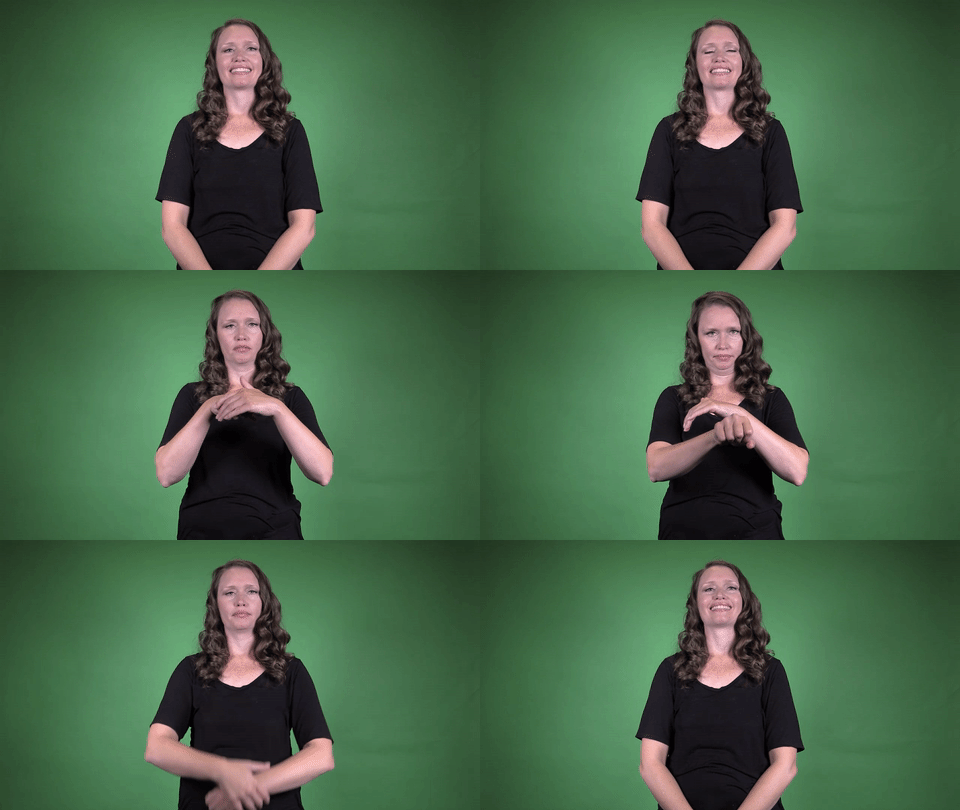
Definition: Birth via vagina
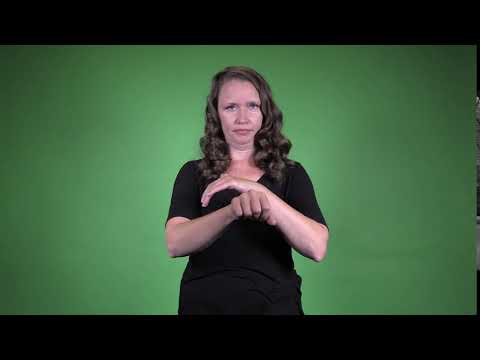
Sign for BORN 1 in ASL

Practice Activities:
Start practicing the sign for BORN 1 in ASL by isolating the movement. Stand in front of a mirror and repeat the sign multiple times, focusing on handshape and directionality. Make sure the dominant hand moves smoothly under the non-dominant hand, representing the concept of emerging or being born.
After you’re comfortable with the isolated sign, begin incorporating it into short phrases. Try signing “I was born in (city/state)” or “My baby was born yesterday.” Repeating these sentences with different subjects and time frames will help solidify your understanding and use of the sign for BORN 1 in ASL.
Use flashcards with dates and places to form sentences about being born. For example, draw a card that says “Texas” and another that says “1995,” and sign “I was born in Texas in 1995.” Practicing with changing details ensures you’re ready to use this sign flexibly in real-world situations.
Partner activities can increase fluency. Pair up and take turns introducing famous historical figures using the sign for BORN 1 in ASL. You could sign “Abraham Lincoln was born in 1809” and quiz each other on birthplace, year, or sequence of events using the born sign correctly.
Try storytelling by describing a fictional person’s life. Begin with their birth, using the sign for BORN 1 in ASL, and continue through childhood and adulthood. This helps with sequential narration and gives meaningful context to sign usage.
Record yourself signing a brief personal biography that begins with your birth. Watch the playback to evaluate fluency and accuracy. For added challenge, sign a story about the birth of a sibling or cousin, using appropriate time markers and facial expressions.
Cultural Context:
The sign for BORN 1 in ASL is more than just a motion—it’s a way of expressing existence and entry into life. In American Sign Language, this sign is culturally rich, often reflecting the deep meanings behind birth and origin, especially when referring to heritage, identity, and background.
When using the sign for BORN 1 in ASL, members of the Deaf community may be indicating the place or conditions of their birth, such as being born Deaf or being born into a Deaf family. This phrase holds different layers of cultural meaning depending on who is using it and in what context. It can also express the idea of being born into Deaf culture, which has its own norms, values, and shared life experiences.
The sign for BORN 1 in ASL may be used in stories, introductions, and narratives to explain where someone comes from or when they entered the world. It plays a role in identity storytelling, often shared during Deaf gatherings, in classrooms, or within family settings. This sign is not just a literal translation but carries emotional and cultural relevance, especially when discussing personal journeys.
In ASL, signing someone is BORN 1 can be connected to pride in Deaf identity. It may signify not only the birth event but also a declaration of cultural belonging. Someone saying they were BORN 1 into the Deaf community could be emphasizing a generational legacy of Deaf culture.
When teaching the sign for BORN 1 in ASL, cultural context is key. Learners often explore more than the handshape and motion; they discover how the sign fits into larger conversations about Deaf life, identity, and community values. Teachers and native signers emphasize the importance of expression and tone, which help convey the depth of meaning behind the sign.
This sign also emphasizes the difference in grammar and structure between ASL and English. The phrase BORN 1 in ASL doesn’t translate word-for-word into English but carries meaning that depends on context, facial expression, and body language. It’s a prime example of how American Sign Language operates independently from spoken English.
In everyday Deaf interactions, the sign for BORN 1 in ASL might be used when explaining someone’s life story, sharing proud moments, or identifying regional or cultural roots. It shows how language in the Deaf community reflects more than just words—it reflects values, connections, and shared experiences.
Whether used in ASL storytelling, personal introductions, or cultural discussions, the sign for BORN 1 in AS
Extended Definition:
The sign for BORN 1 in ASL is commonly used to convey the concept of birth, specifically referencing the birth order of siblings. In this case, BORN 1 means the firstborn child in a family. This sign combines the idea of being born with the number one, indicating the person is the eldest brother or sister.
To produce the sign for BORN 1 in ASL, you generally use the sign for born followed by the number one. The born sign is usually shown by representing something going from inside to outside, symbolizing the act of being born. Then, you follow it with the number 1 sign, emphasizing the birth order clearly and effectively.
This phrase is especially useful when discussing family structure or describing relatives. It helps give clarity in conversation when someone wants to mention they are the first child or talking about their siblings’ birth positions. Whether you’re answering a question about your family or introducing yourself, using the sign for BORN 1 in ASL communicates important context.
In Deaf culture, family ties and identity are often shared early in conversations, making signs like BORN 1 valuable. When someone tells you they are BORN 1, they’re offering personal information that can help build a connection. The sign also supports storytelling, allowing Deaf individuals to express their family stories with visual clarity.
When learning ASL, understanding the significance of sign combinations like BORN 1 is essential. It’s an example of how American Sign Language often uses compound signs to create new meanings. Mastering these combinations enhances communication and helps convey more detailed ideas within the language.
It’s important to use correct facial expressions and body language when signing. When sharing about being the firstborn, a confident or neutral expression is typically used. Since ASL is a visual language, your facial tone helps reinforce the meaning of the sign for BORN 1 in ASL.
Parents, teachers, and interpreters may frequently use this sign when talking about children’s roles or school records. It comes in handy during introductions or when sharing profiles of kids in a classroom or daycare. The sign helps clarify who the first child is, without needing complex explanations.
This term is also valuable in storytelling, especially when narrating birth stories or family histories. It solidifies the traditional storytelling rhythm that’s so important in Deaf culture. ASL relies heavily on visual sequencing, and BORN 1 helps anchor that sequence when discussing multiple children.
For learners of American Sign Language, practicing signs like BORN
Synonyms: originated, delivered, brought into the world, came into existence, emerged
Educational resources: Find related learning materials in our course bank!
Want more? Check out some of our popular learning activities on the homepage!
Need to look up a sign? Use our highly rated dictionary: https://aslinteractive.com/best-asl-dictionary/
Follow us on tiktok: https://www.tiktok.com/@aslinteractive. More social media links at the bottom of this page!
Long-tail Keywords: what is the sign for born in ASL, how do you sign born in ASL, ASL sign for born
Categories:
tags: birth, life milestones, family, occasions, people
Parameters
*Handshape*:
The handshape for the Sign for BORN 1 in ASL uses a flat, open non-dominant hand, palm facing up, representing a surface or “ground.” The dominant hand is also flat and open, palm facing downward, and it moves under the non-dominant hand as if passing through.
This smooth motion reinforces the meaning of the Sign for BORN 1 in ASL, symbolizing emergence or being born. Both hands remain relaxed throughout the sign✨.
*Palm Orientation*:
For the sign for BORN 1 in ASL, the dominant hand is generally in a flat B-handshape, palm facing upward. The non-dominant arm acts as a surface, lying flat with the palm facing down.
When producing the sign for BORN 1 in ASL, the dominant hand moves under the non-dominant arm and emerges out from the other side, simulating being born or emerging from a surface. This palm orientation helps reinforce the visual metaphor of birth.
*Location*:
The sign for BORN 1 in ASL is typically produced in the neutral space in front of the body, around the mid-torso level. This location allows clear visibility and contrast with the body for the motion that moves along the non-dominant hand.
In the sign for BORN 1 in ASL, the dominant hand starts behind the flat non-dominant hand and moves forward underneath it, simulating a motion of being delivered or emerging. The position in mid-space ensures clarity while keeping the signing space natural and comfortable.
*Movement*:
The dominant hand begins with a flat palm facing upward, positioned near the stomach area. The non-dominant hand is also flat, palm down, and placed horizontally in front of the body. To produce the sign for BORN 1 in ASL, the dominant hand smoothly passes under the non-dominant hand and moves forward and slightly downward, as if something is emerging or being born.
This motion in the sign for BORN 1 in ASL symbolizes something coming into existence or transitioning from inside to outside, much like the concept of birth. Keep the movement fluid and deliberate to convey the meaning clearly.
*Non-Manual Signals*:
The non-manual signals for the sign for BORN 1 in ASL include a soft, relaxed facial expression, often paired with a slight downward head tilt. This helps convey the natural, peaceful concept of birth or origin.
Maintain neutral or slight positive emotion, as the sign for BORN 1 in ASL doesn’t generally express strong feelings. Appropriate eye gaze is important—typically directed downward to follow the movement of the dominant hand going under the non-dominant hand.
*Prosody, Dominant/Non-Dominant Hand*:
The sign for BORN 1 in ASL uses the dominant hand in a flat B-handshape, palm facing up, and the non-dominant hand also in a flat hand, palm facing down, representing a surface. The dominant hand slides forward and underneath the non-dominant hand, mimicking the action of being born or coming into the world.
This prosodic movement is smooth and grounded, with the sign for BORN 1 in ASL often paired with facial expressions indicating newness or emergence . The dominant hand represents the subject being born while the non-dominant hand provides a symbolic boundary to pass through.
Tips for Beginners:
When learning the sign for BORN 1 in ASL, it’s important to focus on the path and direction of your dominant hand. This sign is usually done by placing your non-dominant hand palm up to represent the ground or the mother, while your dominant hand, palm facing down, slides under the non-dominant hand and outward, symbolizing a birth or emergence. Be sure your hands are not too far apart—keep the gesture compact and smooth .
One common issue beginners face with the sign for BORN 1 in ASL is confusing the motion with similar signs like “arrive.” The key difference is that the movement for BORN 1 is more of a slide under and through, not a tap or slap. Practicing slowly in front of a mirror can help you monitor the fluidity and clarity of your motion as you build muscle memory .
Another tip is to pay close attention to your facial expressions. Even though this sign is fairly neutral in basic usage, your face can convey emotional context, such as pride, surprise, or nostalgia, when you discuss someone’s birth. Try practicing saying “I was born in…” using the sign for BORN 1 in ASL and follow up with the place signed clearly.
When you’re watching others sign BORN 1, observe the hand placement carefully. It may be tempting to rush through the movement, but doing so can distort the meaning. Practice with others and ask for feedback, especially if ASL is not your first language. Group study can make a big difference in catching small gestures you might miss otherwise .
Finally, remember that consistency is key. Repeating the sign for BORN 1 in ASL daily as part of storytelling or life history practice can help reinforce the correct technique and ensure fluency develops over time.
Connections to Other topics:
The sign for BORN 1 in ASL connects closely with concepts like “birth,” “beginning,” and “life” in general. It often appears in conversations involving family, medical history, or biographical storytelling, especially when referencing where or when someone was born. This gives it a natural relationship to signs like PREGNANT, BABY, and MOTHER, all of which contribute to broader discussions around life events or stages.
The sign for BORN 1 in ASL can also be integrated into compound signs that express more specific ideas. For example, combining it with PLACE or COUNTRY can help form phrases like “born in America” or “born in Texas,” conveying both birthplace and identity. These types of phrases are very useful in narratives, introductions, or during classroom settings when discussing cultural or personal backgrounds.
The sign also holds relevance in historical and educational contexts. It might be used in biographical study settings, especially in reference to famous Deaf figures, such as “he was born Deaf” or “she was born in 1800.” These examples show how the sign for BORN 1 in ASL becomes part of larger expressions, helping learners expand their signing fluency while learning history or storytelling structure.
There is a natural semantic relationship between the sign for BORN 1 in ASL and signs like DIE or DEAD, as both deal with the boundaries of life. This contrast can help learners see how ASL structures life events in a visually rich way that enhances comprehension. Additionally, signs like START and ORIGIN may also overlap in meaning or context, especially in abstract discussions like the beginning of an idea, movement, or even a tradition.
In church, philosophy, or literature discussions, the sign for BORN 1 in ASL might be used metaphorically, as in being “born again” or describing a spiritual rebirth. This demonstrates how one core sign can be adapted into different thematic conversations, reinforcing its flexibility across various topics and helping learners connect vocabulary in meaningful ways.
Summary:
The sign for BORN 1 in ASL conveys the idea of something emerging or coming into existence, specifically referencing physical birth. It is often used to symbolize the act of being born or to describe the origins of a person in a biological sense. The motion and form in this sign are intuitive, allowing it to communicate the meaning clearly even across varied understanding levels.
To produce the sign for BORN 1 in ASL, the non-dominant hand is held flat, palm facing down, representing the surface or ground. The dominant hand moves under the non-dominant hand from behind, sliding forward and emerging past the edge of the non-dominant hand, as if passing through a surface. This mimics the idea of something being delivered or born from a source.
The motion of the sign is deliberate and graceful, simulating emergence or delivery. Some signers may slightly extend the motion to reinforce the concept, especially when used in storytelling or more expressive settings. The spatial relationship between hands in this sign is essential to clarify meaning.
Grammatically, the sign for BORN 1 in ASL is used mostly in reference to people or animals. It aligns well with context-rich information in ASL and is typically accompanied by name signs, dates, or locations for full sentences. Non-manual signals may include a neutral or nostalgic expression, depending on the tone of discourse.
This sign often appears in personal narratives or biographies, like when someone describes where or when they were born. It also comes into play in formal settings, including introductions, where origin is part of background sharing. The sign might be reinforced by referring to hometowns or heritage immediately after.
In applied linguistics, the sign for BORN 1 in ASL showcases how ASL carries metaphor within its structure. The emergence of the dominant hand from behind the non-dominant hand metaphorically represents transition, not just physical birth, but the beginning of identity. This allows for metaphorical extensions of the sign, useful in poetry or expressive signing.
Sign for BORN 1 in ASL is deeply rooted in the physicality of birth but extends beyond the literal interpretation. In cultural contexts, Deaf individuals may reflect on being “born Deaf” either metaphorically or biologically, and this specific sign might play a role in that discourse. It may be paired with signs like DEAF, IDENTITY, or COMMUNITY to reflect personal or cultural origins.
The sign connects powerfully with generational storytelling in ASL literature. In these narratives, being born into certain Deaf families or Deaf spaces is symbolic and marks a passageway into Deaf culture. The sign is used not only to denote start of life but initiation into shared visual-linguistic experience.
Though the sign is consistent across many regional variants, some subtle differences in motion fluidity or handshape might occur. In multilingual signing communities or those with contact signing, the sign for BORN 1 in ASL may align more closely with English word order, but still maintains spatial ASL grammar. The core features of the sign remain constant.
Related signs include BIRTHDAY, CREATED, and START. Though BIRTHDAY might seem similar in meaning, it’s produced differently and involves a touch to the chest and chin. START shares metaphorical properties with BORN 1, as both indicate beginnings, but use separate handshapes and motion paths.
This sign is also pertinent in discussions about status and existence. In philosophy or religious signs, BORN 1 may be employed when referring to the beginning of life. It is thus applicable in the broader themes of human origin, existence, and identity construction.
Linguistically, the sign for BORN 1 in ASL illustrates classifier usage, spatial referencing, and symmetry in handshape. The non-dominant hand acts as a physical referent barrier, depicting the “surface”, while the dominant hand takes on the role of a moving object. These hand roles demonstrate how meaning in ASL is constructed visually and relationally.
This sign fits well into temporal sequences. For example, if someone signs CHILDHOOD, GROW-UP, and BORN 1 in sequence, it forms a clear chronological narrative. ASL’s capacity to visually stack such concepts without ambiguity is part of its syntactic beauty.
The sign may be adapted contextually when discussing hypothetical or metaphorical birth. In metaphorical uses, such as “born to perform” or “born as a leader,” visual emphasis and facial expressions are used to broaden the meaning from literal to symbolic. This shows ASL’s flexibility in engaging with figurative language.
The presence of this sign in storytelling and its consistent pairing with heritage signs demonstrates its cultural anchoring. Signers reporting their background will use BORN 1 before specifying the city or state via fingerspelling. Thus, it frequently appears in stories of identity, migration, and family histories.
In Deaf education, introducing the sign for BORN 1 in ASL is often part of foundational
Want more? Check out some of our popular learning activities!
ASL Interactive Resources
ASLInteractive YouTube Channel
Follow us on tiktok: @aslinteractive.com
Follow us on Instagram: aslinteractive
Facebook page: aslinteractive
Facebook group: aslinteractive
LInkedIn: ASL Interactive LLC
Twitter: @ASL_interactive
*Some information on this page is AI-generated. AI can make mistakes. Please check the information.


Responses