
Definition: A rectangular container (first instance).
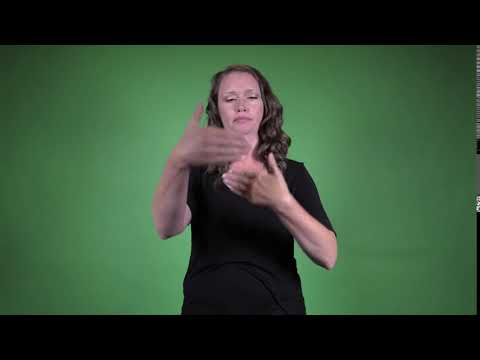
Sign for BOX 1 in ASL
Practice Activities:
Start by practicing the sign for BOX 1 in ASL in front of a mirror. Focus on creating a clear, rectangular shape with both hands, as if outlining the sides of a box. Repeat the sign five times slowly and then five times at a conversational pace to build fluidity.
Use the sign for BOX 1 in ASL while identifying different types of boxes around your home like a cereal box, a gift box, or a moving box. Point to each box and sign “box” followed by an adjective or color, such as “big box” or “red box.” This strengthens vocabulary pairing and helps you stay grounded in real-life context.
Create simple sentences using the sign for BOX 1 in ASL such as “I open box,” “box is on table,” or “gift inside box.” Practice them in front of a partner or in a video recording. This helps learners connect the sign with everyday phrases and improves confidence using it in ASL structure.
Engage in partner practice where one person mimes placing objects into boxes and the other person signs a sentence about what they see. For example, “toy in box” or “box under bed.” This improves both expressive and receptive skills through interactive communication.
Storytelling is a great way to reinforce the sign for BOX 1 in ASL. Come up with a short story about someone receiving a mysterious box in the mail. Use the sign repeatedly as the character interacts with the box—opening it, shaking it, guessing what’s inside. Add emotions and facial expressions to increase clarity and storytelling impact.
Use flashcards featuring pictures of different sizes and shapes of boxes to prompt the ASL sign each time. Say the name of the item and follow with the corresponding sign. This makes practice visual and more engaging.
Cultural Context:
In American Sign Language, the sign for BOX 1 in ASL is more than just a literal representation of a container. It reflects how physical space and abstract concepts are visualized through handshapes and movements, an essential part of Deaf culture and communication. Understanding the sign for BOX 1 in ASL helps learners connect visual grammar with real-life objects.
In Deaf culture, visual storytelling is crucial. The sign for BOX 1 in ASL is often used in narratives or explanations that involve storing, packaging, or thinking inside and outside of the box. Hands create the shape and size of the box to clarify the context, offering a visual that supports the meaning being conveyed.
When teaching children or beginners, the sign for BOX 1 in ASL can serve as a basic spatial reference. It can help anyone learning ASL understand how dimensions and locations are expressed using hand placement and movement. This strong visual link supports comprehension across various learning styles.
The sign for BOX 1 in ASL also connects to how the ASL community wraps language around the physical world. For instance, it can be used in classroom settings to demonstrate practical vocabulary that students encounter every day. This reinforces the value of using relevant signs that match everyday experiences.
ASL is a visual language, and the sign for BOX 1 in ASL is a great example of showing rather than telling. The sign mirrors the dimensions of a real or hypothetical box, often adjusted depending on size or shape, making it versatile and easily understood. This flexibility matches the dynamic nature of how Deaf individuals use space when communicating.
In social settings, the sign for BOX 1 in ASL might come up when discussing gifts, moving, organizing events, or even expressing abstract ideas like limitations or boundaries. Using space around the body visually, signers can emphasize the openness or restriction represented by the concept of a box. That brings richer meaning to a simple sign.
ASL is influenced by the culture and values of the Deaf community, where clarity of expression is key. The sign for BOX 1 in ASL is a clear reflection of this, as it relies on the visual precision and spatial orientation that make ASL unique from spoken languages. It’s not just what’s being said, but how it’s visually shaped.
ASL evolves with cultural shifts and personal expression. The sign for BOX 1 in ASL is used in various settings—educational, professional, and casual—which helps it stay active in daily
Extended Definition:
The sign for BOX 1 in ASL is a visually iconic sign that mimics the shape of a box using both hands. This sign typically uses open hands positioned in front of your body, forming the outline of a rectangular or square shape. It represents the physical dimensions of a box, making it a visually descriptive sign that aligns well with its meaning.
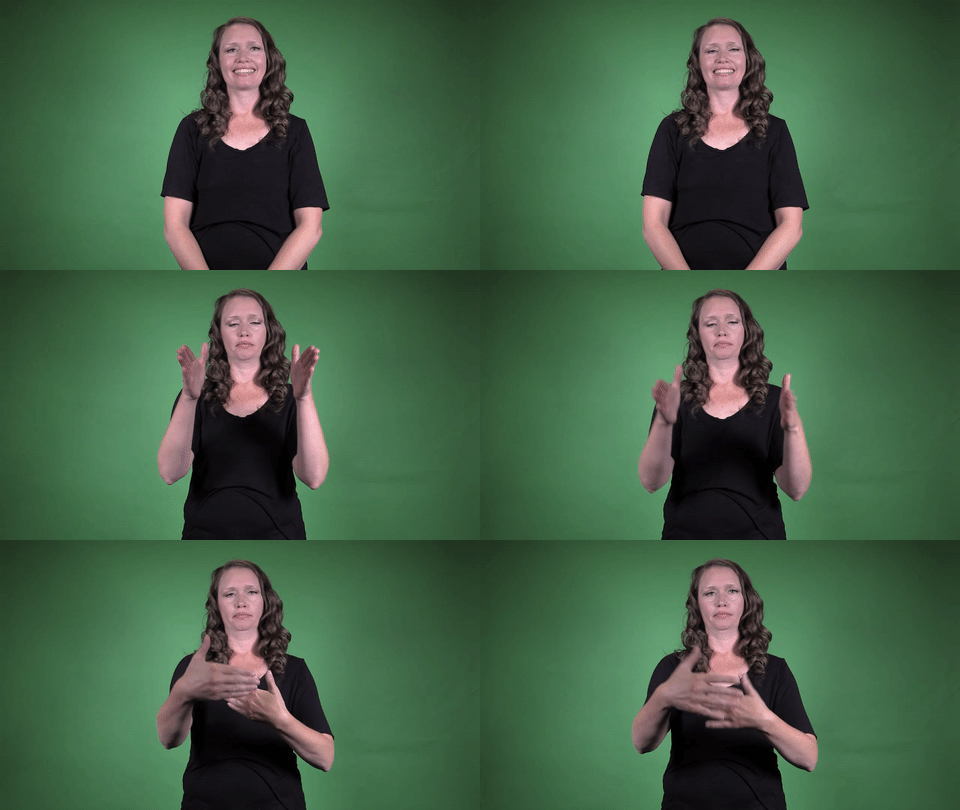
To sign BOX 1 in ASL, place your hands in front of you with palms facing each other, about shoulder-width apart. Move your hands to trace the shape of a box, typically forming a square or rectangle in the air. This helps convey both the structure and boundaries of an actual box.
The sign for BOX 1 in ASL is often used in daily conversations when referring to packages, containers, or storage. Whether you’re talking about something being delivered, something being packed away, or locating a storage item, this sign is highly relevant. It’s a useful vocabulary word for both home and work environments.
In educational settings, students learning ASL encounter the sign for BOX 1 early because it’s common and easy to remember. It allows learners to associate the visual elements of the sign with its English meaning, reinforcing language connections. Teachers often use this sign while teaching categories, spatial arrangements, and object descriptions.
The concept of spatial reference in ASL makes a big difference, and the sign for BOX 1 plays into that well. Because ASL is a visual language, signs like BOX 1 help express not only the object but also spatial orientation. For example, when talking about placing items inside, beside, or on top of a box, this sign often comes first in the sentence structure.
Many native and fluent ASL users incorporate variations of the sign for BOX 1 when referring to specific dimensions. A larger box may be signed with wider spacing of the hands, while a small box might use smaller hand shapes. This flexibility adds depth to the sign and allows clear communication based on context.
In storytelling or descriptive signing, the sign for BOX 1 in ASL helps form environments or settings. You might use it to describe a character finding a box, opening it, or taking something out of it. These actions are easily conveyed after establishing the box’s shape with the appropriate sign.
The frequency of this sign in signed conversations makes it a crucial term to master. It’s also commonly used in interpreting scenarios, especially when describing actions like packing, moving, or organizing. Because it’s a visually intuitive sign, both Deaf and hearing ASL
Synonyms: Got it! Please provide me with the content for “box 1” so I can create the necessary synonyms.
Educational resources: Find related learning materials in our course bank!
Want more? Check out some of our popular learning activities on the homepage!
Need to look up a sign? Use our highly rated dictionary: https://aslinteractive.com/best-asl-dictionary/
Follow us on tiktok: https://www.tiktok.com/@aslinteractive. More social media links at the bottom of this page!
Long-tail Keywords: What is the sign for box in ASL, How do you sign box in ASL, ASL sign for box
Categories:
tags: objects, box, classroom, language learning, activities
Parameters
*Handshape*:
The handshape for the sign for BOX 1 in ASL uses both hands in B-handshapes . Fingers are extended and held together with the thumbs extended along the sides. The palms face each other as the hands outline the dimensions of a box in the air.
This handshape helps visually represent the rectangular shape and size of a physical box. In the sign for BOX 1 in ASL, this handshape plays a key role in clearly depicting the object’s spatial structure.
*Palm Orientation*:
For the sign for BOX 1 in ASL, both hands are in a “B” shape, and the palms face each other. Initially, the hands are held apart at shoulder-width with palms facing inward. Then, they move toward each other as if outlining the sides of an invisible box .
The palm orientation remains inward throughout the motion to represent the form of a box. This consistent orientation is key in correctly conveying the sign for BOX 1 in ASL.
*Location*:
The sign for BOX 1 in ASL is performed in the neutral space just in front of the chest. Both hands are brought up to this area, mimicking the shape of a box as the fingertips and palms face each other.
This placement allows for clear visualization when signing the sign for BOX 1 in ASL. Keeping the movement and handshape in front of the chest ensures visibility and maintains the integrity of the shape being expressed.
*Movement*:
To produce the sign for BOX 1 in ASL, start with both hands in flat B-handshapes. Place your hands in front of you, palms facing each other about shoulder-width apart.
Move your hands toward each other slightly, then shift outward to create an invisible rectangular shape in the air, mimicking the dimensions of a box . The sign for BOX 1 in ASL clearly mimics the shape and gives a visual reference to the object.
*Non-Manual Signals*:
When demonstrating the sign for BOX 1 in ASL, the facial expression should remain neutral, showing attentiveness and slight engagement. Slight head movement may accompany the hand shape to reflect the concept of a box, helping add spatial clarity without over-exaggeration.
Maintain relaxed brows with focused eyes as you illustrate the sign for BOX 1 in ASL, as this supports the three-dimensional representation being made. Avoid dramatic or emotional expressions unless context requires it.
*Prosody, Dominant/Non-Dominant Hand*:
The sign for BOX 1 in ASL uses both hands in a flat “B” handshape. The dominant and non-dominant hands start about shoulder-width apart in front of the body, palms facing each other. Both hands move inward slightly then pull apart again, mimicking the shape of a box .
In the sign for BOX 1 in ASL, the movement represents the three-dimensional size of a container. This sign clearly conveys the concept of a physical box using visual space and symmetrical hand movement.
Tips for Beginners:
When learning the sign for BOX 1 in ASL, it’s helpful to visualize the shape of a box. This sign uses flat hands held in front of you, as if outlining the sides of an invisible cube. Begin by placing both hands palm-in, fingers extended, and simulate drawing the corners of a box by moving your hands apart and then forming the sides.
It’s important to keep the movement symmetrical so it looks neat and intentional. Beginners often forget to maintain consistency in spacing or may move their hands too quickly, making the sign unclear. Practice in front of a mirror can help you check that both hands mirror each other precisely when signing BOX.
A common pitfall is making the shape too small or awkwardly shaped. Make your gestures large enough to be clear, but not exaggerated. Control the pace; slow and deliberate movements will help your communication be more effective and easier for others to understand.
You can enhance clarity by keeping your hands flat and your fingers together. Avoid curling the fingers or creating bent hands, which can lead to confusion with other signs. Remember to keep your palm orientation correct—facing inward—as this small detail can change the meaning of your sign.
If you’re unsure whether you’re forming the sign for BOX 1 in ASL correctly, watch native signers or ASL instructors online or in person. Mimicking skilled signers can improve your own accuracy. Don’t hesitate to pause and restart while practicing the sign until it feels smooth and natural.
Finally, consistency is key when learning the sign for BOX 1 in ASL. Regular short sessions practicing the handshape and movement pattern will help commit it to muscle memory. As with all ASL signs, facial expressions and fluid movement add clarity and naturalness to your signing.
Connections to Other topics:
The sign for BOX 1 in ASL is foundational for discussing shapes, sizes, and spatial organization. It connects naturally to signs like ROOM, HOUSE, and GIFT, all of which rely on visualizing or enclosing space using similar hand shapes and motions. The concept of forming a container with flat hands to visually represent dimensions can be translatable across contexts involving rooms, structures, and packaging.
In practical usage, the sign for BOX 1 in ASL often appears in compound ideas such as SHOE-BOX, STORAGE-BOX, or MOVING-BOX. These combinations allow signers to describe not just the object’s shape but also its function. For instance, pairing the sign with signs for STORE or ORGANIZE provides more detail about the box’s purpose or setting .
The spatial description used in the sign for BOX 1 in ASL is closely related to classifiers in ASL. Using Classifier 3 or bent handshapes, a signer can describe the type, size, or orientation of various boxes, like a large delivery box or a small jewelry box. This brings a deeper layer of communication beyond just labeling the object.
Understanding the sign for BOX 1 in ASL also helps in expressing abstract ideas, especially when discussing categories, boundaries, or limitations. It can symbolically represent “thinking inside the box” or constraints in creative problem-solving. This opens up dialogue for bilingual expressions mixing ASL and English idioms .
Additionally, this sign bridges to educational and work-related vocabulary, interacting with signs like MAIL, PACKAGE, and SHIP. For instance, one might say DELIVER BOX or PUT-IN-BOX to describe shipping tasks. These connections emphasize the sign’s practicality across both casual and formal topics.
Summary:
The sign for BOX 1 in ASL is a spatial classifier that mimics the shaping and outlining of a box. Both hands are used in a flat “B” handshape, starting parallel to each other in front of the signer and then moving outward and upward in a rectangular motion to outline the shape of a box. This gesture allows the viewer to visualize the three-dimensional characteristics of a box clearly.
This sign relies on iconicity, where the shape of the hands and their movement closely resemble the object being described. It is highly visual and does not require fingerspelling for common contexts, though in more technical situations, FS-BOX may complement it. The classifier-based nature of the sign makes it very efficient in describing physical items and spatial understanding.
In practical use, the sign for BOX 1 in ASL belongs to a broader category of signs that employ classifiers to represent objects and their interactions in space. These classifiers are key components of ASL grammar, not just vocabulary placeholders. They serve as morphosyntactic tools for storytelling and detailing scenes.
Culturally, the sign for BOX 1 in ASL is significant because of its visual nature, which reflects how Deaf culture values tactile and visual communication. The ability to express physical forms accurately through hand shapes and movements is a celebrated feature of ASL and other signed languages. This embodies the sculptural and performative aspects often present in Deaf storytelling and art.
The grammatical use of BOX 1 integrates into sentence structure with a role similar to a noun, but its positioning and orientation can vary depending on the context. For example, when discussing where the box is located in a room, the sign’s spatial placement may imply that positioning. This grammatical flexibility highlights the three-dimensional grammar embedded in ASL.
In storytelling, the sign for BOX 1 in ASL may be used when describing scenes or narrating events that involve storing, moving, or finding items. The sign can be adapted through modifications in hand shape size or movement to show the box’s size, weight, or status—whether it’s open or closed. That visual variability allows for expressive and efficient communication in narrative discourse.
Related signs include signs for container, bag, package, and room. Each of these signs may use similar classifiers or handshapes but differ in their spatial representation or movement trajectory. The sign for ROOM, for instance, uses a similar framing movement with “B” hands but typically traces the walls of a space rather than an object like in box.
The sign for BOX 1 in ASL also connects to the broader concept of space typology and parameter setting in linguistics. In ASL, parameters like handshape, movement, location, palm orientation, and facial expression define each sign. BOX 1 strongly relies on handshape and motion parameters, which allow it to be intuitively understood within ASL syntax.
This spatial approach is a cornerstone of applied linguistics studies in sign language research. Understanding how signers use signs like BOX 1 allows researchers to analyze how visual languages encode and structure physical and abstract meaning. This is especially resonant in cognitive studies that explore the role of gesture and embodiment in language processing.
In educational settings, learning the sign for BOX 1 in ASL provides a platform for understanding classifiers and spatial referencing early in ASL acquisition. In classrooms, ASL learners often practice with signs like BOX 1 by describing their environment or scenes, which fosters vocabulary development alongside grammar immersion. This dual approach promotes comprehensive language learning and fluency.
The usage of BOX 1 also reflects how ASL integrates multiple cognitive domains—like spatial memory and visual perception—into fluid communication. Unlike spoken languages where spatial referencing is often described in words, ASL demonstrates space directly. The sign for BOX 1 in ASL is a clear example of how the language brings this experiential aspect to the forefront.
Emotion and emphasis can be added to BOX 1 through nonmanual markers. For example, widening the eyes or adding a slight puff of the cheeks can imply a very large or surprising box. In contrast, squinting the eyes and using tighter motions can suggest a tiny or secretive one. This interplay elevates the sign from simple description to vivid expression.
In Deaf culture, boxes carry symbolic weight as representations of gifts, tools, surprises, or constraints. In storytelling within Deaf communities, a box may be used metaphorically, and the sign BOX 1 can transition fluidly between literal and symbolic meanings. This creates layers of interpretation and narrative richness using a single visual concept.
ASL poetry and performance art also incorporate signs like BOX 1 to activate visual metaphors. A performer might use the BOX 1 sign repeatedly or alter it dynamically to convey entrapment, transformation, or the opening of possibility. This bridges linguistic form with artistic function in unique and culturally resonant ways.
In terms of technological use, the sign for BOX 1 in ASL might appear in video relay interpretation in logistics conversations, where Deaf users discuss
Want more? Check out some of our popular learning activities!
ASL Interactive Resources
ASLInteractive YouTube Channel
Follow us on tiktok: @aslinteractive.com
Follow us on Instagram: aslinteractive
Facebook page: aslinteractive
Facebook group: aslinteractive
LInkedIn: ASL Interactive LLC
Twitter: @ASL_interactive
*Some information on this page is AI-generated. AI can make mistakes. Please check the information.
Responses